
Translated material
What is shaming?

Shaming (from shame - disgrace or literally “shame”) is the practice of purposefully shaming a person for any reason, dictated by accepted norms and stereotypes in society.
Shaming comes in many forms and, as members of the community, we need to work on our own biases.Below are 11 shaming practices worth eliminating in the LGBT community.
1. Age - shaming, ageism
This stigma occurs in the gay community in many different forms, but the most well-known is the stereotype that older gay men are all creepy perverts. But in reality, they, just like you, were just trying to have a good time. The saying is familiar: “Where are you going, old fart?”2. Victim-shaming (var. victimblaming), blaming the victim
Victim blaming , or victim blaming , occurs when the victim of a crime, accident or any type of violence is held fully or partially responsible for the violation committed against him or the misfortune that occurred. Typically, victim blaming takes the form of racist, sexist , or classist statements. The expressions are familiar: “It’s my own fault” or “What did he want when he dressed like that.”
3. Body shaming, body shaming
For men, this means having the chiseled body of a god with pumped up muscles. For girls, an hourglass figure with a narrow waist. These idealistic body types certainly have the right to be... but so should ANY OTHER body types. In an ideal world, no one violates other people's boundaries or interferes with their valuable opinion about your appearance. We are all different, so we also look different. But every person at least once in his life has faced condemnation: for some you are too fat, for others you are too brightly made up, someone thinks that over the age of 20 you shouldn’t have lilac hair, and someone else doesn’t like tattoos.All of these are manifestations of body shaming, or, in Russian, discrimination against those who do not fit into generally accepted standards of appearance. Very often people who are overweight are bullied, although people who are too thin (in someone’s opinion) are also regularly bullied.

4. HIV-shaming
People living with HIV/AIDS should be surrounded only by love and support, especially from our community. But we all know how the gay community treats HIV-positive guys. If an HIV-positive gay man faces distancing in a gay environment, that’s half the trouble. But you’ve probably often heard such phrases as “AIDS” or “be careful, he has HIV”
5. Fem - shaming
Stop shaming people from the gay community for being feminine! We heard: “Look, the fagots have gone!” or status in Hornet “feminine by”.
6. Slat-shaming
You have the right to sleep with as many people as you choose! Play safe, have fun, and don't listen to people who try to judge your sex life! Slat-shaming (from the English slut - whore, shame - disgrace; literal translation into Russian - shaming a whore), also known as slut-bashing (from the English bash - pound; literal translation - beating a whore) is the idea of shaming and/or attacking a person for being sexual, having one or more sexual partners, acknowledging sexual feelings and/or acting on them. Moreover, it is about “the attitude that if a person has sex that traditional society does not approve of, he should feel guilty (Alon Levy, Slat-shaming ).
7. Shaming based on race
Make it a rule to eradicate manifestations of stereotypes associated with skin color in your circle of acquaintances and personal life, because this is racism and discrimination. Racism is a set of ideological views based on the inequality of human races and the decisive influence of racial differences on history and culture.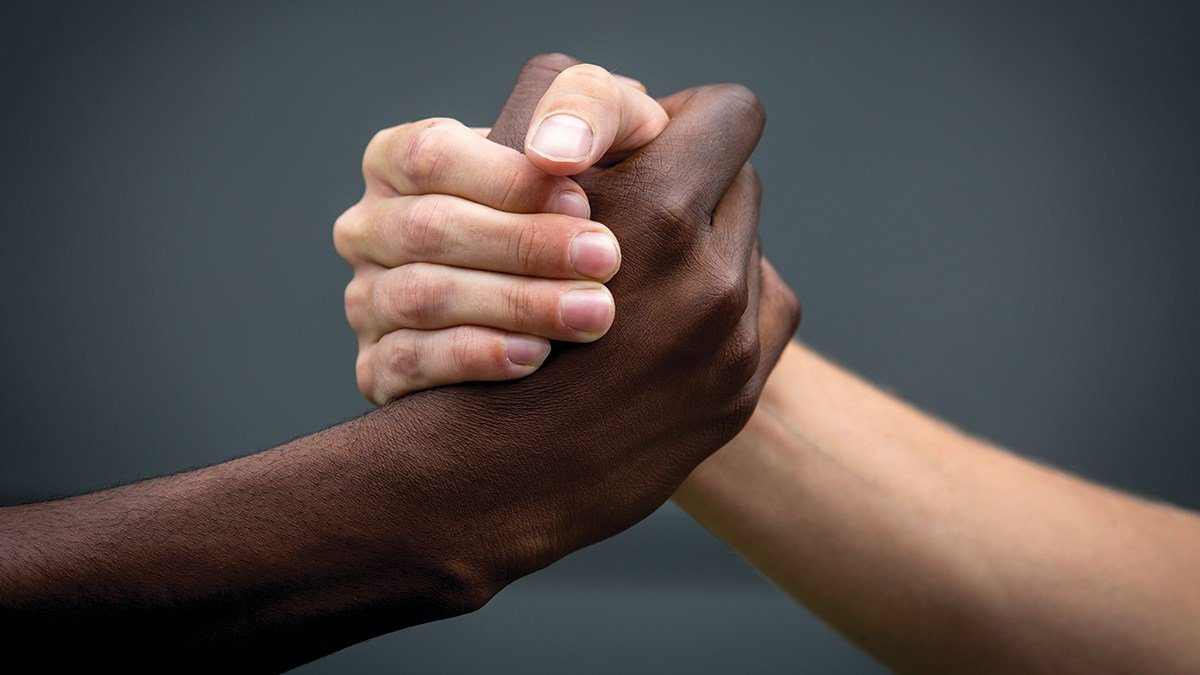
8. Bottom shaming
The role of the bottom is an integral part of the sexual act. Why do we shame people for this?! Familiar: “I’m already fucked up in Hornet, a bunch of passives are stupidly tearing up the PM. And all of them are bastards or stocking whores.” Or this: “Damn, there are so many passives and most of them are mannered or behave like stupid cunts.” Against this background, “davalka” is like a kind word.9. Shaming drug addicts
Addiction is a disease that is plaguing our community in more ways than we know. We should work to help people overcome their addictions and never judge those who suffer from them. Drugs in the context of sexual practices have accompanied the gay community for as long as it has existed in its modern form. But we owe the scale of coverage in the gay community that this phenomenon has now received to the emergence of new cheap drugs, as well as to the fact that the Internet has transformed both the search for a partner (Grindr, Hornet) and the search for drugs (darknet). And although we call what is happening now in America, Europe and Russia with the same word “chemsex” So what will you do if you find out that your friend has been using drugs for a long time, or even worse, your boyfriend?
10. B-shaming
Many people don't believe in bisexuality and they think it's just a way to eventually "become" gay. These people continue to maintain the invisibility of bisexual(s) in less than honest ways. Because it's not about them. If they don't feel the sexual attraction felt by bisexuals, how dare they say it doesn't exist? “Make up your mind already, the damned double-barreled shotgun,” this statement can also be heard in the LGBT community.Continuing the topic
[Video] BBC film about transgender Russians on the “anniversary” of the transition ban
Irish study on homophobia in schools
Russia “without LGBT”: dumber, poorer and smaller in number
STAY UP TO DATE IN A CONVENIENT FORMAT


