
Translated material
Geometry of Now: Errorsmith
Where is the line between the world of contemporary art, academia, experimentalism and the world of dance music? This question is answered by Errorsmith , a musician and developer of the Razor synthesizer plugin, who will perform today in the GES-2 space in the evening program Geometry of the Present.
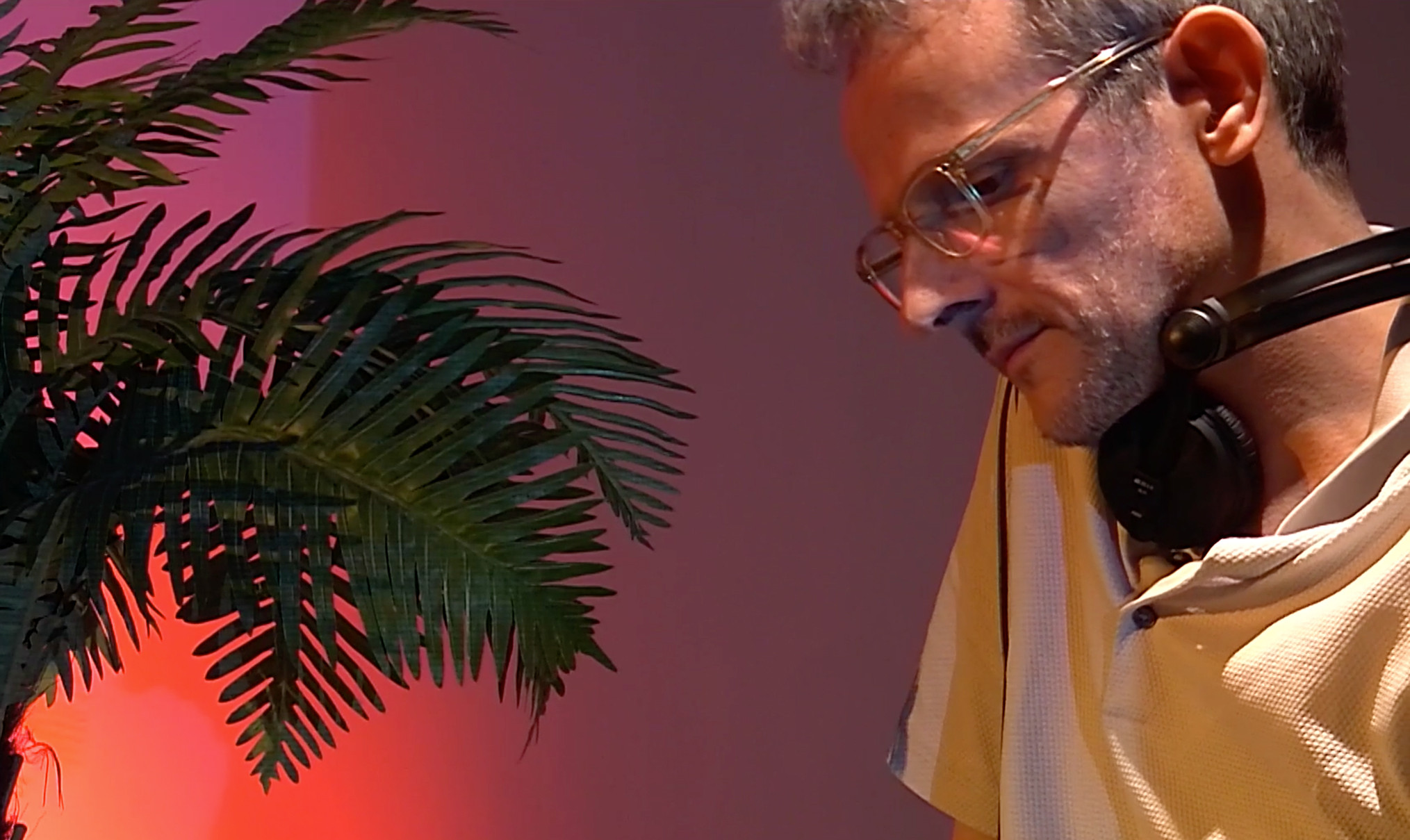
EB: Besides your solo project Errorsmith, you also participate in MMM and Smith'n'Hack, which are more dedicated to dance. Roughly speaking, you exist in two parallel dimensions: the more academic field of contemporary art, on the one hand, and on the other, in the territory of club culture. However, these dimensions influence each other: even in your most experimental things, I hear the echo of a dance beat. How do you define these relationships in music for yourself?
EV: In my opinion, producing exciting and meaningful art (and music in particular) always involves some kind of experimentation. Mark Fell said something similar in his interview with xlr8r , and I completely agree with him. Sometimes the experiments are not so obvious or there is no hype around them. For example, there is popular music that I find more experimental than some musique concrète pieces, even if they have "experimental" written all over them in bold letters. So I don't want to draw a line between the world of contemporary art, the academy, the experimental approach and the world of dance music. I have my own way of making music - and sometimes the result is more or less dedicated to the dance floor. This is the relationship you asked about.
EB: Your music is difficult to understand, and at the same time it always seemed very ironic and cheerful to me. Am I right?
EV: Yes, I completely agree with you. Sometimes I play on the difference between serious and funny. However, it is important to observe moderation in order for this to work. Ambiguity and ambiguity can create very interesting tension.
EB: Judging by the above and the fact that you actively DJ and host your program on Berlin Community Radio, dance music remains very important for you.
EV: Yes, I really love music that makes us dance. This is what I listen to most of the time. I like her directness. But good tracks are hard to find: in mixtapes and sets I share my discoveries, regardless of genre.
EB: According to Discogs or Boomkat, your collaboration with Mark Fell on Pan was Errorsmith's first release in eleven years. What was the reason for this pause? Are you planning to publish anything in the near future?
EV: It's very easy for me to dive into developing music software, instead of recording music as such. This leads to many technical and musical ideas, but does not find expression in the form of music. I was incredibly excited to release my Razor synthesizer, which was the fruit of the years when I fell off the radar and spent time researching and developing my skills in the field of sound synthesis. But ultimately I want to make music. Participating in various collaborations is not only an exciting and insightful creative experience, it is also a way to finish what you started. I ended up releasing music with Mark Fell and Fiedel (as the duo MMM). Now I’m forcing myself to finish writing my long play, which is due out this year. New material from it can be heard in my current live set.
EB: In various interviews you have mentioned that for Errorsmith, the development of software synthesizers plays a key role in creating music. In 2011, you published your Razor together with Native Instruments. As far as I know, you are using Reaktor. Have you had experience programming in other languages (like Max, Pure Data or SuperCollider)? Why did you start using non-standard ways of working with sound in your work?
EV: Musical instruments and other devices influence the music that is recorded on them. For example, if a synthesizer has a chromatic keyboard, then most likely chromatic melodies will be played on it. If the default time intervals in the sequencer are divided into powers of two (2, 4, 8, 16, 32 parts), it is very likely that the user will not change anything and will continue to program patterns within these conventional grids. A synthesizer can define an entire genre. A classic example is the Roland TB-303, without which acid house would not have arisen. Because the influence of these interfaces is so great, it is important to me to include the creation of these instruments in the process of writing music. I think this path can be fruitful and liberating in its own way. But it is worth saying that this is only one path in creativity. Some people create amazing things with existing, more conventional audio tools.
I was partly a computer science student and had a background in classical text programming, but when I discovered Reaktor (then Generator) in 1998, in which you arrange synthesizer blocks like oscillators, filters or math modules and connect them using virtual cables, I realized that this type of programming suited me best because it was faster and the closest thing to writing music. I tried both Max and PD, but I didn't see any benefit to my work over Reaktor. Reaktor is good for synthesis - and this is my main interest.
And in general, now I use a DAW. They are very good for sequencing, automation and recording.
EB: It seems to me that Razor is your most important work. Shifting the focus from recording music to designing the instrument with which we can create it is a very powerful aesthetic gesture. In the world of capitalist realism, where popular culture constantly reproduces itself, such a strategy seems to be the only correct one. Instead of creating music that we can only passively perceive, we create programs with which we can endlessly interact with it and record something of our own. In other words, I think Razor can be described as both a work of art and a piece of technology. Do you agree with this? Do you plan to create something similar in the future?
EV: No, I don't think so. In general, I don't think that the lack of any innovative tools or programs is the reason why popular and mainstream culture constantly reproduces itself. For example, the Razor, which at least I consider to be an innovative synth, can be used in a very boring way. Everyone can create and experiment, regardless of the devices they use. Also, as a musician, I don't listen to music passively. She inspires. She influences my musical creativity. In the same way, I get inspired by interacting with various software or reading articles about synthesis and music theory. I don't evaluate differently what affects me.
Since development is woven into the creation of my music, I cannot differentiate between art and technology. Despite the fact that I am not just a user of Razor, but its developer, the music with which it was recorded is always signed by Errorsmith. However, other users can do what they think is necessary and what they want. I still haven't heard anything similar in sound to my project that was done on Razor.
At the moment I'm busy recording music. After this I can well imagine myself working on a new instrument.
EB: Most of your recordings as Errorsmith, MMM, Smith'n'Hack were released independently, outside the label, only with the help of the Hard Wax store. When and why did this become important to you?
EV: We were lucky that Hard Wax with its distribution system supported us. We print records, bring them to them, and they sell and distribute them. We are not a “proper” label, we are artists who simply publish themselves. This approach gives us a lot of artistic freedom regarding our publishing schedule, the music we release, and how that music looks on a physical medium. It makes us financially independent from the label. But this does not exclude releases on some label in the future.
EB: Have you had any experience interacting with art institutions in the past? Why did you decide to participate in “Geometry of the Present” and what will you present here?
EV: I have very little experience interacting with art institutions: in most cases I play in clubs or at music festivals. The line-up, curated by Mark Fell, is simply amazing. I'm looking forward to my concert in this amazing venue and meeting my friends and artists I admire. In Moscow I will play my new live set of unreleased material.
Interview: Evgeniy Bylina
Errorsmith PAN Geometry of now Geometry of the present GES-2 VAC Live Evgeniy Bylina soundart Native instruments razor plugin unsound