
Translated material
From religion to atheism - what to read?
In a previous article I outlined my path to atheism in general terms. Although the text is called “The Experience of Faith and Unbelief ,” emphasizing religion and atheism as something personally experienced, in essence it is more of a rhetorical device. As we will later see, the revaluation of personal experience in the modern world is one of the ideological expressions of the institution of private property, identified with the individual into an indissoluble, inalienable unity. More significant and useful is to highlight the key points of this process, in particular, the books that influenced the development of a non-religious worldview.
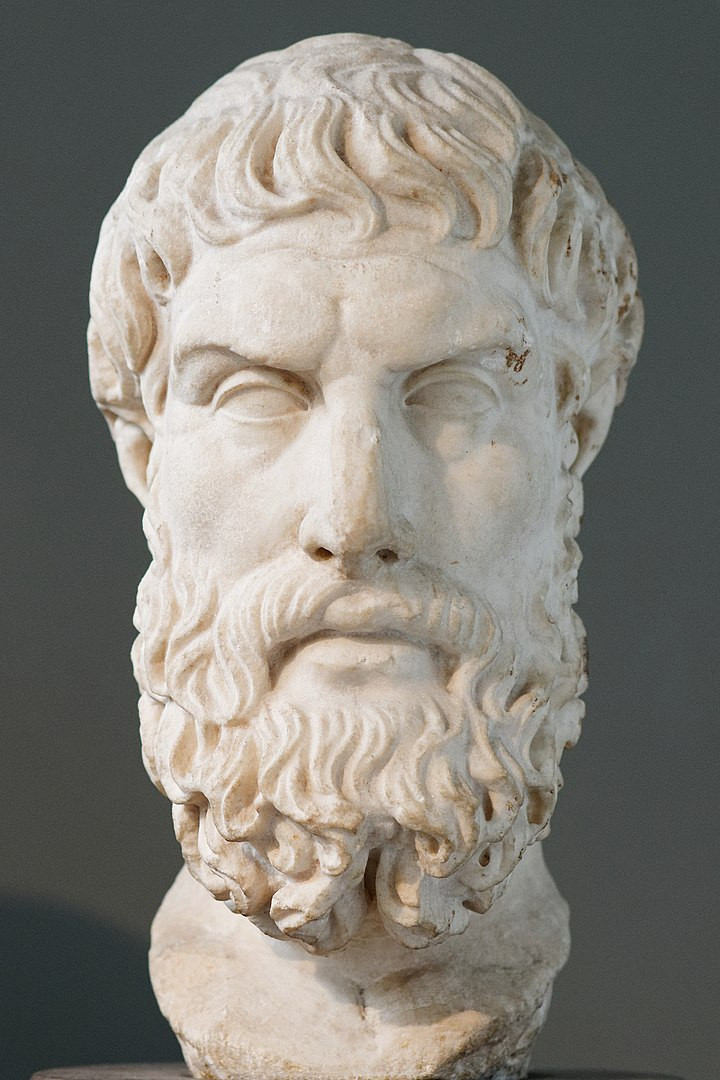
Analyzing the sources of my atheism , I can highlight the following authors on whom I relied in understanding the truth that was imposed on me about the falsity of religion, which was the result of a comparison of various texts. In general, a distinctive feature of objective truth is that it is imposed in the process of thinking or activity - and remains unperceived in the absence of practical involvement in the process of remaking oneself and the world. If God existed, then signs of his existence would be imposed on the participants and organizers of any meaningful business as factors that corrected their ideas about reality and the ways of thinking and changing it. This initial deviation of objects from given forms of motion is one of the signs of the earliest philosophical materialism already in the system of Epicurus and its development in the poem “ On the Nature of Things ” by Titus Lucretius Cara . Any real system, including a biological one, has moments of deviation from the original forms of existence, which is why the position of Epicurus, his materialism seemed to me a good philosophical explanation for the scientific picture of the world, including the processes of biological evolution - while eudaimonistic ethics was a great relief after the senseless and ferocious religious prohibitions and regulations aimed at torturing the mind and body. Another important factor was the refined style of Lucretius's poem:
" In those days, before everyone's eyes,
The life of people on earth under religion is a painful oppression,
From the regions of the sky the head appeared, looking from there
With his terrible face on mortals cast down,
Ellen for the first time alone dared mortal gaze
Turn against her and dare to speak out against her.
And neither the rumor about the gods, nor the lightning, nor the thunderous roar
The sky could not intimidate him, but, on the contrary, stronger
His spirit was driven by his determination to be strong
He was the first to break the gate of nature.
By the strength of his living spirit he won the victory and went out
He is far beyond the fiery fence of the world,
Having walked through boundless spaces with your thoughts and spirit.
As a winner, he tells us from there that he can
What cannot happen, what is the ultimate force
Each thing is given and what limit is set for it.
So, in turn, today religion is our heel
Trampled, but victory lifts us to the sky. "
However, after twisting Epicurean materialism from different angles for two or three months, I found it insufficient in several respects:
Firstly , being an ancient system, it did not include criticism of modern religious systems, which I read in the texts of Dawkins, Fraser, Meslier, Yaroslavsky, Celsus, Taxil and other wonderful atheists.
Secondly , including a number of correct provisions, it was still too categorically poor to describe the modern scientific picture of the world.
Thirdly , it was individualistic and not social in nature, not explaining social processes and not providing methods for interacting with them.
Fourthly , he did not include the idea of infinite intellectual improvement, which I firmly took up during the Olympiads, and still adhere to.
Of the authors listed, I can say the following about their texts:
Celsus is an ancient author, a philosopher probably of the Stoic school, who wrote a criticism of the Christian religion in a short text called “ The True Word .” This text, reconstructed on the basis of quotations in the texts of Christian apologists, consists of four parts. The first of them argues that Jesus, judging by his actions described in the gospels, cannot be recognized as either a divine man or a rational man in his way of life. For example, why couldn’t the angel sent to lead him away from Herod’s repressions protect him from soldiers as a child? Or why could he not endure thirst on the cross, as many courageous people who did not pretend to be sons of God endured it? Or for what purpose did he not restrain his disciples from betrayal before the crucifixion, leading them into temptation and a crime against friendship? The second part contains criticism of Christianity from the standpoint of philosophy and history, showing that the historical ideas of Christians and Jews about the recent origin of the world are implausible, their religion itself arose through sectarianism, instead of reasonable and socially useful things, they preach horrors and absurdities borrowed from the barbarians. The third part contains criticism of certain dogmas of Christianity, of which two quotes especially stuck in my mind at the time. First, about the absurdity of worshiping the cross: “<…> everywhere there (figures) the tree of life and the resurrection of the flesh thanks to the tree; this, I think, because their teacher was nailed to the cross and was a carpenter by trade, so that if he were accidentally thrown from a cliff, or pushed into an abyss, or strangled with a rope, and if he were a shoemaker, or a mason, or a blacksmith, then they would have in heaven is the rock of life, the abyss of resurrection, the rope of immortality, the blessed stone, the iron of love or the sacred sole." And the second, about the invalidity of liturgical psychotechniques for healthy and enlightened people - “A certain Egyptian musician Dionysius, with whom I happened to meet, told me regarding magic that it is valid only in relation to uneducated and depraved people, and it is not able to produce any effect on people who were engaged in philosophy, since they took care in a timely manner (to create for themselves) a healthy lifestyle.”
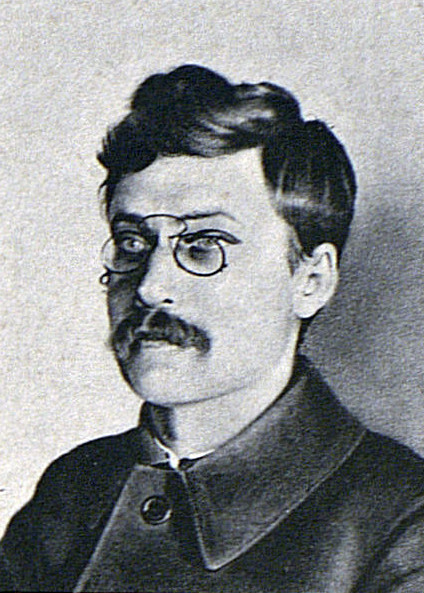
“ The Funny Bible ” by Leo Taxil and “ The Bible for Believers and Unbelievers ” by Emelyan Yaroslavsky are two more modern books of similar content, presenting in a popular form the content of the so-called “Holy Scripture”, and revealing the absurd and funny nature of the stories and tricks of God and his people, prophets, devils, angels and similar characters described in it. Both of them are aimed more at ridiculing biblical myths, and are more journalistic than scientific in nature, while Taxil’s style is rather humorous, and Yaroslavsky’s style is ironic.
The latter, namely the ironic intonation, suggesting some preservation of the subject ridiculed in criticism, refers to the texts of the Marquis de Sade , which are not only artistic and erotic works, but also philosophical and atheistic, since they all have a common way of construction: first the characters are libertines, engage in all conceivable forms of depravity, then move on to equally sophisticated violence (or vice versa), then philosophically prove the justice of their actions, invoking the natural order of things and denying the existence of the god they hate, and then it all starts all over again. De Sade's novels " Juliette ", " Justine " and " Philosophy in the Boudoir ", which I read at the same time, for the pleasure of erotic scenes and philosophical blasphemy, in addition to what has been said, strengthened me in the correctness of the atheistic and materialistic worldview taught in universities in a truncated form, which causes great harm to the development of students.
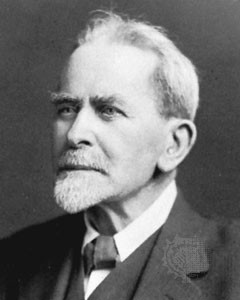
James Fraser's Folklore in the Old Testament is a more serious and theoretical book, the argument of which, as I remember, literally pushed my religious ideas about the truth of biblical stories to the wall: it was impossible to come up with justifications when specific biblical rituals and beliefs, which had a mythological origin, were compared with similar beliefs and practices of other peoples. Comparative religion, in principle, is a field that directly leads to atheism, as it shows the kinship and interconnection of religious ideas, the social and cultural reasons leading to their emergence and transformation. In fact, Fraser's book became for me my first acquaintance with sociological structuralism, or rather with the sources from which it developed. Another book by the same author, “ The Golden Bough ,” showed on even more extensive material the diversity and kinship of magical superstitions and rituals, based on errors of associative thinking, constituting the difference between sympathetic and contagious magic, as well as the idea of the possibility of the direct influence of words on things.
Richard Dawkins , whose books were translated into Russian at that time and fell into my hands, also had a significant influence on my understanding of evolutionary mechanisms and the nature of religion. His books " The Blind Watchmaker " and " The Extended Phenotype " filled the gap in the understanding of biological evolution that was formed due to illiterate teaching of biology in both school and university, and to which religious ideas about God as the driving force of evolutionary change once clung. Dawkins's own atheistic and anti-religious book, The God Delusion , was an exposition of the theory of memes as cultural replicators that make up the body of all religion, and cling to cognitive distortions in the patterns of thought, perception and behavior of individuals and large groups. At the same time, Dawkins’s method in terms of criticizing religion, in my opinion, was distinguished by a number of dubious features, the main of which was the reduction of social factors to the personal and biological level, as well as the enlightenment orientation towards the dissemination of knowledge among ignorant citizens, who only have to come to terms with and accept scientific truth. The first point raised doubts in that it completely ignored the legal status of religious organizations, in the event that the services for providing communication with the other world, which they, according to their own statement, provide, are invalid, as well as the huge reserves of church property, property and capital that the priests own, without bringing any benefit to society. The second attitude ignored the resistance from individual memes localized in the behavior of religious citizens, as well as the resistance of social structures for which the secularization of the consciousness of citizens and church capital is to one degree or another unprofitable. In other words, Dawkins's method lacked both sociality and subjectivity of the subject of criticism.
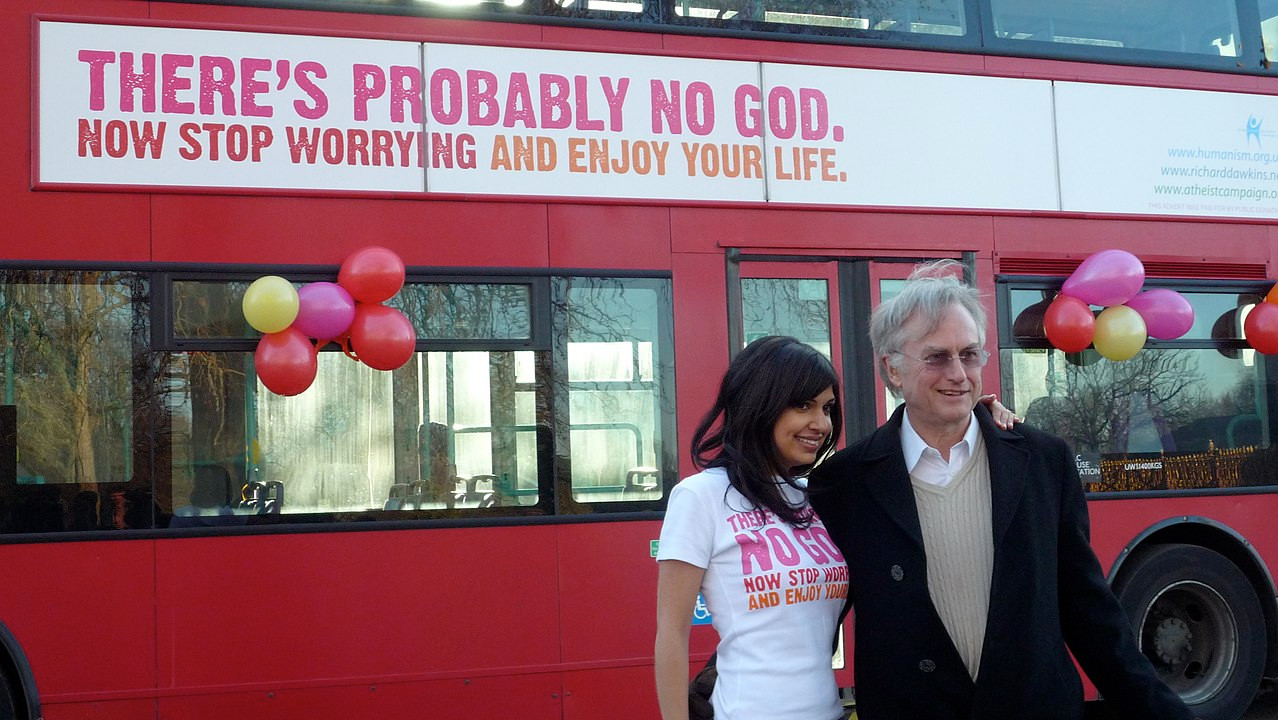
In one package, along with Dawkins’s books, as a rule, there were such authors as Christopher Hitchens , Sam Harris , Daniel Dennett , who together with Dawkins constituted the leaders of the “New Atheists” movement, the novelty of which, as we will see below, was only formal, while in content it included a serious rollback in comparison with the atheism of even the 18th century. Hitchens’s book “ God is not love! ” was of a more pronounced journalistic nature: revealing the absurdities and obvious harm of religion, it does not, unlike Dawkins, provide a scientific explanation for this phenomenon and methods for its elimination, so the last slogan demanding a “new enlightenment” remains and will remain nothing more than a verbal declaration. Sam Harris's book " The End of Faith, " along with a harsh critique of religious fanaticism, contained wild and unacceptable arguments criticizing Noam Chomsky and other leftists about the "morality of George W. Bush", who, according to the author, having the weapons to avoid unplanned casualties, would not destroy civilians in order to maximize the profits of his accomplices. Finally, Daniel Dennett’s book “ Breaking the Spell ” completely treats religion as a natural phenomenon , despite the fact that its symbolic character, in principle, excludes any kind of naturalness, defining its social and artificial character.
More adequate, although sharing the same mistakes of reducing the social and subjective to the biological, I thought books devoted to the criticism of religion from the point of view of the theory of memes, continuing Dawkins’ key ideas in this area. Of the authors working in this direction, at that time I was familiar with the works of Richard Brody “ Psychic Viruses ” and Ilya Nostyrev “ Masters of Illusions ”. As I found out later, the problem was that the authors viewed memes primarily as creations of the minds of individual people, born primarily in their brains - and not as social phenomena generated by the processes of collective objective activity and thinking about it. In the first case, the idea of a god or a radio broadcaster was generated by the brain of a preacher or inventor; in the second case, by the work of the electrical machine industry and the suppression of society by the repressive and ideological apparatuses of the state.
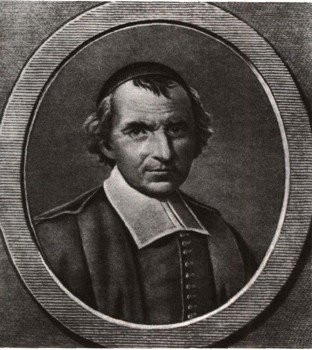
I found the solution to these inaccuracies and errors partly in Jean Meslier’s “ Testament ” - perhaps the most consistent and systematic criticism of Christian teaching from an Enlightenment perspective. It was a book that carried the Enlightenment doctrine of the origin of religion from the meeting of a fool and a swindler to the demand for the need to expropriate church property. At the same time, solving the problem on a subjective level, and noting that the cognitive distortions of illiterate and depressed people are used by scammers and charlatans, about which the New Atheists led by Dawkins are silent, Meslier ignores the social context, namely the conditions of origin of large classes of people, some of whom are in such a position that they can be deceived, and others that they are capable of deceiving.
The social explanation of the origin and existence of religion was revealed to me by the method of Marx, who did not specifically criticize religion, but criticized related more modern forms of ideology of secular origin. The early works of Karl Marx and Friedrich Engels - “ The Holy Family ”, “ German Ideology ” and “ The Poverty of Philosophy ”, dedicated to the criticism of Young Hegelian idealistic philosophy, contained a lot of comparisons and notes concerning the social and historical roots of any ideology as false consciousness, including religious ones, from which their opponents were not far removed. Therefore, after three months of Epicureanism and abstract atheism, I moved on to the study of Marxist philosophy at the age of twenty, and have continued so ever since. And the 11th “ Thesis on Feuerbach ” became one of the most important methodological principles for constructing a philosophy adequate to reality: “Philosophers have only interpreted the world in different ways, but the point is to change it.”
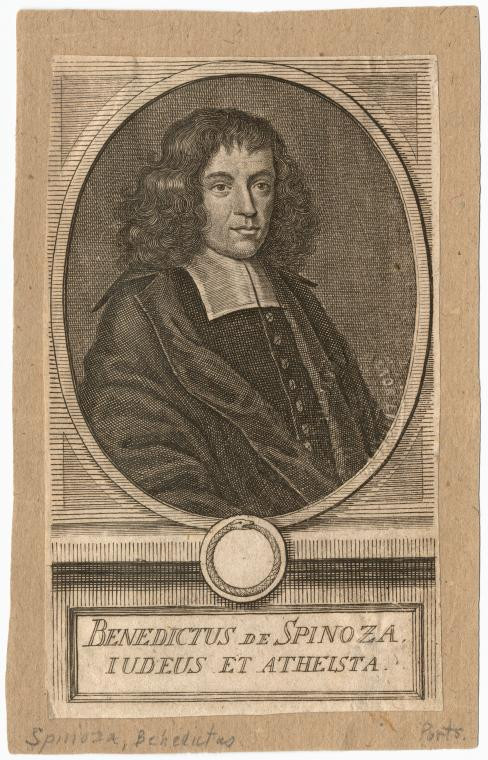
Soon after my first acquaintance with Marxism, I realized that, in general, while correctly explaining the social causes of the origin and nature of religion, he did not carefully consider the mental, unconscious component of ideology in general and religion in particular. This prompted me to pay attention to the texts of Marxist or close to Marxist psychologists - first the Freudo-Marxists: Erich Fromm , Herbert Marcuse , Theodor Adorno , Max Horkheimer and Wilhelm Reich , and then the Soviet cultural-historical school - Lev Semenovich Vygotsky and Alexei Nikolaevich Leontiev . Not finding a sufficient level of philosophical reflection in them, I moved from them to Spinoza’s “ Ethics ,” taking into account Engels’ words that “Marxism is a kind of Spinozism,” and for good reason. Spinoza's philosophical system, despite a certain schematism and abstractness of presentation, contains firmly established ontological foundations, including a materialistic definition of the absolute as an infinite substance that exists necessarily, thinking and extended. Spinoza finally resolved that empirical delving into little things with unspoken foundations, which plagued not only the “New Atheists”, but also partly the texts of Marx himself, on a worthy philosophical and theoretical level. The second advantage of Spinoza’s system was for me the solution to a psychophysiological problem , which Dennett’s colleague, David Chalmers, for some reason calls “the difficult problem of the philosophy of consciousness,” and writes hundreds, and together with his colleagues, thousands of pages of texts. At the same time, Spinoza in the second part of the Ethics, in the thirteenth theorem, there is a definition and its proof that the soul or psyche is the idea of the body: “Anima est idearum corporae.” Chalmers, Dennett, Searle and their associates, apparently, did not read Spinoza and do not know that the main issue of their reasoning was resolved three and a half centuries before their birth , which negates the scientific significance of their discussions, as well as their scientific and philosophical qualifications. The third virtue of Spinoza for me was his criticism of the church and religion as deprivative and sublimating institutions, suppressing the abilities and desires of the bodies that constitute them, and parasitic on unhappy and powerless social environments. Spinoza contrasts such a forced and passive order with another possible order - active and free, achievable at that stage of development of social production, which Marx characterizes as a global communist association , “in which the free development of each is a condition for the free development of all.”
Продумывая спинозистское прочтение Маркса и его критики религии, я пришёл к выводу, что предметом заботы для атеиста, в отличие от верующего, является не служение богу или какой-то высшей идее путём ограничения желаний и потребностей, а присвоение ценностей и развитие способностей их присвоения. В таком случае марксизм получал позитивную интонацию, противоположную расхожему среди российских и отчасти западных левых страдальчески-сострадальческому и отчужденческому звучанию, которое, как и религия, концентрируется на бессилии людей и их неспособности ни успешно следовать своим желаниям, ни освободиться от сковывающих их ограничений, ни присваивать всё новые ценности, поставляемые природой и общественным производством. Таким образом, на место потустороннего бога как вредного вымысла встаёт действительная ценность — техническое устройство и объект желания, усиливающее способности социального и физиологического тела. А религия оказывается выражением неспособности большинства членов общества такие ценности производить и присваивать, вследствие чего те начинают нуждаться в потустороннем утешении и освящении нынешней жизни в нищете и в страданиях.
Тем более важным оказывается сегодня распространение знаний о научном атеизме как первом шаге на пути к научному социализму. Другим существенным моментом является рефлексия над атеистическими идеями, позволяющая составить целостное представление о религии как одном звене в ряду идеологий как форм ложного сознания, вызванных неразрешёнными противоречиями общественного производства. More on this in the next article.