
Translated material
Personality archetypes
The end of the 19th century was marked by the emergence of a fundamentally new concept that defines the behavior of Homo sapiens not only from the point of view of rationally explainable and economically feasible incentives, but by a whole system of internal, sometimes unconscious attitudes and values that actually determine his will, desires and fears. This revolutionary approach, on the one hand, made it possible to look at human history from a completely different, previously unfamiliar angle, and also gave a person an amazing opportunity to understand himself, to see the mechanism of his individuality from the inside.
The main characters who stood at the origins of psychology as a science were Wilhelm Wundt and Helmholtz, however, Carl Gustav Jung and, of course, Sigmund Freud are considered to be the godfathers who distinguished psychology into a separate, generally accepted therapeutic practice independent of medicine and anatomy. Freud, who gave the world the concept of psychoanalysis, was initially Jung's senior comrade, mentor and, one might even say, teacher, but the latter gradually came to his own idea of understanding human psychology, which expanded Sigmund's postulates, limited to one plane - sexual desires. Sigmund argued that every person, without exception, is driven by hidden, irrational drives caused by childhood psychological trauma and growing out of sexual complexes. It is worth noting that childhood complexes and traumas are universal and absolutely natural (if they do not exceed a certain level) components of human life in Freud’s theory, which direct the individual onto the path of normal human life in society. The concept of a norm extends to the entire diversity of behavior, within the framework of which each individual person manages to function successfully and painlessly as a member of society and a biological individual: to work and love, regardless of the forms of these manifestations. This is where we will finish our brief excursion into Freud’s theory, to which we will devote special attention in another material.
After much theoretical reflection and experience based on years of clinical practice, Jung created a model much more complex, controversial and profound than Freud's theory. However, the foundation of logic, the mechanism for explaining mental processes, was borrowed by Karl from his older comrade Freud, and this cannot be denied.
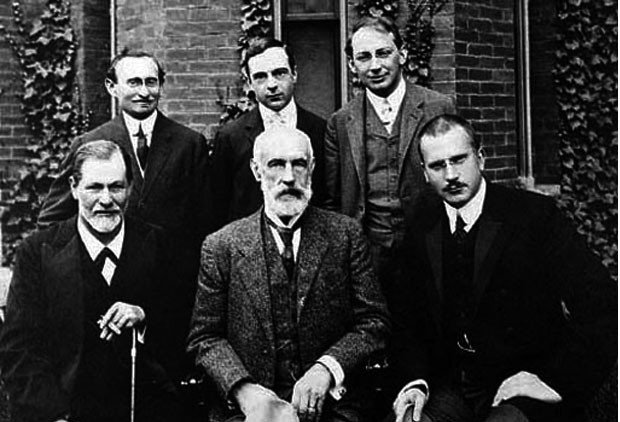
We will begin our acquaintance with the intellectual works of the founder of analytical psychology with the most superficial and obvious, therefore the most accessible and applicable in everyday life, conclusions and postulates. One of the first fundamental works describing the work of the human psyche was the book “Archetypes and the Collective Unconscious.” In it, Carl Gustav comes to the conclusion that all people can be divided into certain types, characteristic of their behavior. At the very beginning of the book it is said that the postulated conclusions are based primarily on factual experience obtained from psychiatric practice, but Jung does not immediately go to the essence of his theory, but analyzes in detail and qualitatively the philosophers and thinkers who preceded him in similar research. Analyzing the written works of Schopenhaur, Nietzsche, Goethe, Schiller, Plato and Aristotle, he clearly demonstrates the intellectual premises of his views, and gradually leads the reader to a detailed understanding of the first method of classifying people according to the principle of extroversion and introversion.
Jung argues that introversion is a process directed inside human consciousness, with the goal of establishing relationships and consequences of processes; Extraversion is the opposite - turning human attention to external objects. These mutually opposite processes are inherent in every person, and only their combination makes a full existence possible, however, a pronounced tendency towards one of them, inherent in an individual, gives rise to a certain type.
The introverted type lives to a greater extent in the world of his ideas, subjective values and views; the external world for him exists only as a trigger that launches the internal processes of consciousness. The object of external reality itself is correlated in the individual’s consciousness with some eternal, not subject to the flow of time, idea or image, which is why it loses all value in itself; feelings, sensations or thoughts, on the contrary, seem to be an invaluable repository of absolute knowledge. Therefore, the individual tries to reduce contacts with others to a comfortable minimum, since understanding internal processes takes a lot of time, and the sensations from interaction can be extremely painful. He subconsciously strives to isolate himself from society and generally abstract himself from all processes occurring outside, which is why he looks timid, shy, sometimes ingratiatingly kind, and sometimes even hostile. Since his own, subjective perceptions are not clear to anyone except himself, even when expressing them, he often looks like an inappropriate eccentric, not of this world. The ideal place born of his imagination is a desert island.
The extroverted type, on the contrary, loves to be the center of attention and make an impression. He lives by external processes and objects, projecting himself into them, does not pay attention to his inner world, and therefore unconsciously fears it. He tries so hard to distance himself from his inner content, dissolving in the flow of events and people, that sometimes he even reaches the extreme of physiological exhaustion of the body and undermines his health, not paying attention to the corresponding symptoms. Disregarding his own judgments, he builds a value system based on social norms and principles, is focused, in most cases, on achievements in the real world and is guided by the demands of the time rather than by personal ideals. This does not mean that this type is not capable of independent thoughts or moral principles, far from it, but for him external factors will always take precedence over his subjective opinion.
Each type sees the world and is aware of it as if through the prism of its own ego, and evaluates it from the standpoint of its own judgments, unable to fully understand and share the point of view of the other. However, it is obvious that both of these types are equivalent in terms of capabilities and only the mutual existence of such behavioral opposites allows human society to exist and develop. Silent introverts give birth to scientific theories and moral norms, active extroverts disseminate them and adapt them to solve specific problems of their era.
Since today we live in a world of hyper-objective orientation, in the modern interpretation “objective” has acquired the meaning “true”, and subjective, on the contrary, “controversial”. However, from the point of view of psychology, this is a mistake, and here’s why: perception is impossible without a subject (the one who looks, hears, realizes), just as it is impossible without an object (what is contemplated). The psychological process itself is impossible without the subjective, since it is this half of the function that transfers external reality into the field of cognition and correlates external forms with known internal contents. If there were no subjective, the world around would turn for a person into a meaningless something, impossible to perceive.
Further classification of types occurs on the basis of the main mental function of the individual. Jung conventionally divides the entire process of human awareness of the world into 4 functions and 2 subclasses. Subclass of rational: thinking (defining value from the point of view of logic) and feeling (defining value from the point of view of personal preference, sympathy); subclass of irrational: sensation (definition of value from the point of view of sensory, physiological perception) and intuition (definition of value from the point of view of unconscious images). Each of these four functions is inherent in any person, but only one of them is perceived by the individual as the main one and therefore has the exclusive right to dominate over the others. It is this main function that characterizes the strength of the individual and the main channel of his vital energy, hopes, plans, expectations, dreams, values and aspirations expressed in actions, the next most senior function serves as an assistant to it; The 2 remaining, disadvantaged functions manifest themselves, as a rule, unconsciously, out of place and in the form of disturbing, disturbing and painful reactions: phobias, paranoia, mania and hysterics.
The observant reader himself has probably noted more than once that some people wisely rely in their decisions on life experience, others are guided by an irrational sense of the moment and personal predisposition; some are predictably flighty, unreliable and prone to frivolity, but are endlessly hospitable and cheerful, while others, on the contrary, are an example of the crystal purity of the logical mind, but communication with them is extremely difficult and unpleasant, due to the dryness of their character or outbreaks of sudden hysterics. All these eccentricities of temperament are described in detail by Carl Gustav within the framework of 8 main personality types, based on a differentiated function (this is the term used instead of the word “main”) and the setting of consciousness to the priority of the subjective or objective.
Before moving on to a direct description of the types, the concept of “compensation” should be clarified. Carl Gustav depicts all psychological functions and attitudes of a person as a pair of opposites, one of which, in each individual case, is a conscious priority, suppressing the other (introversion-extroversion, rationality-irrationality, thought-feeling, sensation-intuition). A person, despite his conscious choice of only one of the dualities, still needs another, its opposite, for which there is an unconscious, compensating attitude that allows these suppressed functions and processes into life. So, for example, a selfless servant of society - an extrovert, will regularly experience outbreaks of infantile egocentrism, compensating for his conscious attitude, while an unsociable introvert, on the contrary, will unconsciously fall into a state of slavish dependence on certain external objects and persons. And the more an individual concentrates his attention only on the main function, the stronger and more often the unconscious will enter his life, which will ultimately predictably result in stable mental pathologies and deviations. At first glance, compensation is the eternal curse of the human race, however, it is precisely thanks to this unconscious attitude that the individual can never completely become a unipolar extreme, a flat projection of his ego. Thanks to it, even the most callous, cruel and cynical person will have a small door in the attic of his consciousness, through which tender, touching feelings will at least occasionally flood his usual pragmatic reinforced concrete order, saving machines for achieving their goals from the fate of the living dead.
An extroverted thinking type - with the help of collected objective (external) facts and ideas, synthesizes a certain formula, a system of life values and priorities, which becomes his constant universal measure of life, both internal and external. With the help of this equation, he, without exception, solves all the problems that the passage of time poses to him. The actions of the people around him and the resulting processes are also interpreted as right or wrong, through a formula that over time can acquire the character of a religious dogma, a difficult and intolerant character. All manifestations of the opposite function of feelings (aesthetic taste, artistic understanding of beauty, the cult of interpersonal relationships - marriage, friendship, etc.) are mercilessly suppressed, which is why they descend to a state of complete unconsciousness and appear in a perverted form, covered with motives that fit the formula. However, the most obvious example of the manifestation of an archaic (form of primitive and dense) feeling is the inability of an individual to control his emotions in a dispute; he automatically identifies the opponent as a threat to his way of life, an enemy who blasphemes the sacred, which is why he begins to attack him, insulting him on a personal level, leaving the subject of the immediate dispute aside. He generally treats a person without excessive favor and sympathy, which manifests itself only if the person shares his point of view. For the sake of justifying his precious ideology, an individual is even capable of unconsciously falsifying facts and complete self-sacrifice (health, welfare, position in society). As wide as the scope of this ideological dedication is, so strongly are the repressed functions manifested, through suspicion (intuition), pettiness (sensation), capriciousness and radical conservatism (feeling).
In contrast to the previous characteristic, the feeling extrovert is not dominated by ideas, but by objects. Each person who enters into communication with him is important and is identified with a certain feeling (good, bad, beautiful, disgusting). As a result of an appropriate attitude, one might say, self-education, feelings acquire a manageable character, but they are true and are not subordinated to thoughts or strategies for extracting benefits. Rather, they are a natural consequence of a system of evaluating the world in which “good, beautiful, pleasant” is correct, and “bad, disgusting and repulsive” is not. In the case of the exceptional value of the object, the behavior of this type acquires an exalted character, which is why the interlocutor may regard this as a deliberate, insincere pose and acting. However, the true nature of the emergence of such forms is rooted in the inability of an individual of this type to subjectively evaluate his feelings and understand himself/herself. Moreover, around an object that represents exceptional significance (for example, a husband for a wife), particularly dense concentrations of the unconscious can accumulate, which are expressed in infantile behavior, devaluing comparisons, and the manifestation of archaic instincts and prejudices.
The extraverted feeling type is also determined by external objects, or rather by the sensations from their perception, which become identical to the object. The subjective part of the function, responsible for judgment, remains as if on the sidelines, everything external is absorbed indiscriminately into “bad” and “good,” and the value of what happens to an individual is determined by the intensity of these sensations, regardless of their ideological content. The world of ideas and ideals is generally outside the zone of interests of this type; he simply lives in the moment of available objective reality, the sensations of which do not form either experience or subsequent life formulas. The more the differentiated function dominates, the more the individual disappears behind the sensory perception of the object, moving towards one of the extremes: a crude pleasure seeker or a refined aesthete. In this case, the object is subjected to squeezing, violence, being only a reason for sensations. The direct opposite of sensation, intuition, turns out to be the most suppressed function, which is why, emerging from the unconscious, it attacks the individual’s life with phobias, fears and obsessions.
The four extroverts are completed - the type with the main function of intuition. In contrast to sensation, which exists within the physical, real shell of the feeding impression, intuition tries to penetrate further, looking as if through the object or on top of it, extracting symbols and images. The individual is also determined by external objects, but their value is rooted not in the characteristics given at the moment, but in their potential future possibilities, which give rise to known images. Therefore, every stable life situation is a prison for such a person, even if it has all the generally accepted attributes of a successful lifestyle. The individual will show an unbending will to find new paths and pursue them passionately as long as he sees the possibilities of their potential future. But as soon as intuition stops catching the corresponding symbols, the activity immediately loses its meaning and becomes meaningless. As a result of such an attitude, a person can easily and without regret part with objects that were familiar and important in the recent past, as if forgetting about their existence the very next day. Despite the irrational fidelity of emerging plans, a person can endlessly move between ideas and never settle on any of them, meaninglessly wasting his life, allowing strangers to reap the fruits of his dedicated work and insights of intuition. However, this prospect does not frighten representatives of this type at all - they pay little attention to the well-being of the external environment, beliefs and moral standards. Чувства и разум — подавляются установкой и, существуют в качестве компенсаций, образующих суждения, которые, тем не менее, не играют существенной роли в процессе принятия решений. В случае нарушения баланса между сознательной установкой и бессознательной компенсацией, эти суждения в инфантильном и архаичном виде интенсивно проецируются на базовые для человека потребности: секс, деньги, здоровье. Если дисбаланс перерастает в патологию, то возникают модели поведения, обратные типическим проявлениям: нарочитое умничанье и педантичность, резонерство и навязчивые привязанности к ощущению от объекта.
Интровертный мыслительный тип, как и его экстравертный тезка, живет в мире идей, но в отличие от последнего обращает внимание не на объекты (они для него характеризуются отрицательным отношением: от безразличия до враждебности), а на свои субъективные суждения. Эти суждения, выражаемые, как правило, с интеллектуальной холодностью и непреклонностью, в сознании говорящего являются Истинной, отчего он и не считает нужным «выводить их в свет» или приукрашивать человеколюбивым отношением. Экстравертному типу может даже показаться, что идеи интроверта — имеют малое значение для самого говорящего, ведь его поведение характеризуется робостью, или, наоборот, неестественной маской общительности, безличной любезности. Однако эти труды даются индивиду очень не просто, путем длительных, изнуряющих стараний на пути к субъективному совершенству, он обдумывает каждую проблему со всех сторон, и до самого конца остается в плену сомнений. Он и не показывает их почти никому до тех пор, пока не поставил самую последнюю, завершающую точку, а потом мучительно долго переживает от того, что идеи его не подхватываются другими. Он намеренно не убеждает окружающих в ценности своих теорий, а с конкурентами подчеркнуто сух и враждебен, в результате чего предсказуемо терпит неудачу. Преследуя свои цели, проявляет завидную упорность и упрямство, чужих советов — не терпит. Исключение составляет ближний круг индивида, представители которого имеют удивительную возможность влиять на его решения.
Поскольку главная сознательная установка индивида — абстрагироваться, изолировать себя от внешней реальности, то бессознательная компенсация выражается в тягостной экстравертной форме чувств и ощущений, в крайних случаях принимающих вид фобий.
Чувствующий интроверт концентрируется на своем внутреннем состоянии, внешние объекты, вызывающие это чувство — существуют для него лишь косвенно. Потому — скрытны, молчаливы и окружающим непонятны, характеризуются меланхолическим темпераментом. Несмотря на стремление к сильному чувству, сознательно ограничивает себя от интенсивных влияний, устанавливая некую дистанцию, вуаль мистической таинственности или симпатического параллелизма между собой и объектом чувств. Подобные отношения «обожателя и Богини» порождают невидимые цепи очарования, которыми как бы сковывается объект чувств и лишается потенциальной опасности (ведь именно проявления бесконтрольной, внешней реальности так боится интроверт). В случае дисбаланса, вызывающего сверхсильное влияние бессознательного, установка меняется в сторону банальной жажды власти над объектом, тщеславия и тирании или принимает формы паранойи (тайное соперничество, болезненная мнительность и т.д.).
Ощущающий интроверт, как не трудно догадаться, живет в мире своих ощущений и в принятии решений руководствуется не здравым смыслом, а субъективным ощущением момента. Все внешние объекты для него — суть его внутренние реакции на них, отчего мир приобретает форму банальности, а поведение индивида характеризуется традиционными моделями поведения. Мышление и чувство зачастую– архаичны, не развиты и смешаны в усредняющей формуле бытия, отчего мир воспринимается как банальность. Слава Богу, для данного типа существуют уникальные объекты с повышенной интенсивностью восприятия, которые запускают механизмы принудительной экстраверсии. В таком случае, индивид просто вынужден поступать согласно своей внутренней программе, в результате его фантастическая чудаковатость и не стыковка с реальностью становятся еще более очевидны для окружающих.
Развитие главной функции уводит представителя данного типа еще глубже в субъективную мифологическую реальность, где объекты принимают формы Богов или Демонов. Если он понимает это с точки зрения рационального подхода — бесконечно расстраивается, с позиций иррационального — способен приравнять все окружающее к забавной комедии, игре.
Естественная наивность и доверчивость индивида компенсируется интуицией, подсказывающей о потенциальных опасностях и возможной ложности суждений объекта. Однако если наметилась патология, интуитивные образы принимают характер бесконтрольных, отвратительных наваждений неотступно преследующих индивида.
Интуитивный интроверт — являет собой самый сложный для объяснения и анализа тип, поскольку объекты ставшие предметом его восприятия трансформируются в образы, принадлежащие бессознательному. Юнг постулирует, что все психологические функции не управляемые сознанием относятся к категории бессознательных, которая, в свою очередь делится на личное (весь личный опыт, воспринятый через соответсвующие функции) и коллективное бессознательное. Последнее можно представить общечеловеческим сосудом опыта и знаний, тысячелетиями накопленных всеми предыдущими поколениями человечества, являющегося в человеческое сознание в виде символов, которые в дальнейшем трансформируются в мотивы, образы и мифологические содержания. Как экстравертный тип видит потенциальные возможности объектов, так же интровертный безошибочно улавливает образы и символы вещей, существующие на задворках сознания.
Если индивид сильно удаляется от объектов, то представляет собой мистика-мечтателя, провидца-фантазера, «мудрого полуглупца» созерцающего мир, не вмешиваясь в происходящее. Возникающие символы часто не воспринимаются как свои собственные, и не находят, как правило, дальнейшего применения, кроме созерцания и абстрагированной от конкретики оценки.
Вытесненная функция ощущения компенсирует естественную замкнутость и сказочность типа, наделяя его характер безмерностью, чрезвычайной привязанностью к чувственному (физиологическому) ощущению и непреодолимостью силы влечения.
Однако если при анализе очередного образа у интровертного интуита возникает вопрос «Какое значение это имеет для мира\меня?», «Какие из этого вытекают обязанности?», то жизнь его становится подчинена увиденном символу, желанию реализовать его. Он желает влиять на происходящее определенным образом, однако, зачастую, не способен на это, поскольку к жизни — не приспособлен. Его речи не убедительны и малопонятны окружающим, в результате он становится отвергнутым пророком грядущего будущего, которое как это не потрясающе и иррационально звучит — тем не менее, очень скоро наступает.
Завершая данный очерк, хочется извиниться перед знатоками психологии за популизм и одностороннюю ограниченность материала, которые (я надеюсь) позволили даже самому далекому от соответствующего знания человеку увидеть реальность психологии, ее практическую целесообразность и применимость. Теперь он, для собственного удовольствия или из иных соображений, сможет с легкостью проклассифицировать своих друзей, родных или партнеров по бизнесу. Каждый раз, ошеломленно почесывая затылок от невероятных совпадений, у него, возможно, возникнет желание углубиться в предмет, разобраться в его таинственном механизме. Этой цели и будет служить следующая статья, приоткрывающая завесу тайны нашего сознания, посредством переложения идей Юнга в формы более простые и объемы менее значительные, хотя, конечно, особенно заинтересованным чтения оригинала — не избежать.
ЧИТАТЬ: «Архетипы и коллективное бессознательное», Карл Густав Юнг