
Translated material
People against Bunker
In July 1976, Spain began a gradual but confident movement from dictatorship to democracy. Transit mechanisms are unique in many ways, but successful results are typical

Adolfo Suarez (background) and Juan Carlos (foreground) at the European Cup quarter-final match between Real Madrid and Borussia Dortmund, March 17, 1976. Photo: elpais.com
(18+) THIS MATERIAL (INFORMATION) IS PRODUCED, DISTRIBUTED AND (OR) SENT BY FOREIGN AGENT ANDREY VLADIMIROVICH KOLESNIKOV OR CONCERNES THE ACTIVITIES OF FOREIGN AGENT ANDREY VLADIMIROVICH KOLESNIKOV.
The second leg of the European Cup quarter-finals took place at the Santiago Bernabeu Stadium in Madrid on 17 March 1976. Real Madrid drew with Borussia, but qualified for the semi-finals on the away goals rule. Then Bayern knocked the Spaniards out of the semifinals, but that’s not the point: a few months ago, Juan Carlos, crowned after the death of the caudillo, appeared in the stands with the 43-year-old secretary general of the Falange (or simply the Movement) Adolfo Suarez. The experienced runner between the streams, Arias Navarro, the hope of supporters of aperturista continuismo, that is, a somewhat softened version of Francoism, was still prime minister, but the personal preferences of the young king, who seemed to be in no hurry to change, became obvious: his favorite was Suarez.
The secret mission of a descendant of Columbus
Arias Navarro found himself in the post of head of government in 1973 after the murder by Basque terrorists of Carrero Blanco, a representative of the orthodox wing - inmovilistas, who did not want any changes or easing (the pause between the two cabinet leaders was temporarily filled by the personal tutor of Juan Carlos Torcuato Miranda). What kind of people they were is evidenced by their nicknames: the Basques called Blanco the Cannibal, Navarro was known as the Butcher of Malaga - during the civil war he headed military tribunals.
Caudillo was obviously decrepit, spending more and more time hunting and fishing and watching Real Madrid matches, and Navarro came out with a moderately liberal program in February 1974 - his declaration of intent went down in history as the “spirit of February 12.” A spirit that evaporated, like the “spirit of Geneva” or now the “spirit of Anchorage”: the regime was terribly frightened by the “carnation revolution” in April 1974 - the Portuguese showed the Spaniards that anything is possible, even after decades of unmoved dictatorship. This was a signal for the Bunker, supporters of the most orthodox Francoism, to intensify repression and become even more convinced that nothing in the system should be touched.
Franco died. There was dancing in the streets of Basque towns, and supplies of cava—Spanish champagne—in Madrid and Barcelona were running low. At the caudillo’s funeral, as historian Paul Preston noted, only his colleague Pinochet appeared among the significant heads of state.
Not like at the coronation of Juan Carlos - hopes for the liberalization of Spain were embodied in the list of guests: French President Giscard d'Estaing, US Vice President Nelson Rockefeller, German President Walter Scheel, Duke of Edinburgh Philip...
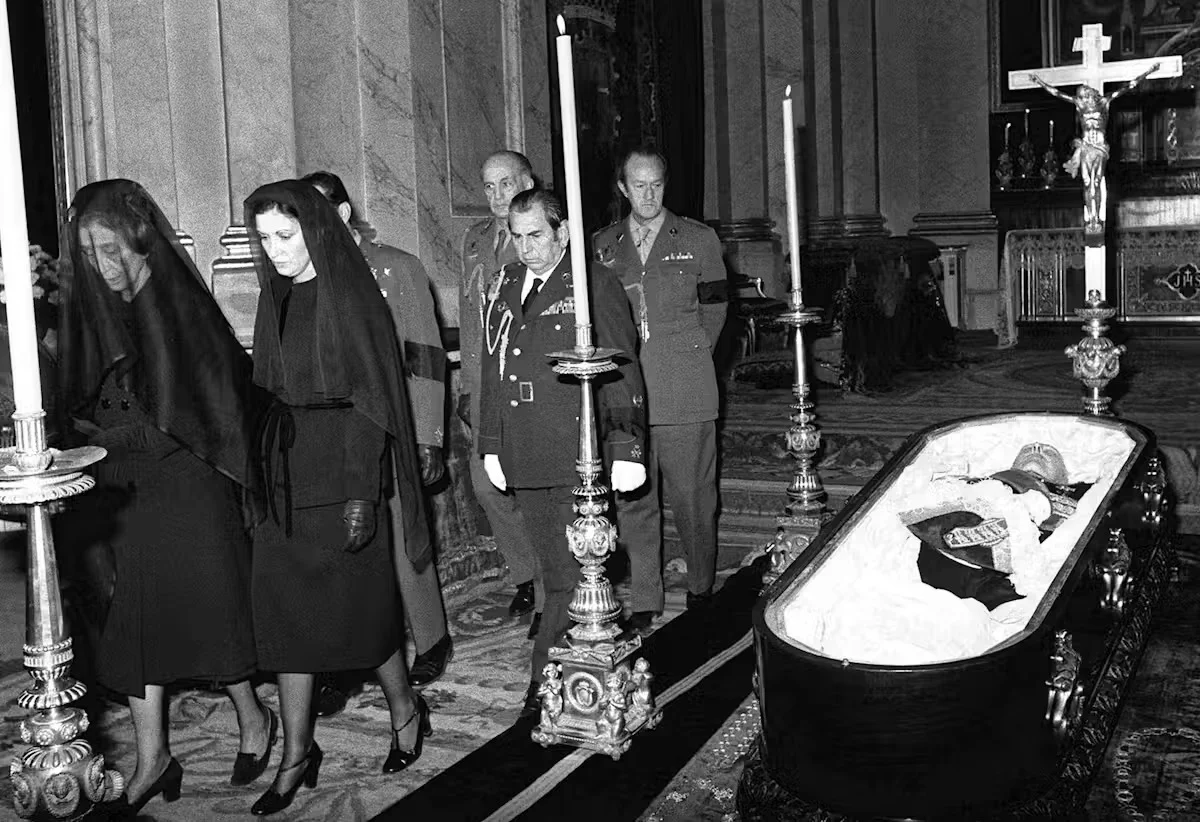
Exactly two years after the “spirit of February 12” was released from the bottle, Navarro drove it back: “All I want is to continue Francoism.” Manuel Fraga, the ambitious former Francoist Minister of Information and Tourism, considered almost an aperturist liberal, took the post of Minister of the Interior and an extremely tough position in Navarro’s cabinet. In addition, he was confident that he would become the next prime minister. During one informal dinner, he told Felipe Gonzalez, leader of the Social Democrats (at that time still banned): “I am the power here, and you are nobody.” (In 1982, Gonzalez will win a resounding victory in the parliamentary elections and become prime minister for a long time, and Fraga will be content with the position of a deputy until 1990, until he receives the post of head of Galicia.)
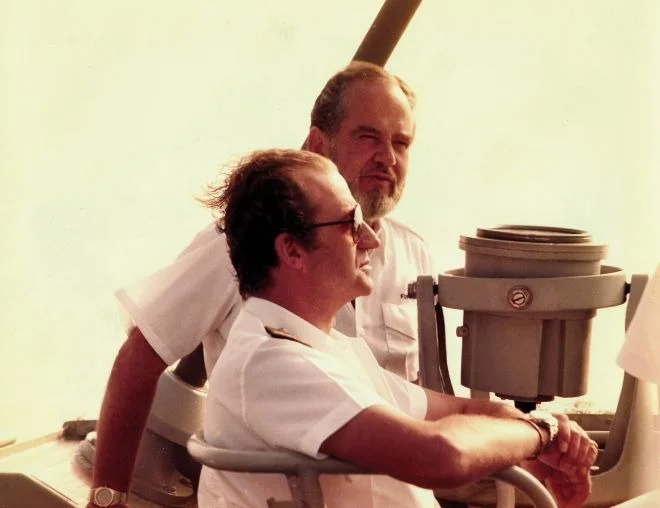
The king did not speak, the king was silent. And this raised suspicions that he remained a Francoist monarch, as Franco intended when the 11-year-old son of the previous Bourbon, the Duke of Barcelona, who lived in exile, was taken in to be raised as the future king. Who knew that already at this time Juan Carlos secretly, through the Romanian Communist Party and a special mission of his close friend (and descendant of Columbus) Manuel Prado y Colon de Carvajal, who even ended up in a Romanian prison for a couple of days by misunderstanding, established contact with the communist leader Santiago Carrillo. The monarch’s plans went very far - he was preparing to legalize the Communist Party of Spain, a significant part of whose leadership lived in exile in France (for some reason Carrillo preferred to spend his vacation under the shadow of another dictatorship - Ceausescu). Juan Carlos' motivation was clear - to be the king of all Spaniards. And this despite Carrillo’s very controversial reputation in the eyes of many Spaniards: it was believed that during the Spanish Civil War, as a young communist, he participated in organizing the mass execution of prison inmates in the town of Paracuellos de Jarama near Madrid, suspected of having links with the Francoists, in the fall of 1936.
Monarchism in communist style
Both “Don Santiago” and Gonzalez accepted the rules of the game, understanding that Spain is not Portugal, here the exit from dictatorship can and should take place gradually, in a legal way, which required, in turn, the legalization of communists and socialists, but also a very cautious attitude towards the army: a specific phenomenon - golpismo, readiness for coups - has not been canceled. The leaders of the communists and socialists played along with the king and the Prime Minister Adolfo Suarez, appointed by him 50 years ago, in July 1976 (he immediately removed from the cabinet the full-length portrait of a caudillo that he had inherited from Navarro; in an interview with journalist José Luis de Vilallonga, the king said that he chose Suarez “because he was a young modern man, because he came out of Francoism, and they could hardly suspect him a person ready for radical changes that are unacceptable for certain circles of our society").
Carrillo, who had a very flexible backbone, but also a powerful political instinct, promised to support the flag and the monarchy, and Juan Carlos helped the Communist Party, which also turned out to be not too dangerous - in the parliamentary elections the Communists received a little more than 9% of the votes, and in 1982 they were completely defeated, which cost “Don Santiago” the position of Secretary General.
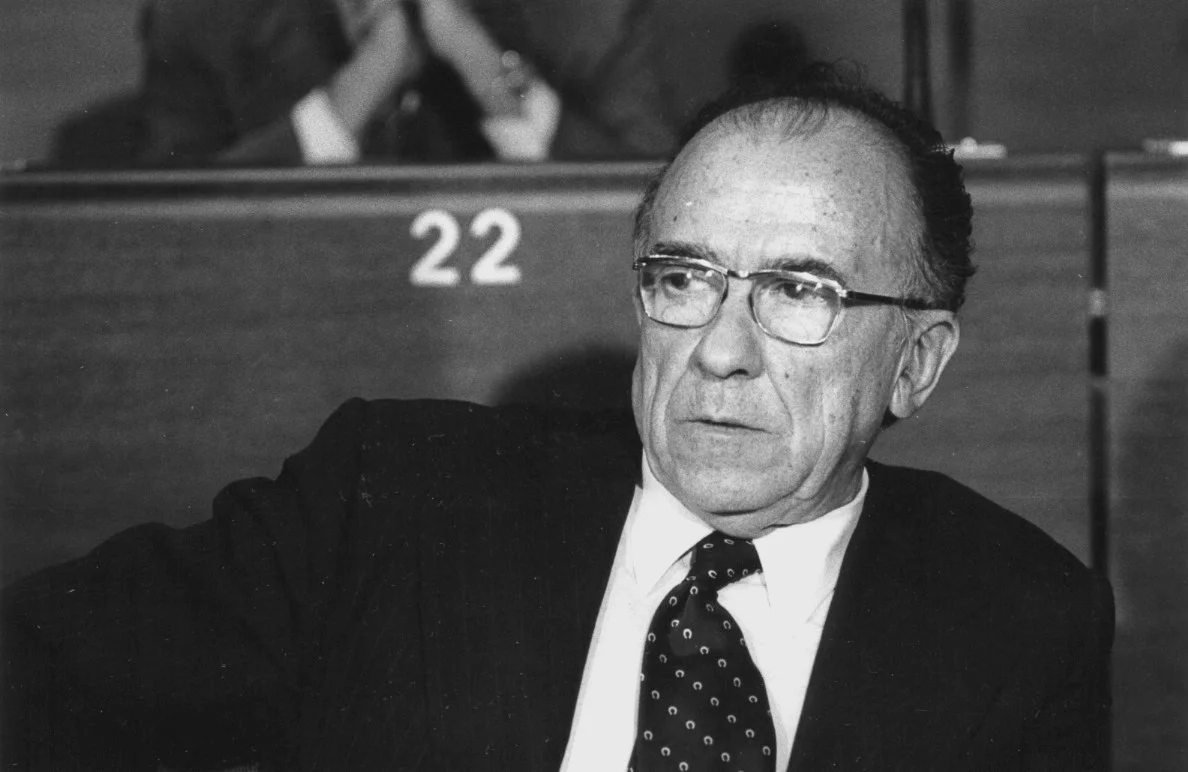
Carrillo became a convinced “Juancarlista,” and the monarch made fun of him - they say, you need to rename the PCI the Royal Communist Party of Spain. This is the scope - from Stalin, with whom Carrillo had the opportunity to communicate, and Mao from Ceausescu to Juan Carlos. He, like Suarez and Gonzalez, behaved courageously during the coup attempt on February 23, 1981, when gendarmerie Colonel Antonio Tejero held them and other government officials and Cortes deputies at gunpoint, and in Valencia General Milan del Bosc brought tanks into the streets. It was then that the formal position of the monarch as the supreme commander and king of all Spaniards, who tried not to irritate the Francoists and be friends with the army commanders, came in handy - with his nightly address to the nation and commands to the generals, he stopped the rebellion. If Spain during the transit period had not been a monarchy, but a republic, if the king had not been a real army officer, popular among the military, the coup might have been successful.
The involvement of all political forces in the transit under the “roof” of the king naturally facilitated the transition to democracy, despite the persistence of two serious obstacles - that same golpismo and Basque terrorism. Juan Carlos and Suarez resolved the most important problem inherited from Francoism - regional autonomies, and above all in Catalonia. And as in the case of Carrillo, the main role was played by a personal factor: the co-authors of the transit, under personal security guarantees, returned from many years of emigration the already very elderly, but symbolizing the dignity of the Catalans, the former head of the province, Josep Tarradellas (the Barcelona airport is now named after him, just as the Madrid airport is named after Suarez). This was a brilliant move, which made it possible to once again indicate the irreversibility of the movement from Francoism to democracy.
The transit was also a change of generations: the king was born in 1938, Suarez was born in 1934, Gonzalez was born in 1942. Juan Carlos and Adolfo Suarez were quite close - while still heir to Franco and at the same time to the throne, the future monarch helped promote the Falangist bureaucrat to the position of head of Spanish television, and he showed his comrade on the silver screen in the best possible way. Due to their age, none of them took part in the civil war, which was also important for their reputation. Many representatives of the Spanish elite, like Suarez, were members of the Catholic organization Opus Dei, and, as a rule, they were mainly technocrats or supporters of greater openness of Spain, which did not prevent them from holding, for example, ministerial posts in various Francoist governments or positions in the party in power (again, like Suarez). There were no other career ladders in the sclerotic and rigid system of Francoism.
Returning Democracy
Torcuato Fernandez Miranda, the king's mentor, who eventually led the Cortes General until the democratic elections, supported the king in his caution and gradualism: “Your Highness should not worry. Take an oath of allegiance to the principles of the Movement, which we will then gradually change one by one”; in dismantling Francoism we must go “from law to law.” The technology worked, and its highest achievement was the new Constitution of democratic Spain, adopted in December 1978 in a national referendum after the dismantling of Franco legislation (the political reform law of December 1976, which, among other things, envisaged the democratic formation of a bicameral Cortes; the dissolution of the Falange; the legalization of banned parties and trade unions) and the parliamentary elections of June 1977. The reconciliation of political and social forces was secured by the Moncloa Pacts of October 1977 (as they say, do not try to repeat it: Yeltsin’s “Treaty of Social Accord” of April 1994 did not work as successfully as the pacts in Spain).
Characteristically, during the same period, the Constitutions of Greece (1975) and Portugal (1976) that emerged from the dictatorships were prepared and adopted. And here is the result of constitutional changes in Spain - a “parliamentary monarchy”: “Spain is a social, legal and democratic state, the highest values of which are freedom, justice, equality and political pluralism.” (One can compare this provision with the Greek Constitution of 1975: “Respect and protection of the human person are the primary duties of the state.”) “Political parties, in accordance with the principles of political pluralism, compete in the formation and expression of popular opinion.” Chapter two is just like in the 1993 Constitution of the Russian Federation: “Rights and freedoms.” They are approximately the same in democratic Constitutions - precisely because “they must be interpreted in accordance with the Universal Declaration of Human Rights and international treaties and agreements on these matters that have been ratified by Spain.” These are the very universal, or “destructive liberal rules, established by no one knows who,” which are so disliked in Russia today by those who interpret the concept of “the foundations of the constitutional system” in a very specific way.
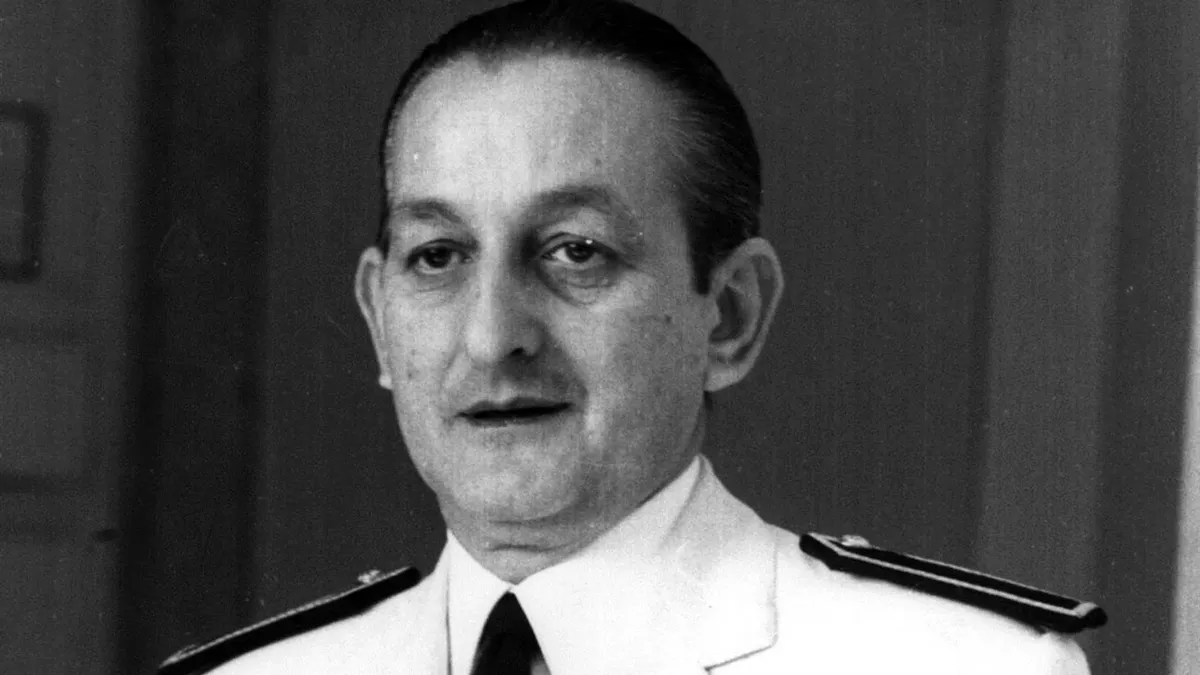
New Spain solved the problem of religious freedom, radically changing the traditionalist “spiritual and moral” approach to this issue of Francoism. And he demanded “obedience to the law of God in accordance with the teachings of the holy Roman Catholic Church, which is the only correct one.” (Almost Leninist logic: “Marx’s teaching is omnipotent because it is true.”) The constitution established genuine federalism (national-territorial autonomies), as well as linguistic freedom - “the own languages of the communities” (for example, Catalan, Valenciano, Galician, Bascon) were declared to be as official as Castilian. After four decades of dictatorship, free elections themselves were an absolute novelty - under Franco, unicameral Cortes were formed on the principle of corporatism, from representatives of “organic units” (like “vertical trade unions”), and the electoral qualifications for elections from the provinces were limited to heads of families and married women.
The king was declared “the guarantor of the proper functioning of state institutions,” but nothing more. It was this duty that Juan Carlos fulfilled on February 23, 1981, when far-right conspirators tried to seize power by blocking the Cortes and members of the government.
The bunker lost the battle for Spain. Political life calmed down somewhat. Veterans of the anti-Franco struggle were even slightly nostalgic for their past activism, ironically remarking: “We lived better against Franco” (a parody of the Franco phrase “We lived better under Franco”).
We must give credit to both the moderate part of the post-Franco elites, who wanted to shed the ballast of the past, and the counter-elites who returned to the legal political field - they behaved responsibly. Transit was ensured not by any one political force, opposition or pro-government, but by a conglomerate of movements and parties competing, including in fair elections.
The main protagonists of the transit, along with politicians, the prime minister and the king, were the voters, what was called “the people” in the Constitution. He turned out to be perfectly prepared for democracy and did not need any paternalistic tutelage in order to elect a capable parliament.
When the coup attempt happened, three million people demonstrated in support of democracy. The same people (or almost the same ones) who lived for many years under the tutelage of an ideologized archaic clique and under the control of 11 secret services came out en masse for a decisive exit from the dictatorship, from the Bunker. There is a return of totalitarianism, and there is a return of democracy - the Spaniards returned to it quickly and naturally, as if four decades of ultra-conservative tyranny had never happened.
Maybe this is not an exclusive property of the Spaniards (Portuguese, Greeks, Italians, etc.), but, in principle, a feature of any social organism striving for a peaceful and fruitful life?
This material was published in the twenty-first issue of Novaya Gazeta. Magazine". You can buy it in the online store of our partners.