
Translated material
Not a backstory
Grigory Gukovsky and the birth of the science of Russian literature of the 18th century
Russian literature of the 18th century has long been considered a boring threshold to the Pushkin period. Grigory Gukovsky was the first to present it as an independent era with its own internal logic: he created an entire scientific school and in his short life managed to change the idea of the development of our literature. Sergei Vorobyov talks about his path from formalism to historical and literary synthesis, his main books and students, among whom was Yuri Lotman.
All of us, since February 24, 2022, have found ourselves in the face of advancing barbarism, violence and lies. In this situation, it is extremely important to preserve at least the remnants of culture and support the values of humanism - including for the sake of the future of Russia. Therefore, the editors of Gorky will continue to talk about books, reminding our readers that there is still a place for thought and fiction in the world.
There are scientists whose names are firmly inscribed in textbooks, but are hardly heard outside of them. Grigory Aleksandrovich Gukovsky is precisely such a case: specialists in Russian literature of the 18th–19th centuries know him as a figure of primary importance, almost fundamental, while the general reader is unlikely to have encountered this name except in a footnote or bibliographic list. Meanwhile, we are talking about a researcher who literally created a scientific discipline - or, more precisely, returned to it a subject that it seemed intended to bury forever under the condescending label of “false classicism.”
Gukovsky lived for forty-seven years—not long by any standards, and not long at all by the standards of his academic career. During a quarter of a century of active work, he managed to write a textbook, which became the first systematic course on 18th-century literature in Soviet science, found a research group, the collection of which is still published to this day, educate several generations of students, among whom was Yuri Lotman, and build a grandiose typological scheme for the development of Russian literature, which he did not manage to complete. The arrest in 1949 and death in April 1950 put an end where, according to the plan, there should have been an ellipsis.
To restore the appearance of this scientist means to tell not just about the fate of one person, but about how in Soviet science of the twenties and forties a serious attitude was born to an era that was usually considered either boring, or politically dubious, or both.
Odessa, Petrograd, State Institute of III: formation at the crossroads of schools
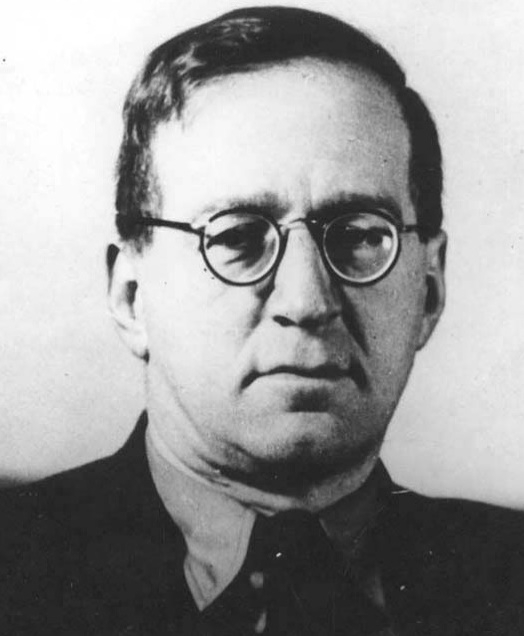
Gukovsky was born in Odessa in 1902, but this remained only a fact of birth: his father, a prominent engineer, moved to St. Petersburg long before his sons were born, and the future scientist visited Odessa only on vacation. He studied at the St. Petersburg gymnasium - together with the grand dukes - and in 1923 he graduated from the Faculty of Social Sciences of Petrograd University. So the biographical origins of his scientific interests should be sought not in Odessa, but precisely in St. Petersburg, where he spent his childhood and youth.
Petrograd in the early twenties was a special place. The revolution reshaped the institutional landscape, but did not destroy the intellectual environment: on the contrary, for some time a strange, almost hothouse space emerged in which the old academic school and young radical researchers existed side by side, argued, published collections and created what would later be called one of the most fruitful periods in the history of Russian humanities. The center of this ferment was the State Institute of Art History - SIHI, an institution that united under one roof Viktor Zhirmunsky, Boris Tomashevsky, Boris Eikhenbaum, Yuri Tynyanov, Vladimir Propp and many others. It was here that the formal school fully manifested itself - a direction that proposed viewing literature primarily as a system of techniques, as a “specially organized language,” to use the formulation of Roman Jakobson.
Since 1924, Gukovsky has been a researcher at this institute. He was twenty-two years old, full of energy and, apparently, even then, distinguished by that assertiveness that his later colleagues would describe as “bold” and “bold.” Formalism is not alien to him: the first works were written precisely under his influence, with characteristic attention to the “independent existence of techniques”, to the structure of a separate poetic fact. Interest in the 18th century, awakened during his university years, receives institutional support here: Gukovsky lectures on the history of Russian literature of the 18th century at the Higher Courses of Art History at the institute, and it was during this teaching work that his first scientific ideas were formalized.
The graduate school at the State Institute of Fine Arts brought the young researcher together with people of different convictions and methodological views. Methodological seminars, participation in scientific meetings, reading Marxist literature - all this gradually changed my perspective. One might assume that this was about the usual ideological pressure of the era: they say, the young scientist was simply adapting to the demands of the time. But the testimonies of those who knew Gukovsky personally paint a different picture. His student Georgy Makogonenko recounts the words of his teacher, spoken in a private conversation in the forties: “Formalism collapsed and crumbled because he did not want to understand art as it really is, because in the place of art he substituted emptiness - form, and in place of form - something that really does not exist - device.” The reader will have to decide for himself how sincere Gukovsky was.
“Russian poetry of the 18th century”: the first audacity
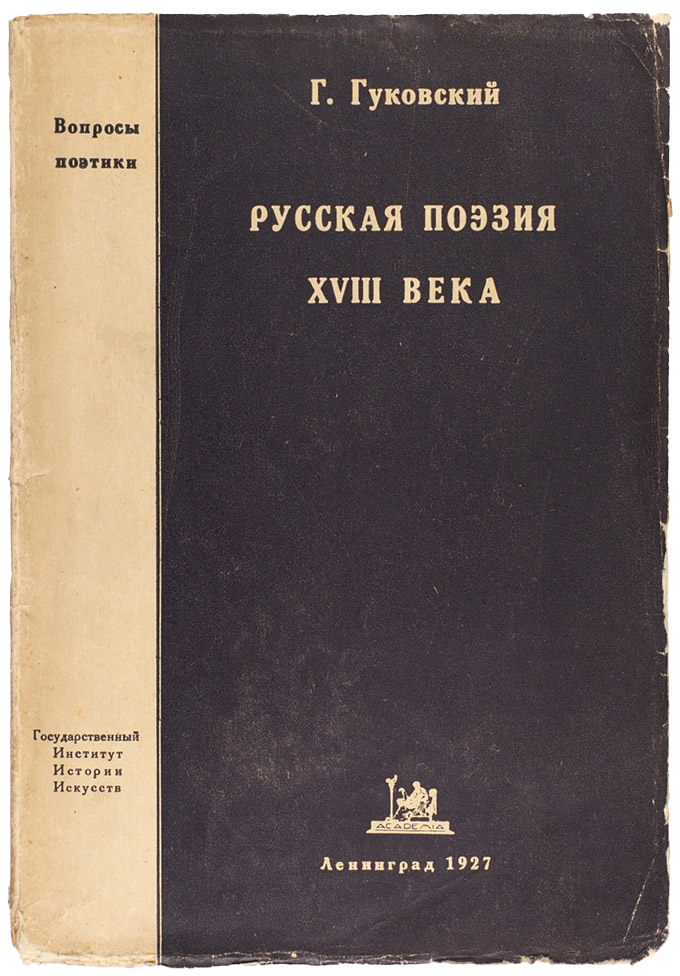
In 1927, Gukovsky defended his Ph.D. thesis, which became his first major book, “Russian Poetry of the 18th Century.” The work was created in 1923–1925, almost simultaneously with the completion of the author’s university education - a rare case when a student and then a beginning graduate student conducts independent research, marked from the very beginning with an undisguised polemical intonation.
The polemic was directed against the popular view of 18th-century literature as a dull and uninteresting imitation of French models. This view had a long history: even critics of the 19th century looked at Sumarokov, Kheraskov, or even the early Derzhavin condescendingly - as conscientious copyists, but lacking independence, who should be studied only as a prehistory of real, great Russian literature. Gukovsky categorically disagreed with this. “One cannot assume,” he wrote, “that the work of Russian poets of the 18th century was a simple imitation of French models.” And he added with that characteristic confidence that makes his texts so recognizable: “The roots of Russian literature of so-called classicism should first of all be sought here; the tradition that had developed over the centuries was strong enough to subordinate elements of foreign influences to its influence and organically merge them together.”
This was not just a historical and literary thesis, but a methodological one. Gukovsky proposed to consider Russian literature of the 18th century not as a periphery of the European process, but as an independent phenomenon with its own internal logic - a phenomenon in which Western influences were processed on the basis of a strong ancient Russian tradition and gave rise to something fundamentally original. The question of the connections between new Russian literature and ancient Russian literature, posed here for the first time with such urgency, has not lost its relevance today.
The research material was the works of Lomonosov, Sumarokov and Derzhavin, and Gukovsky’s special attention was drawn to poetic competitions and the fervent spirit of building secular literature in Russia. It was in the practice of competitions that the young researcher saw evidence that the artistic thinking of the mid-18th century was “classificatory” in nature. Poets thought by norms and authorities, divided genres into strictly demarcated departments and subdivisions; What was important was not individual authorship, but the desire for an ideal solution within a given form. Hence the appeal to general genre themes, repetition of compositional schemes, readiness to translate the same poem several times in search of the “correct” version.
Traces of formalistic passions in this book are obvious: the author here is more interested in the “independent existence of techniques” than in the content side of a work of art. Some colleagues pointed out the fragmentation of the work: Gukovsky described individual “corners” of cultural space without building a comprehensive picture of literary dynamics. This is a fair point. But fragmentation was here, perhaps, an inevitable price for novelty: the researcher was exploring a territory that no one had previously described systematically, and the first step through such territory always looks a little chaotic. Another thing is important: the step was taken, and taken confidently.
Pushkin House and the birth of the “18th century”
By the early thirties, Gukovsky was already a recognized specialist. Since 1929, he has been an employee of the Institute of Russian Literature of the USSR Academy of Sciences, the famous Pushkin House on Vasilyevsky Island. Since 1935 - professor at Leningrad University (now St. Petersburg State University), head of the department of Russian literature, and at various times dean of the philological faculty. Teaching was never a burdensome duty for him: his general courses - “History of Russian drama from Sumarokov to Pushkin”, “Poetry of the first quarter of the 19th century”, “Introduction to the history of Russian literature of the 18th and early 19th centuries” - according to the testimony of listeners, did not repeat the material of published books, but were independent and broad in concept.
But the main institutional achievement of these years was something else. In 1934, at the Institute of Russian Literature, on the initiative of Gukovsky, a Group for the Study of Russian Literature of the 18th Century was created - the first systematic center in Soviet science, purposefully uniting everyone who studied this topic. The task was clearly formulated: “to unite all literary scholars working in the field of studying the 18th century, organize and coordinate their individual research, and direct them along the lines of planned collective work.” Academician A. Orlov became the first chairman of the group, and from 1937 it was headed by Gukovsky himself; together with Pavel Naumovich Berkov, who became a co-organizer and true co-author of the entire enterprise, he turned the group into an all-Union scientific center.
The permanent organ of the group was the collection “XVIII Century” - a publication that quickly acquired high scientific authority. It is characteristic that the viability of this initiative turned out to be tested in the most reliable way - time: the group (later transformed into the Commission) exists to this day, the collection “XVIII Century” continues to be published, and several generations of researchers have already passed through it.
It must be said that the creation of this group had a significance that went far beyond administrative convenience. Before Gukovsky, literature of the 18th century existed in science as if on a “residual principle”: individual works on Lomonosov, Derzhavin, Fonvizin appeared, but there was no single research field. The group at the Pushkin House created this field - and thereby legitimized the 18th century as a full-fledged subject of scientific study, and not just a prehistory to “real” literature. This was not only an organizational act, but also an intellectual one.
"Essays" and textbook: system construction
The second half of the thirties became a time of intense synthesis for Gukovsky. In 1936, “Essays on the History of Russian Literature of the 18th Century” was published, in 1938 - “Essays on the History of Russian Literature and Social Thought of the 18th Century”, and in 1939 - the textbook “Russian Literature of the 18th Century”, the first systematic university course on this topic in Soviet science.
These works are written differently from the book of 1927: a Marxist methodological framework is noticeable in them, and there are frequent references to Marx, Lenin, and in some places to Stalin. This ideological layer may disturb the current reader, and this is understandable. But it would be unfair to reduce the essence of what was done to it. Behind the ideological rhetoric lies serious research work aimed at understanding literature in its organic connection with the historical context. Gukovsky wanted to show how literary movements reflected the moods of different social strata, how the “noble front” of the 1750s–1760s was refracted in Sumarokov’s poetic practice, how the ideas of the Enlightenment, Freemasonry and early democratic movements shaped literary programs - and vice versa.
In these books he revealed to the reader the poet Muravyov, Zhukovsky’s predecessor and teacher, who had remained in the shadows for a long time; summed up the results of the study of Radishchev and raised a new topic - democratic trends in Russian literature and social thought of the 18th century, their connection with the Radishchev tradition. This was not simply a fixation of sociological parallels: Gukovsky always insisted that the analysis of artistic structure and the analysis of ideological content are inseparable. “Style,” he later formulated, “is an aesthetic refraction of the totality of the features of a worldview,” therefore, to understand style means to understand worldview, and vice versa.
The criticism of the sociological bias in these works is justified: at times, the cause-and-effect relationships between the “base” and literary phenomena seem too straightforward, and the complex aesthetic dynamics seem to be flattened into illustrations of social processes. But this limitation was common to all Soviet humanities of the thirties - and Gukovsky himself, as we will see, realized it more clearly than many of his colleagues.
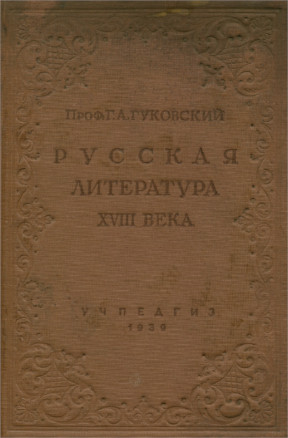
The textbook of 1939 deserves special attention - a book that, despite its “service” genre status, turned out to be a real scientific event. It begins with introductory chapters about Peter’s reforms - and already here one can sense a characteristic feature of Hooke’s writing: his biographies of writers are not a list of events in the spirit of “born/married,” but portraits of living people with tragic destinies. “Sumarokov’s life, poor in external events, was extremely sad. He was a nervous man who reacted sharply to the savagery of morals surrounding him, to the triumphant barbarism in his own class,” writes Gukovsky. For him, it is important to present a literary work not as an abstract object, but to show it in direct connection with life practice.
The textbook also contains a detailed polemic against formalism, presented not in a private conversation, but in a text intended for a wide audience. Gukovsky accused the formalists of the fact that, refusing a serious analysis of content, they reduced the function of the art of words to “decorating life with play” - to the free processing of material, devoid of a semantic dimension. If the formal school, through the mouth of Jakobson, as we wrote above, defined poetry as “a specially organized language,” Gukovsky invariably viewed the art of words as “a specially organized meaning.” The difference is fundamental, and this difference is the essence of his evolution from early works to mature ones.
The maturation of an idea: from the 18th to the 19th centuries
Somewhere at the turn of the thirties and forties, an important shift occurred in Gukovsky’s research strategy. Without abandoning the 18th century - he continued to teach it, edit texts, and participate in the publication of the “Poet's Library” - the scientist begins to think on a larger scale: not in a separate era, but in the entire movement of Russian literature from the 18th century to his time. He wanted to describe this movement as a natural historical process, subject to internal logic.
He formulated this logic in the form of a stage scheme: classicism - romanticism - realism. Each direction, according to Gukovsky, resolved the contradictions of the previous one and at the same time laid the foundations for the next. Classicism mastered the contradictory psychology of the individual, but did it on the basis of abstract rationalism, schematizing it and subordinating the particular to general concepts and classifications. In these abstract constructions, a specific personality disappeared without a trace: the explanation absorbed the explained. This is how a contradiction arose, which romanticism tried to resolve - and resolved radically: it rediscovered the individual personality, absolutizing its subjectivity and declaring the external world only a projection of internal experiences. “Each of the romantic heroes,” Gukovsky generalized, “feels lonely, cut off from the world, and at the same time, each is similar to each other.” A new contradiction arose, the resolution of which was realism, which explained the personality by the objective socio-historical conditions of its life.
The scheme is beautiful and, importantly, productive: it made it possible to read specific texts in a broad historical context, to see in an individual author not an isolated phenomenon, but a link in a large chain. But it also carried the risk of teleology - the idea that the literary process moves towards a predetermined goal, and each previous direction is important only insofar as it “prepares” the next. Later critics would point out this risk—and with good reason.
The idea was grandiose: a series of monographs tracing the path of Russian literature from the 18th century to the present day, should have included books about Dostoevsky, Tolstoy, Chekhov, Gorky. Apparently, this was not the end of the matter. In 1949, work on the series was interrupted by arrest. В апреле 1950 года Гуковский умер в Москве — обстоятельства его последних месяцев остаются до конца не выясненными, как это часто бывает с жертвами позднесталинских репрессий.
Учитель и школа
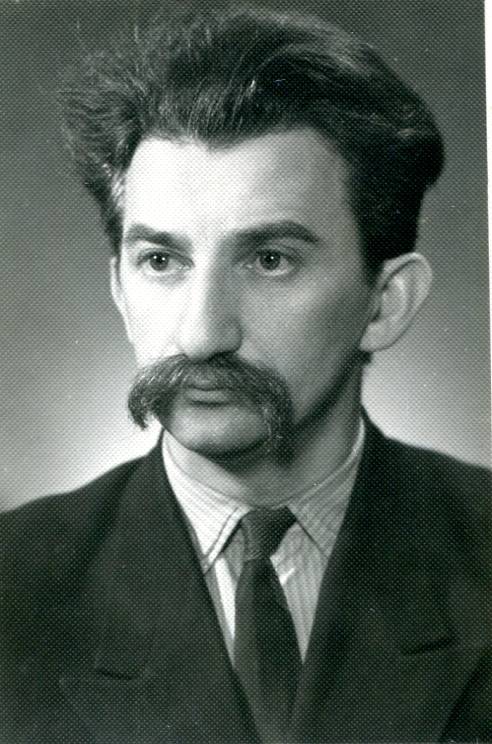
Любой разговор о Гуковском был бы неполным без упоминания о том, что он был учителем — в самом серьезном, не метафорическом смысле слова. Среди его учеников — Георгий Макогоненко, Илья Серман, Александр Западов, Фаина Канунова, Евгений Наумов. И Юрий Михайлович Лотман.
Это последнее имя заставляет остановиться. Лотман — один из крупнейших гуманитариев XX века, основатель тартуско-московской семиотической школы, автор работ, без которых невозможно представить современное литературоведение. Он начинал под руководством Гуковского в Ленинградском университете. Говорить здесь о прямой преемственности было бы упрощением: Лотман пошел своим путем, и путь этот уводил от историко-литературного синтеза в сторону структурной семиотики. Но связь между учителем и учеником прослеживается — прежде всего в том серьезном отношении к художественному тексту как к носителю смысла, которое Гуковский сделал своим методологическим кредо.
Характерно, что именно те годы, когда Гуковский преподавал в Ленинградском университете, — конец тридцатых и сороковые, — стали временем особой концентрации таланта в одном месте. Это не случайность: Гуковский умел создавать вокруг себя исследовательскую атмосферу, в которой работать над сложными вопросами казалось не только возможным, но и необходимым. По свидетельствам учеников, его семинары отличались теми же качествами, что и книги: плотностью мысли, нежеланием останавливаться на полуответах, готовностью идти за идеей туда, куда она ведет, даже если конечный пункт заранее не известен.
Наследие: что осталось и что продолжается
Когда сегодня исследователи открывают очередной том сборника «XVIII век» — а выходит он уже без малого девяносто лет, — они, возможно, не всегда задумываются о том, кому обязаны существованием этого издания. Гуковский не придумал интерес к русской литературе XVIII столетия: до него существовали работы о Ломоносове и Державине, были известны имена Сумарокова и Фонвизина. Но он первым создал системный исследовательский центр, первым написал полный университетский курс по этой эпохе, первым настоял на том, что XVIII век — не «предыстория», а самостоятельный и богатый период национальной культуры, заслуживающий такого же серьезного внимания, как творчество Пушкина или Толстого.
Его научная эволюция — от формализма к историко-литературному синтезу — отражает интеллектуальную историю советской гуманитаристики двадцатых — сороковых годов, со всеми ее возможностями и ограничениями. Те, кто готов видеть в этой эволюции только вынужденный идеологический маневр, рискуют упростить картину. Те же, кто склонен идеализировать его марксистский период, рискуют не заметить, что идеологический каркас временами сжимал живую исследовательскую мысль в не вполне соответствующую ей форму. Истина, вероятно, находится между этими крайностями — и именно с этой позиции стоит читать Гуковского сегодня.
Гуковского стоит читать сегодня не только как исторический источник о том, каким было советское литературоведение в свои лучшие годы, но и как исследователя, чьи наблюдения о природе классицизма, механизмах литературной преемственности и связях между художественной структурой и мировоззрением не устарели.
Его ученики разошлись в разные стороны и создали разные школы. Сборник «XVIII век» продолжает выходить. Вопрос о связях новой русской литературы с древнерусской традицией, поставленный в книге 1927 года, по-прежнему обсуждается на конференциях. А сама идея о том, что русская литература XVIII столетия — не унылая пустыня ложноклассицизма, а динамичная и самобытная эпоха со своей логикой развития, давно стала общим местом, настолько общим, что мало кто помнит, кто именно превратил ее из полемического тезиса в научную аксиому.
Это и есть, пожалуй, лучший возможный итог для ученого — когда его главные открытия становятся столь очевидными, что перестают казаться открытиями. Но это уже совсем другая история — история о том, как знание теряет имя автора и становится просто знанием.