
Translated material
Early Vucic
The Serbian President is ready to leave his post, but is unlikely to give up his role as a political leader

Alexander Vucic. Photo: AP / TASS
At a grand Saturday rally of the Serbian Progressive Party in Belgrade, organized from above and which, according to the Serbian Ministry of Internal Affairs, gathered over 200 thousand people, Aleksandar Vucic finally interrupted the months-long intrigue around his political future, which he himself skillfully maintained. “I will be president for only a few more weeks and then I will resign,” he announced to his supporters, simultaneously announcing early presidential and parliamentary elections, but without specifying their dates; one way or another, elections are expected this fall. Vučić decided to leave office almost a year before the end of his second and final presidential mandate.
The Serbian leader's statement was made against the backdrop of massive anti-corruption protests that have been ongoing in Serbia for more than a year and a half. The political crisis worsened after the tragedy in November 2024, when a canopy collapsed at the Novi Sad train station killed 16 people, sparking a wave of large demonstrations demanding early elections.
The fun begins now.
Over fourteen years, Vučić has cleared the political space around him so thoroughly that today it is difficult to name a person to whom he could transfer power without risk. This is the classic problem of personalist regimes: the leader becomes indispensable not because there are no capable people, but because for decades they were not allowed to grow into independent politicians.
And here a question arises that for Vucic himself is probably more important than the question of a successor. Who, after early elections, will become the guarantor not of Serbian stability, but of his own? Who will have his back if he is no longer president?
Vucic himself made it clear that he is not necessarily going to leave politics. He did not rule out returning to the post of prime minister, a position he already held in 2014–2017. This scenario is possible if the Serbian Progressive Party retains a majority in parliament and forms a government, and a politician loyal to him becomes president. In the Serbian model of power, this would allow Vučić to retain decisive influence on the governance of the country, changing only his position.
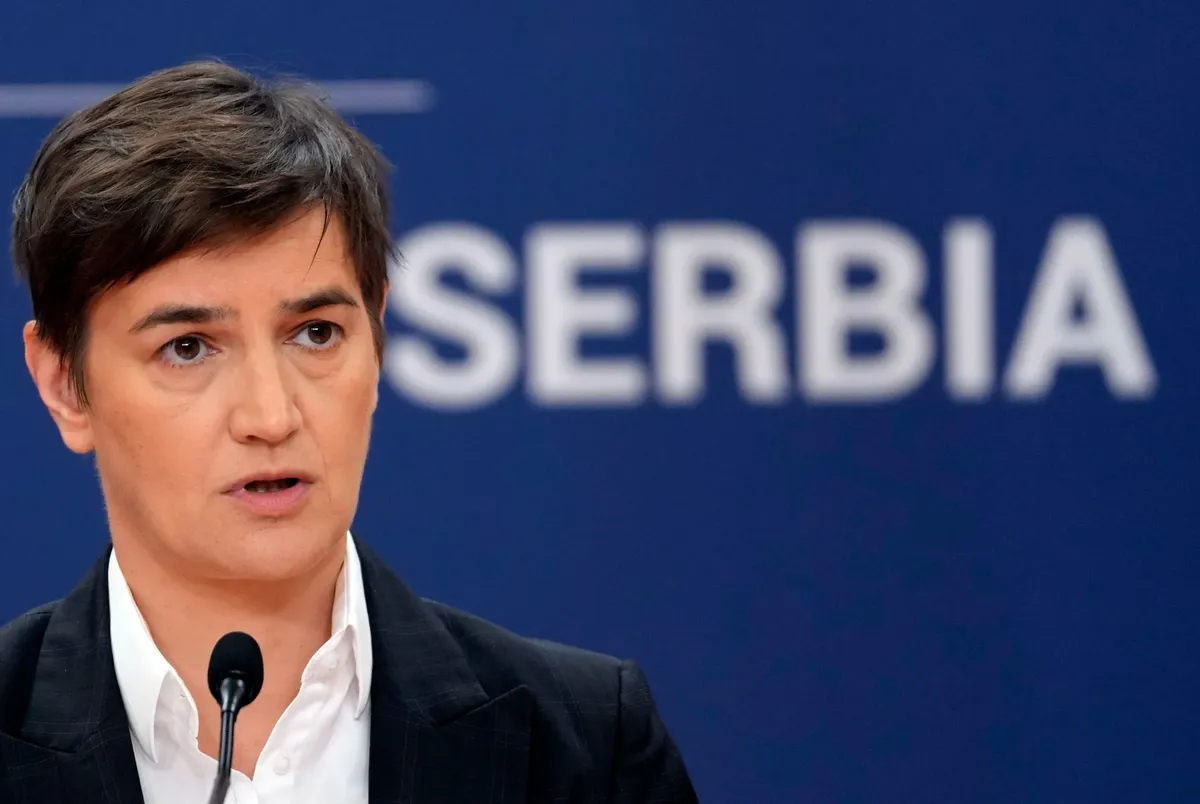
The answer to the question “who after Vucic?” does not exist today. Among the most likely figures are the Speaker of Parliament Ana Brnabic, the Minister of Finance Sinisa Mali, the President of the Serbian Progressive Party Milos Vucevic, who until recently headed the government, and the current Prime Minister Djuro Matsuta. However, none of them yet has independent political weight comparable to the weight of the current leader.
Vucic himself admitted that he is considering “two or three candidates” and is still continuing to “test” them. This may mean that the struggle is not so much between politicians, but between different scenarios for the future of Serbia.
In Brussels, many consider Ana Brnabic to be the most comfortable figure, a politician with extensive experience in negotiations with the European Union and a reputation as a pragmatist. For Moscow, what is important is not so much the name of the future president, but rather the preservation of the system itself: the best option there is considered the formula “Vučić is prime minister, a loyal president is head of state.” It is this that would allow Belgrade to continue its usual balancing act between East and West.
Perhaps this is precisely the main result of the era of Vuchi, as he is popularly called. He built a system in which it was not the presidential institution that was indispensable, but the president himself. And now Serbia must answer the question that inevitably arises after any long personalist rule: who can replace the man who for many years did not allow anyone to emerge who could replace him?