
Translated material
LDPR: anti-migrant program before the State Duma elections
On February 8, 2024, DOXA was added to the register of “undesirable organizations.”
If you are in Russia or planning to return to it, you cannot repost our materials on social networks, link to them or publish quotes.
Read more about what is and is not possible in the cards .
On July 22, the LDPR presented a new anti-migrant program at the forum “Pillars of the LDPR’s migration policy: zero tolerance for crime and the Russian language as soft power.” The party leadership announced a package of initiatives that it intends to submit to the State Duma in the near future. Among the proposals are the transition to a paid basis for the education of migrant children in high schools, colleges and universities, a ban on the entry of families of migrant workers, strengthening control over foreigners and expanding the grounds for deportation.
What did they talk about at the forum?
LDPR leader Leonid Slutsky said that the party stands for the principle of “zero tolerance” for any offenses by migrants. According to him, the stay of foreigners in Russia should remain “a privilege, not an unconditional right,” and any serious violations of the law should inevitably end in expulsion from the country.
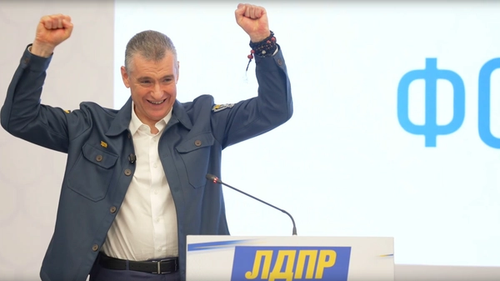
Leonid Slutsky
Screenshot DOXA
“No study in universities and the system of secondary vocational education at the expense of the budget. Today we need to save every penny of the budget for our own people, for the citizens of Russia. Anyone who has committed a crime or systematically violates the law should be immediately expelled,” Slutsky said.
In addition, the leader of the LDPR proposed transferring to a paid basis the education of migrant children in grades 10–11, institutions of secondary vocational and higher education, and the costs of additional classes in the Russian language to be borne entirely by foreign families. Another key demand of the party was a complete ban on the entry of families of migrant workers. According to Slutsky, the LDPR continues to adhere to the principle of “came, worked, went home.”
First Deputy Chairman of the State Duma Committee on Security Andrei Lugovoi proposed introducing mandatory pre-entry checks for foreigners. In his opinion, identification, collection of biometric data, verification of entry purposes and professional competencies should be carried out even before crossing the Russian border.
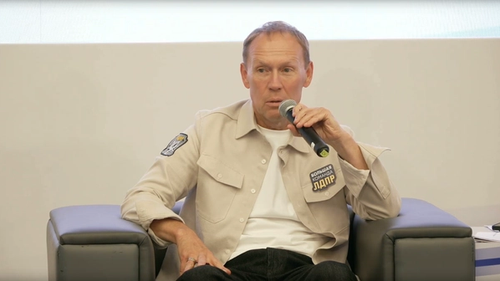
Andrey Lugovoi
Screenshot DOXA
“It’s cheaper not to let a threat in than to look for it inside the country,” Lugovoi said.
Lugovoi devoted a significant part of his speech to the alleged connection between migration and the activities of foreign intelligence services. In particular, he called the head of the SOVA research center, Alexander Verkhovsky, “a traitor who is engaged in propaganda for the importation of migrants to Russia.”
Andrei Lugovoi is known not only as a State Duma deputy. The UK considers him one of the participants in the murder of former FSB officer Alexander Litvinenko, who was poisoned with polonium-210 in London in 2006. Lugovoi himself denies any involvement in the murder.
In recent years, Lugovoi has also consistently sought repression against independent media. In January 2024, the Prosecutor General's Office recognized DOXA as an “undesirable” organization. After this, Lugovoi and the head of the State Duma Security Committee Vasily Piskarev publicly stated that it was their appeals that became one of the reasons for this decision. Previously, Piskarev sought recognition of DOXA as an “extremist” organization, and Lugovoi twice accused the publication’s editor, Maria Menshikova, of “justifying terrorism.”
Who else performed?
The head of the LDPR Youth, Marat Shipov, proposed canceling state scholarships for foreign students. In his opinion, the current system is unfair: Russian students receive payments depending on their academic performance, while foreigners can apply for government support regardless of this.
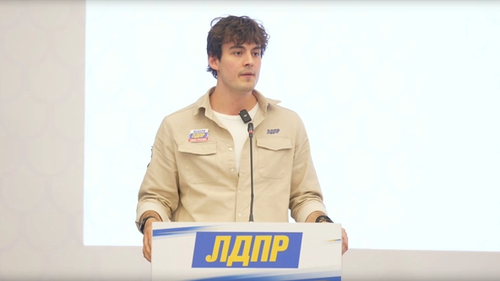
Marat Shipov
Screenshot DOXA
DOXA also found out that Shipov is a member of dozens of telegram chats associated with the LDPR, law enforcement agencies and militaristic initiatives. On his VKontakte page, he subscribes, in particular, to the community of the far-right philosopher Alexander Dugin.
The last speaker at the forum was Evgeniy Enenkov, deputy coordinator of the St. Petersburg branch of the LDPR and deputy of the municipal council of the Shuvalovo-Ozerki municipality.
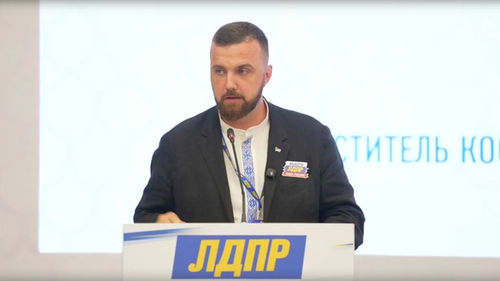
Evgeny Enenkov
Screenshot DOXA
DOXA established that Enenkov is a member of the chat room of the St. Petersburg branch of the Russian Community, as well as numerous chat rooms associated with support for the war against Ukraine and far-right organizations. On VKontakte he is subscribed to the communities of the ultra-right movement “Forty Sorokov”, “Rus”, “Union of Slavic Fighters” and a number of other nationalist publics.
In addition, DOXA found in archival databases records about a person with the same name and date of birth, containing information about a criminal record under Article 166 of the Criminal Code of the Russian Federation Article 166 of the Criminal Code of the Russian Federation - theft of a car or other vehicle without the purpose of theft and an administrative offense under Article 20.1 of the Code of Administrative Offenses of the Russian Federation "Petty hooliganism" . At the same time, the editors do not have official confirmation that these records refer specifically to the LDPR deputy.
The LDPR information campaign began even before the forum
A few hours before the start of the forum, the LDPR published a post dedicated to State Duma deputy and deputy head of the party’s central apparatus Maria Voropaeva. The publication claimed that after speaking out about immigration policy, she received threats from migrants in Instagram comments. The post was later deleted, but the repost was retained by pro-government blogger Vsevolod Voronin.
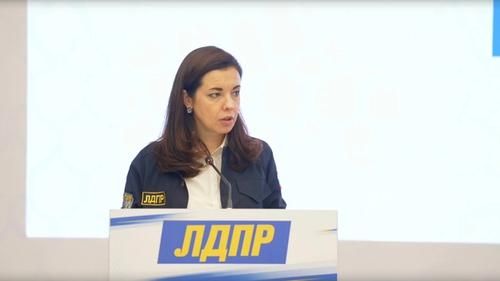
Maria Voropaeva at the LDPR forum, July 22, 2026
Screenshot DOXA
DOXA checked several accounts that, according to the LDPR, belonged to migrants and left threats against Voropaeva. Most of them turned out to be practically empty profiles with no signs of real activity and looked more like bots than accounts of real users.
The publication ended with the announcement of the LDPR forum on migration policy, which was supposed to begin a few hours later.
Context
At the forum, representatives of the LDPR repeatedly called their party the main initiator of the tightening of Russian migration policy in recent years. Director of the Center for Legislation Development Alexander Fedotov said that since 2024, LDPR MPs have introduced 52 bills on migration. According to him, 17 of them have already been adopted, about 20 more are under consideration by the State Duma.
Fedotov also stated that the party intends to seek further restrictions on social benefits for migrants, consolidating the priority of Russian citizens in employment, expanding the powers of regions in the field of migration registration, introducing financial responsibility for employers for foreign workers and a complete ban on families of migrant workers living in Russia.
The forum took place less than two months before the State Duma elections, which will take place from September 18 to 20. The day before, the Central Election Commission registered the LDPR federal list of 246 candidates. Chairman of the Central Election Commission Ella Pamfilova presented certificates to party leader Leonid Slutsky, Maria Voropaeva and Viktor But.
In recent months, the LDPR has noticeably increased its anti-migrant rhetoric, but opinion polls do not record a significant increase in its support. According to VTsIOM, over the past six months the party's rating has fluctuated between 8-12%, reaching a maximum of 11.7% at the end of May, after which it dropped to 8.2% by mid-July. The data from the FOM show similar dynamics: they also do not record a steady increase in support for the LDPR.