
Translated material
Country. Cardboard. And I
A Novaya correspondent went to an independent state created by a group of enthusiasts on Chistye Prudy to find his home in a box
"Theater of the Absurd" on the way to the red stagecoach
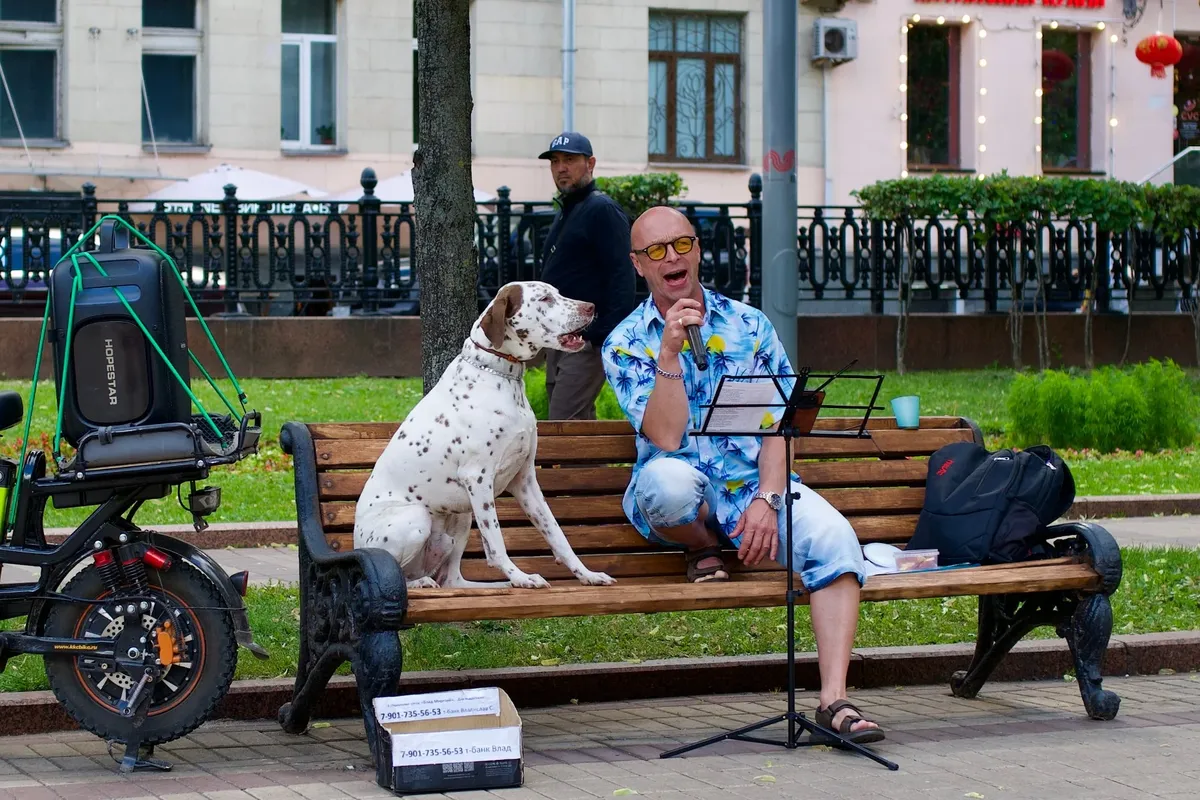
I get off the tram at Chistye Prudy and see: next to the monument to the Kazakh poet Abay Kunanbayev, a man in a blue shirt in the Hawaiian style sings a duet with a Dalmatian dog sitting next to a mammoth song of thieves' chanson - the Butyrka group. On the chorus of “Certificate in the Blood,” he brings the microphone closer to the dog’s muzzle, and the dog’s barking echoes throughout the entire square, along with the lines about the convoy. Ladies in summer dresses and earrings are touched, gasp and run to cuddle the Dalmatian.
The newlyweds take pictures at the Kazakh embassy. Artists paint summer landscapes and flowers on easels. Along Chistoprudny Boulevard, people wander from one stage to another: from the opera to a beautifully trashy interpretation of Chekhov’s “The Wedding.” At one of the sites, children and their parents participate in an educational quiz:
— Aziza, what is “robbery”? — the presenter previously listed three options and is now waiting for an answer from the eight-year-old girl who raised her hand.
- Second...
“And this is what we have...” her eyes look up at the huge screen. — Assault with the aim of stealing someone else's property! Bravo, Aziza!
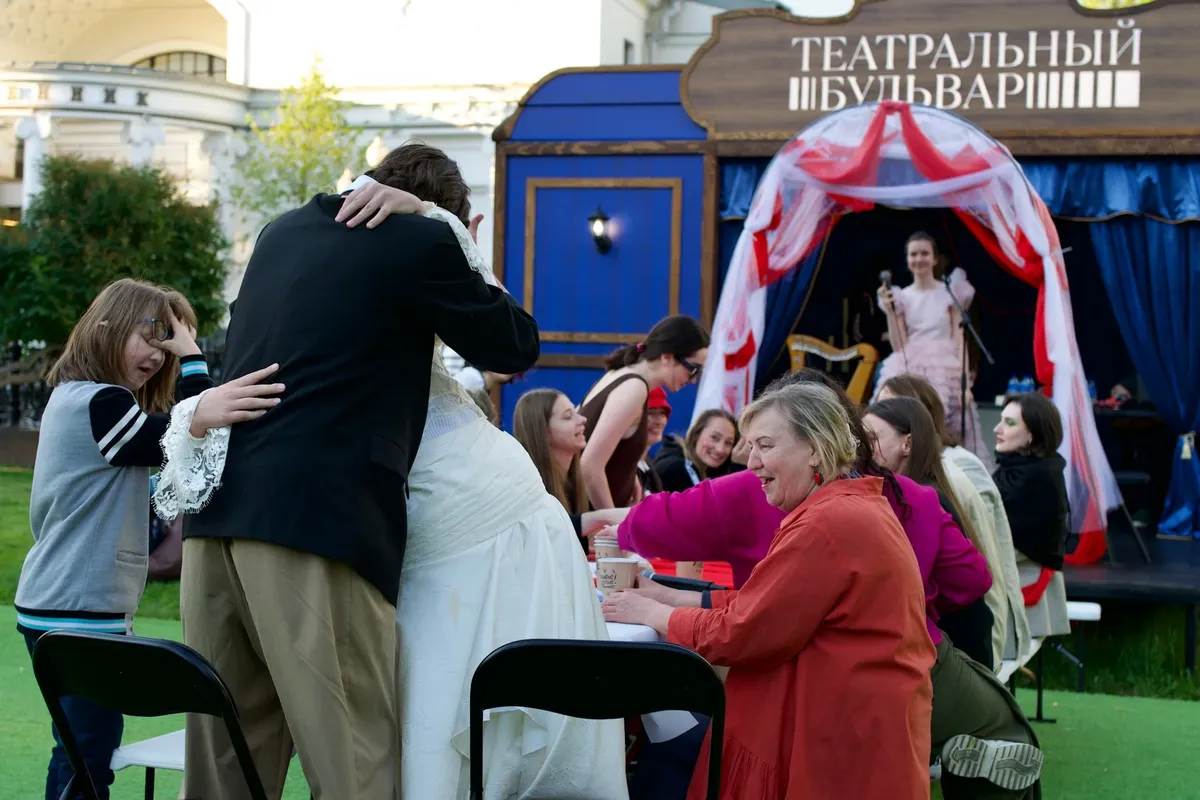
Since the beginning of summer, Moscow has been joking, dancing and organizing all sorts of clownery. The culprit for it all is the third season of the “Theater Boulevard” festival, which will continue all summer. Every day, professional groups perform on city boulevards, embankments and parks - both with classical plays, musicals, ballet, and... let's say, with “experimental performances”.
One of these is “Cartonia” - an imaginary country built to the left of the pond, next to a red stagecoach equipped as a chamber stage.
The international art project "Cartonia" is an event agency that organizes holidays and festivals around the world. To stand out from ordinary agencies, they came up with their own unique world - a state without territory or borders, founded by the master of theatrical performances Sergei Korsakov together with like-minded people in 2007. When they come to a city to hold a festival, they “materialize” “Cardboard” there and attract ordinary people to make anything that comes to their mind from cardboard.
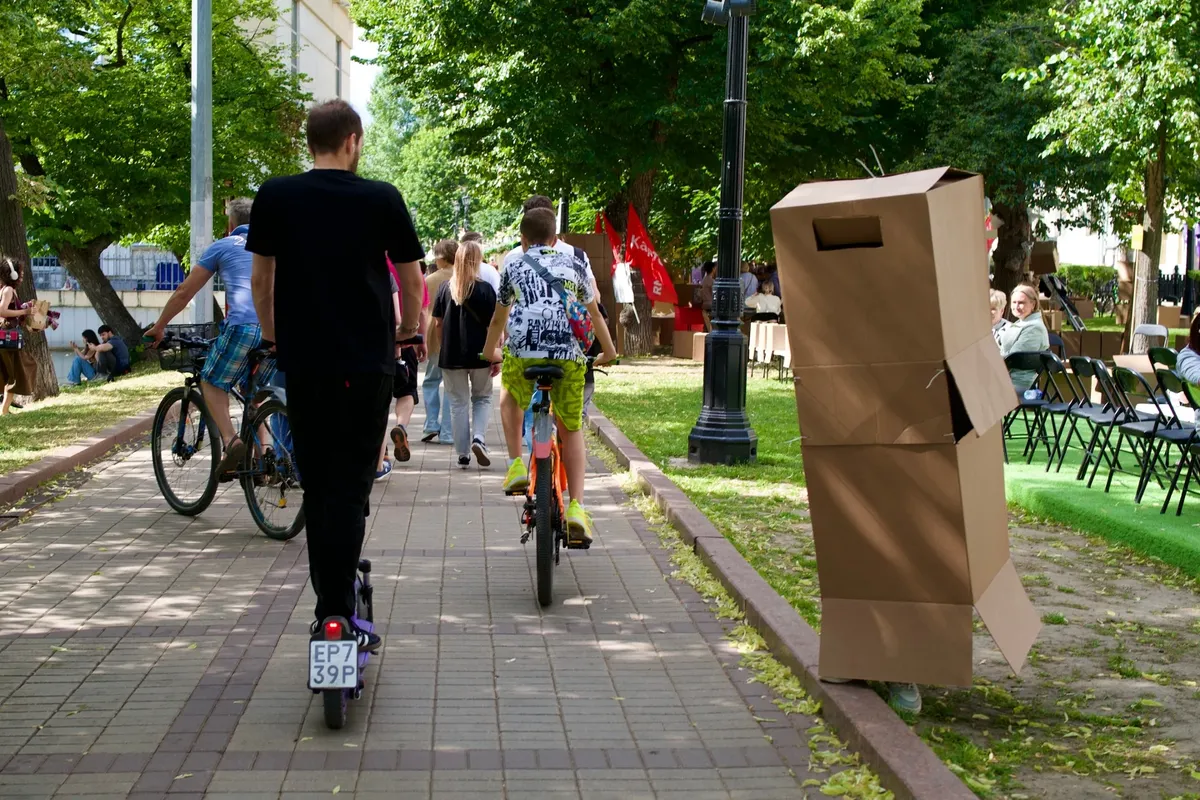
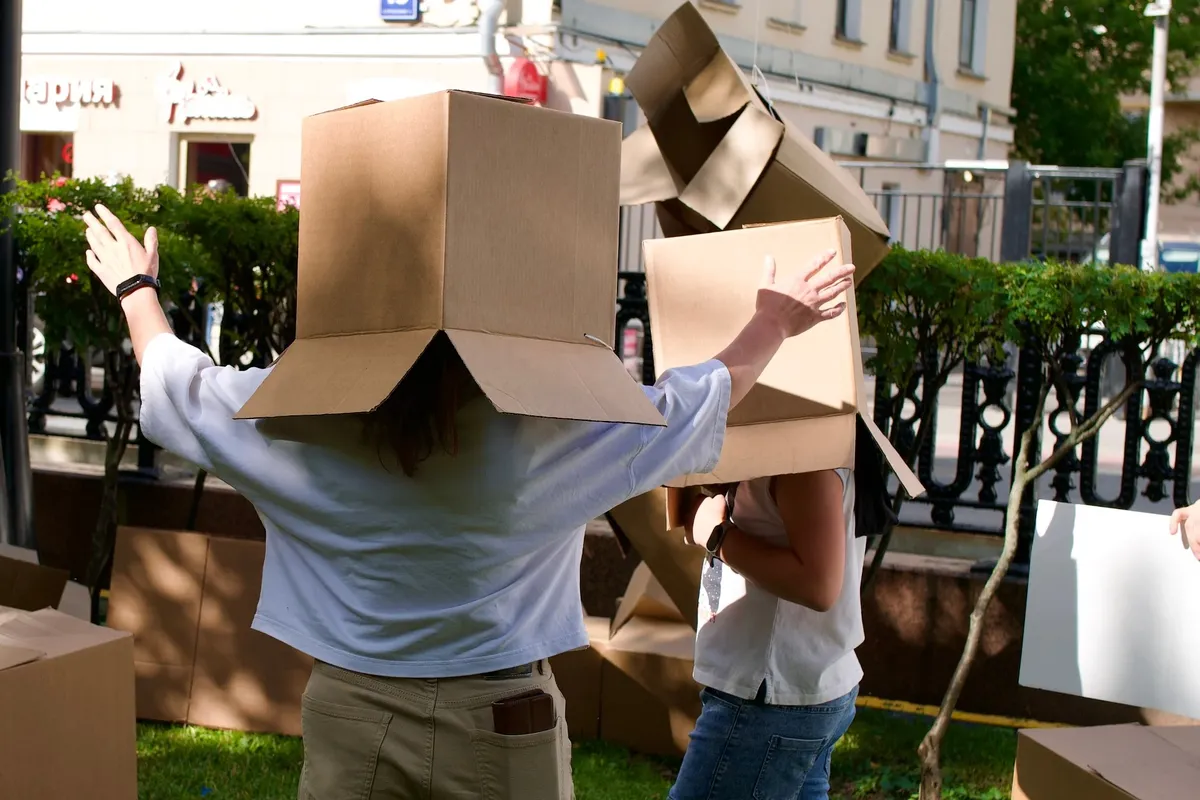
On the way to Cardboard, I notice a man in a two-box suit walking alone. One is worn on the head, the second hides the torso and legs. There are cutouts for the arms on the sides, and a small window for the eyes at face level. But even these I can hardly see: the box-man covers them with a translucent fabric, apparently to remain incognito.
Korobka's name is Arina, she works as a teacher in primary school, and is now conducting an experiment:
“I set myself the following task: to understand what the tree feels—it’s not very easy to hear. “So now I’ll stand for 15 minutes, as if in an invisibility cloak, and look at the duck house.”
Behind it stands a whole city made of cardboard. And an idea.
State without borders
“Cartonia” is separated from Moscow only by a large cardboard door with the inscription “Entrance”, standing on the lawn opposite the pond. To the right of it is the same - only “Exit”. And that's it, no more fences. Technically, you can get to Cardboardia by simply stepping over the curb, but it’s not that simple. Compliance with the rules is closely monitored.
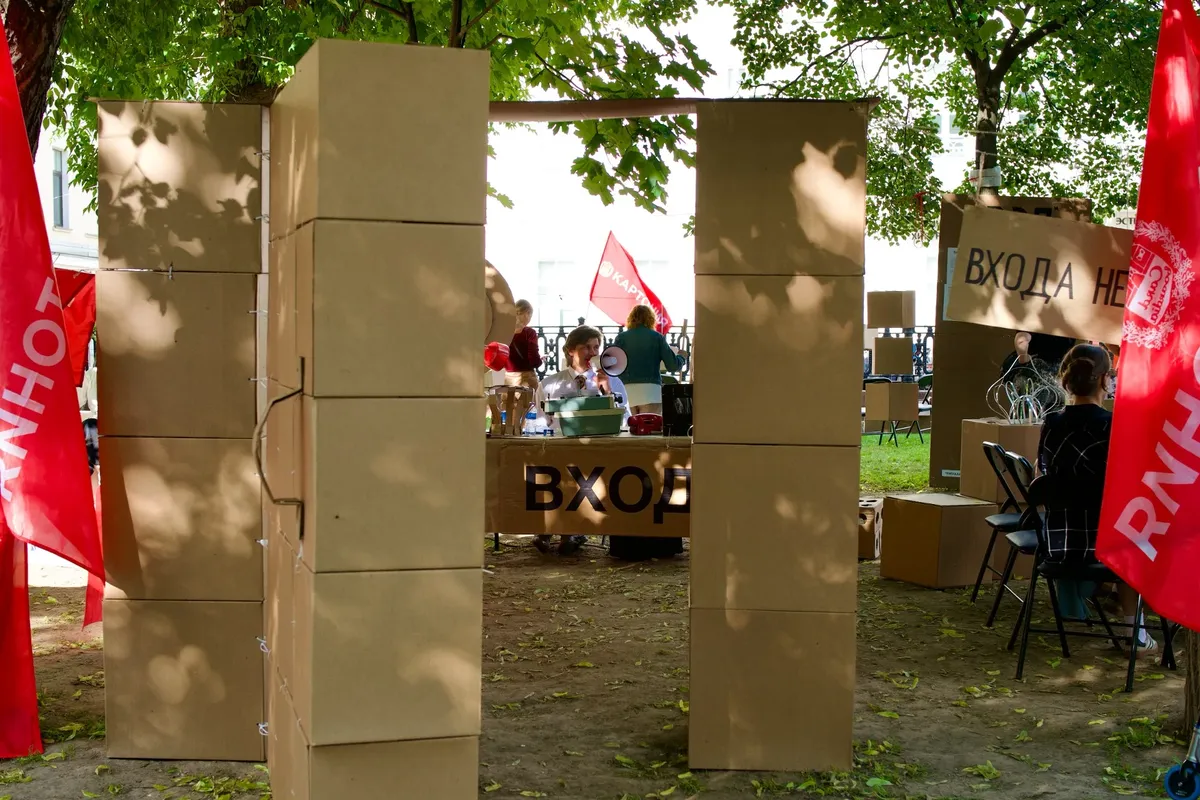
- Girls, stop! Come back! - a man shouts at the makeshift reception desk to two curious grandmothers who have mixed up the doors. — It says “Entrance” there! Friends, how can you confuse the entrance and exit! This is the basic value of any state!
“We’ll go better...” the grandmothers turn around, showing their dissatisfaction, and go out the right door.
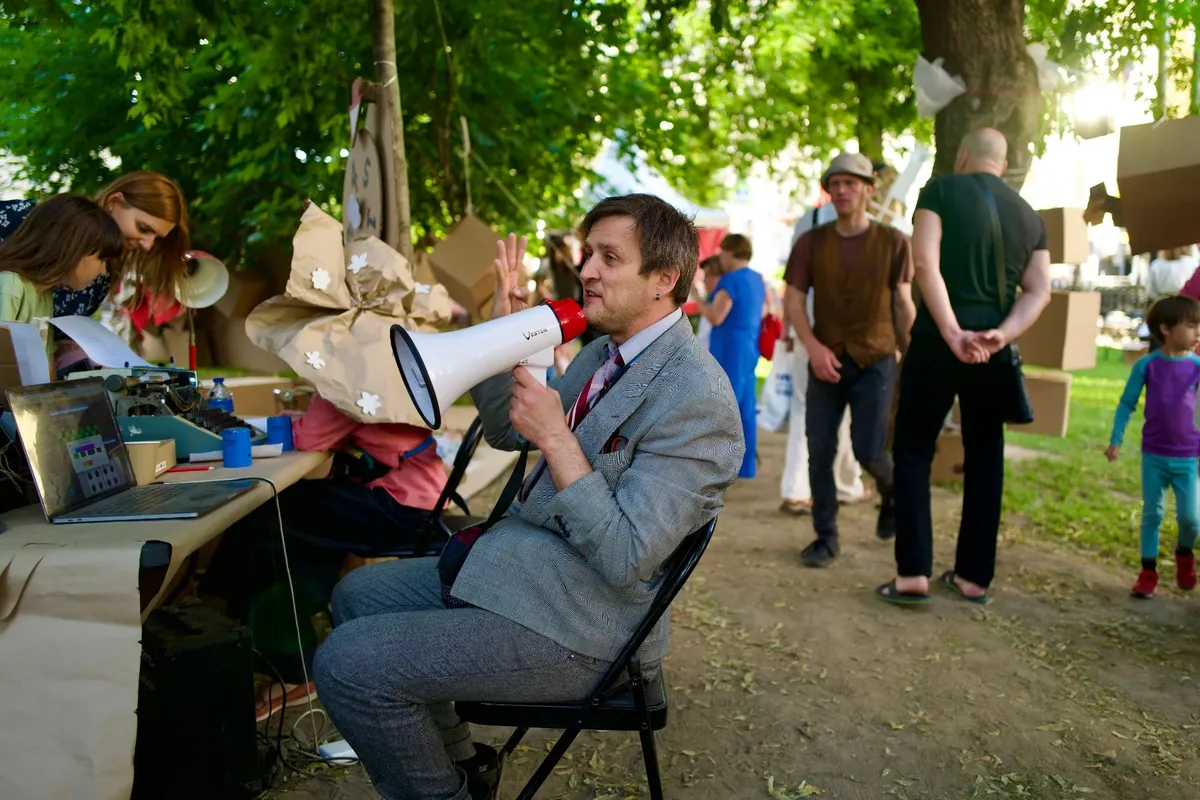
The performance begins at the stage, the presenter with a white megaphone, Igor, asks everyone to start counting from 15 to 1.
- ...4 ...3 ...2 ...1 - when the audience reaches the end, there is silence. Igor, wearing a funny burgundy tie and an earring in his left ear, stands and smiles. - No, no, we're not starting yet! I simply suggested that you enter into a relationship with time!
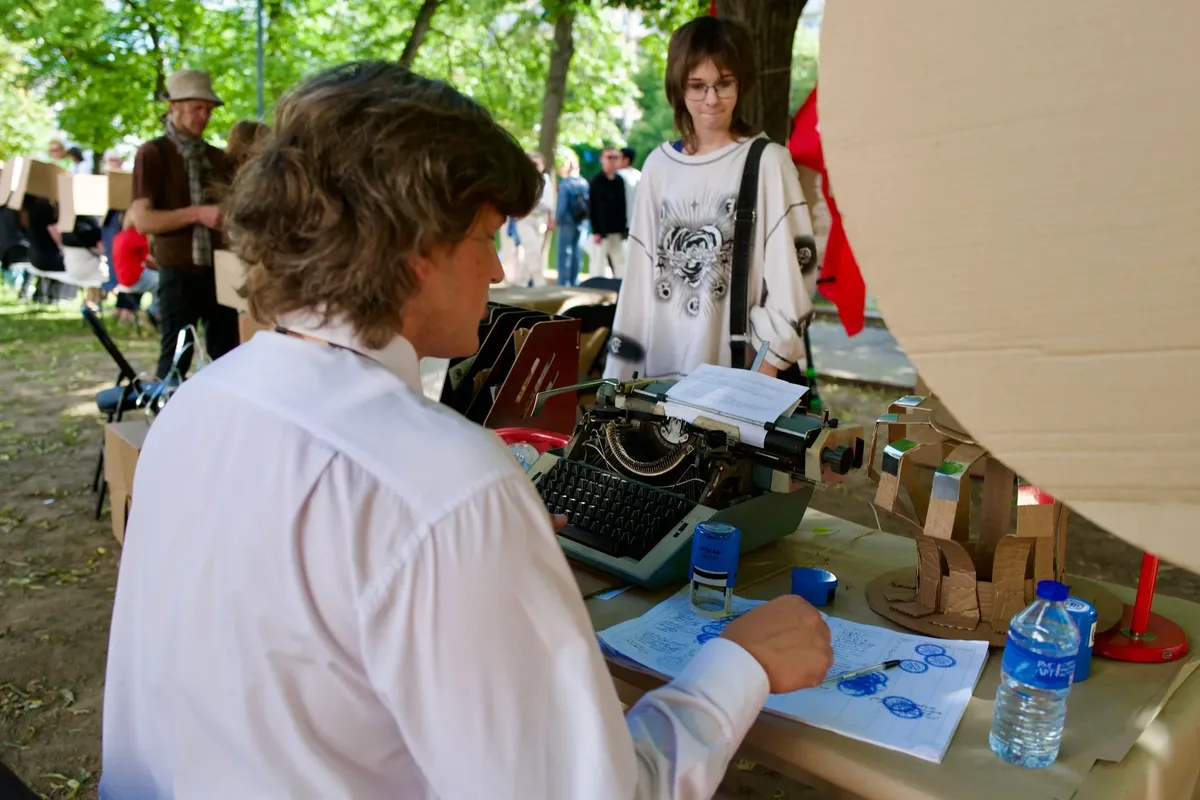
I am sent to the registration desk to write down my name and put a stamp on the form so that I can officially enter the city. Sitting at a cardboard table and a typewriter is Slava the Deputy in a white shirt and tie - the same one who scolded the grandmothers. He is typing something busily: he looks and speaks deliberately seriously. Tells about this amazing country.
“The President is a tyrant, but we are glad!”
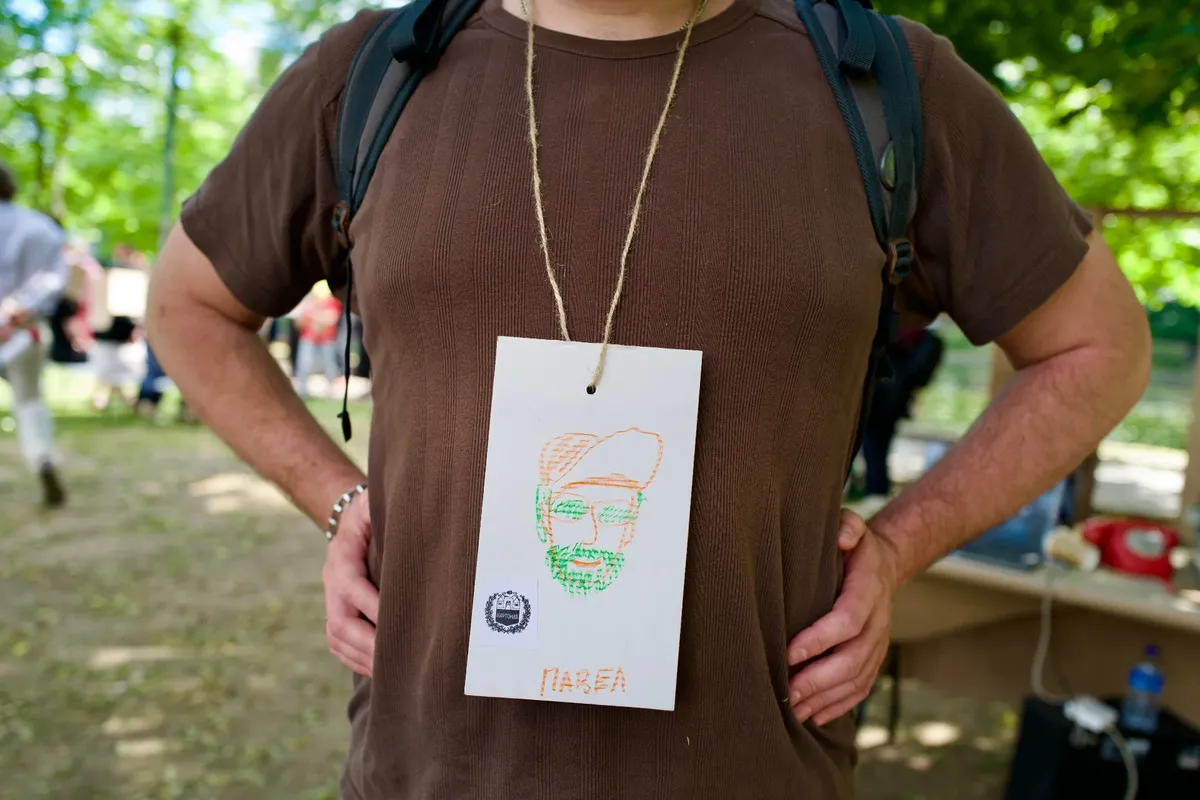
Slava sends me and the crowd gathered at the reception to get a “passport”. This is a small piece of cardboard on a string, on which another person you just met while waiting in line at this table must draw a portrait of you (and you, by extension, of him) with your non-working hand and glue a quote from one of the artists who inspired the organizers to the back side.
“As I see, you also want to become a citizen,” I turn to the man with a film camera, “let’s go create together?”
“We are not citizens, this is inappropriate here.” “We are all characters,” Irina, one of the organizers, interrupts us. — Absolutely anyone can become a character, all you need is desire, no bureaucracy.
—Who is the head of your country?
- We don't have a president. Only a tyrant, and we are glad.
As I quickly find out, the political system of “Cartonia” is a tyrannical anarchy led by the author of the idea, Sergei Korsakov. “The synthesis of the inflexible will of the creator and the free choice of other participants - their right to accept this will or refuse it.”
From any school textbook on social studies we know that the basic foundations of the state are territory, sovereignty, the concept of citizenship - but “Cartonia” doesn’t give a damn about this! Which is why it is unique. And it seems to be thriving happily. Apart from, of course, tyranny.
Later, Irina will introduce herself to me as the editor of the Tirana News newspaper. This newspaper, as you might guess, is absolutely controlled by the local authorities, writes only about positive events in the country, without any criticism. Kartonia journalists also make vertical videos with reports and post them in the VK community of the “country.” Irina explains to me how they hold elections in “Cartonia”. Each character can write “Tyrant of Cardboard” on any piece of paper or candy wrapper and throw it in the trash - that’s how they vote.
It's nice to see honest tyranny.
" As long as we are alive, silence is impossible"
We draw passports. At a small table, Ira, wearing a cardboard hat, gives us pencils, glue and a quote from a random creator. I got: “There is no empty space or unfilled time. There is always something to see and hear. While we are alive, silence is impossible." - John Cage, American composer.
With a passport hanging around our necks, we are allowed into the country. The main thing is not to confuse “Input” and “Output”!
On the territory of “Cartonia” there is a performance park - a site dedicated to a laboratory for the study of various forms of theater. Laboratory assistants (organizers and activists) together with the characters of “Cartonia” come up with performances.
A guy flies past me imitating a helicopter. Before that, he tore off the “wings” of a cardboard mill standing nearby and began to circle around the country, rotating the “blades” above his head. He lands next to a huge information board REP (Ritual Aestheticization of Everyday Life), which reads:
"ATTENTION!!!
Active production of creative energy has an addictive effect.
A person who is in a creative act may forget about other types of energy exchange, in particular, the most important thing for a person - food consumption, which subsequently leads to a decrease in the level of creative energy and even death. Due to this danger, please read the following REPizations carefully.”
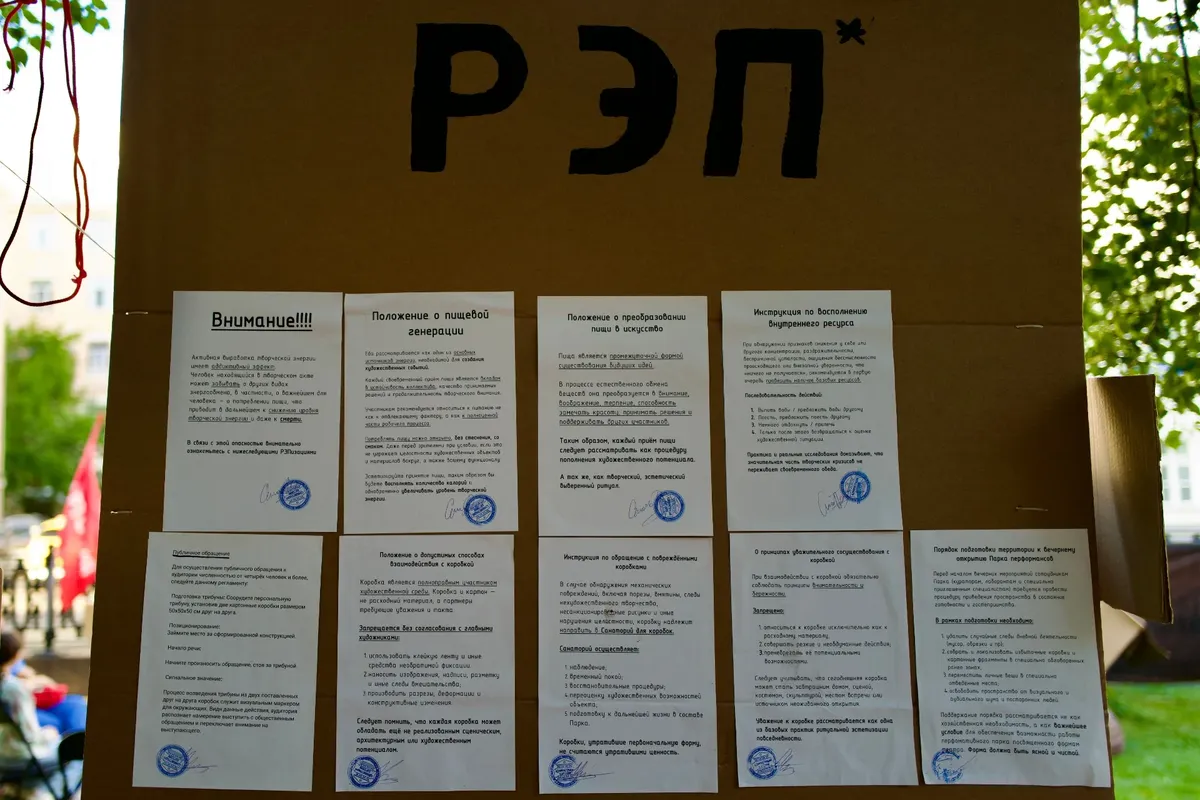
Among the various rules, my attention is drawn to the paragraph “On the principles of respectful coexistence with the box.” The box in Cardboard is an integral part of any performance.
“When interacting with the box, be sure to follow the principles of care and caution.
Forbidden:
- Treat the box exclusively as a consumable item.
- Take sudden and rash actions.
- Neglect its potential.
It should be considered that today's box may become tomorrow's house, stage, costume, sculpture, meeting place or source of unexpected discovery. Respect for the box is seen as one of the basic practices of ritual aestheticization of everyday life.”
“Every world (performance) created in Cardboard is real,” Slava the Deputy tells me. “Real people live on the lawn and do their important work.” This is not a game or a clownery. — He even sounds too serious against the backdrop of the cardboard camp. — “Cartonia” brings together creative people from all over the world - artists and people of any other professions. We do not have land, which means we do not have natural resources, the main source of prosperity for other countries. The purpose of the Cardboard experiment is
create a precedent where the economy of an international multinational community is built not around fossil natural resources, but around creative energy. We are looking for opportunities to extract this resource not from the natural environment around humans, but from human nature itself.”
In the performance park you can learn a lot about yourself. For example, becoming a “spectator of your own production.”
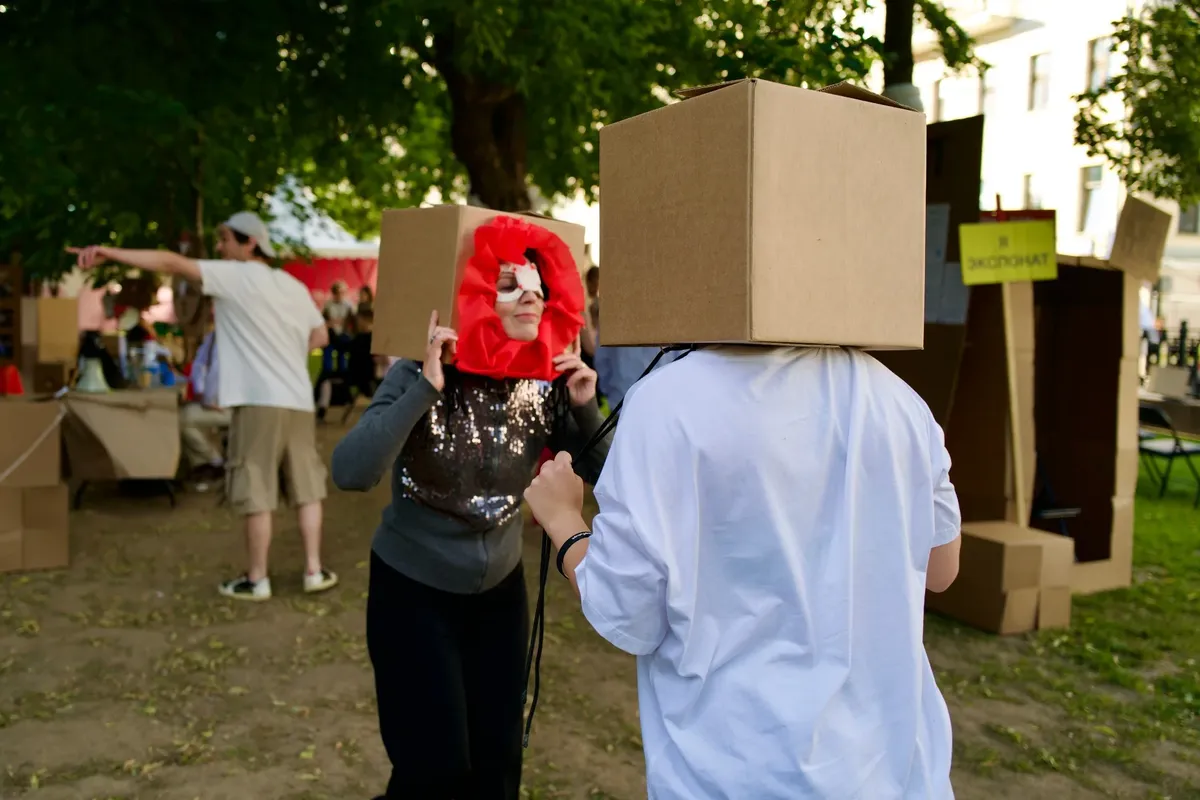
To do this, you need to put a cardboard box on your head with a small cutout at eye level, where a magnifying glass is inserted. Through it, young people and parents with children look at the crowds of people walking along the boulevard. As I later tested for myself, the glass makes the view very narrow and the only thing visible if you look forward and don’t move is the frighteningly gigantic faces of passers-by. As they take out their phones and film us, someone is waving or just fooling around, trying to look into the box.
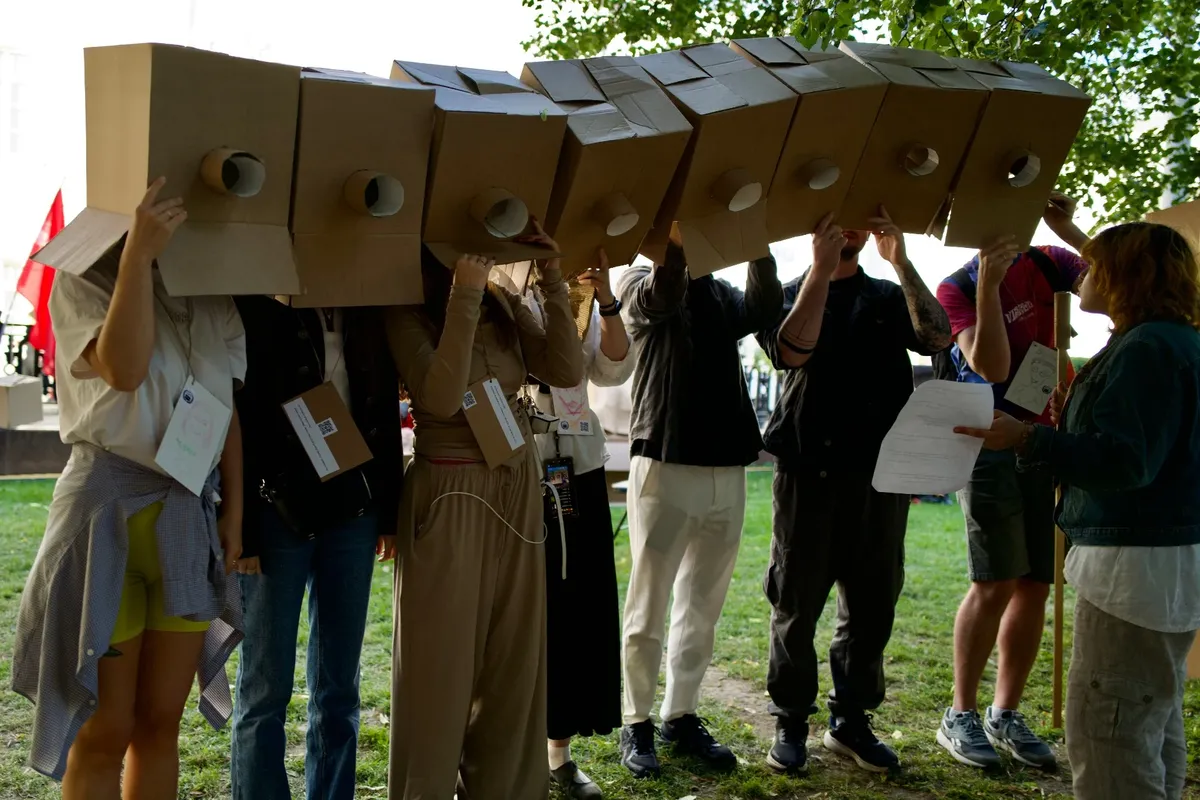
Next to us, a girl invites people to take part in the performance “Xylophone of Meanings,” where each character can become a composer or an instrument. To do this, you need to stand in a line and everyone put one of the boxes glued in a line on their heads. The red-haired laboratory assistant very expressively explains to us the rules of the experiment.
— I have always been interested in understanding how great people’s thinking works. Listen to one quote: “Art is against any power. Art claims power because art could rule. Only this!” “At this moment we are standing shoulder to shoulder with boxes on our heads, each of us is a separate xylophone record. — Did everyone make a sound for this quote?! Let's sound!!!
- Uuuuuuu!
- Aaaah!
- Eew-eew-eew!
- Stop. Our musician starts playing,” the laboratory assistant gives the cardboard “mallet” to the boy in a cap with a straight visor. -When you feel the vibration, make your own unique sound. The second blow - you stop sounding.
The boy is more happy to hit us over the heads than create a melody, so it comes out a little choppy, but we sound!
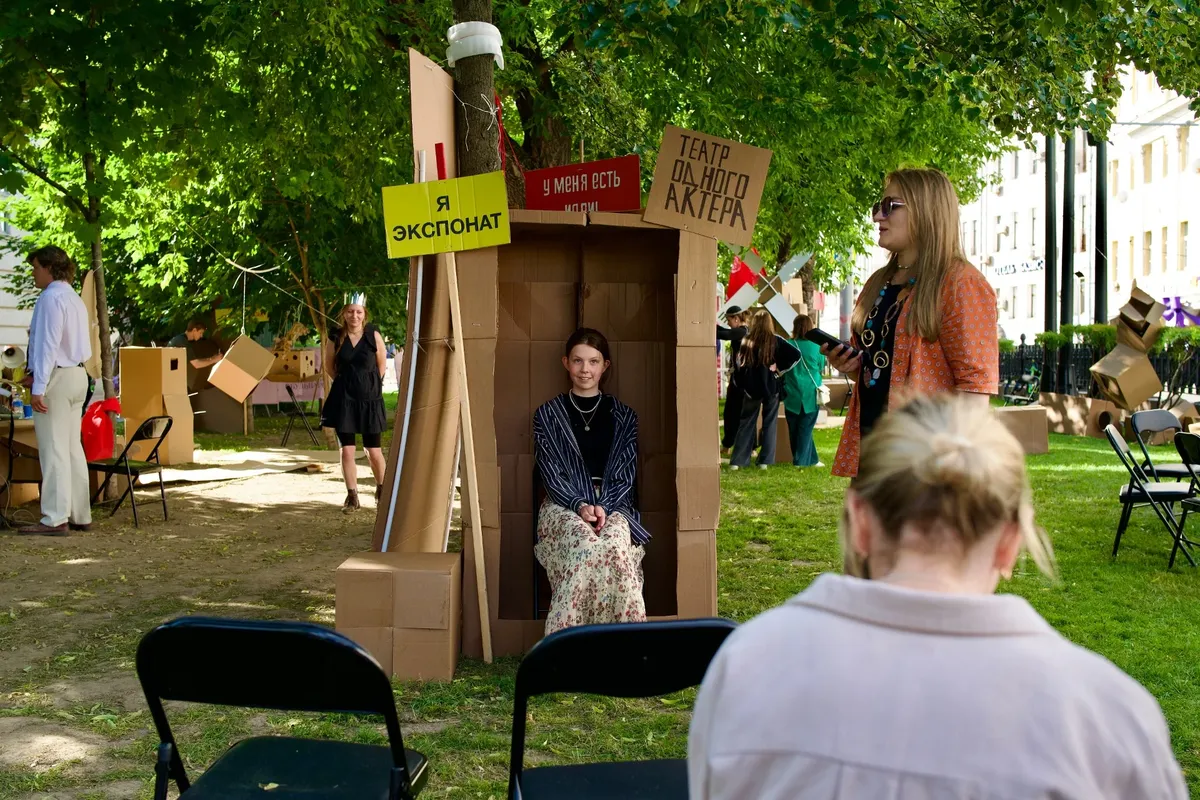
The next performance is “One Actor Theater”. A fourteen-year-old girl sits on a chair in a cardboard box with the smile of a hare from “Well, wait a minute!” A crowd of people looks into her eyes and smiles. "She's a showpiece." Her task is to sit still for five minutes and do nothing - just look at the audience. Her lips are trembling. As presenter Dasha says, “she doesn’t miss the opportunity to become the author of her own experience.” I became the first guy who, according to Dasha, “decided to give people my five minutes.” To be honest, the first minute is really hard, and it’s not because of my hyperactivity.
My gaze darts across their faces, and I meet the eyes of a woman from the front row. She has the kindest face in the world, she hugs her child and looks with a look full of love and calm. I feel uneasy, but I complete the experiment.
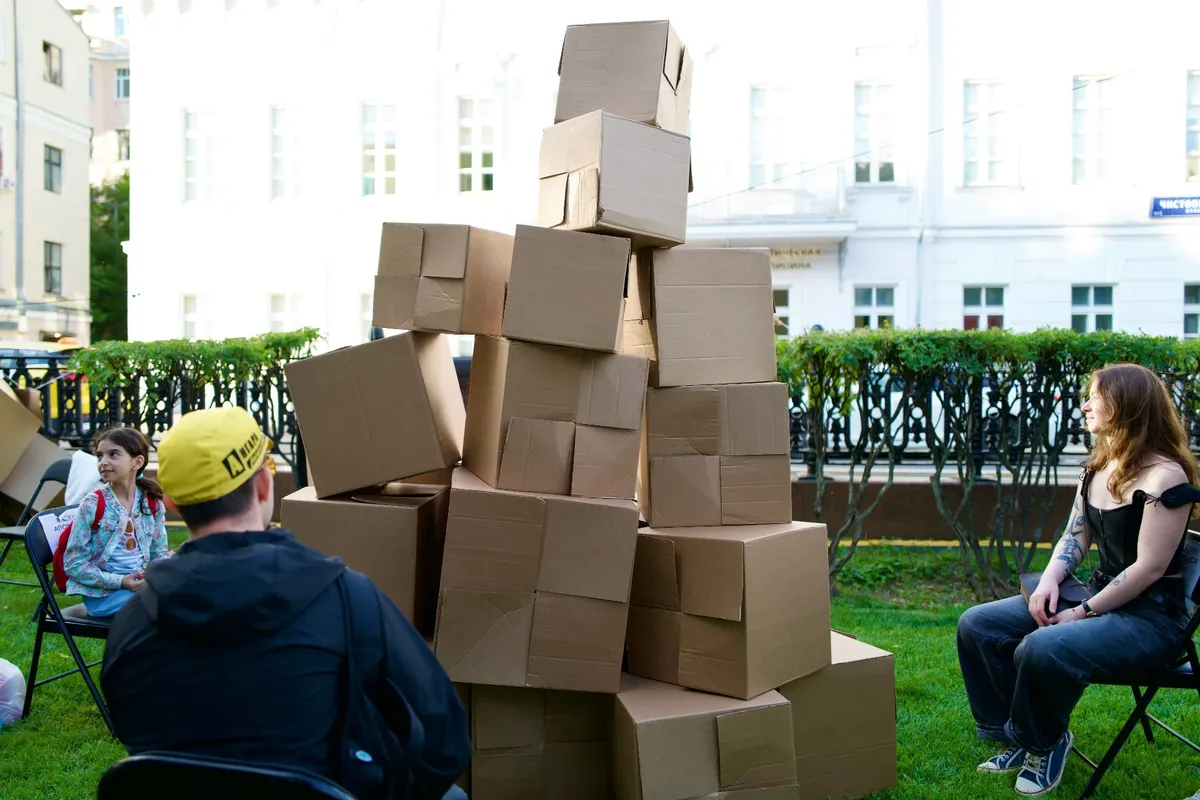
Two steps from this scene there is literally a mountain of boxes. People sit on chairs around her and are simply silent. Suddenly, with a blow of wind, a shaky cardboard structure falls on a man holding his son in his arms - a happy squeal is heard. When the chair is free, I notice the inscription on it: “Waiting for the apocalypse. Sit down and wait."
The Anti-Race takes place on the big stage. “Racers” sit in boxes and slowly-slowly pull other boxes by a string - at speed. Whoever brings it last wins! The record for this day is 30 minutes.
I meet two young guys, Vanya and Anton. They are representatives of the Cardboard Research Institute. They lead the educational project "Synchronization", teaching basic and advanced skills in working with cardboard, including the creation of moving mechanisms, costumes and sets. They are trying to understand: can a person become one with cardboard?
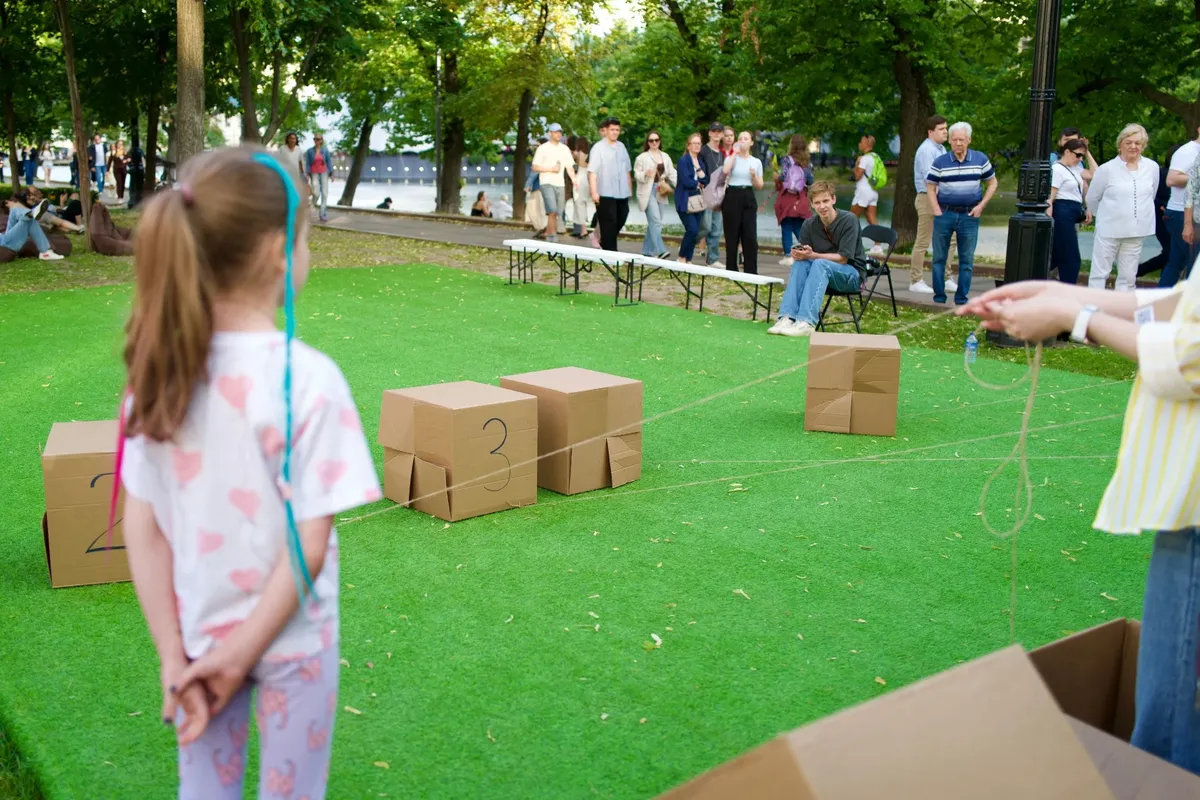
We are divided into teams, I am paired with an adult woman, and the laboratory assistants take out a sheet of paper.
“Look, the top left corner is your left shoulder, the bottom left corner is your left thigh...” with these words they begin to bend the sheet of paper back and forth. We “synchronize” and repeat these movements until we reach the next stage. — You are now in 3D, get ready, it’s difficult to be in 3D. — They exchange a sheet of craft paper for a box.
Following the same pattern, they begin to “dance” with the boxes, twirl them, place them on top of each other - the woman tries to climb on my back and apologizes that she can’t help herself - “she’s synchronized.”
In the middle of the “country” a girl with a box on her head lies on the lawn in the pose of a lurking predator. She pressed her stomach to the ground, her arms were outstretched and ready to push off the ground at any moment. Through the round cutout on the box, only her concentrated face is visible. Opposite her head lies another box with the same window.
- Just don’t take the second box! - another character warns me in slight confusion.
I take the box. The predator gets up and begins to repeat every movement of my box, apparently exploring “synchronization” in the field, not in the laboratory: as soon as I lower the box, she kneels down, turn to the left, she doesn’t lag behind her for a second. After a short jog and a “carousel”, I think for a long time about how and to whom to pass the baton (I don’t want the girl to lie down on the ground again). Here I notice a grandmother with a fresh passport who has just entered the country.
- Excuse me, can you support me for a second?
“They won’t believe that there are rallies in Moscow!”
After coffee and a huge line at the former McDonald's, I return to Kartonia. But at the entrance I am greeted by a huge and terribly disorganized crowd of informals, pensioners and couples in love. Igor puts us in a line and explains the philosophy of the queue.
- You must stand one after the other, hands clasped on your chest, but you can do it from behind. So, I don’t see it? - He’s looking to see if we can get in line. - Now we make tired faces, look down, take a deep breath and long exhale “fu-uh-uh” - you should feel the queue!
We stand and breathe.
“Any action you take can become an act,” says Igor. - Well? Do you feel your desire growing through prohibition and expectation?
Seven minutes later, Igor does not let us into the country, and gives the megaphone to a guy on stilts in a fancy dress. We are going to a demonstration.
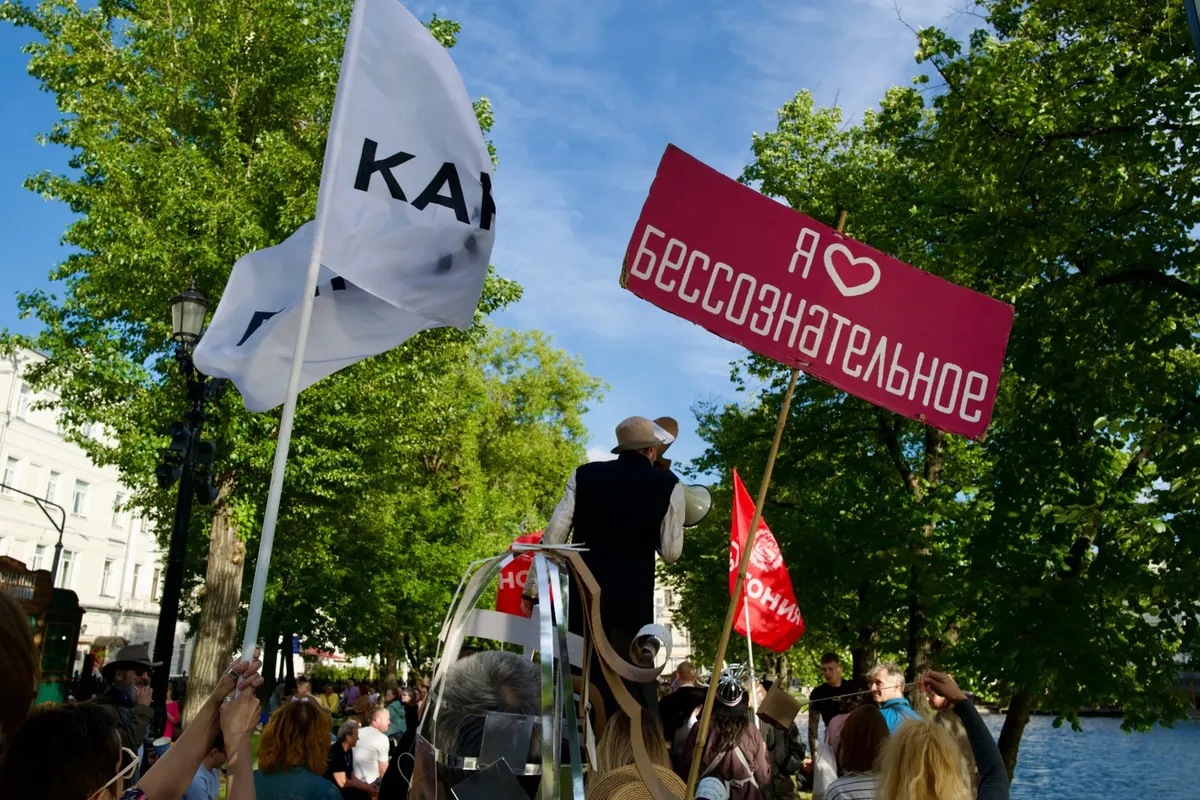
The crowd marches along the boulevard and chants the slogans: “Freedom to the theater!”, “Freedom to art!”, someone shouts for freedom in a slightly different sense, rather political. People walk in masks of musicians, actors, philosophers, whose faces are familiar to few people, unlike their thoughts - Heiner Goebbels, John Cage, Cantor, Wilson, Alexander Exter and others. On the back of the cardboard masks are written quotes from these figures, which we voice. In the general shout of the demonstrators, they turn into mush. A flag flutters above their heads with the inscription: “I love the unconscious.”
The girls around are spinning an electric organ with solemn music. I turn to Dasha, the instructor from the performance “I am an exhibit”:
- What other chants are there?
- Just.
- What is “simple”?
- Just shout, create your own sound of protest - and shout it! — she starts yelling a heart-rending “A-a-a-a” and goes closer to the head of the column.
Tourists standing nearby record video.
- Damn, they won’t believe that they got to a rally in Moscow!
One step
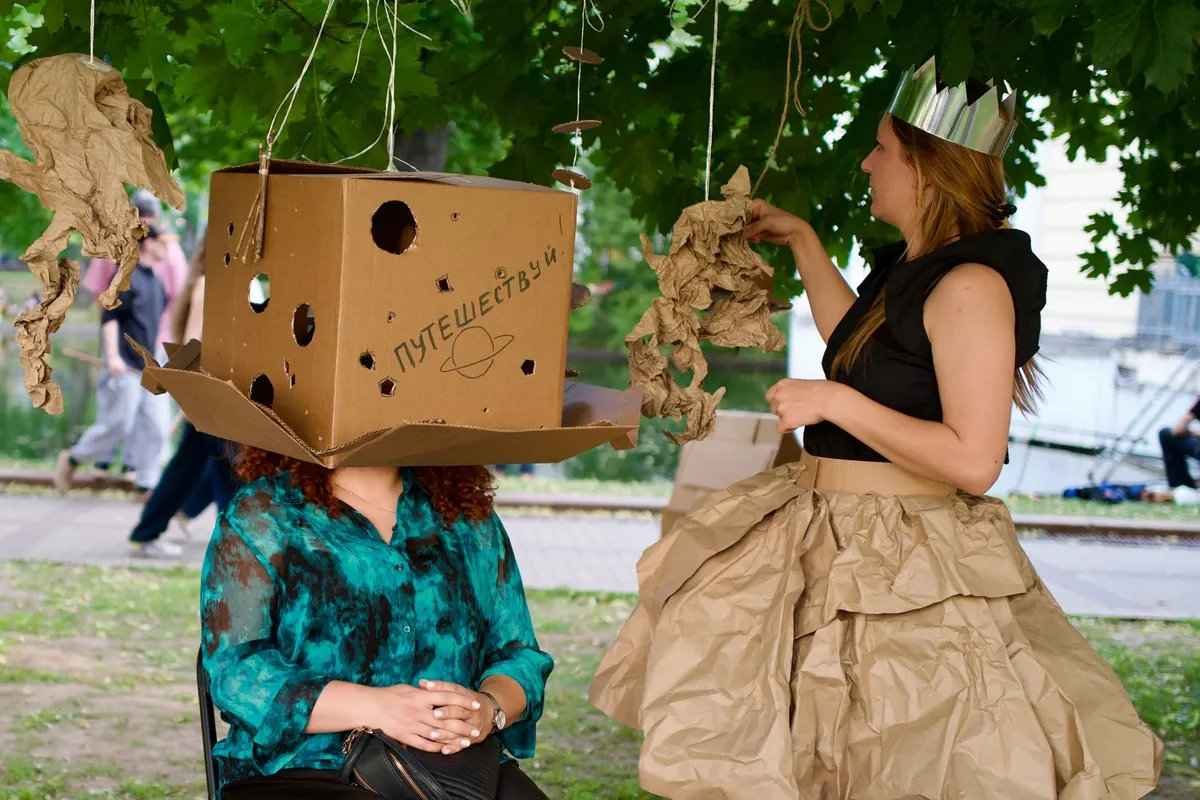
During this day, I made many attempts to “enter real reality,” as Igor taught me. But I can't help but think about the girl in the box costume I saw this morning. I finally decide to repeat this experience.
While walking around the pond, I get slapped on my cardboard butt a couple of times, kids on scooters give high fives and ask me to take a photo, passers-by overtake me and turn around: they try to look into my eyes. The guard hits the box head and asks:
- Can I help you somehow?
- Sorry, I'm a tree.
- What are you ***?!
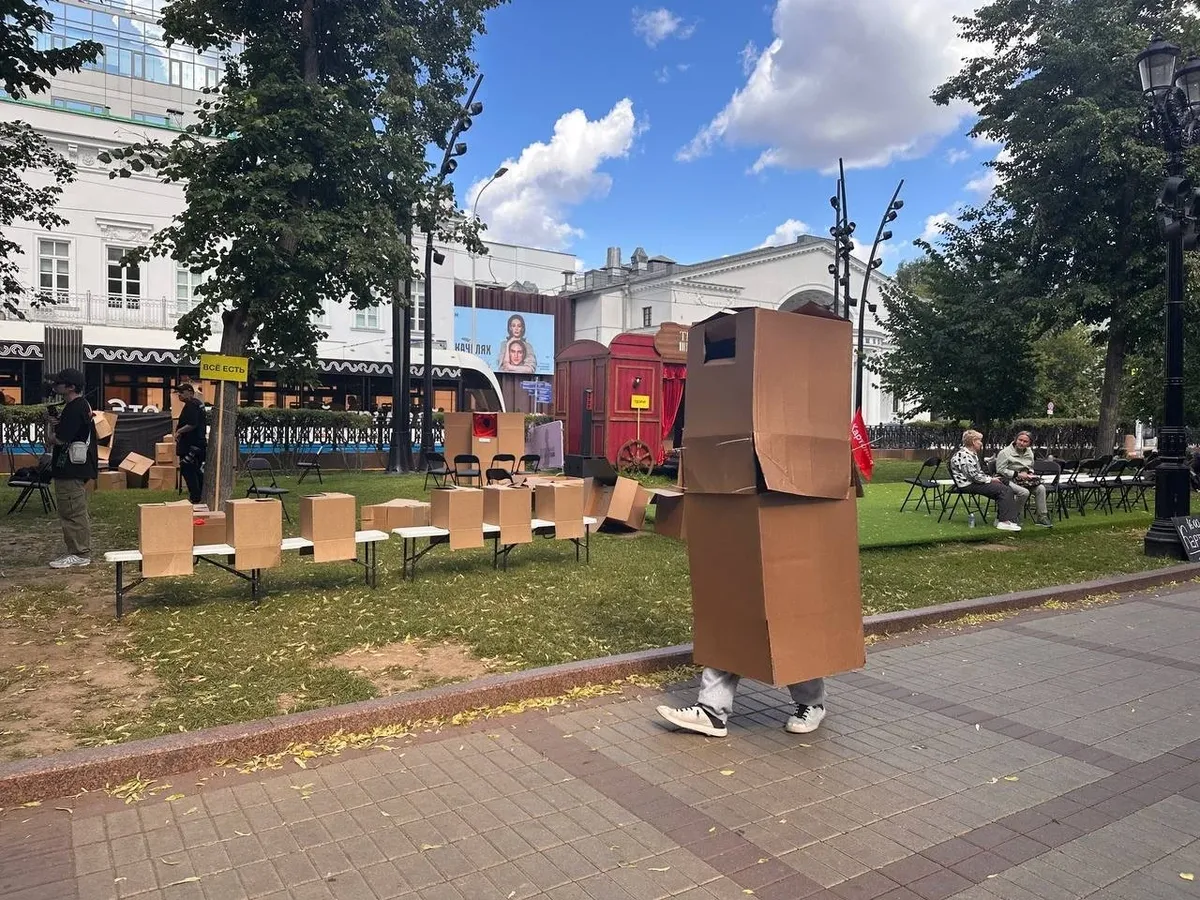
But I lied. I was not a tree, but rather a very social box. Then my friend joined my performance, and we - already two boxes - walked holding hands along the Clean. A very kind grandmother filmed us on her phone and protected us from drunks:
-What is this? — примерно так они кричат нам вслед.
— Лавис это! — кричит наша седоволосая защитница, видимо, имея в виду «love is». — Лавис!
На нас оглядывается и другая милая пожилая пара. Они заступают на газон «Картонии», Слава-депутат нещадно их журит.
— Друзья, заходить нужно через вход! — они пятятся назад. - No no! Ваше желание открыть для себя что-то новое лишь вдохновляет, хватит быть зрителями своей жизни! Только поучаствовав, вы сможете узнать о себе что-то новое! Только заходить надо через вход, это же базовая ценность!
Улыбающиеся дедушка с бабушкой делают шаг в сторону «двери».
…На следующий день от этого «государства» не осталось ничего. Ни одной коробки или даже кабельной стяжки на зеленом газоне вокруг пруда. Только ее персонажи, не стесненные границами, ходят среди нас.
This material was published in the twenty-first issue of Novaya Gazeta. Magazine". You can buy it in the online store of our partners.