
Translated material
CD, DVD - alas...
Sony Corporation announced that it will stop releasing games for the console on discs. Another carrier gone

Photo: Ivan Petrov / Kommersant
Sony Corporation announced that starting in 2029 it will stop releasing games for the PlayStation console on discs. Leaving the market for physical media of digital information is a logical development of progress for some and a reason to shed tears for others. And this is the very case when the cliché “end of an era” is more than appropriate.
No, games didn’t start with cartridges for us. Consoles like Dandy from Nintendo came later. We started with ordinary audio cassettes, which in the case of Moscow were sold at the stalls near the Elektronika store on Leninsky Prospekt. In order to load the game, you needed a cassette recorder (in my case it was “Electronics 302-1”), an electric drill, a screwdriver and the computer itself - the most popular was the BK-0010.
With a computer and a tape recorder it is more or less clear. The magnetic media transmitted a hissing sound to a computer, which decrypted the information and turned it into an executable file. Why a drill with a screwdriver? All this was, to put it mildly, of poor quality: to correct it, it was necessary to drill a hole in the area of the head, which read information from the tape, get to the bolt that regulates the height, and calibrate it so that the process goes smoothly. Those were the times!
Game consoles, such as the Chinese analogues of Dandy with yellow cartridges that had to be blown out and wiped so that the contacts did not rust, appeared later, and not for everyone. Atari, familiar from the arcade games played by John Connor in Terminator 2, was exotic. Sega Mega Drive 16bit cost twice as much and, accordingly, was for wealthier segments of the population. And despite the fact that a duck that had to be killed with a light gun was an understandable meme in those years, one way or another, this entertainment was not for everyone.
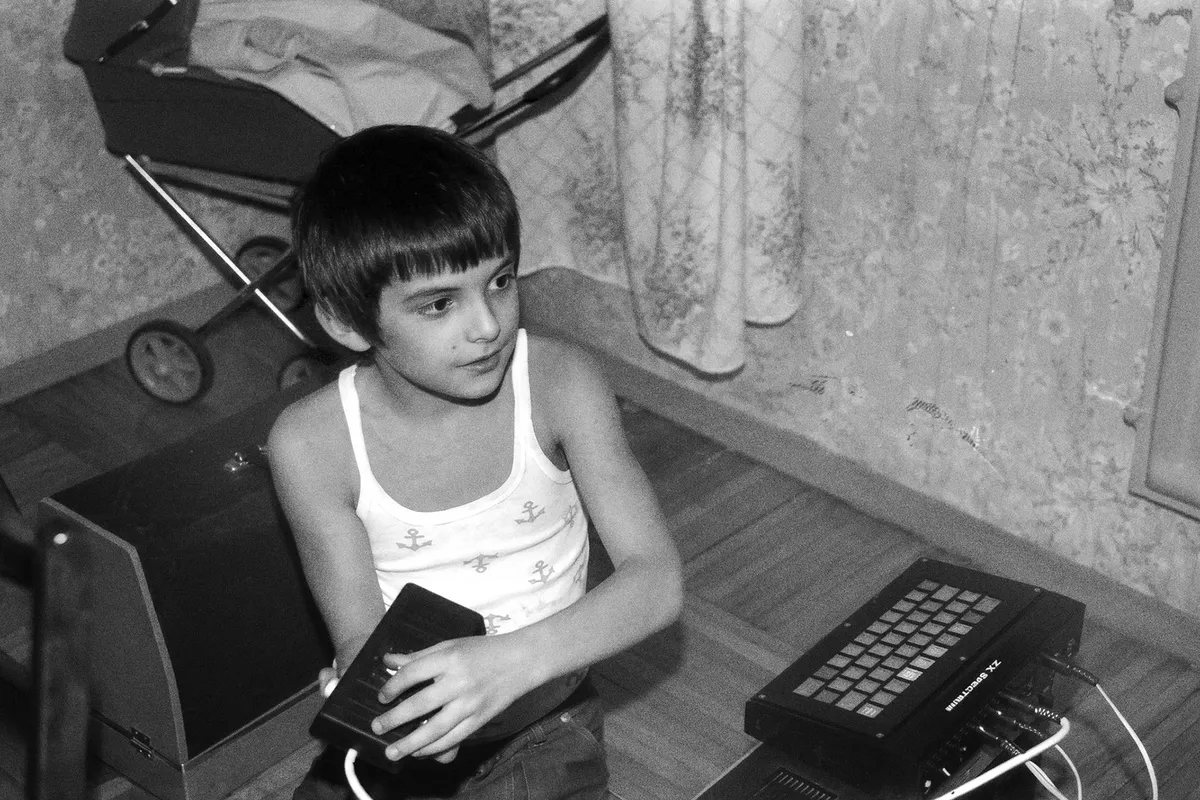
Both for our parents and now for connoisseurs of beauty, digital media, be it records, audio cassettes or cartridges, were of real value. It was an object to be bought, exchanged, collected, with the corresponding joy of ownership.
The same cartridges with games: there were original ones - one game, one cartridge, and not very much, where Chinese craftsmen stuffed dozens, or even hundreds of games. So it is with audio cassettes: there were self-written, pirated ones, with crookedly printed covers, and original ones - with a small book that could contain lyrics or some kind of detailed description.
Floppy disks for computers performed approximately the same role and circulated in a similar format: self-written, where the name was reproduced with a ballpoint pen, or in beautiful packages on which licensed software was distributed. All of the above was a familiar landscape for users of digital equipment and the first computers like the IBM 286-486DX. Many reading these lines probably have artifacts of the past somewhere in a dusty corner of their Czech furniture set.
And then the CD came along. Gorbushka, the largest music and software market in Russia, has blossomed. The most popular accessory in the apartment was a stand where you could place your collection. Music, games, operating systems, where the serial number for activation was printed directly on the disk. Databases with phone numbers now available online. The scale of what is happening is perfectly shown in the film “Brother-2”, where the heroes are looking for a way to get personal data.
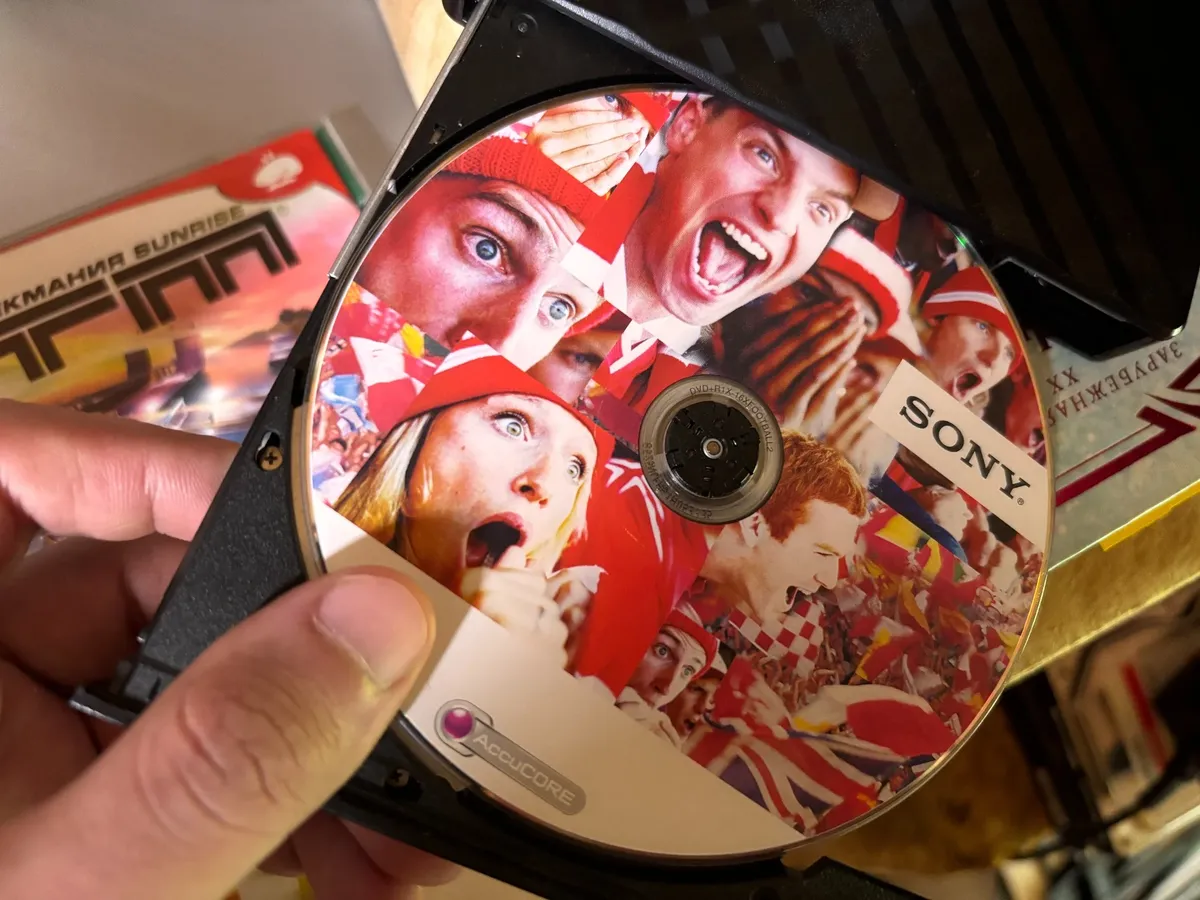
Single episode - CD-R. Both discs designed for recording and rewriting information at home, and corresponding drives that support technology. Blank recording pads are a consumable item and a popular product. External drives were expensive and the memory capacity was small. The only available way to save information is to burn it to a CD. This is an opportunity to replicate at home! Recording an album on discs and sending it to radio stations is a common topic. In approximately the same way, only on audio cassettes, songs of the groups “Tender May” or “Malchishnik” were distributed. Not everyone could buy the “Black Album” by the group “Kino” on vinyl.
With the growth of computer performance and the quality of audiovisual products, the requirements for media have also grown. So, absolutely imperceptibly, CDs, holding about 600 megabytes, replaced DVDs and Blu-Rays - the same discs, visually indistinguishable, but containing an order of magnitude more information. Almost everything migrated there: games, films, programs, music. Indeed, in addition to the tracks in excellent quality, it was possible to record a video version of the concert on the disc. In the case of software - before the emergence of the Software as a Service ideology, when you pay for a subscription to certain programs - buying a beautiful box with Windows, Microsoft Office or Adobe Photoshop was the only legal way.
The spread of fast internet has begun to change the rules of the game. Software has gone online, music and films have gone to streaming services. Having a device in the household that can read CD/DVD has become exotic.
Vinyl migrated to dusty stores and online marketplaces, remaining an entertainment for connoisseurs. The release of physical media is only for musicians and their fans. This phenomenon has no meaning other than as a collectible gift. Everything has gone online.
It would probably be fair to say that the gaming industry remained the last bastion. Just ten years ago, queues for boxes of the next World of Warcraft series in shopping centers were a common occurrence. And today, game stores are rare stable tenants. And then, in addition to the games themselves, there are still a lot of related products, including physical toys. You can't take it out on discs alone.
But the reality is that even this is now unnecessary.
- Firstly, downloading tens of gigabytes by paying online, without taking into account regional circumstances, is not a problem: the Internet allows it, and all set-top boxes have a large amount of internal memory.
- Secondly, a toy is not a music album cast in granite: every day there are updates - errors need to be corrected, and new content needs to be added.
It is, to put it mildly, unprofitable to release another CD on this occasion, and even more so to send updates to customers.

Formally, this could be done today. But behind Sony’s decision, in addition to technology, there are probably contracts to load the corresponding factories, some obligations, market assessments, and, after all, where some more physical media can finally be thrown. But the date is known: three more years, and that’s it. Discs in beautiful boxes with glossy books will become the same exotic item as audio cassettes and floppy disks.
More and more things - from books and magazines to music and games - are becoming completely virtual.
You can no longer show off your collection to your guests, you can’t exchange it with a friend, you can’t feel the joy of a purchase in a branded box, in a beautiful package, dreaming and anticipating on the way home from the store.
Here, another cliché about “the world will never be the same” more than suggests itself. But this is not the end. There are new challenges ahead.
Any new device with a large screen consumes significantly more traffic. Any new toy, due to strange circumstances, is much larger than its previous version. And there are no fewer of us, owners of those PlayStations, new smartphones and other powerful computers. The next version of GTA will be released soon - most will buy it online and rush to download it. Tens, thousands and hundreds of thousands of devices will consume gigabytes of data every hour. If you don’t modernize the infrastructure, the Internet will die. A data tsunami is coming. So, maybe it’s too early to throw away the disks - at least in the next few years they will still be useful.