
Translated material
Interface control
Why the large-scale use of AI in politics will not lead to the creation of objective and fair power

Photo: Evgeny Pavlenko / Kommersant
It seems that this task has always existed in the school curriculum - “write an essay about the future.” And Soviet schoolchildren wrote, and perestroika schoolchildren wrote, and schoolchildren of the nineties wrote - they wrote about the future where one day power will be replaced by a supercomputer.
There was something very understandable in this for that time, when there was a heavy air of decay all around, the state seemed either dead or predatory, the rules were zeroed out, security was random, and life too often depended on someone else’s arrogance, strength and connections, and new technologies, computers, mobile phones and the Internet already looked like a crack into another, more intelligent world. If the authorities are corrupt, the judges make mistakes, the deputies are controlled by other people's interests, why not give control to a cold, precise machine. At the time it sounded like science fiction.
Now a similar idea is returning in the form of friendly and supportive neural networks, which, it turns out, are not even as inhuman as in the dreams of the youth of the nineties, because they respond to our every message with understanding and enthusiasm. Now they are already writing texts, helping doctors, checking documents, calculating risks, and somewhere in the depths of their souls the old hope is stirring again: “Maybe, if the state cannot be made fair thanks to people, it can be made fair thanks to algorithms?”
In Russia, this hope is especially tempting, because here we are well aware of the weariness of human tyranny - and the digital state looks like a promise of life without humiliation.
“Government services” in the popular imagination have long been proof that the state can sometimes be convenient. And although it seems counterintuitive, the love of digitalization among the Russian authorities does not contradict blocking, slowdowns and prohibitions.
Blocking in this reality is also digital control, just reversed by the other side. In one case, the state removes obstacles to a convenient service, in the other it creates them to limit behavior that is objectionable to them. This is the same technocratic gesture: reality should not be discussed, but adjusted.
And as has become commonplace, when the Russian government talks about artificial intelligence, it almost immediately talks about sovereignty. Putin has repeatedly called generative models a matter of national, technological and value independence, spoke about data centers, domestic developments and the need to use Russian models in sensitive areas. The national project “Data Economy and Digital Transformation of the State” until 2030 also describes the future through data-based management, digital public administration, domestic platforms and artificial intelligence.

Within this framework, AI appears as part of a larger administrative imagination in which data is collected, processes are accelerated, and most importantly, everything is predicted, distributed and controlled.
And here it is important not to fall into too simple criticism. A convenient service is really convenient, and many emigrants who moved, for example, to Berlin, are often surprised at how people like papers and letters there, although a good AI model can spot an error, advise a doctor, help a lawyer, and relieve the workload of an official.
The problem arises where convenience begins to blur the question of whether the rules themselves are fair.
You can replace a rude official with a polite interface, but if the interface remains a closed system, a person simply has fewer opportunities to understand who exactly made the decision and how to challenge it.
And the Russian experience has already shown very clearly several times how a fast, convenient service can turn the other way.
Thus, in 2023, electronic summonses to the military registration and enlistment office through State Services were legally equivalent to delivery. And this is perhaps the most accurate example of why talking about AI in the Russian system cannot be naive. Technology here almost never comes into empty space. It comes to a place where there is already a vertical structure, security forces, closed registers, a weak possibility of contestation and the habit of explaining any expansion of control with the word “efficiency”.
Therefore, returning to the fantasy of a fair algorithm, we need to ask not only whether it calculates well, but also who it will work for first.
In Moscow, a facial recognition system based on the same AI has already been used to detain protest participants and for partial mobilization. Roskomnadzor launched Oculus, an AI-based system for automatically searching for prohibited content in photos and videos, including “extremism” and calls for illegal mass events. And here you don’t even have to imagine some kind of gloomy supercomputer that makes its own verdicts. In such a reality, AI does not replace arbitrariness with neutrality - it simply makes arbitrariness fast, quiet and much less noticeable.
The Russian Field survey clearly shows that people feel this. In April 2026, AI and large language models were named a priority innovative technology by 16% of respondents; this interest was higher among young people, residents of large cities and people with higher education. But interest does not turn into a willingness to give the machine the right to decide for a person. The attitude towards a song created with the help of AI is relatively tolerant, but in scenarios where the algorithm approaches the body, money, children and power, the ratings sharply darken. I will assume that when the question concerns something more real, everyday, personal, respondents may be afraid of scaling up the injustice that they are already accustomed to encountering. Moreover, if everything is arranged according to the principle “the system decided so,” then who will you have to contact in cases where the system made a mistake?
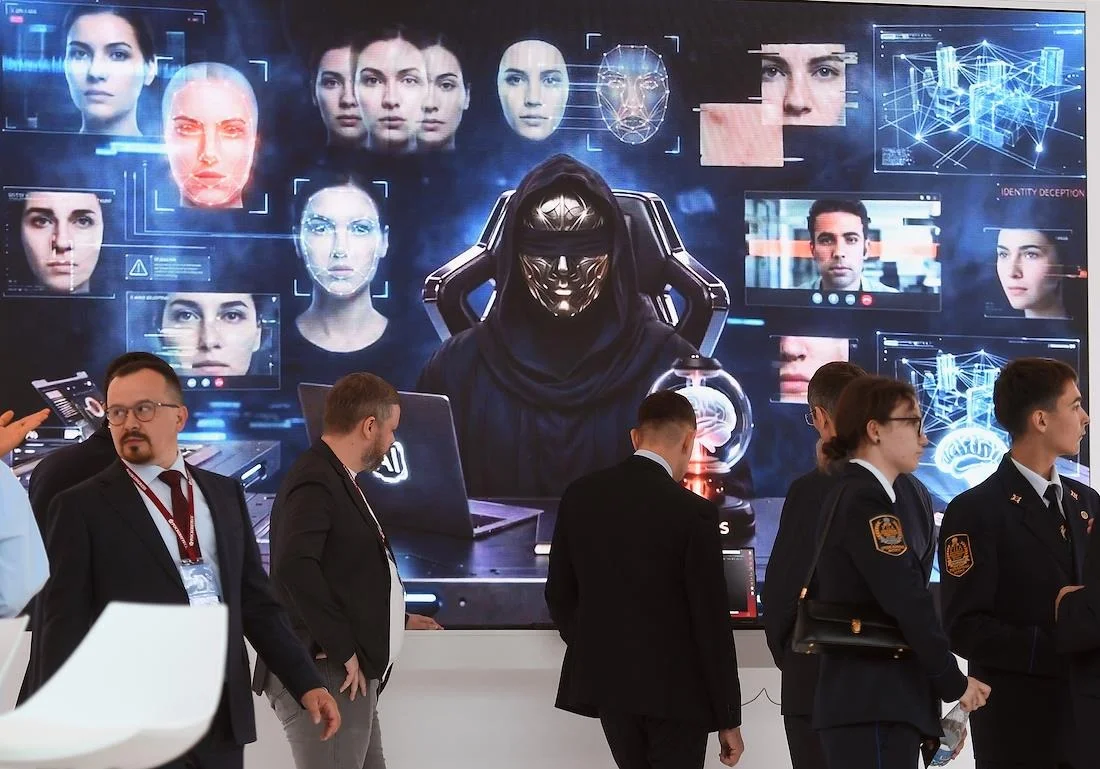
And here the conversation about the Russian state unexpectedly leads to a broader issue. Even if we take our cameras, registries, and the government’s habit of turning a service into a control tool out of the equation, the very dream of neutral AI still begins to crumble.
In June 2026, Anthropic reported that the US government had requested that foreign access to the Fable-5 and Mythos-5 models be restricted for national security reasons. The company wrote that because of this, it had to disable models for all customers in order to comply with the order. Until recently, the model was described as a universal intellectual product - but today access to it is already determined by passport, jurisdiction and export control.
What seemed like an abstract mind instantly becomes a place along which state borders run. It’s just that any large model is built on data, rules, filters, human assessments and pre-selected goals. When a company talks about Constitutional AI, such as Anthropic, it recognizes that the model's behavior is shaped through a set of principles. And here again a political question, visible in Russian practice, arises: who writes this “constitution”? What is considered harm, what is acceptable risk, where is the line between safety and censorship, between care and paternalism?
This is why AI in the state is dangerous because of its ability to make old power scalable. If the bureaucracy is suspicious of the poor, migrants, debtors, women, single mothers, politically inconvenient people, the algorithm will not cure this suspicion on its own. He can only quickly find those whom the system is already accustomed to considering as a problem.
In Russia, the technocratic dream easily makes friends with the authoritarian habit, because both love to speak in the language of efficiency instead of the language of rights.
Where there is no strong independent court, free press and real responsibility of the official, the algorithm becomes not a counterweight to power, but its new layer.
This is probably why the dream of late Soviet schoolchildren about the future is both touching and dangerous. There is a very human desire in it to get rid of arbitrariness, from fatigue, from human stupidity and from the feeling that your life is being decided by someone random. But artificial intelligence does not bring justice as a built-in feature. He comes to where there is already a distribution of power, money, where there are those who write the laws. If these things are unfair, AI will only multiply them.
Perhaps the most honest conclusion here is not futuristic at all. What we need is not AI as a fantasy of just power, but AI as an accountable tool within just institutions. In the end, it all comes down to them - fair institutions that need to be fought for, built, defended and constantly conquered from the temptation of simple controllability. Impartiality in politics is a device where values are named, rules are published, decisions are explainable, error is appealable, and power is not hidden behind an interface. Without this, the supercomputer will very quickly become not a replacement for the bad state, but a smoother, faster, and more difficult to challenge version of it.
Vasilina Tissova