
Translated material
At a distance of memory
From September 3 to 13, the Docker International Film Festival will be held in Moscow with the support of KARO/ART for the twelfth time.

Still from the film “Even if we are islands”
The Docker program includes prize-winning films and participants in prestigious film festivals, mainly Russian premieres. 80 films from 30 countries, nine nominations in four competition programs. International feature and short film competitions, a section on mental health “Doc Therapy”, the Russian program “Doc Station”, a program of films about art “Docker Art”, an experimental section “Docker Punk”, special events and professional discussions.
The festival will end with the premiere of the scientific film detective Yulia Kiseleva “ In Search of Sensory Deprivation ” - a film investigation about a lost Soviet film and a scientific experiment on human isolation.
The cross-cutting themes of the festival are memory and separation, disappearing communities, families, and the fragility of the natural and social world. “The camera becomes a way to hold on to what is rapidly disappearing: home, tradition, landscape, inner freedom and the very image of time,” says the press release.
The opening film is the meditative Spanish drama “ Even If We Are Islands ,” the feature-length directorial debut of Cristina Rodriguez Paz.
The author goes in search of the last lighthouse keepers; It seems that on this journey she is trying to solve her own problems. It begins as a journey across the country and sea - turns into a journey within oneself. And the picture itself turns out to be a poem about a disappearing way of life. The lighthouse keepers reveal to us a different, special way of being. Cinema is like a letter to the director’s nephew and to all those who wonder why it is so important to make the invisible visible on the screen.
This movie is about the invisible force that connects people despite distance: even when we are far away, light allows us to find each other.
Through archival materials, conversations and interviews, the director restores the history, memory and present of lighthouse life. How the keepers of six lighthouses fought against the elements, and also against the prevailing machismo of their time, in order to remain true to their calling. Today we dive into the secrets of a profession that is destined to get lost in the waves and disappear.
Lighthouses rising above the sea could tell hundreds of exciting dramatic stories. It turns out that not all of them are still automated and uninhabited. The author explores the connection between them and the six heroines, in whom the light of the lighthouse's guiding stars has been preserved. There are no talking heads here. We simply observe and gradually come into contact with these extraordinary women and learn their stories.
Beginning as a scenic journey through the lighthouses of Spain, the film gradually evolves into a deeply personal exploration of loneliness, memory and human connection.
"At a distance of memory." Directed by Morteza Ahmadvand and Firuze Khosrovani. Winner of the main documentary film festival in Amsterdam (IDFA). Family portrait in the interior of a maddened world.
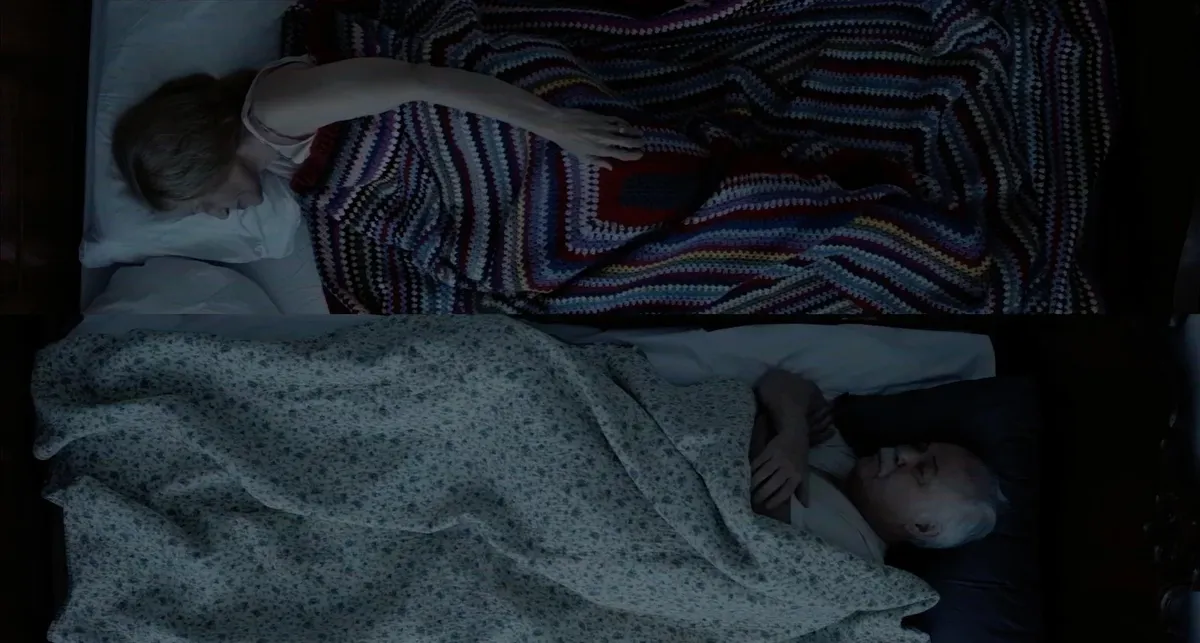
What does it feel like to leave your family in a place where you can never return? Maryam fled Iran literally in “sheep’s clothing”, hiding inside a herd that crossed the mountain border. Now lives and works in America. But part of it remained in Tehran. There, in a large, beautiful apartment in the modernist house designed by her architect father, where she grew up, mom and dad live. Already very elderly. Maryam is bored, she came up with the idea of installing CCTV cameras in all the rooms, in the courtyard. Now she has 24-hour screen access to her “distant loved ones.”
Flickering images on the screen become a way to maintain family connections across great distances. But how can you help them at such a distance?
They cook, watch TV, walk, sleep. Even when they dance - each in their own room - the heart clench. She's with them. Does this make it easier or harder for her? We see old photos: in the sixties, her parents were part of the country's liberal intelligentsia, advanced fashionistas. With the help of photo chronicles, we remember the Iranian revolution of 1978 and the Iran-Iraq war, which suddenly fell on people two years later. The overarching visual metaphor is soaring white birds, sometimes they “soar” excessively and intrusively.
Only from the credits do we learn that everything we saw was a complex reconstruction. I know that in the documentary community there are many opponents of such films. But the authors managed to create an emotionally charged meta-plot about broken ties - today, it seems, this topic is one of the most important.
“Paykar” (2025) is the debut feature-length work of the Afghan-Dutch director Daoud Khilmandi, the world premiere took place at the IDFA festival in the Luminous section.
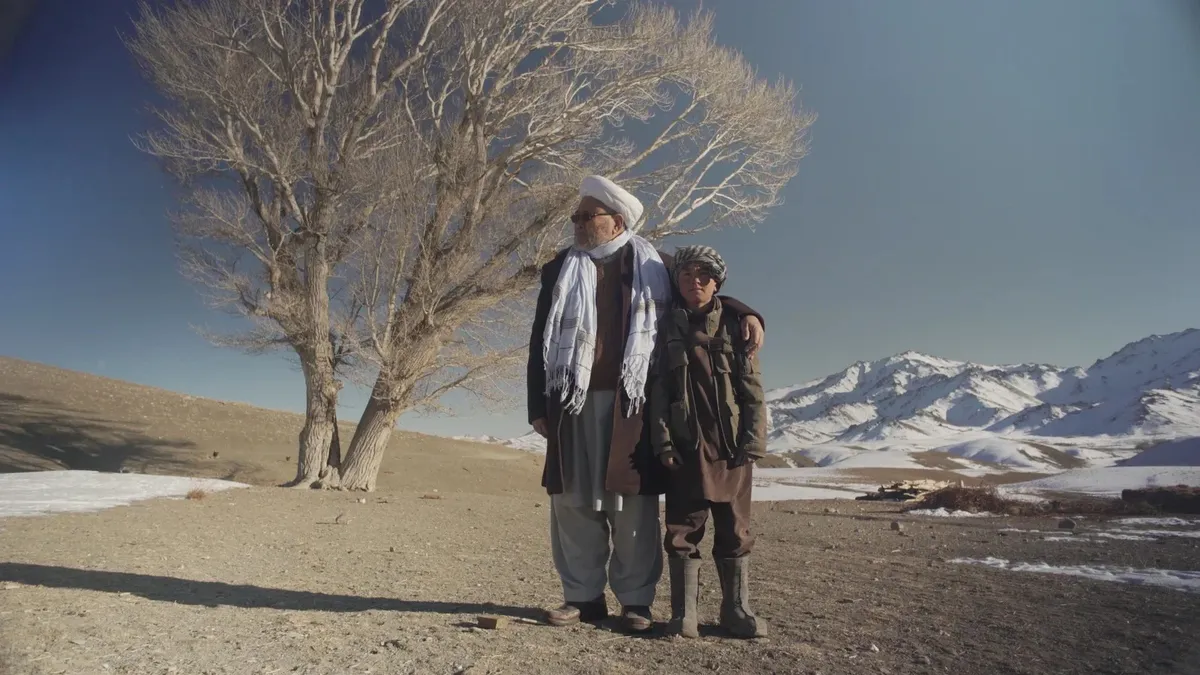
Through family optics, the story is about how war cripples the destinies of different generations. About the painful and difficult reconciliation of father and son.
Daoud, born in Afghanistan and raised in Europe, goes on a journey with his elderly father, Baba, once a mujahideen commander turned religious imam and poet. Together they explore Baba's past, moving from Afghanistan to Iraq and Iran. How a father distributed weapons to his children, turning them into soldiers. How the children were afraid of their tough, stern father. Dowd makes a tense, honest film, making difficult confessions, breaking the reinforced cultural taboo on public discussion of intra-family problems in a radically patriarchal society. The author is trying to overcome the distance that has arisen over the years of separation between him and his parents. Gradually, behind the authoritarianism and silence, he discovers the “other side” of his father, who, as it turns out, writes poetry, reflects on the fate of the world, and suffers from mistakes made in the past. The author is ready to forgive and forget, but he wonders how the traumas experienced by parents are inherited by subsequent generations? And does memory have a therapeutic property, or does it only bring pain?
“Winter has come” is a subtle, airy Iranian cinema. 16-year-old Sogol and her six-year-old named sister Delaram live with their family in the Zagros Mountains, leading a nomadic life among the mountains, industrial waste, wildlife and age-old traditions. The approach of winter seems like another difficult test. But they learned to take care of each other, creating their own microworld - a safe space. Sogol dreams that Delaram will receive an education and be able to choose a different life. The main thing is to survive the winter and withstand the approaching snows.
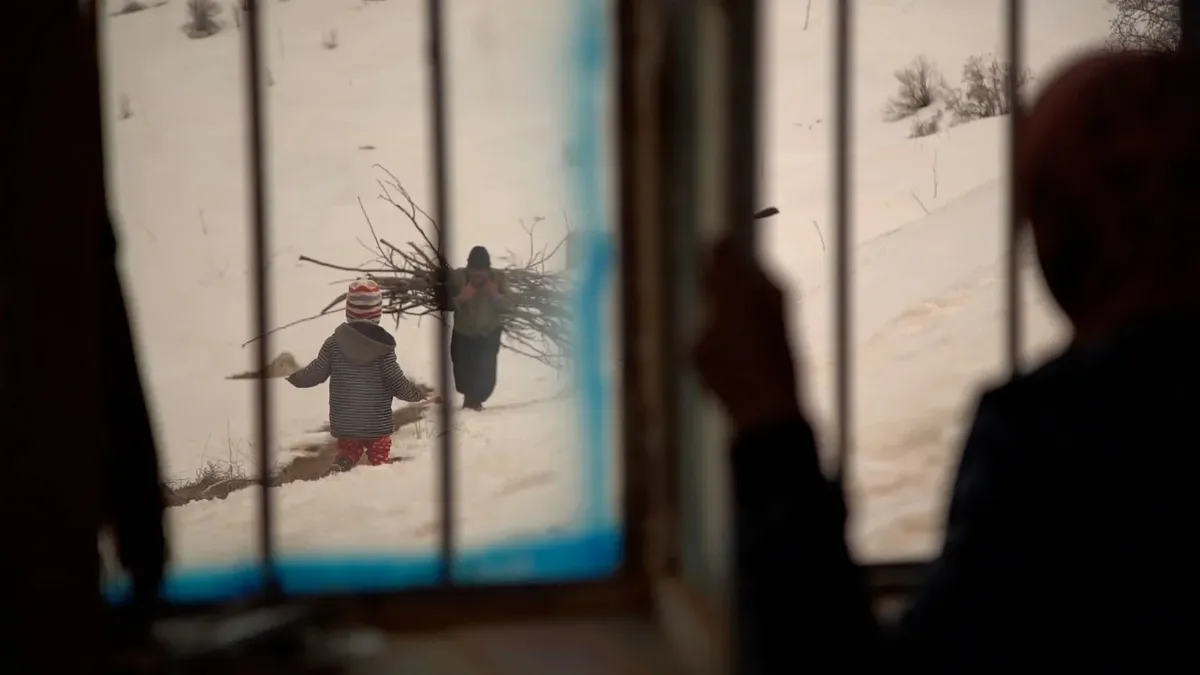
Landscapes of rare beauty, devoid of gloss, are mesmerizing. In the Zagros mountains there is a pressing, unsafe, but at the same time majestic force that dictates its own rules of survival.
Cinema rooted in the traditions of the Iranian cinematographic school. Here the line between ethnographic observation, document and poetic parable, which forms the prose of everyday life, disappears imperceptibly. Collecting firewood, trading, snowfall - the passage of time is associated with the experience of growing up and the existential struggle for one’s own life in the world of patriarchal structures, bureaucracy, the onset of the city (city garbage and industrial waste flows into the mountains). This entire avalanche is opposed by the care and tenderness of two fragile girls who cannot be broken.
The world premiere of the film took place as part of the international documentary competition program at the 29th Tallinn Dark Nights Film Festival (PÖFF) in November 2025.
“The Land at the Kalinov Bridge” (2026) is a black and white drama by Alexei Tikhomirov, a story about the life of the last inhabitants of Atlantis, a northern village that is disappearing before our eyes.
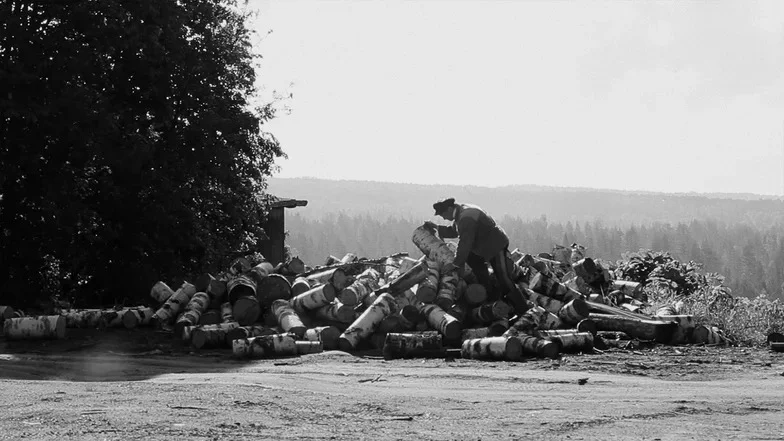
Two old men who refused to leave their home remained to live among the remains of the remote but once prosperous village of Proskurnino. All the residents have left a long time ago, the village is not even on the maps. But they exist.
Kalinov Bridge in Slavic folklore is the border between the worlds of the living and the dead. The space of the film balances on this border. And the old people themselves seem to live outside of time, just as their ancestors lived.
They walk on water, cook, wash, chop wood to heat the drying out stove, mow the grass and encroaching hogweed, and shovel snow in winter. A cat sleeps on your lap, a dog looks into your eyes. The silence is broken only by the TV, which is on in the evening, reminding us that besides Anna and Kolya, there are other people on planet Earth. Alexey Tikhomirov is faithful to the idea of slow cinema. His film is an anthropological study of human solitude, the right to choice, to “self-determination”, which should be available not only to countries, but to every person.
In the climactic scene, dozens of people come to the village of Proskurnino - children, grandchildren, former neighbors who once left for the cities. On this day, an abandoned, almost dead village is resurrected for several hours. A noisy feast with songs flying into the open sky is a session of communication with those who lived here before. Everyone will leave, only Anna and Kolya will remain. He is 74, she is nearly ninety. One day Kolya came to this house to spend the winter... Later in the credits we learn that Anna was also gone.
MORE ABOUT CINEMA
Larisa Malyukova runs a telegram channel about cinema and more. Subscribe here .