
Translated material
Special crap
How they are trying to return the system of special storage to libraries - and whose experience they rely on

Photo: Sergey Bulkin / TASS
“The class struggle in the field of literature and art has recently taken on more and more new forms. In particular, on the ISO front, Glavlit discovered skillfully disguised attacks by the class enemy. Through various combinations of colors, light and shadows, strokes, contours, disguised using the method of “mysterious drawings,” clearly counter-revolutionary content is smuggled through. <…> All censors related to posters, paintings, labels, photomontages, etc., should establish the most careful examination of these products, not limiting themselves to attention to the external political content and general artistic level, but especially carefully look at the entire design as a whole, from different angles (contours, ornaments, shadows, etc.), often resorting to the use of a magnifying glass.”
From order No. 39 of Glavlit dated February 14, 1935
And they say there is no time machine. Everything exists in Russia! For our powers are limitless. But only in moving backwards.
We don’t know how to move forward and somehow we don’t really want to. And back - please, as much as you like. When I read the fiery speech of Deputy Minister of Culture Zhanna Alekseeva about the revival of the special crap (crossed out) of the special storage facility, I thought that I had slept for more than 30 years, and I was simply dreaming about the years without censorship. And he opened his eyes, read the news and calmed down - everything was in place, familiar, habitually musty, overgrown with mold. The document I quoted in the first paragraph can easily be seen in circulation today.
I probably also dreamed of the order of Glavlit, then living out its last days, dated 1990 “On the liquidation of the special storage facility,” which transferred all books to the general fund without control and without accounting. However, the logic of the development of the incredibly exciting business of eradicating “hostile” literature and strangling the book industry always inexorably leads to special storage facilities.
The general director of Leninka, Vadim Duda, where the special storage facility is now being recreated, complains that the work is very difficult and time-consuming. The process of forming a structure so necessary for every self-respecting state is still in its infancy. But we have at our disposal the rich history of Soviet special storage facilities, and it clearly shows what kind of monster a newly born child of censorship can develop into.
Access to unwanted books has been limited “since ancient times,” there were closed collections in Tsarist Russia, but we are interested in the phenomenon of Soviet special depositories, which the current one inherits. They are unique, first of all, for their scale. Their volume is difficult to imagine. Soviet censorship lists (and there were many of them) included up to 10 thousand titles.
Censorship historian Arlen Blum wrote that in special storage catalogs, Glavlit lists, circulars and orders, the number of Russian publications alone that passed official Soviet censorship and were subsequently banned exceeds 100 thousand titles. As for the total number of destroyed copies, there were more than a billion (!) (and this does not take into account the millions of books that were simply destroyed as a result of mass “cleansings” of libraries at different levels). The latest data is for 1987: the Special Collections Department of the Russian National Library by that time contained up to 800 thousand items: about 27 thousand domestic books, 250 thousand foreign publications, 572 thousand issues of foreign magazines, about 8.5 thousand annual sets of foreign newspapers.
Of course, the volumes and lists of special storage facilities were constantly changing. Something became accessible, something, on the contrary, was classified. But the second was invariably an order of magnitude greater than the first.
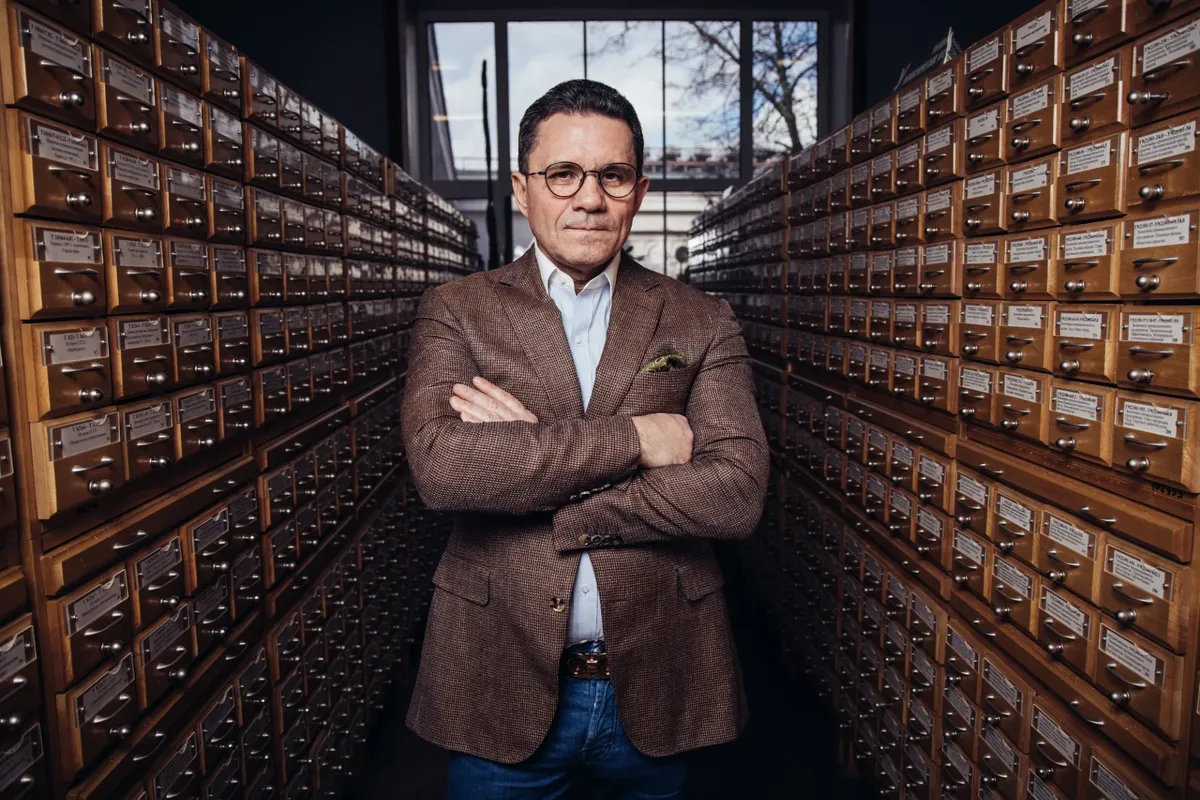
Soviet special storage facilities are the embodiment of secrecy. Everything and everyone was classified. In 1928, the censor of the newspaper “Pskov Alarm” received, poor fellow, a reprimand: he let the regional plan for the export of milk mushrooms go into print.
In the first years of the revolution, special depositories as organizations did not yet exist, but archivists and librarians themselves tightly closed the collections precisely because of the paranoid regime of secrecy caused by the Civil War. Actually, the official appearance of the first special storage facility in 1920 was the result of this regime of secrecy, the institutionalization of a policy that had long existed in the localities.
The first by-laws on special storage were issued by the Soviet authorities in 1920. These are the “General Provisions for the Rules for the Use of Archival Materials for State, Scientific and Private Needs.” Already in this document restrictions were established: “cases recognized by the GUAD (Main Directorate of Archival Affairs) not subject to disclosure will not be issued.” Moreover, there was an important postscript: “without specification,” that is, no one was going to explain why this or that publication was banned. And even now they are not particularly eager.
And the first special depository was formed in the Book Chamber. The initial task of the Book Chamber, formed in 1917, was to register printed materials and preserve legal deposit of all publications. The situation changed, again, in 1920, when the chamber, by decree of the Council of People's Commissars, was obliged to receive three copies of secret literature (publications of the Red Army, the Revolutionary Military Council of the Republic, the Cheka). It’s funny: the special storage facility was originally intended not to protect against “enemy” materials, but to store “our” secrets. However, already in 1921, the special depository of the Book Chamber began to receive emigrant newspapers and magazines, and in 1922, confiscated books published without censorship permission.
Special depositories in libraries were created on the basis of a resolution of the Council of People's Commissars of the RSFSR dated December 12, 1921. By 1923, three more or less identical special depositories had been formed - in the Book Chamber (in 1924, all its functions were transferred to the special depository of the Lenin Public Library), the Moscow library of the Rumyantsev Museum and in the Petrograd Public Library.
Thus, special storage facilities have always had several tasks. Along with direct censorship, the government also ensured secrecy. By the way, most of the documentation on special storage facilities was classified as “secret”.
And in 1923, the special storage facilities came under the jurisdiction of a new body, the name is familiar to everyone who lived in the USSR: the Main Directorate for Literature and Publishing, or Glavlit. The process of centralizing the management of archival and library affairs was more or less completed, the system was built.
The instructions for Glavlit (secret, of course) were developed by the agitprop department of the Central Committee. The first points in it read: “a) Glavlit in the field of fiction, on issues of art, theater and music, liquidates literature directed against Soviet construction; b) literature on issues of philosophy and sociology of a strongly idealistic direction is not allowed; c) literature on natural science that is clearly not of a materialistic direction is not allowed; d) from children's and youth literature, only authorize publication of literature that promotes communist education; e) from religious literature, only literature of a liturgical nature is allowed to be published.”
Libraries had to be guided by the regulations of Glavlit and its bulletins - of course, top secret. Arlen Blum provides examples of such a document: “Bunin I.A. Scream. Sat. stories. Berlin, Slovo Publishing House, 1921. A pretentious collection of naturalistic stories, trying to find a justification for the revolutionary catastrophe in the natural cruelty of the Russian people.”
One of the first instructions required the removal from libraries of books published by all parties except the RSDLP-RKP(b), as well as “textbooks and books praising monarchism, kings, ministers, the church, wars, capitalism” published under the tsarist government...
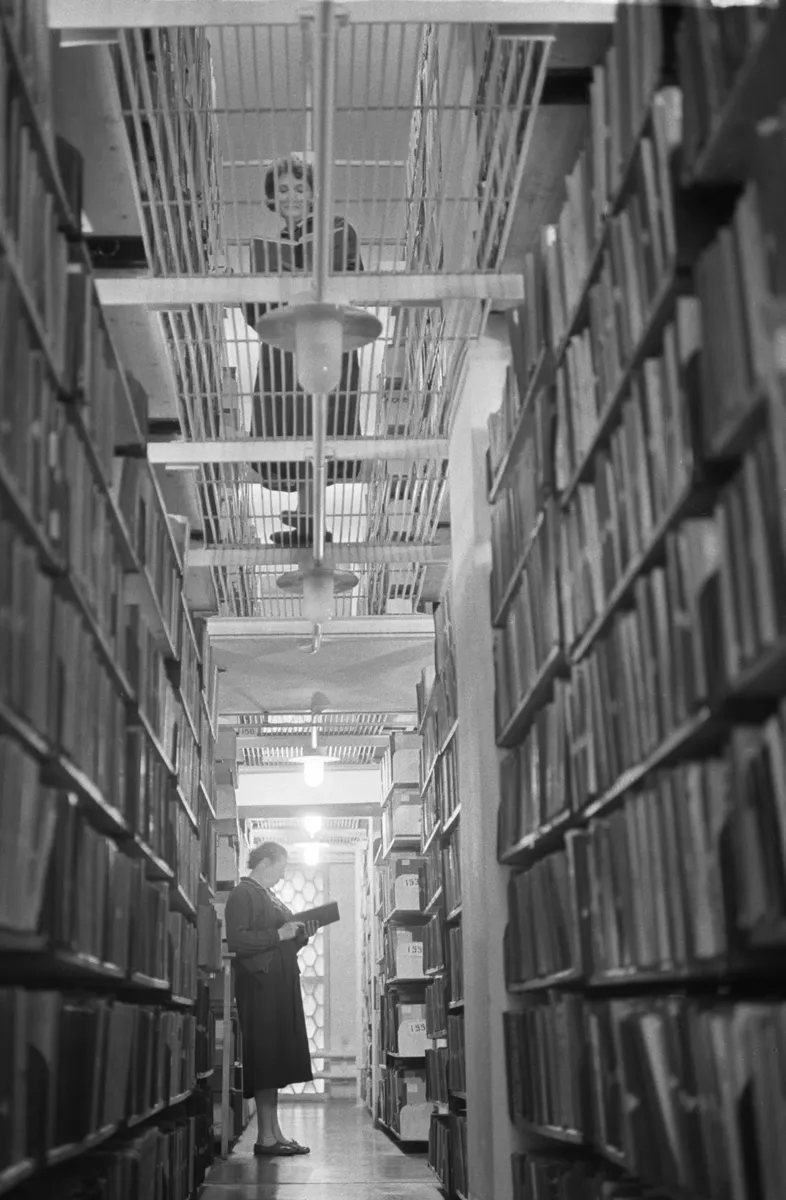
In 1925, the press department of the Central Committee identified “a list of hostile emigrant publishing houses whose books, regardless of their content, are not allowed into the USSR,” writes historian Mikhail Zelenov.
The collections of special depositories steadily expanded: political publications were supplemented with popular, fiction and historical literature. For example, foreign editions of “The Queen of Spades” by A.S. ended up in special storage facilities. Pushkin and even “The Development of Socialism” by F. Engels.
During the years of the rejection of NEP, industrialization and collectivization, special storage facilities played another, very vile role. The fact is that Stalin’s struggle with the opposition began, and not only repressive methods were required here. After all, they had to be substantiated, a pretext for persecution had to be found. And it was then that the special storage facilities showed themselves in all their glory, because it was in them that documents about the past of party members were kept. Oh, that was very helpful! Back in 1926, Stalin used archival documents of Zinoviev and Kamenev from 1917 to politically discredit them. So the special storage facilities also became an instrument of political struggle and conductors of Soviet ideology.
Of course, special storage facilities and Glavlit have always existed in close connection with the Cheka-OGPU-NKVD-KGB. Where there is secrecy, there are organs.
Back on January 28, 1918, by decree of the Council of People's Commissars, the “Revolutionary Tribunal of the Press” was formed, under whose jurisdiction were “crimes and misdemeanors against the people committed through the use of the press.” The penalties included “deprivation of liberty, removal from the capital, certain localities and borders of the Russian Republic.” This new judicial body acted hand in hand with the Cheka.
Archivists, librarians and security officers worked together to identify “enemies of the people” (and themselves found themselves in their ranks). The maintenance of secret department funds, access to special storage materials - all this was subject to agreement with the authorities. In 1937, the leadership of the Central Archives Administration addressed the question of how to dispose of the archives of the enemies of the people Rykov, Bukharin, Radek, Enukidze and others, not to civilian leaders or even the party, but to People's Commissar of Internal Affairs Nikolai Yezhov.
During the years of the Great Terror, materials from special storage facilities played a major role in obtaining evidence against those subject to repression. At some point, the archives were only engaged in issuing certificates and materials at the request of the NKVD; There was practically no talk about scientific work.
Closed collections have proliferated in libraries since the 1920s. There was even a fund with the self-explanatory name “Don’t give it to the masses.” The studies and memoirs of emigrants sent from abroad ended up there; all literature about the political situation in the USSR and the party struggle, books about the social democratic and communist movement in Europe... Books on history were under especially close attention. Thus, the books of Academician E.V. were withdrawn from circulation. Tarle.
In subsequent years, the lists of books confiscated and subject to storage in special storage facilities only increased - literally with each process. After the murder of S.M. Kirov in December 1934, the Politburo of the Central Committee of the All-Union Communist Party of Bolsheviks decided to remove from the libraries all books and articles by Zinoviev, Kamenev and Trotsky, then - books of all authors involved in numerous “Trotskyist-Zinoviev” cases, then - all books that mention such authors and, of course, this trinity itself.
For example, John Reed’s once famous book “10 Days That Shook the World” ended up in special storage. John Reed was an American journalist who ardently sympathized with the Bolsheviks and an eyewitness to the events of 1917. He died in Russia in 1920 from typhus and was buried near the Kremlin wall. The preface to the book was written by Lenin personally, but Stalin at some point felt that Reed was too carried away by depicting Trotsky’s personality and his role in the revolution. And the book flew into a special storage facility until 1957.
By the end of the 30s, there was no trace left of the internal party opposition, even the mythical one, and the role of the special storage facilities changed again. They became, essentially, a party body: since January 1938, the confiscation of every book and magazine was carried out only with the permission of the apparatus of the Central Committee of the All-Union Communist Party of Bolsheviks. During these years, special storage facilities appeared in museums... And the archives were transferred to the NKVD. And Glavlit was subordinate to the Ministry of Internal Affairs, although not for long, only a few months in 1953.
We can summarize:
Special storage facilities performed primarily censorship, ideological and political functions, and only lastly the tasks of preserving cultural and historical heritage and scientific work.
Now we are seeing something similar, although, of course, there are some differences.
Attempts to restrict access to books in modern Russia began to be put into practice in the 2010s, but for a long time censorship was targeted and based on a register of extremist materials. The first lists to restrict access to books by “foreign agents” appeared at the end of 2022. And the first bill restricting access to books appeared only in 2024. Then a group of deputies led by Elena Yampolskaya (now a presidential adviser, then serving as head of the Duma Committee on Culture) pushed in every possible way an initiative to limit access to Ukrainian propaganda literature in the libraries of the so-called “new territories” and about the peculiarities of storing books written by “foreign agents and extremists.” The law passed the first reading and suddenly stalled. It has still not been accepted.
What is interesting here is that at first initiatives of this kind came not from the authorities, but “from below,” from the librarians themselves, as in the first years of the revolution. But the scale, of course, is incomparable: under the Bolsheviks it assumed a total character, which cannot be said about the current situation. We're keeping a low profile for now.
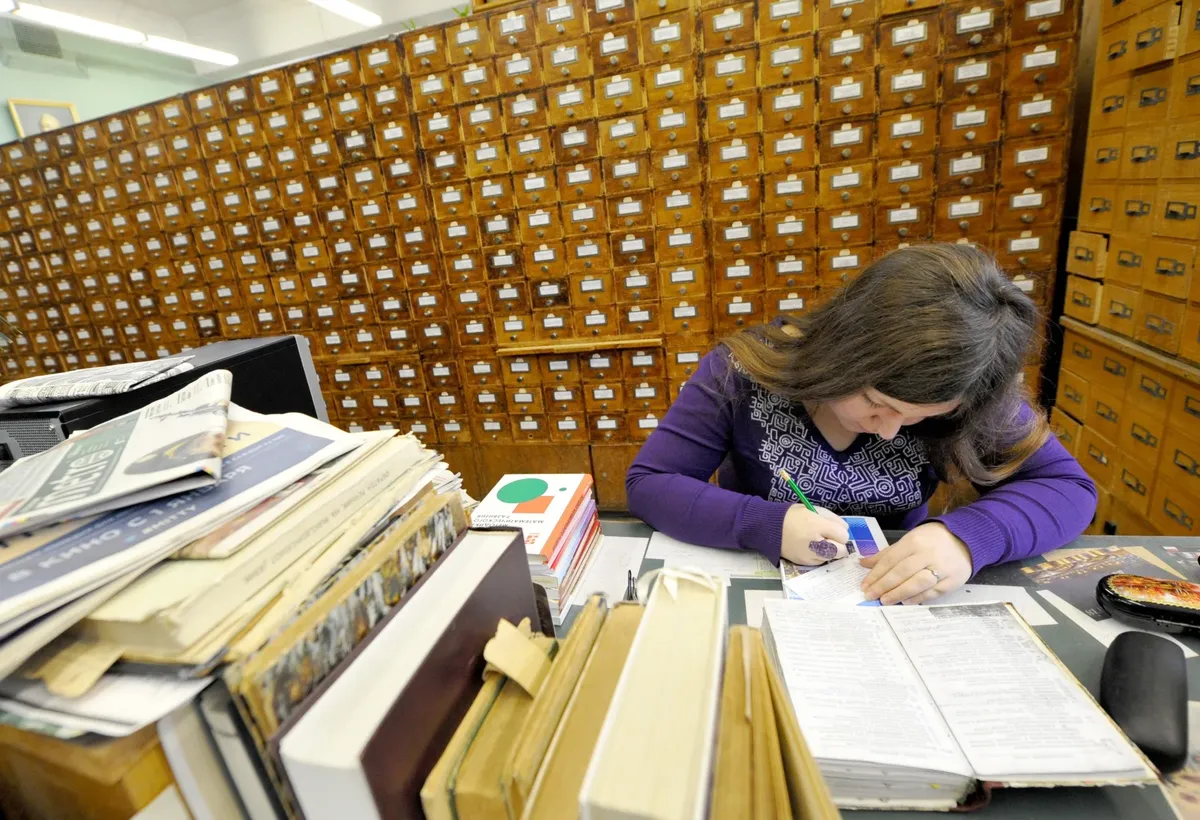
What about legality? Nothing. The Bolsheviks at least had regulations, but we... General Director of the RSL Vadim Duda said that work on the formation of a “special storage” began exactly in 2024 on behalf of the Ministry of Culture. And what the RSL is doing now, in terms of content, copies the provisions of Yampolskaya’s initiative: restricting access to Ukrainian literature and, apparently, “foreign agent” literature. Only this was all formalized by an internal departmental order, which, by the way, is not publicly available (or it is very difficult to find, I haven’t found it. Secrecy?). It turns out that they did without the law.
What do we even know about the new special storage facility? Not very much. Back at the end of 2025, in an interview with Vedomosti, Duda said (and confirmed in June 2026) that the RSL had launched a “special storage facility for Russophobic books” from new regions. According to him, it includes “overtly nationalistic” and history-distorting publications that “were printed long ago on the territory of Ukraine and remained in the library collections of Donbass and Novorossiya.”
Duda emphasized that
The “special storage” also contains books that “deny and ignore the role of Russia in the Great Patriotic War” or “groundlessly attribute unpleasant qualities to the Russian people, for example, such as savagery and cruelty.”
“There are also works that crudely manipulate history. For example, the book “Russia’s Wars against Ukraine from the 11th to the 21st centuries,” which in itself sounds like absurdity,” said the general director of Leninka.
He then gave a description of the process of selecting books for the special depository. The primary selection fell on the shoulders of librarians from the cities of the so-called “new regions,” primarily Donetsk and Lugansk. The publications they select are reviewed by an expert council at the Russian State Library. If this council decides that books have “Russophobic content,” then one or two copies end up in Leninka’s “special storage.”
Deputy Minister of Culture Zhanna Alekseeva, on the sidelines of the St. Petersburg International Legal Forum (SPBILF), said that Russian libraries have stopped replenishing their collections with books by “foreign agent” authors. “We consider it unacceptable to use information products produced by foreign agents during book exhibitions and cultural and educational events,” she added (in fact, this is “our answer to Chamberlain,” that is, to complaints from the book industry that censorship legislation threatens libraries with huge losses).
So, which publications are at risk of special storage? Literature published in Ukraine. Historical literature, especially military history. The broadest interpretation can be given to “attributing unpleasant qualities to Russian people”: an ocean of possibilities. Probably books by “foreign agents”. Well, the choice is wide.
I would especially like to note that all these books are not officially banned. There are no court decisions on them. They are not included in the registers, including the list of extremist materials. Even the general director of Leninka admitted that books from the special storage facility are not formally subject to restrictions. Duda simply considers it necessary to minimize their presence in public funds.
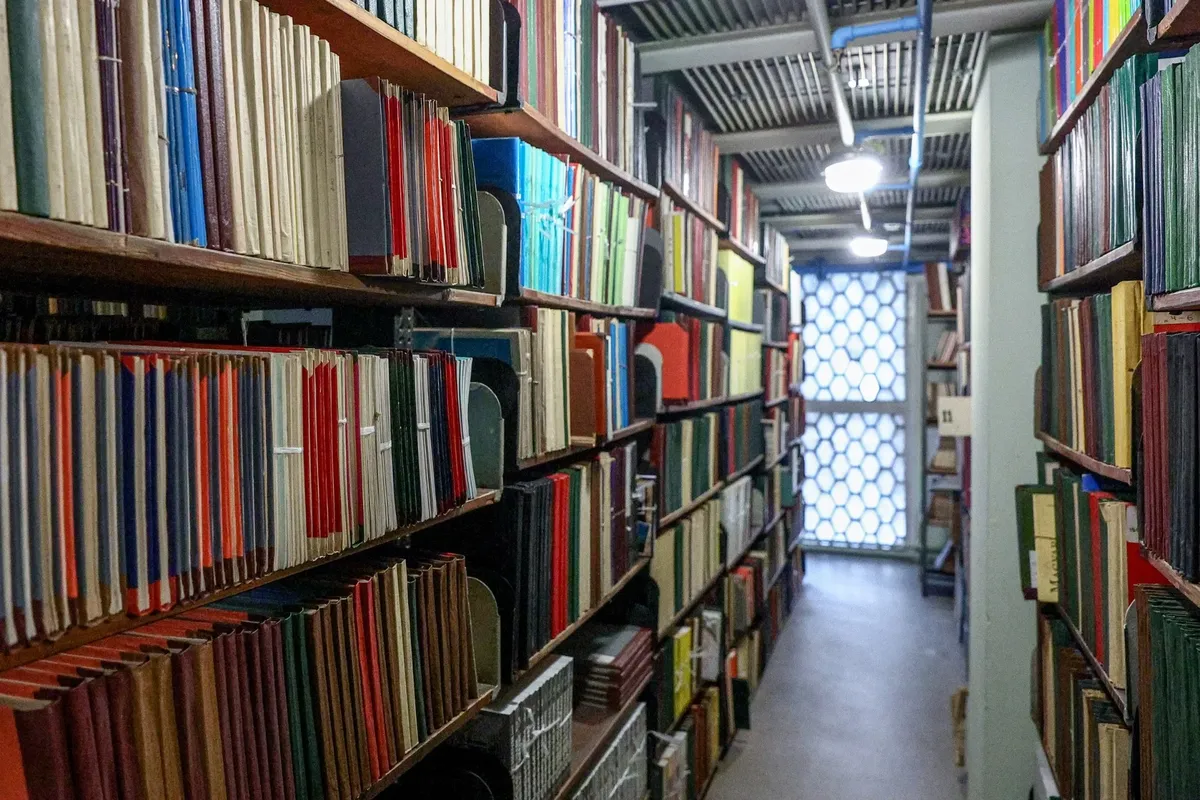
The question arises: is this even legal, even by our current standards?
And in general, what is the volume of the current special storage facility? Duda kindly provided this data. In November 2025, he reported that the new special storage facility contained 10–12 thousand copies of “Russophobic” publications. In June, he provided different data: about 18 thousand publications. So we are seeing strong growth dynamics at a rate of 6–8 thousand publications in six months. Well, not millions, of course, but we got off to a brisk start.
One more thing. During the Soviet years, all books that mentioned repressed people in one way or another were put into special storage (or destroyed altogether). For example, two poems by the Polish poet Bruno Jasieński were included in an anthology of Polish poetry published in 1932. He was shot in 1937, and the anthology ended up in a special storage facility. The books of one of the most quoted writers in Russia today, George Orwell, were strictly prohibited for decades. Имя его не могло появиться в открытой печати даже с целью охаивания (приключения книг Оруэлла в СССР могут послужить материалом для отдельной большой книги. Например, роман «1984» распространялся не только там- и самиздатами, но был вполне официально переведен на русский в язык в 1959 году — исключительно для высшей партийной элиты, слабо разумевшей «по-аглицки». Это специздание даже в спецхраны не попало, рассылалось сугубо адресно).
«Частым поводом для запрета книг был, говоря на литературоведческом жаргоне, так называемый конвой (вспоминается в связи с этим сочиненный кем-то в годы застоя пародийный лозунг: «Искусство идет впереди, конвой идет сзади») — то есть предисловия, послесловия, вступительные статьи или примечания лиц, подвергшихся позднее политическим репрессиям», — писал Арлен Блюм.
И что мы наблюдаем сейчас? Списки попавшей в спецхран литературы Дуда обещал опубликовать на сайте Национальной книжной палаты, но они пока там отсутствуют (опять секретность?). Но там есть «деструктивный» список «иноагентских» изданий, где обозначены не только книги авторов-«иноагентов», а всё, к чему «иноагенты» вообще имели отношение: предисловия, переводы, вступления, комментарии. Это в чистом виде «конвой» — шаг вправо, шаг влево…
В общем, можно сказать, что
по теме спецхрана мы сейчас находимся где-то на уровне 1920 года и у нас еще всё впереди. Очень хотелось бы, чтобы история не повторялась, но шаг к этому мы уже сделали.
И еще одно, напоследок. Более всего не хотят говорить о цензуре сами цензоры. Само это слово «в Советской России попало под запрет: с конца 20-х годов слово «цензор» стали везде заменять эвфемизмами: «уполномоченный при издательстве», «редактор».
Его не шибко жалуют и сейчас. «Мы не занимаемся цензурой в том смысле, в котором это пытаются представить. Наша задача — аккуратно и бережно собрать эти издания в одном хранилище, предназначенном для научной и исследовательской работы. Это не акт уничтожения, а акт сохранения», — пишет гендиректор Ленинки в своем телеграм-канале.
Понимают они, значит, какая стыдоба выходит. Но вы же сами назвали новый старый способ сохранения «спецхраном», никто за язык не тянул. И были абсолютно правы. They are.
А «спецхран» — это не про просвещение и не про науку, как ни вертись. Это всегда цензура. Это всегда запреты, ограничения и прочая спецхрень.
This material was published in the twenty-first issue of Novaya Gazeta. Magazine". You can buy it in the online store of our partners.