
Translated material
Let's renounce our world!
New books of the week: the history of marriage in medieval France, the memoirs of the Duchess de Montpensier and the Reformation in Europe

Collage: “Novaya Gazeta”
Three new items in historical literature: the Middle Ages, the great century of France, the Reformation. Courtly love and chivalry, musketeers and the Fronde, Protestants and freedom of conscience.
Georges Duby. “Knight, woman and priest. History of marriage in medieval France"
- Translation from French: Denis Golovalenko, edited by Tatyana Sergeeva
- "Ice"
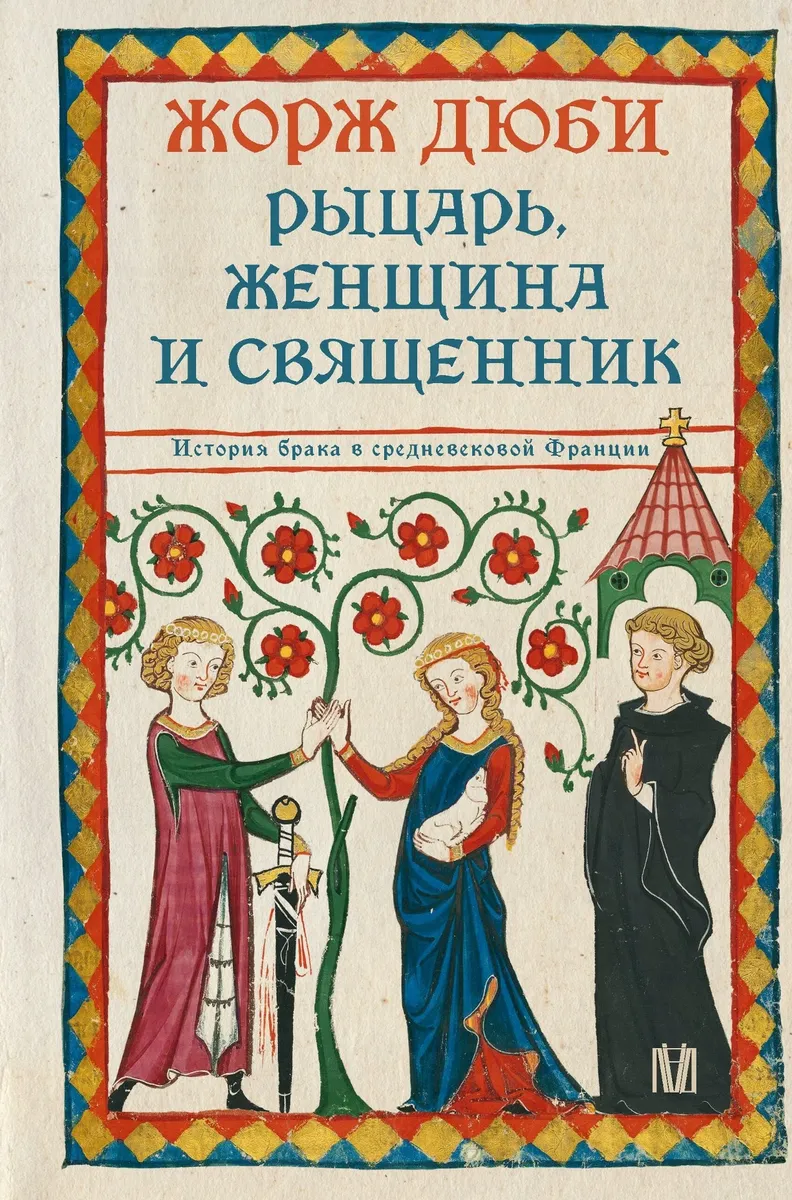
Georges Duby is one of today’s last great historians of the legendary French school “Annals”, which at one time revolutionized the idea of historical science and also became part of history. The appearance of each of his books in Russian is still an event (at least for lovers of the Middle Ages).
The “Annalists,” as these French historians were called, were politically engaged people who fought passionately for history (as another great representative of the school, Lucien Fever, called it). Georges Duby is no exception. In the Middle Ages, he saw something like a conservative ideal, created, among other things, by the historians themselves. He devoted a considerable part of his work to proving that the famous three-part model of medieval society (“work-fight-pray”) corresponded to reality - at least within the framework in which we can reconstruct it. Courage in constructing hypotheses was combined with excellent knowledge of sources, exemplary work with texts, and the use of methods from other social sciences, including anthropology. All this allowed the French historian to create, perhaps, the last consistent image of the Middle Ages for today, which at the same time claims to be complete. All this applies to his book “Knight, Woman and Priest.”
Her heroes, on the one hand, are real archetypes of the Middle Ages. On the other hand, the historian constantly “grounds” them, providing theoretical models with examples from people’s behavior in real life.
They live, they love, they die, but most importantly, they get married. According to the French scientist, family relationships are one of the nodes of the Middle Ages, which, among other things, provided it with stability unique in world history
(certainly cannot be compared with our era of turbulence) - and at the same time determined policy. This intersection of the “personal and the political” anticipated the famous slogan of feminism by about a millennium. And this same intersection, of course, is very important for Georges Duby himself. Dynastic and status marriages, which he also examines in this book, have not been taken seriously for a long time. Meanwhile, it is worth recalling that one of the latter - Isabella of Castile and Ferdinand of Aragon - led to the birth of modern Spain. That is, these marriages were a real political force - and we should not forget about it.
The opposite is also true: future wives and husbands, imbued with a sense of their own duty and Christian humility, were ready to marry or be married to whomever was pointed out to them. And it seems - there are no statistics here, of course - that family life was generally happier than it is today... but here I want to stop myself: what about living people, and not “quantities”? Isn’t man—in Clio’s irony—lost in this history of everyday life, in historical anthropology? Of course, the selection and examples of the French historian are very subjective, but representative within the framework of his concept.
But the most interesting thing about this, perhaps, is something else - medieval society believed in the way of describing itself, which Georges Duby tried to reconstruct. A strong tension arises between the ideals of courtly love, the cult of the Mother of God and knightly service, for the conflict between dreams and reality is inevitable. However, the historian sees nothing wrong with this. On the contrary, it seems to him that these vicissitudes create something like a “combustible spirit” for the era and constant self-overcoming.
Perhaps, Soviet scientists would reproach their French colleague for idealization - for all his academic rigor. However, when reading this small and extremely interesting book, one is left with the impression that it is still one of the most convincing methods of reconstructing what can be called the spirit of the Middle Ages.
Memoirs of the Duchess de Montpensier
- Translation from French: Gennady Kreimer. Preface and commentary: German Titov
- Symposium
The 17th century is rightfully considered the great century of France. Blaise Pascal and Francois de La Rochefoucauld, Pierre Corneille and Jean Racine, Moliere and Jean-Baptiste Lully, Versailles and the most brilliant court in Europe - and also endless wars, the repeal of the Edict of Nantes and the resumption of the persecution of the Huguenots. And of course, Cardinal Richelieu and the musketeers... Today it seems: the main thing that remains from this era for history is its self-awareness.
During these decades, an outstanding memoir culture in France emerged: a person turns to himself not only to describe historical (and most often tragic) events that he witnessed and participated in, but also to better understand himself. From here arise, perhaps, three main memoirs: the diaries of Cardinal de Retz, Duke de Saint-Simon and the great and beautiful Anne Marie Louise of Orleans, Duchess of Montpensier, which have now been translated into Russian.
Reading the memoirs of “The Great Mademoiselle” is as unusual as it is fascinating, because it is no coincidence that Marcel Proust himself was a fan of this text.
A huge number of names, surnames, titles, events, details - an exhaustively complete commentary helps to understand them - creates something like a luxurious curtain, against the backdrop of which the main action takes place: the Fronde, intrigue, politics as the art of the (impossible).
“The Great Mademoiselle” was a very passionate person and if she gave herself to something, then with all the fervor of her feelings. Therefore, it is especially interesting to follow her character, which clearly does not fit into the era (or at least, into our ideas about it). In fact, how many women were there in the 17th century who suddenly not only realized and created their own political subjectivity, but also participated in the civil war at the highest level? This is not an exaggeration: the Duchess de Montpensier recruited and disbanded troops (albeit small ones), entered into alliances and broke ties with the most powerful people of her time. And obviously, it influenced decision-making. Of course, in her life (and in her great memoirs) there was a place for autobiographical myth and, so to speak, an element of courtly play, suddenly transferred from behind the walls of the palace to the battlefield.
But all this is not as important as her exceptional literary talent, her ability to convey intrigue in the text, the proud and sometimes self-ironic sound of the author’s “I” from the pages of this book. And yes, in her own way, she also had to break the prejudice against women in politics - and she did it brilliantly. Each time, making the decision to intervene in political battles, Anne of Orleans was guided by both reason and feelings - and not least the feudal hierarchy, to which she was devoted. This did not stop her from seriously thinking about limiting royal power, albeit at the expense of strengthening the rights of the nobility. Unlike most politicians today, she (like many of her contemporaries) professed her views much more openly - and remained faithful to them.
Her memoirs are not lamentations about “times and mores” in the spirit of La Rochefoucauld, not an attempt to justify ourselves in the spirit of Cardinal de Retz, and not even a doomed desire to capture an elusive reality in the spirit of the Duke de Saint-Simon. She wanted first of all to understand herself in history. The high title guaranteed her freedom from political persecution after her case was lost. And the Duchess de Montpensier also did not need to prove her case once again - she believed that she did it with her actions.
She approached writing the book of her life with all thoroughness, understanding that she was creating a new genre of literature. Before us is perhaps the best self-portrait against the background of the era - and, moreover, brilliantly translated into Russian.
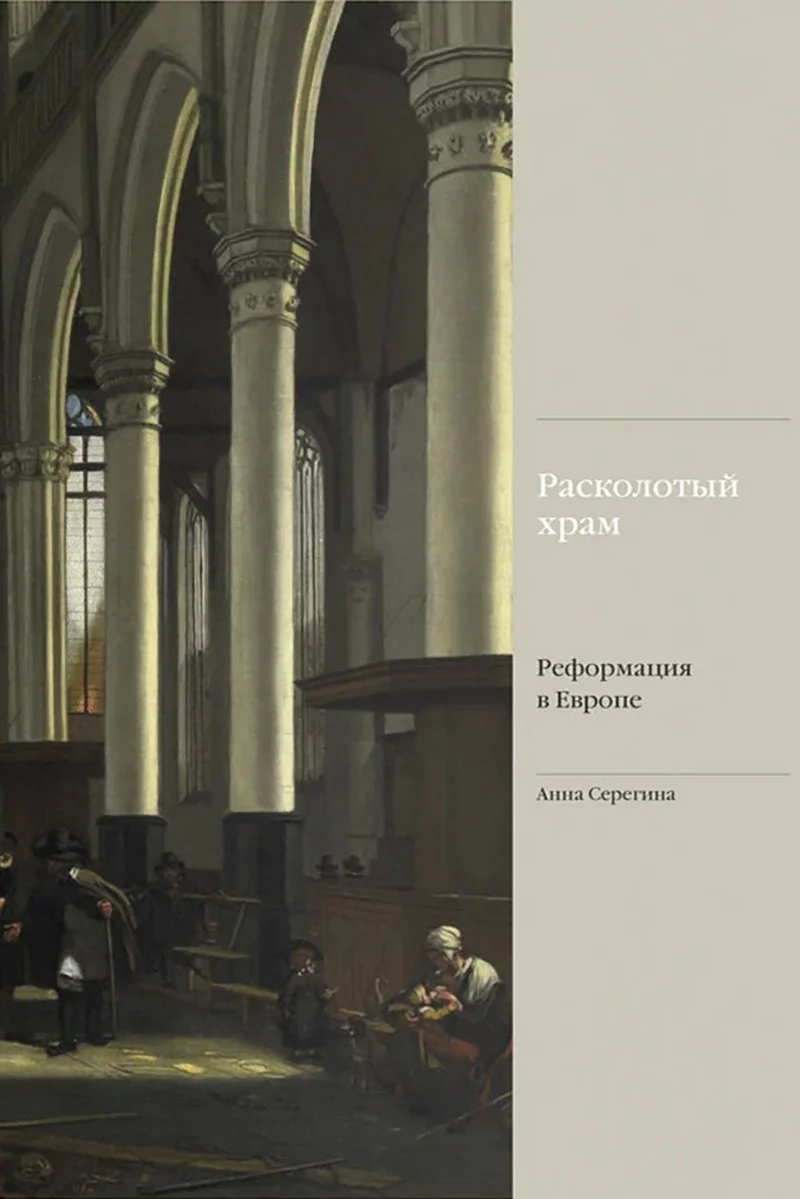
Anna Seregina. “The Shattered Temple. Reformation in Europe"
- Slovo
With rare exceptions, the best books on the history of Protestantism were published in Russian before the revolution. And this is understandable, because the Marxist interpretation extremely limited the range of research topics in the history of the great religious schism of the Western world. With the light hand of Max Weber, the idea that the Protestant ethic shaped the spirit of capitalism (and therefore, indirectly, the so-called “collective West” that exists in the strange historical imaginary of some of our leaders) began to be perceived almost as truth. That is, Soviet historians seemed to understand that this was a very important event that, without exaggeration, changed the course of world history, but due to the fact that it was too closely connected with religion, they preferred to bypass it a little. With the exception of one subject - the Peasant War in Germany, to which Friedrich Engels dedicated one of his classic works, thanks to which this topic still remained in the research field. And then with one important amendment: Soviet historians should not have overestimated the importance of the religious factor, otherwise the communist idea itself would have appeared as a utopia. Perhaps, what has been said is already enough to understand: Anna Seregina’s beautifully written and superbly illustrated book throws a real historiographical bridge over the abyss.
The Reformation did not come out of nowhere, but it followed an important tradition: attempts to bring the church - if it serves as a mediator between God and man - a little closer to people in order to save more souls. A person wants to read Scripture in understandable language in order to believe even more deeply - and to understand even better what he believes. What is this if not an inalienable right, since these people lived in a thoroughly religious society and cared about the salvation of their souls? If the more or less modern Western world begins with this, then we are talking about the right to freedom of conscience and access to knowledge.
Anna Seregina reminds us: the main paradox of the Reformation is that it was started by people who believed in God so deeply as we cannot even imagine. The religious passions of Martin Luther, Philip Melanchthon, John Calvin best testify to their sincerity, their indifference, their desire to comprehend the truth and not make a deal either with their conscience (they are for its freedom) or with the state (they are against its interference in religious affairs). Even the outbursts of Protestant religious fanaticism become better understood in this context. Protestantism stands at the origins of the first modern revolutions - and the very first political thought of the New Age - insisting on freedom of conscience, which begins all other freedom. The Reformation was a revolution, and one of the most powerful and influential in world history. The book talks about this - but not only.
Expanding the context deeper into the Middle Ages, the author shows that the seeds of the Reformation were sown back when the church enjoyed almost unlimited power and, it seemed, nothing foreshadowed its crisis.
Medieval society is religious in its very essence; rites and rituals in one form or another form the very fabric of life and organize everyday life. But it is clear that in such a world attention to religion will be especially acute - with all its advantages and disadvantages. (There’s no escaping the historical parallel: maybe the church shouldn’t merge with the state in a symbiotic embrace after all?)
From this point of view, the Reformation is one of the few almost objective historical processes that had to happen sooner or later. And now the circle is closing, because isn’t that what the bearded classics of communism wrote about? They were echoed by the outstanding Soviet historian of philosophy Erich Soloviev in his work “The Past Interprets Us,” dedicated, among other things, to Martin Luther. Who, perhaps, really knew some great truth.