
Translated material
General's posthumous term
Who was Ratko Mladic and why the executioner of Srebrenica is still called a “hero”

Ratko Mladic. Photo: AP / TASS
Ratko Mladic died on August 27 in The Hague at the age of 84 - a UN prisoner serving a life sentence. The judicial part of his biography was finally completed by this time: the International Criminal Tribunal for the Former Yugoslavia found the former commander of the Bosnian Serb army guilty of genocide in Srebrenica, crimes against humanity and war crimes, and the appeals chamber upheld the life sentence in 2021.
The dispute about another part of his biography has not ended.
For Bosniaks and the families of the more than eight thousand Muslims killed in Srebrenica, Mladic is one of the main organizers of the largest massacre in post-war Europe. For Serbian nationalists, he is still a “hero” who lost not a war, but a political duel with the West and its court.
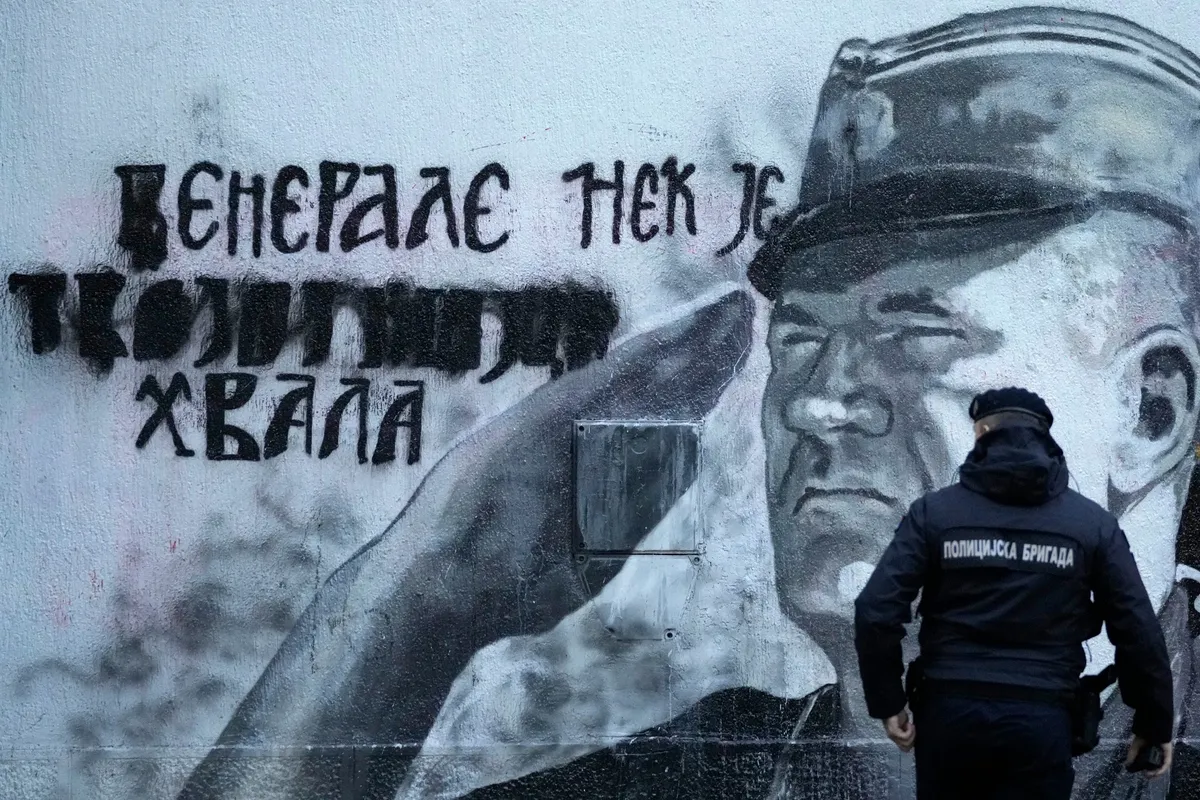
However, it is incorrect to talk about a unified “Serbian attitude” towards Mladic: the Republika Srpska as part of Bosnia and Herzegovina is not Serbia, and public sentiment on different sides of the Drina River differs markedly. In Serbia itself, murals of Mladic have been appearing in Belgrade and other cities for many years, and his portraits are carried at rallies. The paradox of Mladic lies precisely in this: a man whose criminal responsibility was established after a multi-year international process remained a symbol of valor for part of society. To understand the persistence of this cult, it is not enough to list the crimes. We need to understand who Mladic himself was and who he managed to appear to those who considered him one of their own.
Son of a partisan
Ratko Mladić was born on March 12, 1942 in the village of Božanovići near Kalinovik in Bosnia. His father Nejo, a Yugoslav partisan, died in 1945 in a battle with the Croatian Ustasha, Nazi sympathizers. The son of a deceased partisan made a career in the multinational Yugoslav People's Army: he studied in Belgrade, served since 1965, spent most of his career in Macedonia and by the time the country collapsed had a quarter of a century of officer experience.
In 1991, when the Yugoslav federation was already falling apart, Mladic was sent to the Croatian Knin, the center of the self-proclaimed Serbian Krajina. In August he ordered an attack on the nearby village of Kiev; a court in the Croatian Sibenik later sentenced him in absentia to 20 years in prison for this episode. According to the Hague Tribunal, the attack was precisely the moment when the JNA (Yugoslav People's Army), under the command of Mladic, openly sided with the Serbian forces.
In October he was promoted to major general ahead of schedule. On May 12, 1992, the Bosnian Serb Assembly created the Republika Srpska Army and appointed Mladić as Chief of the General Staff. He remained in this position throughout the war.
It was here that his second biography took place.
"Soldier's General"
Mladic differed from his political boss, Republika Srpska President Radovan Karadzic, in almost every way. Karadzic acted as a nationalist tribune: he embodied the image of a civilian leader who came to power on the wave of Serbian nationalism, and was the main ideologist of the movement. Mladic defiantly remained a military man. He was constantly appearing on the front lines, talking to soldiers, meddling in the details of operations and possessing the kind of gruff front-line charisma that is especially well received during war.
His own image was carefully constructed: a general in a field uniform among the soldiers, a man who eats the same food, walks the same trenches and does not hide behind politicians.
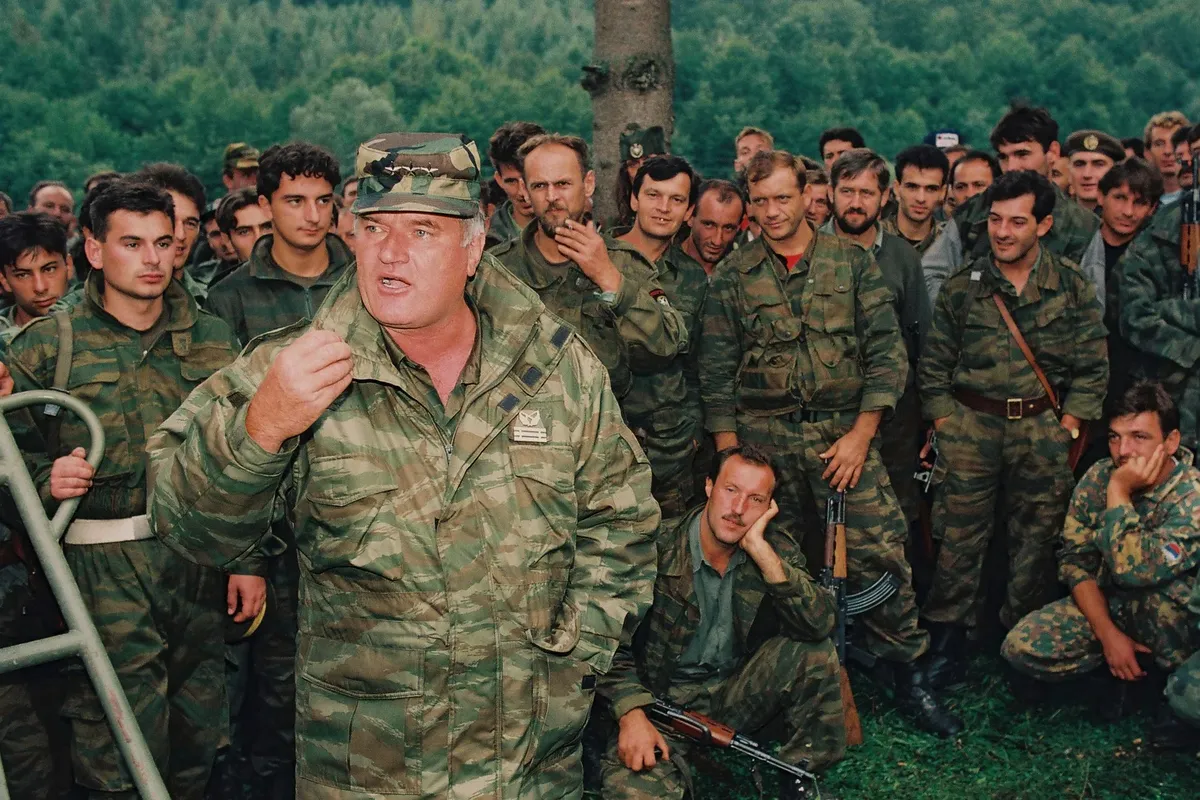
In the Serbian environment, he gained a reputation as a “soldier’s general.” Even his opponents recognized his professional training, energy and ability to control a large military machine.
This is an important detail that can easily be lost when Mladic is turned into a caricatured villain. He was dangerous precisely because he knew how to fight. The international tribunal tried a professional general in charge of army corps, artillery, intelligence, transport, military police and command systems.
Four criminal projects
The dry content of the final verdict on Mladic turns out to be harsher than any evaluative words.
The court established his participation in four criminal communities. The first was engaged in the gradual removal of Muslim Bosniaks and Croats from those parts of Bosnia that the Bosnian Serb leadership intended to include in the Serbian state. The second carried out terror against the civilian population of Sarajevo through artillery shelling and sniper fire. The third organized the taking of UN employees hostage to prevent NATO strikes. The fourth carried out the destruction of the Bosnian Muslims of Srebrenica.
For the first set of crimes, Mladic was found guilty of persecution, murder, deportation and forced displacement of the population. In Sarajevo - in murders, terror and illegal attacks on civilians. For the capture of UN military personnel - in the taking of hostages. Finally, in Srebrenica - in genocide, persecution, destruction and murder.
Initially, Mladic was accused of genocide not only in Srebrenica, but also in a number of municipalities in Bosnia. He was acquitted on this point: the prosecution did not prove the special intent necessary for such a qualification. The legally precise formula therefore reads as follows: Mladic was convicted of genocide in Srebrenica, and acquitted of charges of genocide in other areas of Bosnia.
44 months Sarajevo
The siege of Sarajevo began in the spring of 1992 and lasted almost four years. The city was surrounded by Bosnian Serb forces. Artillery, mortars and snipers worked from the heights around the capital. They shot at streets, markets, residential areas, and trams.
The international tribunal found the existence of a deliberate campaign of terror against the civilian population. The commander of the Sarajevo-Romagna Corps, Stanislav Galich, received life imprisonment for the first period of the siege. Dragomir Milosevic, who replaced him in 1994, was finally sentenced to 29 years. Both were subordinate to Mladic's General Staff.
The war in Bosnia generally does not lend itself easily to a convenient division into an absolutely innocent and an absolutely criminal side. Both Bosnian Muslims and Croat forces committed war crimes; International and national courts also considered these cases. But the presence of crimes on one side is not a legal or factual justification for the crimes of the other. The Hague trial of Mladic was precisely an individual criminal trial: the court established what exactly he and the structures he commanded had committed. This distinction is especially important in relation to Srebrenica.
Srebrenica: what happened
In 1993, the UN declared Srebrenica a "safe zone". The overcrowded enclave housed tens of thousands of Bosniaks, including refugees from surrounding areas. The zone was guarded by a small Dutch battalion of UN peacekeepers.
On July 11, 1995, Srebrenica was captured by Mladic's army. Television footage was preserved, which later became one of the most terrible documents of the Bosnian war. Mladic walks through the city, then appears among the frightened refugees in Potočari, talks with UN representatives, promises safety to the population. The cameras record the general not at headquarters hundreds of kilometers away from what is happening, but directly at the site of the operation.
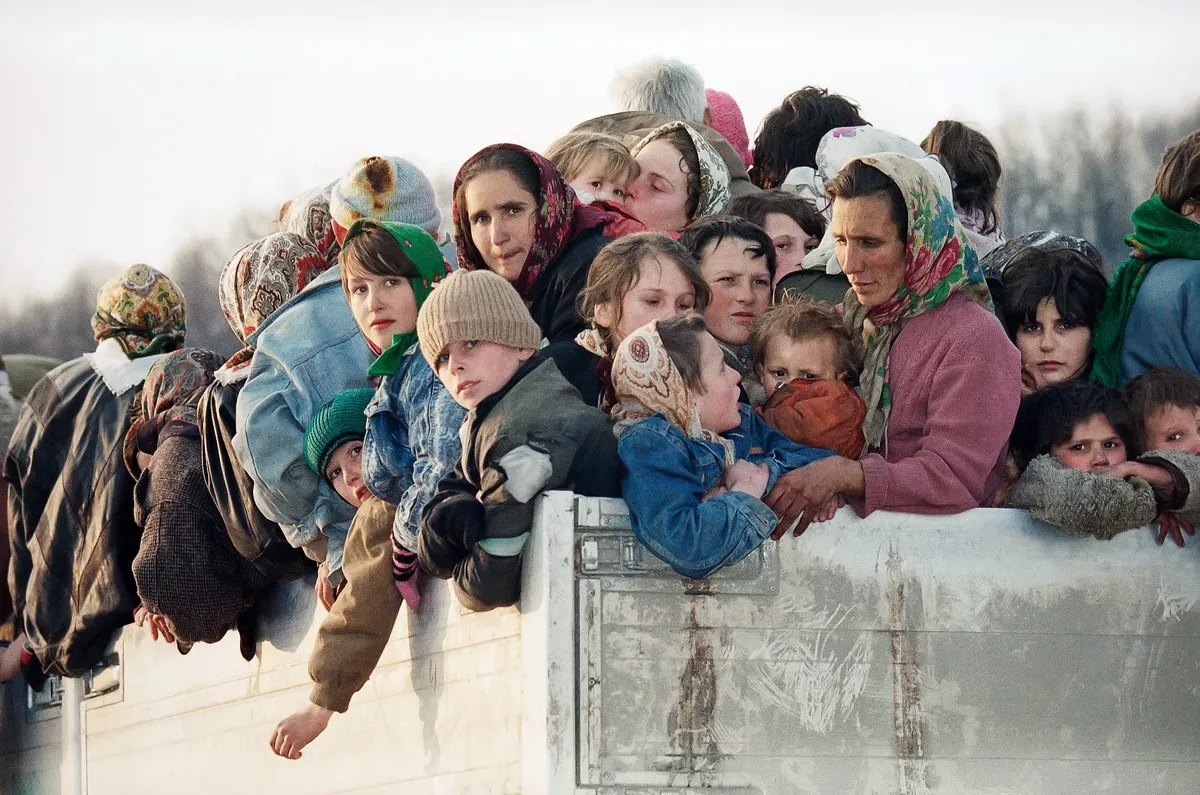
Then the division of people begins. About 25 thousand Bosniaks - mostly women, children and the elderly - were taken from the enclave by bus. Men and boys were separated from their families. The court found that this category included not only military personnel: there were teenagers and men significantly older than conscription age. Another large group consisted of men trying to escape the encirclement through the forests. Those captured were taken to temporary detention centers, and then taken in batches to the execution sites. These improvised prisons and execution grounds were schools, warehouses, fields and farms in Bratunac, Zvornik, Orahovac, Petkovci, Kozluk and the Branjevo military farm.
The executions continued for several days. The total number of killed exceeded eight thousand people - men and boys. In the Srebrenica area, 95 mass graves were subsequently discovered: seven primary, dozens of secondary.
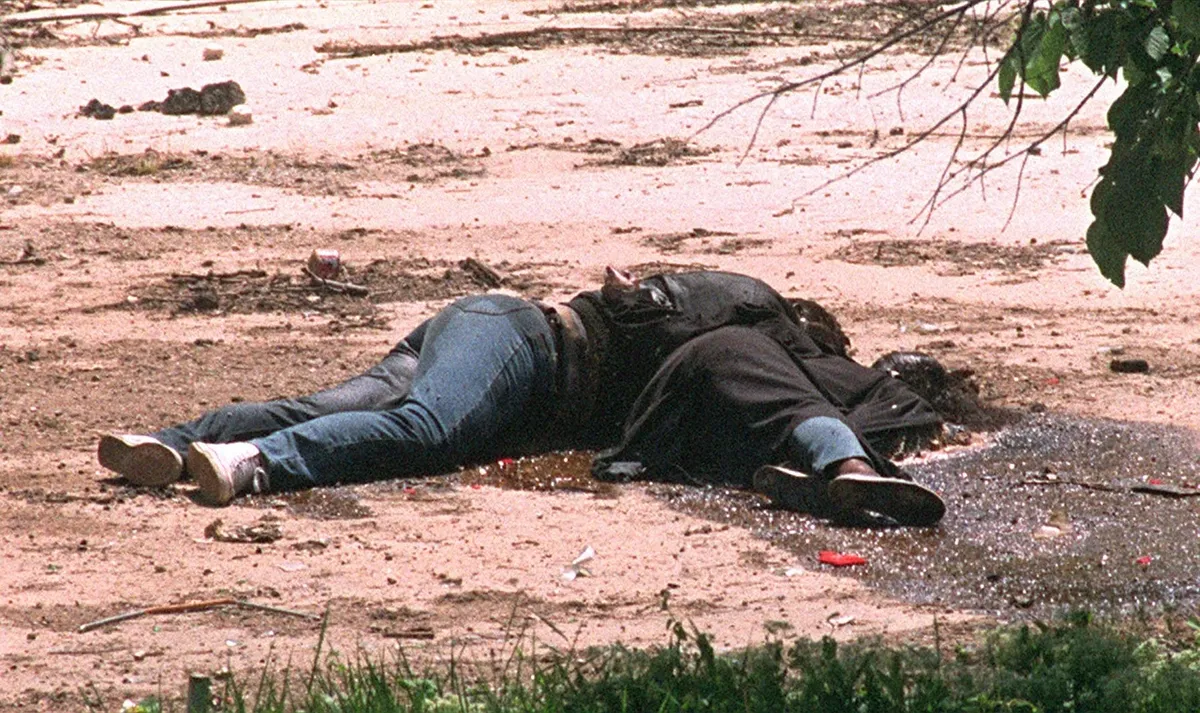
After the first burials, the graves were opened with heavy equipment, the remains were transported and buried in other places, hiding the scale of the crime. Therefore, body parts of one person were sometimes found in different graves during identification. It was not only about mass murder, but also about a systematic operation to destroy its traces.
Both the International Criminal Tribunal for the Former Yugoslavia and the International Court of Justice have classified the events in Srebrenica as genocide. This is where the line between historical dispute and established fact lies. One can argue about the causes of the collapse of Yugoslavia, the responsibility of foreign powers, the actions of NATO, the policies of Sarajevo, the crimes of the Bosnian forces or the murders of Serbs that preceded the mass execution. But it is impossible, while remaining in the field of established judicial facts, to turn the mass extermination of prisoners after the fall of Srebrenica into a fiction or an ordinary military operation.
There are too many graves, witnesses, documents, DNA identifications and court cases to prove that nothing happened in Srebrenica - and the ongoing glorification here works through a different, more effective mechanism: the crime is partially recognized, its scale is reduced, its classification is changed, or it is declared as a response to earlier crimes against the Serbs. As a result, the debate shifts from the question “what happened?” to the question “why are we the only ones being judged?” This is a completely different conversation, a substitution of concepts.
General and Karadzic
It is convenient to reduce the wartime structure of the Republika Srpska to two main figures. Radovan Karadzic, as already mentioned, was the political leader and supreme commander. Ratko Mladic - army commander. Both were first indicted by the Hague Tribunal back in July 1995, before the end of the Bosnian War. After Srebrenica, the charges were expanded.
Mladic's relationship with Karadzic was difficult. The political and military leadership of the Bosnian Serbs periodically clashed, including over the distribution of power and military strategy. In August 1995, Karadzic even tried to remove the popular general, but the army leadership supported Mladic, and the political leader had to retreat.
However, portraying them as almost adversaries of each other is misleading. Basically, they operated in the same system.
Karadzic determined the political goals of the Republika Srpska, Mladic commanded the army that carried out these goals. The International Court subsequently found both participants in the same criminal projects.
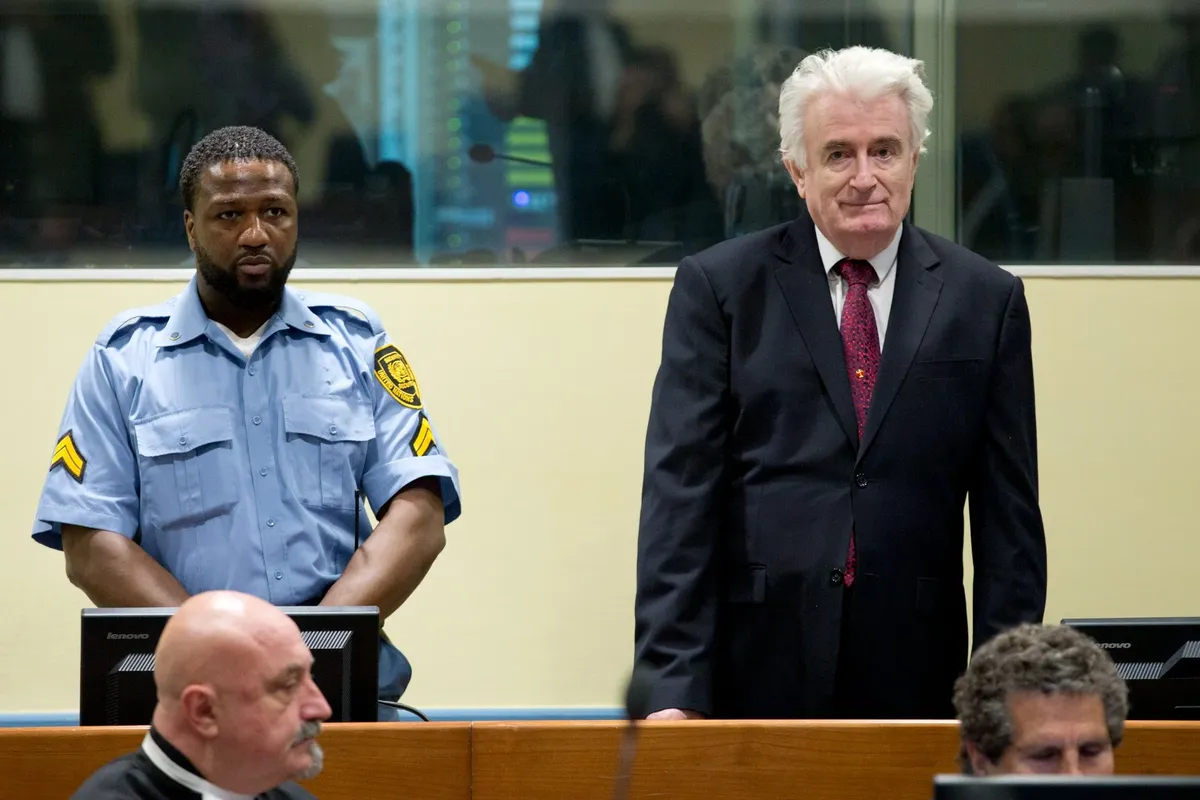
Both then went into hiding for many years. But then their destinies turned out differently. 63-year-old Karadzic was detained in Belgrade in 2008 - by that time he was living under a false name, wore an artistically bushy gray beard, and wore his long hair in a bun on top of his head. Using his medical education, he secretly practiced under the guise of a psychic and guru, until he was identified by the special services and arrested right on a city bus. Now Karadzic, who was a successful writer before the war - he has published several poetry collections, a novel and even books for children, is serving a life sentence in the UK for genocide, war crimes and crimes against humanity.
Mladic did not initially create an exotic new image for himself. After the war, he lived almost openly in Serbia for some time: he was seen at football matches and in restaurants. From 1996 to 2003, he was protected by the Serbian military establishment; a network of supporters later helped him escape. This is one of the most important elements of the history of the Mladic cult: the general accused of genocide was for years not just a successful fugitive sought by the state to no avail, but a person enjoying institutional military protection. Only on May 26, 2011, Serbian special services detained him in the village of Lazarevo in the north of the country in the house of a relative. He was then 69 years old.
President Boris Tadic announced that with this arrest, Serbia fulfills its obligations to the Hague Tribunal and closes one of the most difficult chapters of its recent history. Mladic was transferred to The Hague, and the trial began in 2012. In November 2017, he received a life sentence. On June 8, 2021, the Court of Appeal finally confirmed the verdict. The defendant did not admit guilt.
Why did he remain a “hero”
After the war, Serbia did something that does not fit well into the simple formula “the country worships Mladic.” She handed over dozens of accused to The Hague. In 2010, the Serbian Parliament adopted a special declaration condemning the crime in Srebrenica, expressing condolences and apologies to the families of the victims and emphasizing the need to arrest Mladic. A year later, Mladic was indeed arrested and extradited to court. In Serbia, there are human rights organizations, journalists and social movements that have been documenting the crimes of Serbian forces for decades and opposing the glorification of convicted war criminals.
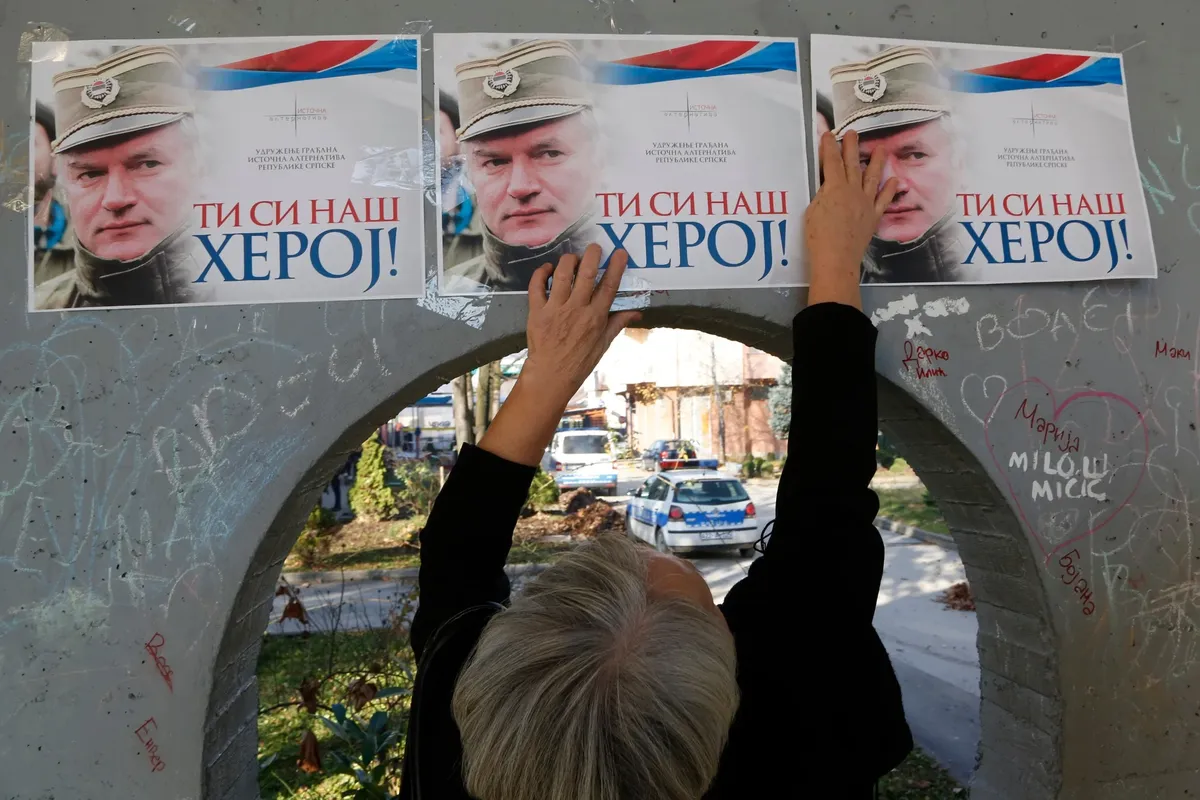
Mladic's death showed that ambivalence towards the war criminal is not history. The former head of the Ministry of Internal Affairs and the intelligence service, Alexander Vulin, said that “from Gavrilo Princip to Ratko Mladic, the best Serbs are being killed tied up,” and demanded state and military funerals and a day of mourning. The editor-in-chief of the pro-government Informer, Dragan Vucicevic, announced that Mladic did not die, but was “murdered” by the Hague Tribunal, which he called a “terrorist organization.” A great friend of the Russian Federation, Milorad Dodik, the former president of Republika Srpska, spoke similarly.
Representatives of the Serbian opposition outlined the opposite position. The Secretary General of the Free Citizens Movement, Aleksandar Radovanovic, wrote that a convicted war criminal who received a life sentence for crimes against humanity, including genocide in Srebrenica, had died. The Green-Left Front called on state institutions to prevent the glorification of Mladic and said that his death does not remove the question of responsibility for the crimes committed.
Such contradictions cannot be explained solely by knowledge or ignorance of facts. For part of Serbian society, the Bosnian war exists in a different coordinate system. The starting point of this story is not the expulsion of the Bosniaks and Croats or Srebrenica, but the collapse of Yugoslavia, anti-Serbian violence, hundreds of thousands of Serbian refugees, the Croatian Operation Storm, the NATO bombing of Republika Srpska, and then the bombing of Yugoslavia itself in 1999.
In this picture of the world, The Hague appears to be a continuation of the defeat of Serbia by other means. If the trial is considered political and anti-Serbian, then the verdict ceases to be evidence of guilt. Moreover: the heavier the sentence, the easier it is to turn the accused into a martyr.
Mladic was perfect for this role. He did not emigrate, did not renounce his actions, did not make a deal with the prosecutor's office, did not come forward with repentance. Unlike politicians who changed positions after the war, he fully reproduced his own image of a general who “defended the Serbian people.”
Mladic on the walls of Belgrade
After the war, the general's portrait became part of the Serbian political landscape.
His image on the walls has its own meaning. For those who see it, the mural is primarily a sign of belonging (“our general”), rather than a reminder of the specific events of July 1995. Therefore, an attempt to paint over an image is perceived not as deleting a drawing, but as an attack on a group, nation, memory. That is why activists and nationalists clashed around Mladic’s Belgrade murals, and the police at times actually guarded the space around them.
In the spring of 2026, the cult received particularly clear confirmation. Belgrade Mayor Aleksandar Sapić posted a photo of Mladic on social media with the caption “Serbian hero” due to his deteriorating physical condition. This time, such a statement was made by the leader of the capital of Serbia - a much more significant figure than an unknown graffiti author or a veteran organization.
One way or another, even thirty years after Srebrenica, the glorification of Mladic in Serbia is not exotic. It remains socially acceptable to a significant part of society and periodically receives support from government officials.
Serbian President Aleksandar Vucic chose a cautious formula, but he also sharply accused the Hague Tribunal. According to him, the court wanted Mladic to “die behind bars” and the refusal to allow him to spend his last days in Serbia was “anti-civilizational behavior without precedent or justification.” Vucic said the state would organize the funeral in a “decent and dignified manner” if the family decided to bury Mladic in Serbia.
Justice Minister Nenad Vujic said Mladic will be buried with the highest state and military honors, and the burial place will be determined by the family. Сам Младич, по словам его сына Дарко, хотел быть похоронен на Топчидерском кладбище в Белграде рядом с дочерью Аной, к которой был чрезвычайно привязан. В марте 1994 года 23-летняя студентка медицинского факультета застрелилась из отцовского пистолета. Подлинные причины этого так и не были установлены.
Российские оценки
Нет оснований говорить, будто российское общество в целом когда-либо практиковало массовый культ Младича, сравнимый с сербским. Для большинства россиян боснийская война давно является далекой историей. Зато вполне документирована другая вещь: официальная Москва на протяжении многих лет систематически ставила под сомнение легитимность судебного решения по делу Младича, а в российской националистической среде он превратился именно что в мученика.
В 2015 году Россия воспользовалась правом вето в Совете Безопасности ООН и заблокировала британский проект резолюции к 20-летию Сребреницы. В проекте подтверждалась квалификация преступления как геноцида. Российский представитель Виталий Чуркин утверждал, что документ возлагает вину на одну общину и мешает примирению. За резолюцию проголосовали десять членов Совбеза, четверо воздержались, Россия проголосовала против и тем самым заблокировала ее.
После окончательного приговора Младичу в июне 2021 года российский МИД пошел дальше. Представитель ведомства Мария Захарова заявила, что решение вновь демонстрирует предвзятость международных институтов против одной стороны югославского конфликта, назвала подход суда лицемерным.
Россия пыталась вмешиваться и непосредственно в судьбу генерала. В 2017 году его защита просила временно отпустить Младича для лечения в России. Москва направила трибуналу официальные гарантии, обещая принять его, обеспечить медицинскую помощь и вернуть по первому требованию суда. Ходатайство было отклонено.
А вокруг официальной позиции вырос собственный русский культ Младича. В России издавались книги о нем, в том числе книга депутата Госдумы Павла Дорохина и балканиста Елены Гуськовой. Еще в апреле 2026 года «Русская народная линия», российский информационно-аналитический портал православно-националистической и ультраконсервативной направленности, сообщая о критическом состоянии Младича, призывала молиться за «сербского героя». Общество друзей генерала годами называло его «непобежденным героем» и «великим другом России».
Здесь образ Младича встроился в гораздо более широкую архитектуру: православные сербы — исторические союзники России, Запад — общий противник, НАТО — разрушитель Югославии, наконец, Гаагский трибунал — инструмент победителей. В этой конструкции Сребреница оказывается крайне неудобным фактом. Поэтому ее либо замалчивают, либо объясняют предыдущими преступлениями против сербов, либо оспаривают сам термин «геноцид».
Судили не одного Младича
Есть и еще одна причина, по которой версия о персональной «расправе над сербским генералом» плохо выдерживает столкновение с материалами процессов.
Сребреница — не дело одного обвиняемого и одного суда. Гаагский трибунал разобрал механизм преступления буквально по этажам — от политического руководства Республики Сербской и Главного штаба армии до офицеров безопасности, командиров корпусов и непосредственных участников расстрелов.
- Радован Караджич. Президент Республики Сербской и политический руководитель Младича. Первоначально они были обвинены вместе. В 2016 году Караджича приговорили к 40 годам, а в 2019-м апелляционная палата ужесточила наказание до пожизненного. Он признан виновным в геноциде в Сребренице, преследованиях, уничтожении, убийствах, депортациях, терроре против Сараево и захвате сотрудников ООН в заложники — то есть в значительной степени в том же комплексе преступлений, что и его военный командующий.
- Здравко Толимир. Помощник Младича по разведке и безопасности, одна из ключевых фигур Главного штаба. Суд признал его участником преступных предприятий по убийству мужчин Сребреницы и насильственному изгнанию населения Сребреницы и Жепы. Толимир был осужден за геноцид и заговор с целью геноцида и получил пожизненное заключение. Апелляция оставила приговор в силе. Он умер в гаагском заключении в 2016 году.
- Радислав Крстич. Командующий Дринским корпусом, непосредственно действовавшим в районе Сребреницы. В первой инстанции его признали участником геноцида, однако апелляционная палата уточнила степень ответственности: Крстич не был признан одним из носителей геноцидного умысла, но знал о плане убийств и предоставил ресурсы корпуса для его осуществления. Итог — 35 лет за пособничество геноциду. Эта юридическая тонкость важна: суд не раздавал одинаковые обвинения всем командирам автоматически.
- Вуядин Попович и Любиша Беара. Один — начальник службы безопасности Дринского корпуса, другой — начальник безопасности Главного штаба. В крупнейшем процессе непосредственно по Сребренице оба были признаны виновными в геноциде и получили пожизненные сроки. В том же деле Драго Николич был приговорен к 35 годам за пособничество геноциду, Любомир Боровчанин — к 17 годам, Винко Пандуревич — к 13 годам.
То есть массовое убийство предстает в судебных материалах не как эмоциональный взрыв нескольких солдат после боя. Для перевозки тысяч пленных требовались автобусы и грузовики. Для их содержания — помещения и охрана. Для расстрелов — конкретные подразделения воинских частей, оружие и боеприпасы. Для захоронения — тяжелая техника. Для последующего сокрытия следов — новая техника, новые водители, новые места захоронений.
Геноцид требовал логистики. Именно эта бюрократическая сторона Сребреницы, возможно, страшнее всего разрушает легенду о «мести за погибших сербов». Месть может быть вспышкой. Здесь был конвейер.
След ведет в Белград
Особая категория — руководители силовых структур самой Сербии.
Йовица Станишич возглавлял Службу государственной безопасности Сербии, Франко Симатович был одним из ее главных оперативников. Их процесс продолжался почти два десятилетия и прошел через оправдание, отмену оправдания и повторное рассмотрение.
Окончательную точку поставили только в мае 2023 года. Апелляционная палата признала обоих участниками совместного преступного сообщества, целью которого было насильственное перемещение несербского населения с частей территории Боснии и Хорватии, убийства, преследования и депортация. Каждый получил по 15 лет.
Это дело особенно существенно потому, что оно юридически зафиксировало участие высокопоставленных сотрудников белградской госбезопасности в преступной системе по ту сторону формальной границы Сербии.
Но оно не означает, что суд установил ответственность государства Сербия за сам геноцид в Сребренице. Международный суд ООН в 2007 году пришел к более сложному выводу: Сербия не была признана государством, совершившим геноцид или соучаствовавшим в нем, однако нарушила Конвенцию о геноциде, поскольку не сделала необходимого для предотвращения Сребреницы, а затем не выполнила обязанность наказать виновных — в частности, годами не передавала Младича Гаагскому трибуналу. Как и в случае с обвинением самого Младича, здесь тоже действует принцип юридически точной формулы — конкретно установленная ответственность вместо пропагандистских упрощений.
Тот, кому приговора не было
Над всей системой ответственности за боснийскую войну находится фигура Слободана Милошевича .
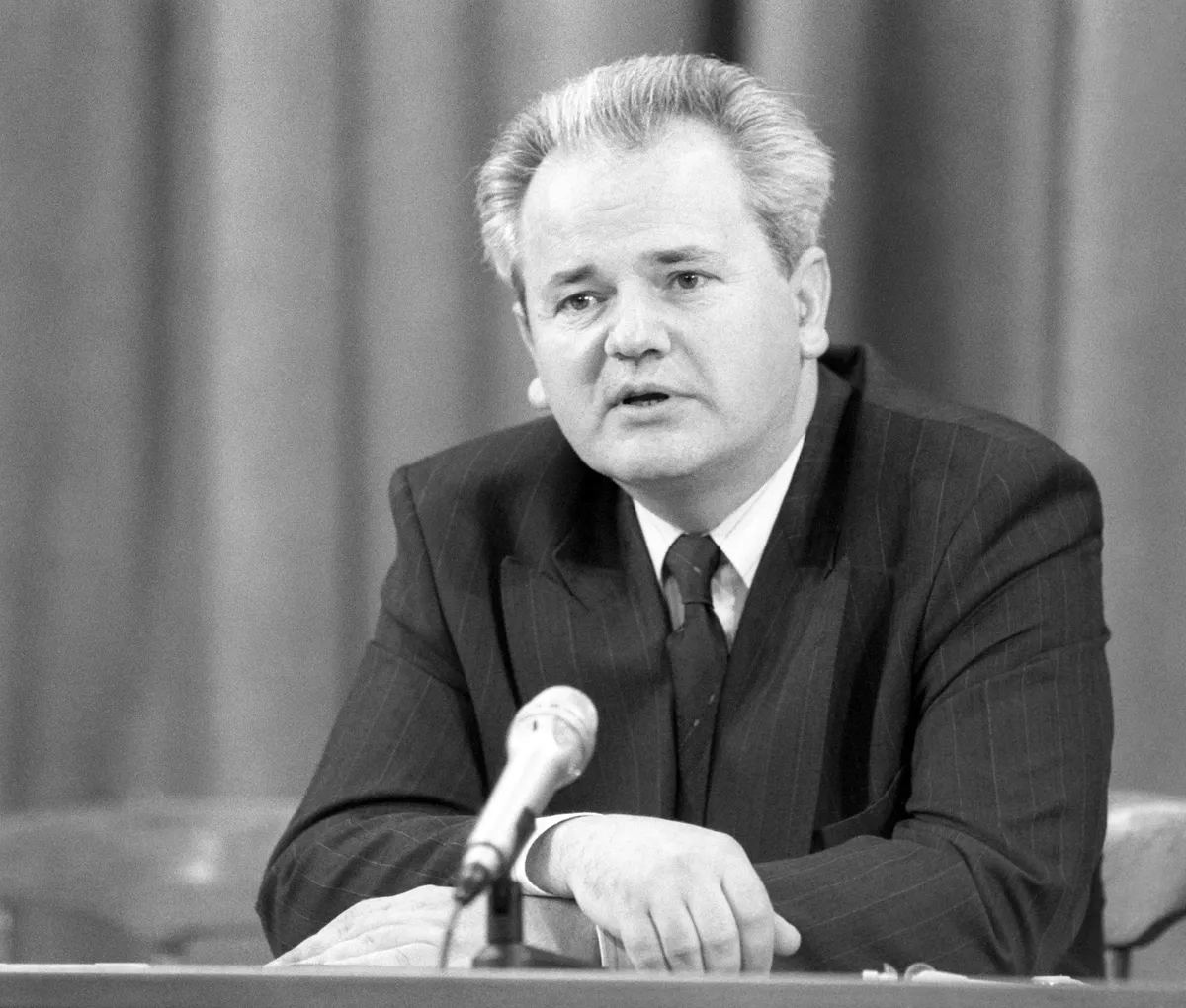
Бывшего президента Сербии и Югославии судили в Гааге за преступления в Косово, Хорватии и Боснии, включая обвинение в геноциде. Процесс длился четыре года. Обвинение закончило представление своих доказательств, Милошевич начал защиту.
Но приговор не состоялся. 11 марта 2006 года Милошевича нашли мертвым в камере. Следствие установило естественную причину смерти. Через три дня суд прекратил процесс. Поэтому называть Милошевича «осужденным военным преступником» юридически неверно: окончательного решения о его виновности или невиновности суд не вынес. В этом смысле Милошевич — крупнейшая фигура югославских войн, и он действительно ушел от окончательного судебного ответа.
Младич — нет.
ПОД ТЕКСТ
Проекция поколения
Что будет с отношением к Младичу в «сербском мире» завтра?
В Республике Сербской культ генерала остается значительно сильнее: в опросе Valicon 2025 года 52% опрошенных сербов назвали его героем и 6% — преступником; 37% не выбрали ни одну из этих характеристик. Семью годами ранее героем его считали 76%.
В сегодняшней Сербии Младич, надо понимать, останется индикатором поколенческого и политического размежевания. В обществе сосуществуют официальная провластная и националистическая героизация его образа, как и прямое осуждение со стороны оппозиции. При этом среди современной молодежи растет равнодушие, ведущее к постепенному ослаблению культа этого человека.
У поколения, выросшего после боснийской войны — а на календаре уже тридцать прожитых лет — место Младича в общественном сознании меняется. В исследовании отношения молодых сербов к войнам 1990-х годов его назвали героем менее 7% опрошенных. Это еще не означает массового принятия выводов Гаагского трибунала: лишь 16% прямо признали его ответственность за преступления, за которые он был осужден; 34% ее отрицали, а половина затруднилась ответить. Надежнее говорить о размывании мифа, меньшей эмоциональной вовлеченности и отсутствии у молодых единой позиции.