
Translated material
Children are not corn
About “Baptized by Faith” by Philip Nikitin
Philip Nikitin’s book “Baptized by Faith” is a rare example of literature about Baptists that is addressed to an audience outside this denomination and allows a glimpse into its isolated world, around which there are many prejudices. Eduard Lukoyanov talks about how it can be useful not only to religious readers.
All of us, since February 24, 2022, have found ourselves in the face of advancing barbarism, violence and lies. In this situation, it is extremely important to preserve at least the remnants of culture and support the values of humanism - including for the sake of the future of Russia. Therefore, the editors of Gorky will continue to talk about books, reminding our readers that there is still a place for thought and fiction in the world.
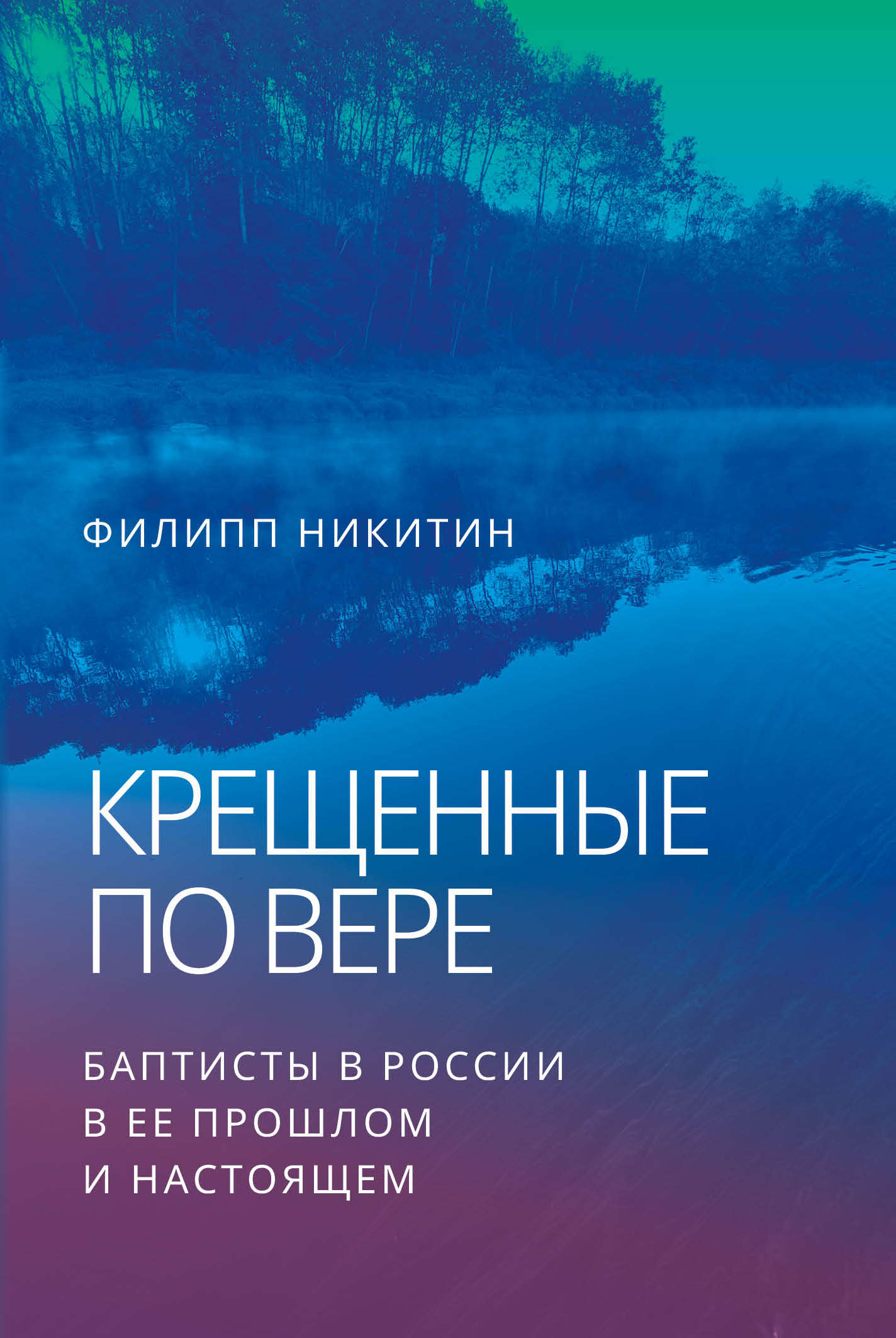
Philip Nikitin. Baptized by faith: Baptists in Russia in its past and present. M.: BBI Publishing House, 2026. Contents . Fragment
Imagine the most ordinary city. Not a town, not a small town, not a settlement, but simply a city, the inhabitants of which have not developed a natural collective identity, and the few personal connections are formed in a semi-random way: living in the neighborhood or studying at the same school or institute. The central street is named after Lenin, the next one is Kirov, the other is Dzerzhinsky, the rest are also named after smaller revolutionaries, about whose activities each subsequent generation has increasingly poor ideas. Today, ask any passerby in this imaginary city who Sverdlov is, along whose street you are walking, and he will answer: “The devil knows. Some kind of admiral."
Meanwhile, on this very Sverdlov street there is a city bathhouse, a chunky building made of time-charred brick, built for the needs of the first settlers. Now, however, no one bothers there; it has long been converted into cramped offices of travel agencies with ficus trees, which the employees who select lucrative trips to Turkey, China, Egypt and Thailand call palm trees for the townspeople. So they ask each other: “Did you water the palm tree yesterday?”
Not far from the bathhouse with palm trees, another building of unknown purpose has been under construction for decades and still cannot be built, although it is also made of brick, but only more recent. There are all sorts of rumors about him. Some claim that it is the city judge who, using bribes, is building a mansion with a personal kennel for himself; others know for certain that next to the bathhouse there is a roofless house for the mayor’s mistress.
Only the knowledgeable few know about the true purpose of a brick house: those who build it and those who prevent this construction. The latter call the former with the mysterious word Jehovah , with emphasis on the first syllable, and sometimes, but noticeably less frequently than before, Muslims. It is they who bombard the city administration with demands from concerned citizens to revoke the permit for the construction of an Evangelical Christian Baptist church and have success in this - however, variable. Listening sensitively to concerned citizens, officials are freezing unfinished construction, only to then allow it again, once again having heard from completely different citizens the provisions of laws on freedom of conscience and religion.
Despite the annoying litigation stretched over time, the builders of the house do not complain, accept the difficulties with humility, and some even seem to derive joy from the oppression. Be that as it may, they look more happy than unhappy. Philip Nikitin’s book “Baptized by Faith: Baptists in Russia in its Past and Present”, published by the publishing house of the Biblical-Theological Institute of St. Andrew the Apostle, is dedicated to them.
We obsessively duplicate the publication location of this work, already indicated above in the imprint, for a reason. The fact is that the BBI publishing house enjoys special authority among a variety of readers: religious and secular, professionally engaged in Christian thought and those simply interested in this aspect of the intellectual and spiritual life of a significant part of humanity. The focus on such a wide audience makes Nikitin’s book a rare attempt to lead the Baptists of Russia out of the kind of ghetto in which they historically found themselves under pressure from the world, and partly of their own free will. At the same time, Baptist printing is very developed, but it is focused mostly on brothers and sisters or on those who are preparing, in terms accepted in this Christian environment, to experience rebirth, that is, to meet God and receive baptism.
The guiding role of the author, who undertook to show one universe to another, is supported by his personal background. Nikitin is the son of religious parents who did not go to the Baptist church. In the modern situation, this is a very common phenomenon, which does not always mean that an atheist was suddenly born into a Christian family with corresponding values. On the contrary, Philip was and remains a man of faith, maintaining close ties to the community within which he grew up and to which he devoted his scientific work as a researcher, equally immersed in the object of research and distanced from it. The results of these works can be found by the reader, for example, in his numerous publications on Gorky.
“Baptized by Faith” begins ab ovo - with the history of the emergence of Baptistism as an independent branch of Christianity from the depths of the Reformation, its spread in the Russian Empire and its main doctrines, inheriting the Protestant tradition: only the Bible (is the source of Christian teaching), only by faith (a person is saved), only by grace (God’s salvation occurs), only Christ (worthy of worship), only glory to God (and not to his vicars, not saints and not even the Mother of God). At the same time, Nikitin, following some modern researchers, mainly Western, refuses to use the term “Protestants” in relation to followers of Baptistism, preferring the concepts of “evangelicals” and “free church”. Personally, we agree with the author that such an approach is more productive than that common in Russian literature on the topic, since it sharply narrows the umbrella term, which sometimes unites extremely different confessions, for the sake of convenience, which often flows into a certain profanity.
The semantic core of the “historical” section of the book forms the participation of followers of Baptistism in the dissident movement. They also faced persecution under tsarism: like representatives of many other religious groups other than Russian Orthodoxy, Baptists became victims of persecution motivated by hatred, they were subject to the same blood libel as the Jews, and Black Hundred brochures were published about them with telling titles like “Baptists as the most harmful sect.” After the revolution, which declared, among other things, freedom of conscience and the separation of church and state, their situation did not improve at all, and in many ways even became more unbearable.
The response of Baptists in the USSR to numerous arrests and reprisals against brothers in faith was participation in the dissident movement, which was extremely radical by the standards of the Soviet era. Even before the famous “Chronicle of Current Events,” in 1965, Baptists launched the publication of the “Brotherly Leaflet,” a newsletter that carefully documented cases of violations of the right to freedom of religion. In letters to general secretaries and other high-ranking officials, they consistently resorted to religious images and direct quotes from the Bible, demanding that the leaders of the atheistic state follow Christian commandments. They also managed to organize the most massive peaceful protest in the post-war RSFSR - a Baptist demonstration at the building of the CPSU Central Committee, which brought together hundreds of people from all over the Soviet Union, is given a separate chapter.
These pages of “Baptized by Faith” seem to us to be the most valuable for the secular reader. Firstly, religious dissidence itself, in our opinion, is undeservedly relegated to the background in Russian historiography by the liberal-human rights wing of the opposition. So, we would like to see more popular literature about the motley and extremely complex dissident movement within the Orthodox Church, from which came such people with opposite views as Alexander Men and Dmitry Dudko - and this is if we take it at the top. Second, this section demonstrates that despite their marginalized position, Soviet Baptists sought to actively participate in public life, being among the most active citizens and demanding that the state abide by its own laws. The state responded with the usual methods: arrests, accusations of working for Western intelligence services and, oddly enough, the same blood libel - spreading wild but effective disinformation about human sacrifices.
True, in the case of Baptists, accustomed to oppression and having a developed sense of martyrdom, these universal measures turned out to be not particularly effective. To fight for the rights of victims of faith, the Council of Relatives of Prisoners was created, which existed from 1964 to 1987. According to incomplete information, 1,055 Soviet Baptists, including 149 women, received long sentences, 127 were convicted twice, 32 received three terms, 16 received four, six received five, and two more were sentenced to imprisonment six times. Some suffered martyrdom - in prison or in the army. All this could not but leave a mark on the Baptist community in Russia with its distinct isolationist tendencies, including refusal to register with government bodies - such unions ended in a much more pitiful way for them than arrest or even death: betrayal of God's commandments to please worldly authorities. What is important to understand: for Baptists, freedom of conscience is not a formally declared abstraction, but the fundamental basis of faith that determines their life path. If a person can be baptized only according to his own will, given by the Lord, then the freedom of this will, so to speak, lies much higher than the laws that it inspired and the state that adopted them.
During the years of perestroika, the situation formally changed: representatives of all faiths and confessions were allowed to hold services and, most importantly in the case of Baptists, openly evangelize, that is, spread the teachings of Christ. At first, Soviet society accepted the new trends with increased interest - Baptist meetings were attended by dozens and even hundreds of people, some of whom remained in the church. However, the substantive relationship of this religious community with the world has remained the same: even today, as Nikitin shows, prejudices about Baptists as “wrong” believers, whose presence in Russian society is undesirable, are spreading in the media. Let us note: even though such narratives are not supported at the government level, we all know very well that in practice the martyrologies of individual teachings are being intensively replenished - and, unfortunately, there is no end in sight to this process.
The book closes with a section on the current situation of Baptists in Russia, the specifics of their private life, the peculiarities and their own language that has developed around the subculture, the far from harmless stereotypes attached to them, as well as the phenomenon of DVRs - children of believing parents, to which, let us remember, the author himself belongs. According to Nikitin’s observations, the most common question asked by outsiders concerns why Baptists have so many children in their families. Indeed, to a modern secular person the very idea of having six, seven, eight or more sons and daughters may seem at least extravagant, and at most irresponsible, on the verge of social pathology. Here the Baptist doctrine of free will collides with not the only, but the dominant postulate on this issue: issues of birth and death are exclusively in the power of the Lord, and only God can decide when, where and how many people should be born.
As for the DDA, this phenomenon as presented by Nikitin seems to us worthy of a separate detailed study, since it in itself reveals many problems of people who find themselves in a liminal position: they are included in the life of secular society, but others notice their differences, at least in speech and behavior; They carry a religious education, value the spiritual component of their personality, but are not fully present in the relevant institutions. Such borderline states can be observed all the time in modern times, not only in religious communities.
I would like to conclude our brief review of “Baptized by Faith” with one thought that crept in while we were getting acquainted with this work. While reading, the same bathhouse came to mind, next to which everything is being built and the church will never be completed. And we thought the following: oddly enough, a xenophobic attitude towards believers is the other side of secularism, which not only gave the right to freedom of conscience, but also brought into the sphere of perversions any genuine spirituality that has nothing to do with the ritual-self-identification rudiments of religious consciousness. Culture clearly reacted and is reacting to this internal contradiction: Andrei Bely, Pimen Karpov, Yuri Mamleev each invent and reinvent the “sectarian novel” in their own way; the stories of the ultra-rationalist Howard Phillips Lovecraft are populated by all sorts of cultists who worship anti-human gods; “The Wicker Man”, “Children of the Corn”, “Solstice” and other folk horror films appear on the screens, exploiting man’s fear of the “backward”, which organically becomes synonymous with the “alien”.
Philip Nikitin’s book “Baptized in Faith” shows that its heroes, whose views are difficult for modern people to share, are, oddly enough, people like any others. And the fact that our society obviously needs such books still says a lot about our society, and not just about those about whom they tell.