
Translated material
Existentialism is communism
Fragment from Dmitry Tsyganov’s book “Jean-Paul Sartre and the USSR”
Sartre's works in the post-war USSR were not known to the general public, but Soviet propaganda closely followed the creative and intellectual career of the French philosopher and writer in order, on the one hand, to subvert his “idealistic and reactionary” existentialism, and on the other, to extol his harsh anti-American statements and favorably note his rapprochement with communist-oriented circles of leftist thinkers in the West. Read about this in an excerpt from Dmitry Tsyganov’s book “Jean-Paul Sartre and the USSR.”
All of us, since February 24, 2022, have found ourselves in the face of advancing barbarism, violence and lies. In this situation, it is extremely important to preserve at least the remnants of culture and support the values of humanism - including for the sake of the future of Russia. Therefore, the editors of Gorky will continue to talk about books, reminding our readers that there is still a place for thought and fiction in the world.
Dmitry Tsyganov. Jean-Paul Sartre and the USSR. Historical and literary essay with a documentary appendix. M.: Litfakt, 2026. Contents
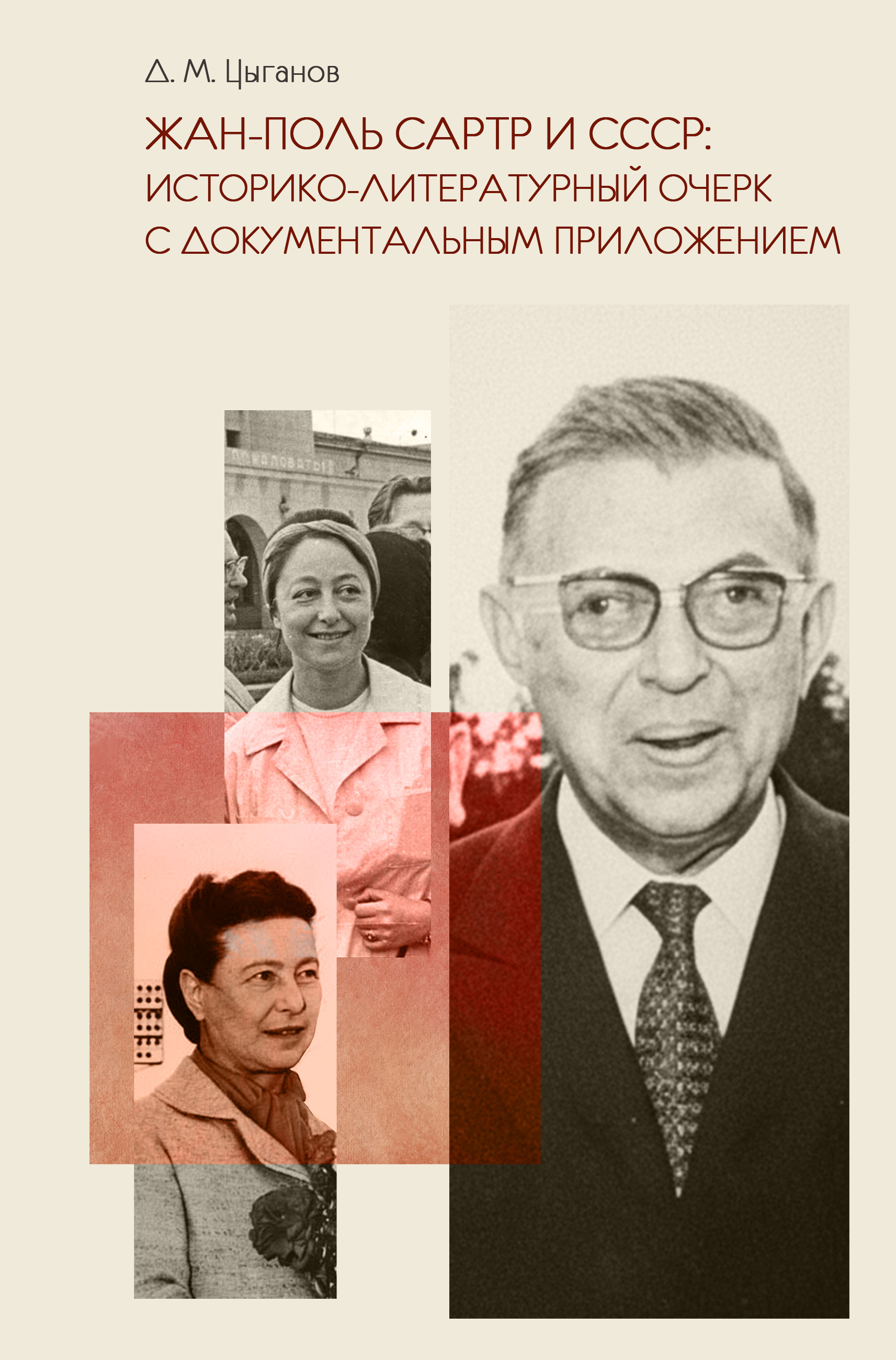
In the first half of the 1950s. the attitude towards the figure of Sartre changed repeatedly and very rapidly. The above-mentioned book by Pesis, “French Progressive Literature in the Struggle for Peace and Democracy,” created in the late 1940s - the first half of 1951 and signed for publication in January 1952, contains a brief but succinct description of Sartre’s intellectual activity:
At the same time, the enemies of the French people are trying to silence or downplay the role of the Soviet people - the saviors of Europe from fascism. These tricks of lackey literature are directly related to the plan of the American headquarters, which hope to erase from the memory of the people the exploits of the heroes of Stalingrad, the capture of Berlin, the victory over Japan, in order to thus make it easier for themselves to obtain cannon fodder for military adventures in Asia and Europe. The thorn in the side of American propaganda is the history of the Resistance, which showed that the French people not only did not allow themselves to be drawn into the anti-Soviet war, but, inspired by the example of the Soviet Union, “overshadowed by the wing of Stalingrad,” launched a heroic struggle against their enslavers. It is the historical lessons of this struggle that try to “refute” countless fakes.
Sartre, shortly after the end of the war, published a fawning “appeal” to the Anglo-Saxons in London. Taking on the role of a false witness, Sartre declared that there was no real resistance by the French partisans and underground fighters. Sartre dares to call the heroic deeds of people like Gabriel Pery "gestures." As the “liberators” of France, he advertises all those who, through the hands of de Gaulle, treacherously undermined the struggle of the French partisans.
In addition, Pesis, following the example of his predecessors, directly writes about the collaborationist views of Sartre, who did not believe in the ideas of the Resistance, and puts forward very specific accusations that have not previously been articulated in such detail:
Sartre not only cannot hide his hatred for the heroes of the French people, for the communists shot by the Nazis, but also directly admits his sympathy for the collaborationists. “Collaborationism,” Sartre brazenly declares, “was an effort to give France back its future.” Thus, it is clear what kind of future the Sartres would like to prepare for France - something like De Gaulle’s Vichy under the boot of the American generals.
“Refuting” the history of the Resistance, the history of the struggle for freedom and national independence of France, Sartre resorts to openly cosmopolitan slander against the people. The Sartres fly into a frenzy whenever the French people speak out in defense of peace, against the terror carried out by the leaders of the “American Party”.
<…> the calculations of Sartre, Rousset and other robbers of the pen that their American masters would be able to pacify the French did not come true. The soil is burning under the feet of the American occupiers in France.
Another context outlined in the above fragment also turns out to be important for us. The critic asserts the absolute lack of independence not only of Sartre’s creative, but also ideological attitudes, calling him, along with Andre Malraux, “a more trained sharper” than any other figures of “French decadence and American-style literary gangsterism.” Pesis directly connects Sartre’s intellectual activity with the “spy phobia” that was gaining momentum in the post-war USSR (cf.: “Sartre and others glorify the “feelings of spies,” which fully corresponds to the functions of the gangsters of the pen, recruiting traitors and saboteurs for Eisenhower”).
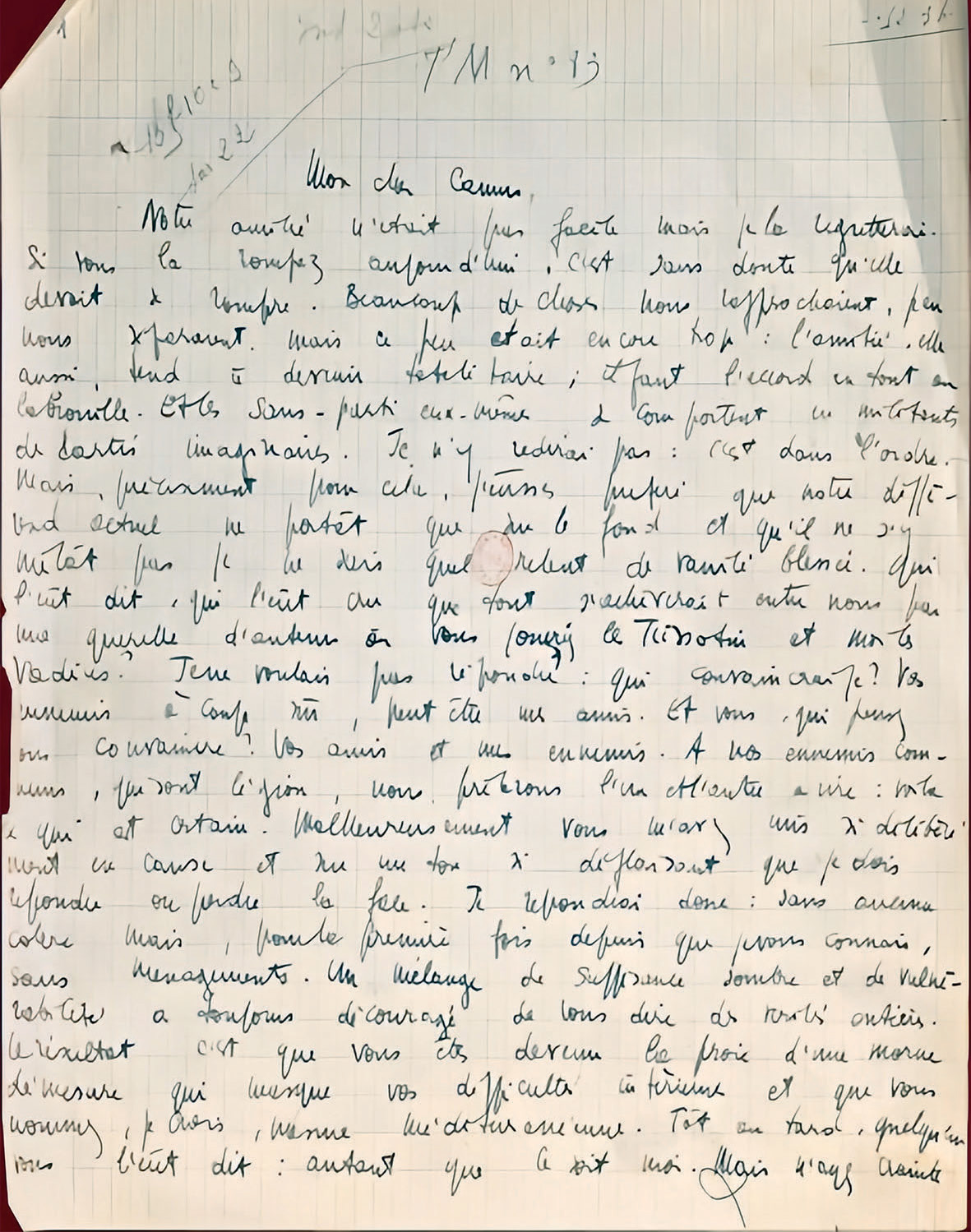
Soon, a change emerged in Sartre’s views, which made it possible for him to become closer, first with the circles of left-wing French intellectuals who opposed the political line of the American government, and then with the leadership of the USSR. In the middle - second half of 1952, two parts of his polemical article “Communists and the World” (Les Communistes et la paix, 1952; the third part was published in Les Temps modernes (No. 101) in April 1954) appeared on the pages of “Les Temps modernes” (No. 81, 84–85), and then the famous “Response to Albert Camus” (Réponse à Albert Camus, 1952) - after this, Sartre began to be perceived as a “fellow traveler” of the communist movement.
On December 5, 1952, Izvestia, in the section “Through the pages of the foreign press,” published a note “Conspiracy of Silence,” dedicated to the reaction of the European intellectual community to Sartre’s article. Let me quote this note:
Recently, the progressive German magazine Weltbühne published an article by its Parisian correspondent, Jean Vilain, “Existentialists and the World.” A German magazine talks about how the French reactionary press is suppressing the article “Communists and the World,” written by the famous French writer Jean Paul Sartre and published by him in his magazine Tan Moderne.
It may seem strange that this speech by Jean Paul Sartre, a man very far from communism, a fashionable French bourgeois writer who is the head of the French existentialists, did not cause heated discussions and debates, as happened in the past. The Weltbühne notes that this time “the discussion that usually flares up almost instantly around each new word of Sartre gave way to a conspicuous silence.”
How can we explain such a cold reception to Sartre’s speech? This question can be answered comprehensively by reading the excerpts from Sartre’s article given in the Weltbühne.
Addressing American and European preachers of the arms race and war hysteria, Sartre writes:
“Don’t you claim to be for peace? I want to see your palm branches, but I only see bombs. Are you saying that you are demonstrating your power so that you don't have to use it? But a demonstration of force is already violence. To force some Negro tribe to submit to you, you cover the skies of Africa with your bombers... The Negroes submit to you before you fire a single shot, but you broke their will with terror...
And this is how you move from one “prevented” aggression to another, in Greece, in Berlin, and even in Paris. And people are dying everywhere - here it is, your world, a world of fear! If the Soviet Union experienced the same fear as you, your world would have become a war long ago.
But the Soviet Union wants peace and provides evidence of this every day. Your American allies constantly insist that war can be avoided only by arming...”
In his article, Sartre spoke out against the squires of American imperialism, the propagandists of war and hatred of the Soviet Union. “Really, it seems to me,” he notes ironically, “that Atlantic propaganda is not yet working flawlessly. I do not think that you will succeed in recruiting many if you impress upon them that they must renew Hitler's anti-Bolshevik crusade, that they must unite with Chiang Kai-shek against the Chinese, with Franco against the Spanish Republicans and with Syngman Rhee against the Korean people, that shoulder to shoulder with the murderers of Beloyannis they must fight against the fathers of the brothers of the prisoners of Makronisos, shoulder to shoulder with the colonial oligarchy against Tunisians, Malagasy and Vietnamese..."
These quotes are quite enough to understand why, as the Weltbühne magazine emphasizes, the French bourgeois press surrounded Sartre's last work with icy silence.
Anti-Americanism, which became dominant in the political views of the thinker, served as a reason to arouse pragmatic interest in his figure in the circles of the Soviet party and literary nomenklatura.
From December 12 to 19, 1952, the Congress of Peoples in Defense of Peace was held in Vienna, which Soviet propaganda perceived as a very advantageous platform for building relationships with the “communized” Sartre. The Soviet press literally tracked Sartre's every move. On December 12, Pravda published a note by special correspondents “Vienna in these days”; we read in it:
All new delegations arrive in Vienna. Among them are envoys from France, India, Ceylon, Brazil, Mexico, Indonesia, China, the Soviet Union, Korea, Vietnam and many other countries. The delegations included workers, peasants, writers, artists, doctors, scientists, political and public figures, representatives of business and religious circles. Speaking about the participation in the Congress of Jean-Paul Sartre and other figures who are not members of the peace movement, the famous German writer Thomas Mann said:
“I cannot consider their arrival in Vienna as anything other than proof of these figures’ support for the cause of peace.” Peace is the vital requirement of our time. If this requirement is not followed, the world is in danger. I am a man of peace. Peace is the cause of all humanity.
In addition, all the central newspapers were full of Sartre’s remarks, which reflected his quite clear pro-Soviet beliefs; The corresponding selection appeared on the pages of Pravda on December 13:
At the end of the preliminary discussion, the famous French writer Jean-Paul Sartre spoke. Emphasizing the tension of the international situation, Sartre said: What is new and remarkable about this Congress is that it brings together people, not diplomats, not specialists, not ministers, but people of all convictions, of all classes.
The participants in the People's Peace Congress do not intend to replace their governments. They decided to communicate with each other without going through them. They are not going to create some abstract body that would give orders to ministers. But, since sovereignty comes from the people, we will coordinate our demands and, when we return to our countries, we will express the will that will simultaneously be the will of every people and all peoples. These words of Sartre were met with loud applause.
Sartre stated that peoples are imbued with the conviction that the peace they desire is good. But we do not want all peace, he said, and in particular we do not want peace brought about through terror. Our reactionary press, commenting the other day on the tests of the British atomic bomb, exclaimed: “Another bomb; the cause of peace is moving forward.” When we hear this, we understand that our first duty is to lift the word “peace” from the mud into which it has been thrown and purify it. No, peace cannot be based either on terror, or on humiliation, or on slavery.
War would be inevitable today between capitalist and socialist states, Sartre continued, if it could be proven that their coexistence is economically impossible, that is, if it turned out that peoples needed to destroy each other in order to work and eat enough. Meanwhile, no one says this. Representatives of socialist countries say precisely that they want peace, that coexistence is possible.
In conclusion, Sartre noted that the resumption and strengthening of trade exchanges between Eastern and Western countries would not only meet the needs of concrete reality, but would also be beneficial for the cause of peace.
Sartre's speech ended the first meeting of the Congress.
It was reprinted almost word for word by Izvestia, Vechernyaya Moskva and Krasnaya Zvezda. On December 14, Pravda again published a short remark from Sartre: “In the podium you can see the French writer Jean Paul Sartre. He said: “I regard this Congress as the first stage of a shift that is emerging in the international outlook, as the first signal of a whole series of manifestations, the result of which may be the achievement of a guarantee for coexistence.”
At the same time, in Moscow there was a discussion of candidates for the international Stalin Prize “For Strengthening Peace Between Nations.” On December 16, Louis Aragon objected to the award being given to his friend Johannes Becher (I note that he, like Aragon himself, worked for Henri Barbusse and participated in the organization of the World Congress of Writers for the Defense of Culture in Paris at the end of June 1935), arguing that “a candidate should be put forward that could cause a greater international response, particularly in France”:
<…> Therefore, I would like the candidate from Germany to be exactly the one that is capable of causing the greatest international response, in particular in France, so that we can more successfully fight chauvinism. This is the reason that forced me to make a critical comment. My wish remains to nominate a candidate from Germany that can evoke the greatest international response.
According to Skobeltsyn, such a candidate could be the former Reich Chancellor (1921–1922) Joseph Wirth. At the same time, Becher also acted as a beneficial intermediary between Soviet party functionaries from literature and the “critical realist” Thomas Mann, the main “target” of Stalin’s policy of “rallying progressive creative forces” in confronting the “decadent culture of the imperialist West.” There were no special debates in the Committee, since some of the experts (Guo Mo-jo, I. Ehrenburg and J. Bernal) were involved in the work of the mentioned Congress of Peoples in Defense of Peace, where Aragon was also summoned “for better communication with a group of French writers <...> which includes, by the way, the writer Sartre”; later Neruda also arrived there, but Fadeev was absent, as he ended up in the hospital. In fact, the decision on bonuses in 1952 was made by three experts: Skobeltsyn, Dembovsky and Sadoveanu. Among the candidates from the Soviet Union were Fadeev, Erenburg and Lysenko (later Prokofiev’s name was included in the list), but only the candidacy of Ilya Erenburg was fully supported by public organizations. The corresponding resolution of the Committee on the International Stalin Prizes “For Strengthening Peace Between Nations” “On the awarding of the International Stalin Prizes “For Strengthening Peace Among Nations” for 1952” was adopted on December 20, 1952. The appearance of the name Sartre in this context is very noteworthy, as it indicates a special disposition of the Soviet side towards the formation of a communist-oriented intellectual ecumene in the countries of Western Europe. On the same day when the name of the “bourgeois writer” Sartre first appeared at the session of the Committee, the next issue of the Literary Newspaper was published, the editorial of which was dedicated to the Congress. In the column “People of Various Persuasions and Beliefs Speak,” a neutral fragment from Sartre’s speech was already quite favorably quoted among the “sympathizers”:
If there are still people in the UN who believe that World War III will be a struggle between good and evil, we tell them that they are wrong. The peoples met each other, talked to each other, came into contact with each other, and they agreed that, in any case, the war that is being prepared for them is evil, that, in any case, the peace that they want to establish and which they will establish is good. No more crusades will be unleashed on us.
Sartre's speech at the Congress was devoted to criticism of the American policy of exacerbating the conflict and turned out to be an important milestone in the escalation of anti-American sentiment in Soviet society. From that moment on, his attitude towards the Soviet regime began to rapidly improve, and the radicalism of Stalinist propaganda in relation to the “fellow traveler” began to naturally soften. Thus, Sartre’s words spoken at the Congress began to appear every now and then in the Soviet press, preparing the ground for an overdue reputational audit. On December 19, 1952, “Evening Moscow” briefly published Sartre’s interview with the newspaper “Libération”:
PARIS, December 18. (TASS). The democratic press pays great attention to the Congress of Peoples in Defense of Peace taking place in Vienna. The newspaper L'Humanité devotes an entire page to reports on the work of the Congress and includes photographs of its participants.
Noteworthy is the interview given by the famous French writer Jean-Paul Sartre to the newspaper Libération. Answering questions from a correspondent for this newspaper, Jean-Paul Sartre noted that each Congress delegate has every opportunity to express his point of view regarding the problem of maintaining peace and preventing war.
“What happened in Vienna was something that could not happen at the UN,” he said... “The results of this Congress will inevitably be slandered or passed over in silence. However, this will not prevent Congress from having some significance...
Я беру на себя весьма приятную задачу ответить на все клеветнические статьи, появившиеся в печати во время работ Конгресса. Я хочу убеждать не Мориака, а честных людей. В этом заключается моя задача».
26 декабря в «Известиях» была напечатана новостная сводка под общим заглавием «За мир и дружбу между народами! Широкая общественность во всех странах поддерживает призыв», где давалась следующая оценка словам Сартра:
Известный французский писатель Жан-Поль Сартр в своем выступлении разоблачил клеветническую кампанию буржуазной печати в период подготовки и работы Конгресса народов в защиту мира. «Самой отъявленной ложью» назвал он утверждения реакционной пропаганды о том, будто решения, принятые Конгрессом, являются результатом «советского диктата». «Если эти решения отражают советскую точку зрения, чему я легко верю, — сказал Сартр, — то тем лучше, так как это доказывает, что советские люди действительно хотят мира».
А следом, 31 декабря, в статье «Голос народов», опубликованной в «Правде», Эренбург уже вполне доброжелательно писал:
Конгресс народов не мог не заняться вопросом о национальной независимости и о безопасности государств, больших и малых. Жан-Поль Сартр хорошо определил значение венского Конгресса, сказав, что на международных конгрессах астрономов или математиков встречаются французы, русские, англичане, несмотря на то, что они люди разных наций, но в Вену французы, англичане, русские приехали именно потому, что они французы, англичане, русские и хотят защитить свою национальную культуру. Делегаты Малайи и Англии приветствовали друг друга. Французы обнимали вьетнамцев. Все понимали, что американская политика грозит обезличением, подчинением, уничтожением суверенитета. Вопрос о независимости тесно связан с вопросом о безопасности. Когда на территории государства находятся иностранные войска, когда политика якобы суверенных государств зависит от левой ноги правого американского сенатора, люди могут проснуться утром, узнав, что их страна втянута в войну без их согласия, даже без ведома их правительства.
К началу 1953 г. перемена в политических предпочтениях Сартра стала очевидной и для части левых французских интеллектуалов, нашедших в его лице сильного союзника. В конце января в выпуске «Известий» появилась статья сочувствующего коммунистической идее гостя СССР, участника Сопротивления и члена ФКП с 1952 г. Роже Вайяна (Roger Vailland, 1907–1965) «Писатель и борьба за мир», в которой он отметил, что
<в>се большее число французских деятелей культуры понимает, как это было с ними во время гитлеровской оккупации, что сейчас уже нельзя оставаться нейтральными. Они понимают, что в великой борьбе за мир, развернувшейся во всем мире, нет места нейтральности: кто не борется за мир, служит лагерю войны.
Сартр это понял. Преследования, которым подвергаются сторонники мира, раскрыли ему глаза. Он вынужден был осознать, что сейчас уже не время заниматься метафизическими дискуссиями об отвлеченной свободе. Фашизм, опасность войны угрожают и отвлеченной, и конкретной свободе. Сейчас нужно срочно помешать войне, воспрепятствовать торжеству смерти.
Это понимают сейчас все лучше и французские деятели культуры, и французы других профессий, принадлежащие к самым различным классам, придерживающиеся самых разных взглядов.
Эти перемены во взаимоотношениях Сартра и советского правительства стали причиной появления сокращенного перевода его философской работы «Экзистенциализм — это гуманизм» (пер. с фр. М. Н. Грецкого; М.: Издательство иностранной литературы, 1953). Это программное эссе, написанное еще в 1946 г., было опубликовано по-русски лишь в конце июня — начале июля 1953 г. Брошюра была выпущена в виде приложения к бюллетеню «Новые книги за рубежом» с издательским предисловием и рассылалась читателям по специальному списку. В этом предисловии осторожно наметилась тенденция к реабилитации взглядов Сартра: «…идеалистические и реакционные черты экзистенциализма выражены в творчестве Сартра крайне осторожно и завуалированно и позволяли ему на протяжении последних 10–12 лет говорить о своей близости к марксизму в ряде философских проблем, солидаризоваться по отдельным частным вопросам с позицией Французской коммунистической партии и выступать с „левой“ фразой».
В мемуарной книге «Мы жили в Москве, 1956–1980» (Ann Arbor: Ardis, 1988) Л. З. Копелев (1912–1997) и Р. Д. Орлова (урожд. — Либерзон, 1918–1989) писали, вспоминая о культурной обстановке послевоенных лет: «В то время когда в Западной Европе и в США говорили, много писали, спорили о книгах Сартра и Камю, читатели советских газет знали, что экзистенциализм — это „идеология империалистической реакции“»; и далее: «В середине пятидесятых годов, когда начиналась оттепель, советским читателям и издателям были известны два современных французских автора — Андре Стиль и Луи Арагон. О Сартре, о котором тогда говорили во многих странах, читатели советских газет знали только, что Фадеев назвал его „гиеной с пишущей машинкой“». Однако, вопреки этим суждениям, существенно упрощающим обстоятельства рецепции иностранной культуры в поздне-/послесталинском СССР, рядовой советский читатель, как я старался показать выше, был куда более подробно (хотя и заочно) знаком с творчеством французского автора.