
Translated material
Memory is longer than the road
About Natalia Ilishkina’s novel “Mire”
Natalia Ilishkina's new novel, which talks about the deportation of Soviet Koreans to Central Asia in 1937, tells about more than the tragedy of a single people in the territory of the former USSR. Here is an attempt to return to the Koreans the memory of their past, which existed long before the advent of Soviet power, and the desire, through the suffering of individual people, to show the ruthless progress of the state machine, which has crushed the whole country under itself. Iskander Bayrashevsky talks about what worked and what didn’t work for the author of “Mire”.
All of us, since February 24, 2022, have found ourselves in the face of advancing barbarism, violence and lies. In this situation, it is extremely important to preserve at least the remnants of culture and support the values of humanism - including for the sake of the future of Russia. Therefore, the editors of Gorky will continue to talk about books, reminding our readers that there is still a place for thought and fiction in the world.
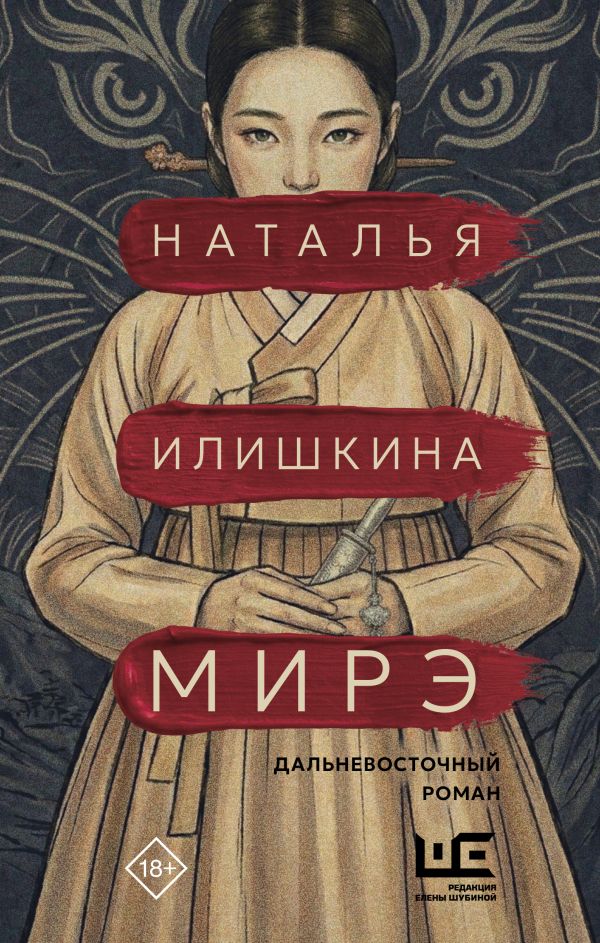
Natalya Ilishkina. Mira. Far Eastern novel. M.: Editorial office of Elena Shubina, 2026
A curious shift is taking place in modern Russian literature, which has not yet become the subject of any serious discussion in criticism. Great novels about Russian history are increasingly being written not from the center, but from the periphery; not about the state - but about the peoples who have existed within it for centuries. The national theme ceases to be an ethnographic decoration and becomes a way to re-tell the very history of Russia.
In recent years, books have appeared dedicated to the most diverse peoples of the country. Among them is “Ak Bure. Crimean Tatar Saga” by Renat Bekkin, “Ulan Dalai” by Natalya Ilishkina herself and other family chronicles, trying to fit the experience of an entire people into the fate of several generations. In such books, history appears not so much as the whirlwind of state institutions, wars and political decisions, but rather as the history of memory, language, family life, and everyday life. Against this background, Natalya Ilishkina’s novel “Mire” looks like more than just another family saga. He finds himself part of a much larger literary process that is just beginning to take shape. And at the same time - one of its most successful implementations.
Mire is one of the most consistent attempts to tell the story of Russian Koreans, starting not from the deportation, but from a much earlier time, to show the world that existed before the state decided to remake it.
Ilishkina came to this book not by chance. In Ulan Dalai she already connected family history with the history of the people, but there the historian in the author at times spoke louder than the novelist. Historical events set the direction of the narrative, and the heroes turned out to be primarily witnesses of the era. In “The World” the ratio changes. History recedes to make room for man.
Mi-rae appears before us not as a future victim of history or as a symbol of the Korean diaspora. She is a woman who is learning to live in a new country, building a family, raising children, working, maintaining habits and faith, and mastering someone else’s space. The story doesn't fall upon her from the first pages. She is slowly approaching. That is why the first part of the novel is the strongest.
Ilishkina rarely explains the feelings of her characters. She shows them through everyday details: family conversation, cooking, prayer, attitude towards elders, children's play, concern for her husband. Thanks to this, national culture does not turn into a museum exhibition. The Korean world exists inside the novel, and is not presented to the reader as an exotic picture.
The religious theme is especially interestingly developed in the novel. Shamanic ideas, the cult of ancestors, and Christianity coexist in the minds of the heroes, not fitting into the simple scheme of the struggle between the “old” and the “new.” Ilishkina shows culture at the moment of its change - when a person still belongs to tradition, but already lives in a different world.
This is the main difference between “Mire” and “Ulan Dalai”. If the previous novel offered primarily a historical panorama, then the new one is much stronger as a family and psychological novel. Ilishkina learned to trust the everyday scene more than historical commentary. However, at the same time, its former weakness remained: it is difficult for the author to part with the material.
Almost every detail seems worth preserving to her. Individual chapters turn into short essays on the history and culture of Russian Koreans. They are interesting in themselves, but slow down the narrative. Where a novelist could mercilessly cut dozens of pages, the researcher leaves them in the text. Memory turns out to be more important than architectonics.
But this becomes especially noticeable when the Soviet state enters the novel.
Up to a certain point, it is present in the book in a contradictory way - and that is why it is convincing. The Soviet government provides Koreans with schools and health centers, provides access to education, and uses the Korean language in print and radio. Mi-rae may be genuinely excited to hear Korean spoken on the radio; Teacher Kim talks about universal literacy as a possibility that didn't exist before.
But the same state project is gradually beginning to require the abandonment of what it itself helped to develop until recently. The Korean language is declared a “feudal relic,” and the official invites people to be grateful that the Soviet government gave them a “new homeland.” Teacher Kim realizes that he will have to make a difficult decision or he will lose his job.
This is where the novel has the opportunity for a real big theme: Soviet power does not just come from outside and destroy an established community. She first offers her a new social and cultural life, includes it in her modernization project, and then begins to perceive the same national specificity as a threat. In this contradiction, the state becomes much more terrible than any caricatured villain: it is capable of simultaneously promising liberation and inflicting violence.
Ilishkina sees this paradox, but does not always use its artistic potential.
The closer we get to 1937, the more persistently the complex history of the Soviet state turns into a sequence of repressive gestures. Party cleansing, arrests, executions, confiscations, accusations of espionage, “bourgeois nationalism”, connections with foreign relatives - all this befalls the heroes with almost mechanical inevitability. In one episode, traders and middlemen are arrested and shot within a few days, their property is confiscated; At the same time, the Korean Party section is being cleansed.
Even more revealing is the fate of the editorial office of a Korean newspaper: one of its employees is arrested for an article about national holidays, another for having a brother in Seoul, a third for old poems, and a translator for errors in translating Lenin’s article.
The material itself is terrible. But the literary problem is different: the more Ilishkina documents the absurdity of the repressive system, the less space remains for depicting its internal complexity. The state begins to be perceived almost exclusively as a machine, which is busy only with looking for a reason for the next arrest.
Meanwhile, the most powerful episodes of the novel show that the state mechanism works more subtly. People don't just fear it, they learn to think of themselves in its language. Teacher Kim is afraid to write about what is happening because he understands that an accusation, once pronounced publicly, can no longer be separated from the person. His wife Mirae advises Kim not to name names because the accused may be innocent. Here the real tragedy of the Soviet man arises: repression exists not only in the investigator’s office, but also in language, in self-censorship, in the habit of guessing danger before it is named.
Unfortunately, Ilishkina does not always follow this observation. At the novel's climax, she often reports on repression rather than exploring its impact on the characters' minds. The historian is once again beginning to gain the upper hand over the novelist.
The same thing happens with the history of deportation. There are strong details in the resettlement scenes - the NKVD commandant's office, mandatory marks, hard work, an attempt to settle in a new reality. After deportation, the heroes find themselves not only in a different geographical space: they now lead the lives of people who are constantly reminded of their lack of freedom. But this is where you want more psychological resistance from the novel. The deportation was to be not only the culmination of a historical narrative, but also the culmination of a personal tragedy.
The reluctance to talk about it is especially annoying because Ilishkina has already created the necessary space for such a tragedy. The reader managed to see the Korean family not as “deported Koreans,” but as people with their own habits, conflicts, hopes and plans. Therefore, the depiction of how this world is destroyed could be stronger than any historical commentary.
In this sense, “Mire” is interesting to compare with “Ak Bure”, and not just put these books side by side as two national sagas. Bekkin and Ilishkina solve a similar problem: to return history to the people, without reducing it to the history of human suffering. In The World, this is especially important, since deportation should not obscure the several decades of life that preceded it.
And yet the novel leaves behind an ambivalent impression.
It is most convincing where the state remains on the periphery of human life and penetrates into it only gradually - through school, newspaper, language, work, passport, party meeting. Even such a seemingly purely financial instrument as a government loan in the novel becomes part of a system of political loyalty: the refusal to buy government loan bonds is interpreted by Mi-rae’s husband, teacher Kim, as a refusal to help the country strengthen its defense. It is in such details that the Soviet regime appears not as a caricatured villain, but as an environment from which it is impossible to simply escape.
It is a pity that in the last chapters the author does not always trust such details. Where it would be enough to show how the state forces a person to monitor his own speech, wait for the night knock on the door and accept someone else’s ideology as a condition for survival, Ilishkina sometimes prefers to once again explain the historical mechanism in general terms.
Hence the main paradox of “Mire”. This is a novel about memory, which at times is too afraid to forget something. Therefore, he overloads himself with facts, historical explanations and documentary detail. But literature works differently: in order to preserve the past, it sometimes needs to lose something from it.
And that’s why Mire is an important, albeit uneven, novel. It is better than Ulan Dalai as a family saga, more convincing than many modern historical novels in dealing with national everyday life, but is still not completely free from the temptation to replace artistic evidence with historical evidence.
Perhaps this is the price of a book written about a history that has been silent for too long. Ilishkina doesn’t just want to invent the past—she wants to bring it back. Hence her generosity, her detail, her fear of lacunae. But at some point it turns out that memory and literature require different things.
I want to preserve everything in memory. Literature - choose the main thing. "Mire" is especially strong when she chooses. And she is especially vulnerable when she tries to save everything.
But the main thing in the novel still remains. Not deportation, not repression, or even the history of Soviet Koreans as such. What remains is the world created by Ilishkina - a house in which people speak their own language, argue, love, raise children, make mistakes, believe in God and the spirits of their ancestors, read newspapers and do not yet know that soon their lives will be divided into “before” and “after”.
The state in the novel ultimately takes away their place, but does not gain the right to define who they were.
And this, perhaps, is the main meaning of “Mire”: memory turns out to be longer than the road along which a person is taken away.
You can deport your family. Rewrite your biography. Ban the language. Take away the house. You can even force a person to prove for decades that he is not an enemy. But you cannot cancel the life that came before.
And if Ilishkina’s novel in some way defeats its own historical circumstance, it is here: it returns to its heroes not only tragedy, but also the past, that is, the simplest and most important right of any people - to be not a victim of history, but its subject.