
Translated material
Freedom is not a gift, but a conquest
Excerpt from Gustavo Gutierrez's book "Liberation Theology"
Peruvian philosopher and theologian Gustavo Gutiérrez is the founder of Latin American liberation theology, a radical leftist school of Catholic thought that emerged in the second half of the 20th century. The other day, DirectMedia Publishing published a complete Russian translation of his main book, “Theology of Liberation”: we are publishing a fragment about why, according to Gutierrez, instead of the “development” of poor countries, we should talk about liberation, social revolution and the ability of man to independently create his own history.
All of us, since February 24, 2022, have found ourselves in the face of advancing barbarism, violence and lies. In this situation, it is extremely important to preserve at least the remnants of culture and support the values of humanism - including for the sake of the future of Russia. Therefore, the editors of Gorky will continue to talk about books, reminding our readers that there is still a place for thought and fiction in the world.
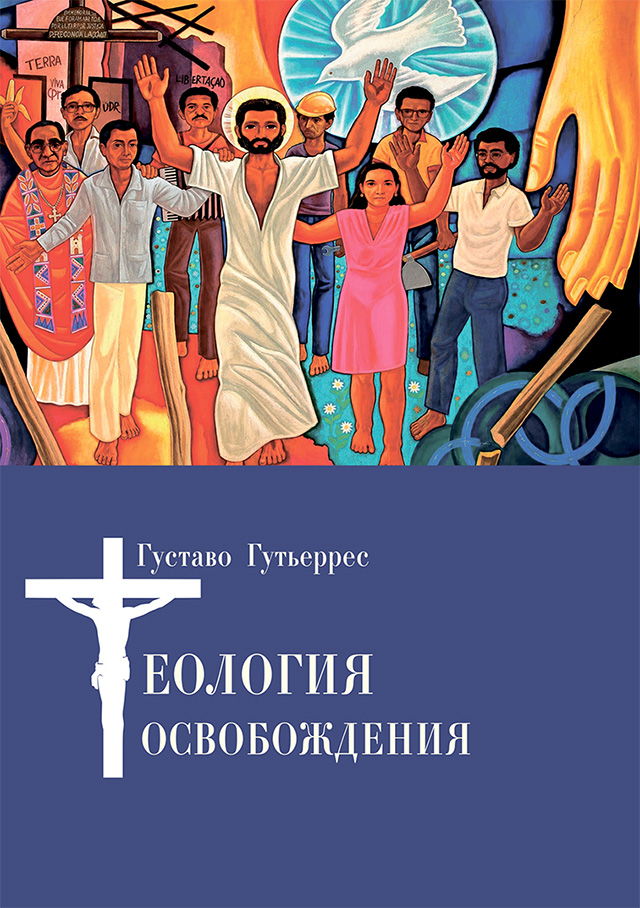
Gustavo Gutierrez. Liberation Theology. M.: Directmedia Publishing, 2026. Translation from Spanish by T. Adamenko. Content
1. From criticism of the concept of development to social revolution
The term "development" has expressed the aspirations of poor peoples over the past decades. However, recently it has come under serious criticism, both due to the inadequacy of the development policies offered to poor countries to overcome underdevelopment, and due to the lack of concrete achievements on the part of responsible governments. This is why development (desarrollismo), a term derived from development (desarrollo), is now used in a pejorative sense, especially in Latin America.
In recent decades, the concept of development has become the subject of intense debate. Countries of the global South actively competed for access to assistance from developed countries, and in academic and political circles there were even attempts to create a kind of “development mystic”. This trend was particularly evident in the 1950s in Latin America, where support for development peaked and created high expectations. However, because proponents of this approach avoided addressing the systemic causes of problems, their efforts failed, ultimately leading to disappointment and conceptual crisis.
A key reason for this situation was that development - viewed solely from an economic and modernization perspective - was often promoted by international organizations closely affiliated with the groups and governments that dominated the world economy. It was assumed that the transformations would be carried out within the framework of existing institutional structures without their fundamental revision. At the same time, the interests of major international economic forces and their natural allies—the domestic ruling elites—were carefully avoided. Moreover, the so-called changes often turned out to be only new and veiled ways to increase the influence of dominant economic groups.
As a result, development has become associated with reformism and superficial modernization, becoming a symbol of half-hearted measures that are ineffective in the long term and actually hinder genuine structural change. Poor countries are increasingly realizing that their backwardness is not an independent phenomenon, but a direct consequence of the development of economic centers - a natural product of the existing system of unequal relations between developed and developing countries. Moreover, they come to understand that their own development is impossible without active opposition to the dominance of industrialized countries.
Such perception reveals the conflict inherent in this process. Genuine development must eliminate the root causes of problems, among which the most profound is the economic, social, political and cultural dependence of some countries on others - which is an expression of the dominance of some social classes over others. Attempts to effect change within the existing order have proven futile.
This analysis of the situation meets the criteria of scientific rationality. Only a radical break with the status quo, including a profound transformation of the private property system, the rise to power of the oppressed classes and a social revolution capable of breaking the relationship of dependency, can ensure the transition to a new society - a socialist society - or, at least, create the preconditions for its formation.
In this context, the concept of liberation seems more adequate and meaningful. Unlike the term "development", liberation implies the inevitability of a radical transformation of social structures. Only within the framework of such a process can development policy be consistently implemented, be filled with true meaning and avoid ambiguous interpretations.
2. Man as the creator of his own destiny
Defining the position of poor countries as dependent and oppressed, we naturally come to the idea of their liberation - economic, social and political. However, this idea is based on something more: a holistic and profound vision of human existence and its historical development.
The driving force of modern historical development is the deep and universal desire for liberation. We are talking about liberation from everything that limits human self-realization and prevents the acquisition of true freedom and its implementation in life. A clear indication of the relevance of this process is the growing awareness of new, often hidden forms of oppression in advanced industrial societies, which are often held up as models for modern developing countries. What is especially significant is that in these societies the protest is not directed against poverty as such, but against the very logic of capitalist accumulation.
However, the situation in developed countries is fundamentally different from the situation in poor countries. In this regard, it is important to avoid both mechanical copying of their model and the imposition of new - this time revolutionary - forms of imperialism by rich states that claim to be the center of world history. Such imitation can only once again mislead the revolutionary movements of the third world about their own reality, causing them to tilt at windmills.
While recognizing this danger, it is important to emphasize that poor countries would also be wrong not to pay close attention to these processes, since their future depends, at least in part, on internal dynamics in dominant states. Their own efforts at liberation cannot remain indifferent to the ideas being put forward by growing critical minorities in the developed world. Moreover, liberation activists in peripheral states can learn valuable lessons from this experience that will help them avoid mistakes when building a new society. We are talking about a fateful choice, equally relevant both for the global South and North, and for the West and East, peripheral and central countries - the opportunity to gain a truly human existence, embodied in a free life and dynamic freedom gained in the historical struggle. Today, the contours of this development and its driving forces are becoming more and more clear, although their origins are rooted in the deep past.
The 15th and 16th centuries marked a turning point in the history of human self-understanding. With the emergence of experimental natural science and the methods based on it for transforming nature, the nature of man's relationship with the world around him radically changed. Based on these achievements, humanity has revised its previous ideas about the universe and its own place in it. As Etienne Gilson aptly noted: “Physics makes metaphysics old.” Scientific progress has allowed humanity to make a qualitative leap in development and begin to think about itself in a fundamentally new way.
This historical process clearly demonstrates that a genuine philosophical tradition has never been the fruit of exclusively speculative speculation, but has always represented a reflexive understanding of the practical experience of human interaction with nature and other people. At the same time, these relationships themselves not only receive theoretical understanding, but are also actively transformed under the influence of technological and scientific achievements.
Descartes is one of the key figures of the new physics, which changed man's relationship with nature. He laid the foundations of philosophical reflection, establishing the primacy of thinking and “clear and distinct ideas,” thereby revealing the creative potential of human subjectivity. Kant's Copernican Revolution strengthened and systematized this approach. According to Kant, it is not our concepts that must be consistent with objects, but, on the contrary, “objects ... must be consistent with our concepts.” The reason is that “we know a priori in things only what we ourselves put into them.” Kant clearly understood that this presupposes a transition to a “new method” of thinking - a knowledge that is capable of critically reflecting on its own premises and thereby overcoming naivety in order to gain intellectual maturity.
Hegel deepened this approach by introducing a historical dimension into philosophy with characteristic energy and persistence. Hegel's philosophical system was largely formed as an understanding of the experience of the French Revolution. This event had the deepest historical resonance, since it proclaimed the right of every person to participate in the governance of the society of which he is a part. According to Hegel, self-consciousness is formed only through recognition from another consciousness. However, this mutual recognition is initially born out of conflict - “a struggle for life and death,” since, as the philosopher claims, “only by risking your life can you gain freedom.”
The dialectic of master and slave, arising from this primordial opposition, reveals the historical process as the formation of consciousness and, therefore, as the gradual liberation of humanity. Through dialectical development, humanity not only creates itself, but also acquires a true awareness of its own existence; it achieves freedom through its practical embodiment, where labor acts as a transformative force that changes the world and shapes man himself. According to Hegel, “world history represents progress in the realization of freedom.” At the same time, the driving force of the historical process is the difficult conquest of freedom, barely noticeable in the initial stages. We are talking about the transition from awareness of freedom as an idea to its practical implementation. As the philosopher emphasizes: “Freedom contains the immanent need to rise to the consciousness of itself and, since self-knowledge constitutes its essence, to reality.” Thus, gradually mastering its own destiny, humanity strives towards the ideal of a society in which there is no alienation and enslavement. It was this vector of development that laid the foundation for a new dimension in philosophy - social criticism.
Marx creatively developed and radically transformed this line of thought. However, this required what has been called an "epistemological break" (a concept dating back to Gaston Bachelard) with the previous philosophical tradition. The new philosophical position found its extremely concentrated expression in the famous “Theses on Feuerbach,” where Marx outlined the foundations of his approach with exceptional brevity and depth. Particularly indicative in this regard is the First Thesis, in which Marx takes a position that overcomes the limitations of both traditional materialism and idealism, carrying out their dialectical removal. From the first he retains the thesis about the objectivity of the external world, from the second - the idea of the transformative power of human activity. For Marx, knowledge was inextricably linked with the practical transformation of the world through work. Starting from these initial premises, he developed a scientific understanding of historical reality. When analyzing capitalist society, he identified specific forms of exploitation - both of man by man and of one class by another. Charting the path to a historical era in which people could finally achieve truly human conditions of existence, Marx created a categorical apparatus that made it possible to construct a scientific theory of historical development.
Thanks to scientific progress, humanity has taken a new step in the development of critical thinking. This, in turn, led to a deeper awareness of the socio-economic conditionality of ideological constructs and expanded the possibilities for overcoming them. In parallel, new knowledge provided more rational control over historical processes (subject, of course, to abandoning their dogmatic and mechanistic understanding). All these changes are aimed at the transition from the capitalist mode of production to a socialist society focused on a free and truly human existence. Such a transition implies the consistent mastery of the forces of nature, the creation of conditions for socialized production, the elimination of private appropriation of excess wealth and, ultimately, the construction of a new social order.
Modern aspirations of humanity are aimed not only at liberation from external pressure that limits a person’s self-realization as a member of a class, nation or society, but also at internal emancipation in the individual and personal dimension. In other words, the search for freedom is carried out not only at the social, but also at the psychological level. At the same time, internal freedom is understood not as an ideological escape from social contradictions or the internalization of relationships of dependence, but as an active transformation of a person’s inner world in accordance with the achievements of psychological science since the time of Freud.
Sigmund Freud made a significant breakthrough by discovering the unconscious determinants of human behavior - it was he who showed that repression occupies a central place in the mental organization of man. According to his theory, repression arises as a result of the conflict between instinctual drives and the cultural and ethical requirements of the social environment. According to Freud, unconscious motivations have a tyrannical power, often giving rise to deviant behavior. It can be controlled only by becoming aware of these hidden forces - through deciphering the special language of meaning created by the unconscious. Thus, if in Hegel conflict acts as the initial explanatory category, and awareness becomes a key stage on the path to freedom, then in Freud these elements are revealed in the context of an internal psychological process, which nevertheless also serves a more complete liberation of man.
At the collective historical level, the process of liberation does not always aim at psychological emancipation, since it affects the deep dimensions of human existence, which usually remain outside the brackets of large-scale social transformations. It is important to avoid simplistic division or opposition between these two forms of liberation. As David Cooper rightly observes, “the main mistake of all previous revolutions was the artificial separation of mass social liberation - that is, the economic and political emancipation of entire classes - and the liberation of the individual in the context of those specific groups with which he is directly associated.” Thus, modern revolutionary rhetoric loses all meaning if it does not strive for a synthesis of the macrosocial and microsocial, “inner reality” and external reality. Moreover, alienation and exploitation - as well as the struggle against them - have a profound impact on the personal and psychological level. Ignoring this aspect poses a serious danger to the construction of a new society and the formation of a new person. It is these personal dimensions, interpreted today as universal rather than particular, that come to the fore in contemporary debates about widening political participation. What is especially important is that this concept remains relevant in the socialist context.
Herbert Marcuse made a significant contribution to the development of this concept. Deeply influenced by Hegel's dialectic and Marx's social criticism, he creatively adapted psychoanalytic categories to analyze modern social structures. Based on the work “The Discontents of Culture,” which was underestimated even by Freud himself, Marcuse analyzes the over-repressive nature of an affluent society and, in contrast to Freudian skepticism, theoretically substantiates the possibility of a non-repressive society. His critical analysis reveals a common tendency for capitalist and socialist societies to become repressive, one-dimensional systems. Marcuse argues that to build a non-repressive society it is necessary to decisively abandon the values imposed by a social order that excludes the very possibility of free existence. Эту радикальную позицию философ определяет как Великий Отказ — «призрак революции, подчиняющей развитие производительных сил и рост благосостояния задаче создания солидарности человеческого рода, искоренения нищеты и лишений повсеместно — вне национальных границ и сфер влияния — во имя утверждения мира».
Разумеется, мы не призываем слепо принимать каждый аспект этой эволюции идей. Слишком многое здесь требует критического осмысления и уточнения. Многие положения требуют тщательного осмысления и уточнения, а некоторые — пересмотра в свете неумолимого хода истории, которая одновременно подтверждает и опровергает прежние теоретические построения. Как и любые идеи, их следует проверять практикой — этим высшим критерием истинности любой теории — и учитывать иную социокультурную реальность, радикально отличающуюся от условий их возникновения. Однако такая критическая работа не должна вести к позиции недоверчивой сдержанности. Напротив, она указывает на грандиозность стоящей перед нами задачи — и ее актуальность лишь возрастает. Ведь эти теоретические поиски представляют собой попытку выразить глубоко укорененное стремление к освобождению, присущее современным массам. Пока еще смутное, это стремление осознается все отчетливее. Более того, для многих людей — во Вьетнаме и Бразилии, Нью-Йорке и Праге — оно уже стало нормой жизни и высшим оправданием служения. Именно их приверженность образует тот становой хребет, который придает историческую жизнеспособность идеям, изложенным выше.
Понимать историю как процесс освобождения человека — значит видеть в свободе не дар, но завоевание; это значит сознавать, что путь от абстрактной свободы к свободе реальной неизбежно пролегает через борьбу со всеми формами угнетения — борьбу, изобилующую скрытыми ловушками, опасными поворотами и постоянными соблазнами отступить. Главная цель этого процесса — не просто улучшение условий жизни или даже социальная революция, но нечто неизмеримо большее: бесконечное творение новых способов быть человеком, непрерывная культурная революция.
В основе этого процесса лежит динамическое понимание человеческой природы — видение, обращенное к будущему, но преображающее настоящее. Как отмечал Пьер Тейяр де Шарден, человечество, по сути, взяло эволюцию в свои руки. Это означает, что история — в противоположность эссенциалистским и статическим интерпретациям — это не просто развитие изначально заложенных в человеческой природе возможностей, но созидание абсолютно новых, качественно иных форм человеческого существования, призванных обеспечить более полную и всеобъемлющую реализацию личности в органическом единстве со всем человеческим родом.