
Translated material
“Snail” Directive
Once again about the cult story of the Strugatskys
This year marks sixty years since the publication of the forest chapters of “Snails on the Slope” in the collection “The Hellenic Secret” - the first appearance of this story to readers - and twenty years since the publication of the collection “Snail on the Slope. Experience of an academic publication,” a unique book about the book, which brings together the text itself, the related story “Anxiety,” and a body of research and reference articles about this work and its relationship with language, culture and society. Lev Kaufeldt reflects on the experience of yet another rereading of the Strugatsky brothers’ story and its ever-increasing influence on reality.
All of us, since February 24, 2022, have found ourselves in the face of advancing barbarism, violence and lies. In this situation, it is extremely important to preserve at least the remnants of culture and support the values of humanism - including for the sake of the future of Russia. Therefore, the editors of Gorky will continue to talk about books, reminding our readers that there is still a place for thought and fiction in the world.
“From this height the forest looked like lush, spotted foam; like a huge, loose sponge for the whole world; like an animal that once hid in anticipation, and then fell asleep and grew into coarse moss. Like a shapeless mask hiding a face that no one has ever seen before.”
The first lines of “Snail on the Slope” can be rolled around in your mouth for a long time, pronounced with different expressions, repeated like a mantra, like a spell, whispered to yourself, marveling at how perfectly the consonances are maintained, how rounded, self-contained and self-sufficient this first paragraph is, one of the best beginnings of Soviet prose of the sixties. Who could start a story as effectively, without fear of being condemned for being pointless and vague? From the very first words, setting the reader up for a completely special, isolated, alien narrative.
The path of “Snail on the Slope” to the reader was difficult. The collection “Experience of an Academic Publishing” includes a detailed article by Svetlana Bondarenko “The Story of a Snail” about the misadventures of the story on the way to full publication. Let us limit our understanding to the main milestones:
– 1966: publication of chapters about the Forest (Candide’s line) with a short introduction by the authors in the collection “The Hellenic Secret”, Leningrad;
– 1968: publication of chapters about the Department (Peretz’s line) with a foreword by Ariadna Gromova in two issues of the magazine “Baikal”, Ulan-Ude;
– 1972: publication of chapters about Management in the collection “Snail on the Slope”, Frankfurt am Main;
– 1981: publication of chapters about the Forest under the title “The Forest”, Ann Arbor;
– 1984: publication of chapters on the Office under the title “Snail on the Slope”, New York;
– 1988: the first FULL publication of the story “Snail on the Slope” in five issues of the magazine “Smena”, Moscow;
– 1989: the first complete book publication of the story in the author’s collection of the Strugatskys “Waves extinguish the wind”, Leningrad.
As you can see, more than twenty years passed between the publication of the first chapters and the release of the full text of “Snails on the Slope.” The story is not unique, especially for the works of the Strugatskys. Some of their things also lay on the table for fifteen to twenty years without the possibility of being published. The greater the surprise every time when re-reading almost every creation of the Strugatskys. Not only are these lyrics ageless and fresh as they were the first time, they remain completely timeless. It is difficult to explain where, in the mid-sixties, the brothers picked up such chic progressive literary techniques that even against the backdrop of the thaw of the new wave of the Soviet sixties, they were read as natural aliens from the future.
Among the works of the Strugatskys there are stories and novels that are not included either in their “Midday” utopian cycle about the future of humanity, or in the “Monday-Saturday” dilogy (or trilogy) about the everyday life of NIICHAVO employees. It is in these off-cycle things that the fun begins: the brothers allow themselves to go into full experimentation. And the strangest of these things, still unambiguously understood and sorted out by few people, is the story “The Snail on the Slope.”
The Edge is present in many of the Strugatskys' works. In “Roadside Picnic” this is the border between the city and the Zone, in “Ugly Swans” - between the city and the midge leper colony, in “Doomed City” - between the city and what is beyond the cliff. At the same time, from other things by the Strugatskys one can see that this Edge, constantly present in the authors’ works, is rather mental, philosophical. This is the edge of human understanding and understanding. Here they come close to the ideas of Stanislaw Lem about the fundamental impossibility of contact with the alien, essentially unknowable for humans. In “Snail on the Slope,” such a line passes between the endless Forest, closed to the rest of the world, and the Forest Department located on the cliff.
It’s a paradox, but the main character of the forest chapters of “Snails on the Slope,” Candide, stepped beyond the Brink, unwillingly. By a stupid coincidence, he ended up in a village in the depths of the Forest, quite by accident he found himself in the very heart of the forest's secrets, but he understood little and only sought to return to his usual world order. On the other side, Peretz, the “superfluous person” in the Department, constantly whines that he is sick with a longing for understanding, either strives for the Forest, or wants to run away from it. At that stage of development (historical time in “The Snail on the Slope”), the Strugatskys’ man is completely not ready to look beyond the boundaries of understanding, because he will not find anything useful or understandable there for himself, and if he does look, he will be quite horrified. (At the same time, notice how whimsically the Management from “The Snail...” and Lemov’s bureaucratic dystopia from “The Manuscript Found in the Bathtub” merge in the narrative space.)
The unsteady structure and unreliable narrative technique of “Snails on the Slope” do amazing things to the reader’s memory and contribute to the emergence of, let’s call them, “apocrypha.” If after the first reading many years ago I could retell in general terms the plot of the story and even remember some of the main scenes, then over time some episodes were naturally crowded out and replaced by something else, either seen in a dream, or invented on my own... I completely threw out of my memory the endings of the two storylines of “The Snail...” and added my own, for a long time being in full confidence that this was the way it was: I have Pepper at the end, sitting quietly and peacefully on a foggy morning by the cliff, I met the director who had finally come out to exercise, and at that very time Candide was climbing up the cliff with a scalpel in his teeth to decompress the managerial dystopia. Is it worth clarifying that these endings had nothing in common with the author’s text and self-destructed after the second reading. But they were remembered for a long time.
I am sure that almost every thoughtful reader of the Strugatskys will agree that the main thing in their works is not revealed the first time, but only after the second or third approach to the text, and a fair amount of time should pass between approaches, ideally several years. Believe me, this is a very important point: over time, the Strugatskys’ texts tend to greatly change their characteristics. Of course, the point is in the reader himself, in his perception, in the texts themselves, naturally, little changes (in fact, a little changes if you first read the so-called canonical texts verified and agreed upon with Boris Strugatsky in the nineties, and then get early Soviet editions somewhere for vintage re-reading, but this only confirms my thesis: these texts live and breathe). And “Snail...” is no exception. Having once carefreely mastered it in early youth, one can consider only the top layer, full of absurd satirical situations and forest adventures a la Vitaly Bianchi, completely not paying attention to the cruel Kafkaesque grotesque, folklore background, without at all comprehending the ideas of parthenogenesis and the third wave of feminism discussed in the text, as well as the general chiasmatic structure of the story.
So I repeat: the shaky structure and unreliable narrative technique of Snails on the Slope can do amazing things to the reader’s experience. In the collection “The Experience of Academic Publishing,” for example, there is an excerpt removed by the authors from the third chapter of the story, where Peretz ends up in the library at night. This is an unattributed polylogue of books standing on shelves. But this polylogue reads as if it had always been there, it looks like a glove. False memories of him will haunt the reader (the reason for this will be revealed further in the text of the story in the ninth chapter, so we will not ruin the intrigue).
After about the third or fourth re-reading, you begin to realize that, in addition to all the semantic layers, “The Snail...” also contains an impressive visual charge. After all, at first the reader may say to himself: well, just think, Forest, just think, some kind of Administration - it’s not difficult to imagine such locations and populate them with characters, it’s not difficult for me to imagine them. But the trick is that “The Snail...” constantly, with each page, plays more and more with our perception of the Forest and Management, in the end reaching a completely surreal scale of distortion. Here, for example, is a very characteristic finale of chapter five, where Pepper for the first time (again by accident) ends up in the Forest:
“And around the forest moved, the forest trembled and writhed, changed color, shimmering and flashing, deceiving the eye, floating and retreating, the forest mocked, frightened and mocked, and it was all unusual, and it could not be described, and it made you sick.”
Probably, it is precisely at such moments that the reader begins to latently suspect that he is reading not bureaucratic satire, but fantasy, or at least a parable with fantastic assumptions - at a time when we need additional visualization. When we understand that the Forest is not just a forest, when our not conceptual, but visual apparatus begins to break down. We are born with a thirst for a new vision.
And this thirst is quenched by the magnificent illustrationsof Sever Gansovsky , Nikolai Domashenko and others, who accompanied us during the first readings, each time forming complex, voluminous, meticulously furnished, so to speak, internal spaces of the story. I would especially like to highlightAndrei Karapetyan , his illustrations in the series “The Worlds of the Strugatsky Brothers” instilled in children of the nineties an understanding of the importance of non-standard vision and perception of prose for many years to come. For many of the Strugatskys’ texts, Karapetyan developed his own style and, within the framework of it, built his own story, sometimes going far beyond the scope of the narrative, interpreting all the stunning understatement of the Strugatskys’ language much more broadly and clearly.
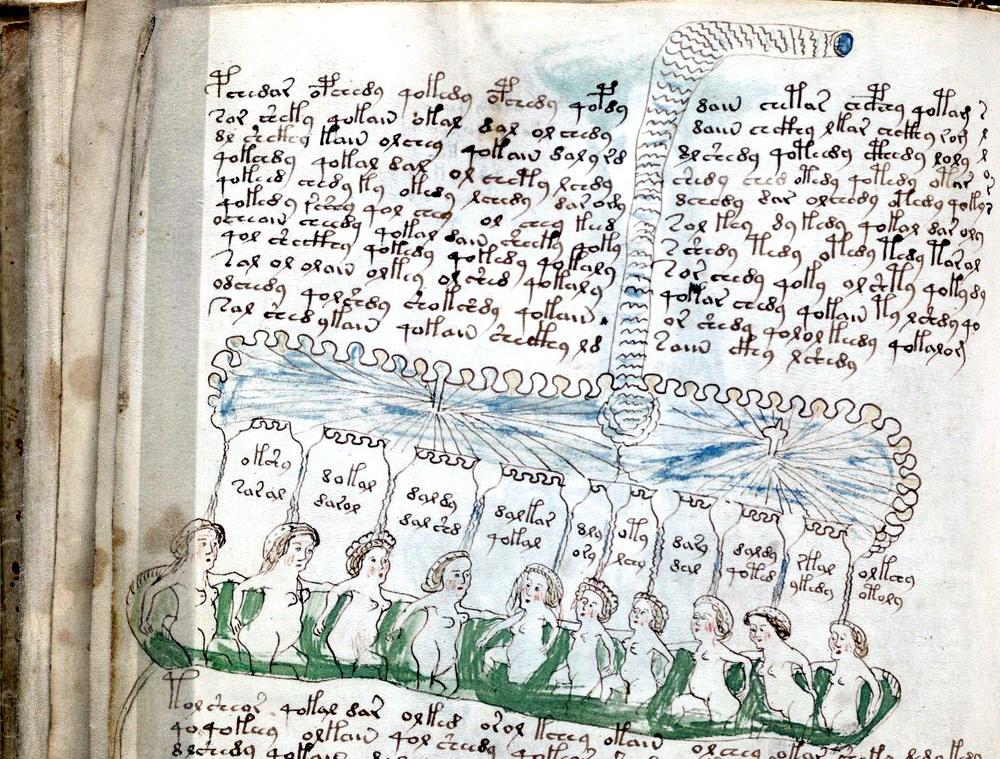
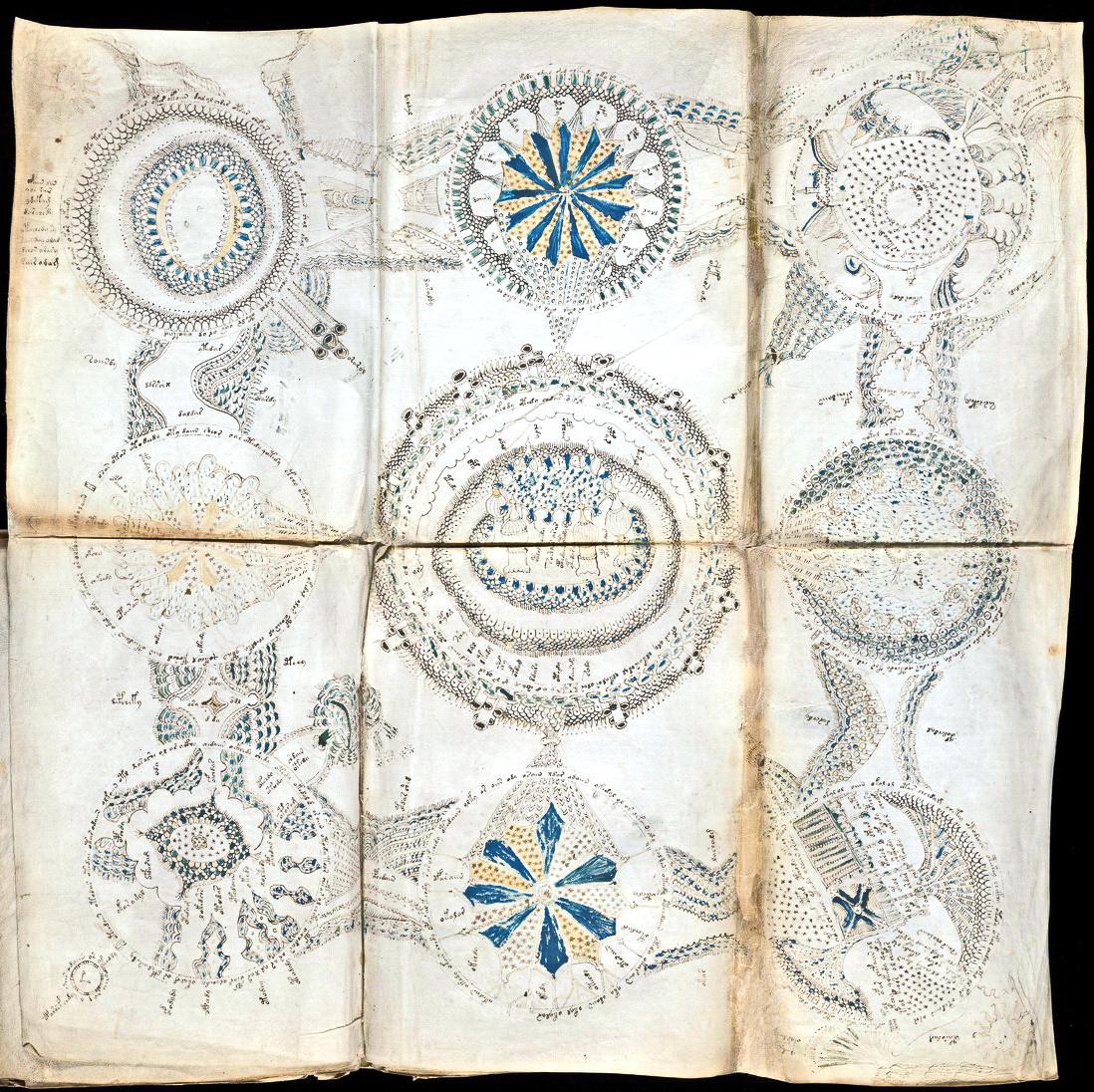
Have you read the Voynich Manuscript? Just kidding, you couldn't read it, it hasn't been deciphered yet. For the reader's mind, exhausted by postmodern interpretations, this 15th-century manuscript in an unidentified language, filled with sketches of strange, unlikeable plants lying in lakes of white-skinned pregnant women and suspicious layouts of the area, is another ideal set of illustrations for the forest chapters of “Snails on the Slope.” Everything that we read about during the journey of Candide and Nava through the hostile and incomprehensible Forest is reflected in the Manuscript. On one of its pages, among the roots of a plant, you can see a small hand beetle, and on the map you can see villages, swamps, a mysterious cesspool and triangular lakes at the sites of Obsessions. Just as on the pages of the Voynich Manuscript the intricate text adapts to the drawings printed on the page, so the text of “Snails...” is just an attempt to embrace and find out the secret of the Forest. Or is this the Strugatskys’ attempt to decipher the Manuscript?.. I remember very well the moment when I first saw illustrations of the Voynich Manuscript with female mermaids in the lake and immediately felt it. Anxiety.
Rita leaves the gates of the biological station, rubbing her cold hands, and enters the Forest. In the Forest there is a path and a small space with trees around. There is a Scalpel under one of the trees. Rita walks along the Path, notices the Scalpel and takes it for herself. The first branch of the Trail. In the branch you can find Mushrooms / Berries / Edible soil. Rita eats and regains her strength.
The Strugatskys' story "Anxiety" is an early version of "Snail on the Slope", at that stage still built into the Midday cycle about the future of humanity. At first it was put aside by the authors as not satisfying the plan, but many years later it was published and is now included in all collected works as a canonical text. I am sure that “Anxiety” is as important for understanding “Snail...” as, say, “Baby” is important for understanding “Bug in an Anthill”. And the most important thing is located precisely in those places where the connections between these texts become not obvious. An expert on the Strugatskys’ work, a member of the research group “Ludens”, Svetlana Bondarenko, in the article “The History of the Snail” from the collection “Experience of an Academic Publication,” provides a transcript of the senselessly abstract telephone speech of the Director of the Office from the third chapter of “The Snail...”. And almost all of it consists of... replicas of the authors and heroes of the story “Anxiety”, chopped up and mixed up. Pepper, being in his crazy Office, listens on the phone to cut-up phrases spoken in a parallel literary world on the distant planet Pandora. Roughly speaking, he hears them from some possible “future,” the one in which a utopia has finally been built (well, almost). And in which people can already cross that very Boundary, risking themselves for the sake of possible methods of knowledge and accelerating progress. In a sense, Peretz personifies you and me, unlucky readers who are sometimes unable to connect pieces of complex text with each other in order to build the only true message, to decipher the signal.
Rita comes to the Cliff. Up on the edge of the Cliff someone is sitting with his sandaled feet dangling. Rita climbs the Cliff, helping herself with a Scalpel. If Rita has eaten all the food in the previous location, she falls down halfway. If Rita eats Edible Dirt, she turns into a bush sticking out of the cliff wall.
Using the example of the flow into each other of “Anxiety”, “Snail on the Slope”, the Voynich Manuscript and others involved to varying degrees, we see how text begets text begets text begets text. Over the past six decades, the Snail continues to crawl up the mountain of manuscripts, leaving its acrid, wet trail on them. How many obvious and hidden imitations have been written, how many dense forest utopias and grotesque management dystopias have flooded Russian literature over the years? This is a task for a separate study. Offhand, you can find traces in Tolstoy’s “Kysi”, in the novels of Sorokin and Pelevin, etc. According to fantlab.ru , “The Snail...” has been translated into twenty languages (it has been translated into English, French, Italian, Serbian and Turkish twice). Even in cinema one can still find faint traces of it. The Japanese “Charisma” (1999) by Kurosawa Kiyoshi seems to be filmed based on “The Snail...”. And the recent animated All You Need Is Kill (2025) by the 4°C studio is built almost like the story of one of the heroes of “The Snail...”, but not Candide or Pepper... Ask: who? In 2014, an attempt to develop the theme of this character was made by D. VanderMeer in the image of the biologist Cuckoo from his novel “Annihilation”. In his next novel, Consolidation, he seems to have tried to show us the workings of the Office from the inside.
Second branch of the Trail. In the branch you can find edible Bugs/Slugs/Snails. They are guarded by Rooked. If Rita took the Scalpel with her and did not climb the Cliff, she kills the Handeater and moves on to the Swamp. If Rita didn't find the Scalpel, the Hand Eater sprays spores and turns Rita into a Leaping Tree.
Rita from the biological station is one of the most mysterious and unsolved images of “Snail on the Slope”. Rita is mentioned by a couple of minor characters; Pepper thinks about it a couple of times and only once observes it with his own eyes. And Rita herself utters literally one insignificant phrase throughout the entire story and immediately leaves the frame. Nevertheless, she, outlined with only a few author’s touches, immediately captures the reader’s attention - the Strugatskys have this type of heroine. At the same time, Rita embodies one of the Brothers’ favorite literary devices - the negative space of the narrative, the missing area of the narrative that always deliberately remains empty, the absolute silence with which the authors so love to leave the reader alone. This is the story of Saul in “An Attempt to Escape”, and what Zhilin experienced in “Predatory Things of the Century”, and Abalkin’s destiny in “The Beetle in the Anthill” - a scary gap full of uncertainty, like erased, irreparable sections of the phonogram from the book “Waves Quench the Wind”. Empty places that, after reading, begin to peer at you more and more intently. Biologist Rita is the third main character of “Snail on the Slope”, perhaps the most important hero of the story, a person from the biological station: no longer from the Office, but not yet from the Forest. Her story remains hidden from us. For me, Rita symbolizes the entire “Snail on the Slope” - a changeable, constantly elusive substance, where the most important things will never be said out loud.
Swamp. A Mermaid swims in the Swamp. A dialogue with the Mermaid follows: did Rita eat any Bugs/Slugs/Snails on the way to the Swamp. The dialogue branch, Rita's choice of answers and the number of Bugs/Slugs/Snails eaten influence one of two final decisions of the Mermaid:
— The mermaid turns Rita into a Slug, and she crawls away into the branch;
— The mermaid turns Rita into the Swamp Fairy, and she plops down next to her in the Swamp.
What should we do with immortal poems? It's 2026, and people, like our Pepper, are still sick with a longing for understanding. Сейчас я совершу немного нечестный ход и пробегусь только по отрицательной читательской рецепции последних месяцев. Мы никоим образом не можем осуждать читателей за то, что они не поняли повесть, это живые мыслящие люди, достойные уважения, у меня нет намерения никого оскорбить, следующие сведения приводятся чисто в исследовательских целях. Итак, по итогам недавних прочтений «Улитка на склоне» — это бред, который признается шедевром; торжество не отягощенного смыслом процесса над целью; тяжелый сон, полный кошмаров; экзистенциальные бредни воспаленного мозга и полный абсурд; честь и хвала тому, кто смог найти хоть какой-то смысл в этом потоке бреда; палата умалишенных, двигающихся в броуновском стиле; сейчас таких фантазий пруд пруди.
Третье ответвление Тропы. В нем можно найти съедобные шоколадки, банки газировки, пакеты чипсов (вывалились из Вертолета во время падения). На упаковках провианта есть подсказки типа: поднажми на красное; вдарь по желтому; хрустни синим. Рядом — упавший в Болото Мотоцикл. Если в соответствии с подсказками Рита нажимает все правильно, Мотоцикл заводится, и Рита уезжает на Утес.
О чем говорит нам подобная рецепция? О том, что программа работает: произведение, замысленное и созданное с тем, чтобы быть непонятым, остается непонятым. Все шестьдесят лет. Даже больше: скорее в первую очередь правы читатели, оставляющие отрицательные реакции на основании того, что «Улитка на склоне» ими не понята, ибо эта рецепция справедлива. А те, кто утверждает, что поняли повесть, либо лукавят, либо поняли ее неправильно. Ибо у нас нет данных, для того чтобы решить это уравнение. В других произведениях Стругацких присутствует несоизмеримо больше вводных; они разрешаемы; если в них не указано прямого решения, их можно, поднатужившись, расшифровать. Ну разве что «Гадкие лебеди» (мой любимый роман авторов) примерно схожим образом нерешаем: без авторской подсказки можно и не пытаться. Мы не сможем «улучшить» «Улитку…», мы не сможем дописать ее, бережно подвязав все торчащие ниточки (я пробовал читать попытки такого, это отдельное изощренное порнографическое мучение). Мы не сможем, потому что у нас есть «слепая зона» — так и не рассказанная история Риты. Да, мы можем выдумать ее, эту историю, мы можем ПРЕДСТАВИТЬ СЕБЕ ее. У каждого она окажется своей собственной, отличной от других.
В первой главе «Беспокойства» Тойво Турнен говорит:
«Вранья вообще не бывает. Все, что выдумано, — возможно. <…> И треугольный пруд. И туман, и зеленую луну. Все это я вижу так отчетливо, что могу описать во всех подробностях. Для меня это и есть критерий реальности, и он не хуже любого другого. <…> Ведь я не увидел здесь ничего такого, чего не мог бы представить себе, сидя дома».
Перец в шестой главе «Улитки на склоне» вторит ему:
«Наверное, все, что есть здесь, в лесу, я мог бы придумать <…>. И все, что есть в Управлении, я могу придумать и представить себе, я мог бы оставаться у себя дома и придумать все это, лежа на диване рядом с радиоприемником, слушая симфоджазы и голоса, говорящие на незнакомых языках».
Если в локации Болото Русалка превращает Риту в Слизня, та приползает к Утесу и может всползти по нему. По пути на вершину Утеса встречаются клочья Лилового тумана. Если проползти через достаточное количество Лилового тумана, Рита превращается обратно в человека. Она видит, что на краю Утеса, свесив ноги в сандалиях, сидит Перец. Тогда она садится рядом с ним.
«Улитка на склоне» останется недописанной. Она продолжает свое движение.
«Понять — значит упростить».
«Увидеть и не понять — это все равно что придумать».
Аркадий и Борис Стругацкие