
Translated material
Imaginary Malraux
From Saigon prison to de Gaulle's office: an amazing biography of Andre Malraux
At the Pushkin State Museum on February 12, the exhibition “Voices of the Imaginary Museum of Andre Malraux” ended, which showed more than 800 works illustrating the concept of the French writer, military pilot, Resistance fighter, Minister of Culture and reckless adventurer. If you were unable to see the exhibition, you can visit the imaginary museum and get acquainted with its creator in the book “Signed by Malraux” by Jean-François Lyotard. At the request of “Gorky,” Dmitry Bezuglov sorted out the confusing biography of the Goncourt Prize winner, who surrounded himself with adventures and myths.
The imaginary museum, a concept outlined by Malraux in his essay of the same name, is not subject to space and time. It exists in a consciousness that overcomes the aesthetic constraint generated by the class concept of good taste. He stores not the works themselves, but the memory of them - images processed and rethought by the imagination. He brings together masterpieces belonging to different cultures and eras, revealing unobvious connections, explicit and hidden quotes. It lasts as long as the imagination that gave birth to it, and belongs to the artistic, otherworldly world, and not to this-worldly reality.
The team at the exhibition “Voices of the Imaginary Museum of Andre Malraux” gave voice to a variety of works: from busts by obscure Egyptian architects to paintings by Géricault and sketches by Klee. The exhibits, which met each other for the first time in Pushkinsky’s space, testified in favor of Andre Malraux’s pancultural concept. But their evidence is not obvious to those who do not know the author - “many-faced, unhappy and cheerful.” The exhibition catalog refers to specific works and curatorial decisions, offering a clearly defined portrait of its inspiration. A much more trembling and lively image is painted by Jean-François Lyotard in his hypobiography “Signed by Malraux.”
“Hypobiography” - from ancient Greek. ὑπό (“from below”), that is, located under the actual biography. This cautious maneuver was dictated by the fact that the hero himself claimed to be a biographer and jealously ensured that his private life was protected from prying eyes. Malraux believed that the image and history of a person is composed solely of his actions: “I have learned little and poorly how to create my own Self, if creating it means adapting to the despondency and loneliness of a provincial inn, which we call life.” He did not hesitate either in deeds or in words, which sometimes replaced action. What he experienced formed a grandiose biography that is amazing, even compressed into a few paragraphs.
Malraux was born in 1901 into the family of a grocer, Berthe, and a loving clerk, Fernand. Andre spent his fourth year in the Bondi commune with his mother and grandmother - his father abandoned them, carried away by endless novels and Paris. At five he was sent to private school, from where he left at fourteen. Later, he was unable to enter the Lycée Condorcet (although there is contrary evidence, probably based on the words of Malraux himself). So the future Minister of Culture of France became a self-taught person without a matriculation certificate. Malraux acquired knowledge himself: at eleven, having spent his summer in the scouts, he taught himself to instantly remember what he saw and decide what of his experiences should be subjected to oblivion.
Malraux's best friends were museums, theaters and libraries. As Lyotard writes, “he read everything, rapidly: the late symbolists, cubists, romantics, books on the history of Byzantium, the kingdoms of China and Mesopotamia, Barres and Maurras. And he looked at everything: the Venetians and the Japanese, the Florentines and Cezanne, Matisse, Picasso and Braque. <...> The boy from Bondi loved books as weapons, and the street as an adventure story.” Malraux exhausted his school friends with runs around the Louvre, searching for new productions, and, having exhausted his friendship to the end, he looked for new acquaintances. At eighteen, full of determination, he went to the Cubists and brought a prose poem to be torn to pieces by the poet and critic Max Jacob, a friend of Apollinaire and Picasso. At the same time, he began his first adventure: having gained the trust of the wealthy bookseller Lucien Cras, young Malraux launched the publishing project “La Sageitter” and began publishing “artists’ books” (livre d’artiste - artefact books for which exceptional illustrations, fonts, design layouts and expensive binding were created; the format was invented by Ambroise Vollard and picked up by the French art dealers and printers), dragging Baudelaire's Conversations and Jacob's poems into the publication plan. The project ended as soon as the publisher compared the promises of the young scoundrel with real sales. Having squandered other people's material capital and strengthened his symbolic capital, Malraux thoroughly took up writing: starting with poetic and artistic criticism, he moved on to prose - and in 1921 he published the allegorical fairy tale “Paper Moons”. The author subsequently preferred not to remember this didactic and carefully collected story.
His restlessness and omnipresence—Malraux-at-an-exhibition, Malraux-in-the-editions-of-magazines, Malraux-at-bookstores—gathered around the young writer a whirlwind of geniuses, political activists, fluttering hearts and hungry bellies. In the early 1920s, he became friends with Andre Gide, who, as literary critic Samarius Velikovsky notes, admitted “that he had difficulty imagining Malraux working diligently at his desk every day.” Another remark from Gide was recorded by Jean Giono - dedicated to Malraux’s public dispute with the writer de la Rochelle, it sums up Malraux’s verbose youth: “The conversation, which began at half past one, lasted until six o’clock in the evening <...> They ordered coffee, alcohol, smoked, Gide was silent all the time. <...> I decided to accompany Gide a little and along the way I tried to justify myself: “I didn’t say a word, because, frankly, I didn’t understand anything about what we heard, not a single detail of the conversation.” At that moment, Jide, showing exceptional courtesy, touched my hand and said: “Calm down, Giono, I didn’t understand anything either.” And after a few steps he added: “I guess they didn’t understand anything themselves.”
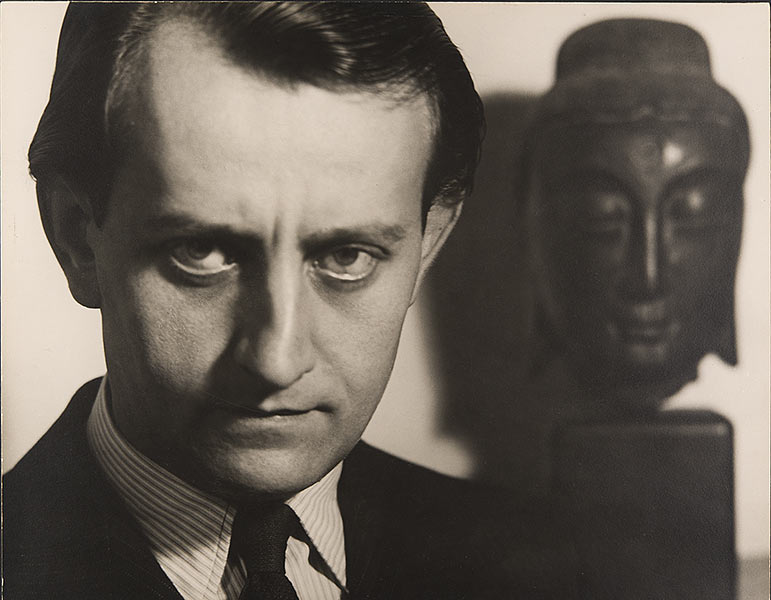
Portrait of Malraux by Philippe Halsman, 1934
© 2015 Philippe Halsman Archive / Magnum Photos
Malraux no longer allowed himself such luxury - speaking for the sake of speaking - in public, saving it for his novels. He subordinated speeches that served the goals of the World Anti-Fascist Committee, the Resistance or the de Gaulle government to larger goals. Malraux learned this during his imprisonment in Saigon prison, where he was led by arrogance, dandyism, love for archeology and the desire to get rich. Twenty-two years old, Malraux learned that an unexplored Khmer sanctuary had been found in Cambodia, which had not yet come under the patronage of the French Commission for the Protection of Cultural Monuments. The plan was simple: cut down the idols, transport them to France, transfer them to a scientific institute interested in them and get rich. However, the colonial authorities accused Malraux of stealing historical property and arrested him, and in addition they hated him for being a cosmopolitan, a cubist, a Bolshevik and a friend of the openly homosexual Andre Gide. So the usual routine for the French intellectual - arguments, reviews, articles, debates in coffee houses - was interrupted once and for all. For the first time, Malraux felt how experience can weigh down a word, and henceforth he charged the letter with action, following the adored Lawrence of Arabia. It was possible to get out only thanks to the hype in the press and the help of his wife: a letter in support of the writer was signed by Braque, Picasso, Jacob, Gallimard and even the surrealists Aragon, Breton and Soupault, whom Malraux treated with skepticism.
Released from prison, he wrote The Royal Road (1930), a paranoid novel whose intimacy was born in a cramped closet in a Saigon prison, and whose redundancy of descriptions was born from the heavy intoxication of Joseph Conrad's Heart of Darkness. This is how he described him in Anti-Memoirs: “The book and the character were born in reflection on what a person can oppose to death. Hence the type of inactive hero who runs the risk of torture for the sake of the only idea that he had, and also, perhaps, in order to stop his fate, because the risk of torture seemed to him the only victory over death.” A little later - after a short escape to Indochina, where Malraux published a newspaper for the national liberation movement - he wrote “The Lot of Man” (1933), which brought the writer the Goncourt Prize.
From that moment on, the number of adventures increased dramatically. Malraux got a job at the Gallimard publishing house, where, unlike La Sageitter, he behaved moderately, but took advantage of every opportunity to go on a business trip. Is a publication about the monuments of Egyptian culture being prepared? Malraux rushes to Cairo. Japanese art? Malraux goes to Tokyo. In 1934, he set out in search of the kingdom of the Queen of Sheba and flew around the length and breadth of the Arabian Desert. In the same year, he spoke at the First Congress of Soviet Writers (he met Gorky, Eisenstein and Vertov and, due to the forced landing of the plane, spent the evening in one of the collective farms near Moscow). And together with Gide he went to free the Bulgarian communist Dimitrov, accused by the Nazis of setting fire to the Reichstag.
Two years later - unable to fly an airplane and without military ranks - he assembled the "Spain" squadron to fight on the side of the Popular Front against Franco's army: he participated in 70 missions, received several wounds and was shot down twice. According to him, “there is no word in the language that can describe the feelings of a person moving towards an enemy, but these feelings are as strong and as unlike anything as sexual desire or fear. The world seems filled with a faceless threat." He packaged his experience into the evil story “Nadezhda.”
Having received leg injuries and being distracted from military operations, Malraux decided to make a film based on “Hope”. He hoped to hand over the direction to Eisenstein, but Soviet cultural policy put an end to the idea. They managed to make the film, but the distribution did not work out - World War II began. In 1940, Malraux ended up in a prisoner of war camp, from which he escaped and until 1944 he lived quietly in a castle in the south of France, writing the novel “The Hazelnuts of Altenburg.” Only in 1944, pulled out of a sleepy limbo by a series of family tragedies (the death of his mistress, the arrest of his brothers), Malraux joined the ranks of the Resistance and headed the Alsace-Lorraine tactical group, hiding behind the pseudonym “Colonel Berger.” The remark he made in one of the conversations dates back to this time: “I have a tendency to consider myself useful.” But in the post-war years, his ideas about usefulness changed greatly. Malraux sharply broke with communist views and, fascinated by de Gaulle, in 1946 he took over the propaganda services of the Rally of the French People. The pen, which wrote speeches in praise of the world revolution and glorified the liberation struggle so that Trotsky and Gorky read the texts, became at the service of reaction.
1/4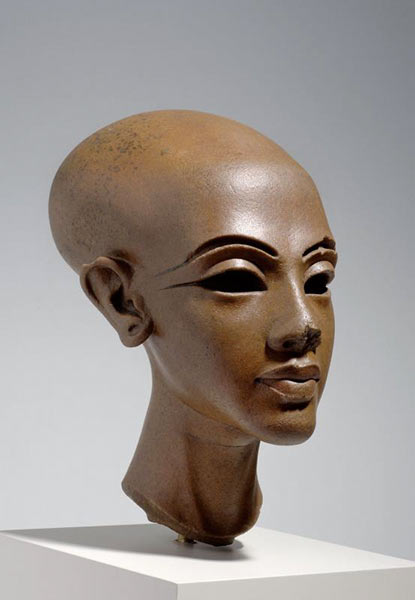 Exhibits from the exhibition “Voices of the Imaginary Museum of Andre Malraux.” Head of the princess. Egypt. Amarna period (around 1350 BC). Quartzite. Egyptian Museum, Berlin arts-museum.ru 2/4
 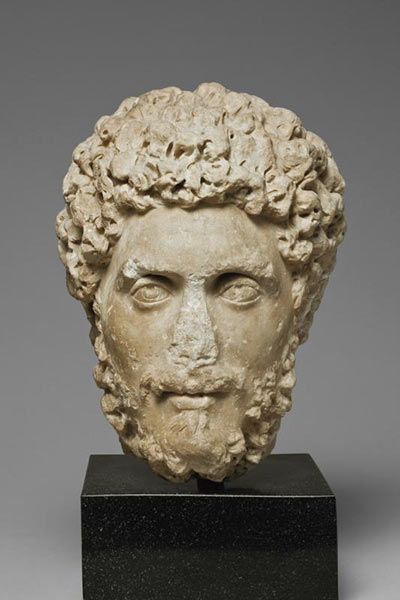 Portrait of Lucius Verus. Rome. 70s of the 2nd century. Marble. 33.5×25 cm. Pushkin Museum named after. A.S. Pushkin arts-museum.ru 3/4
 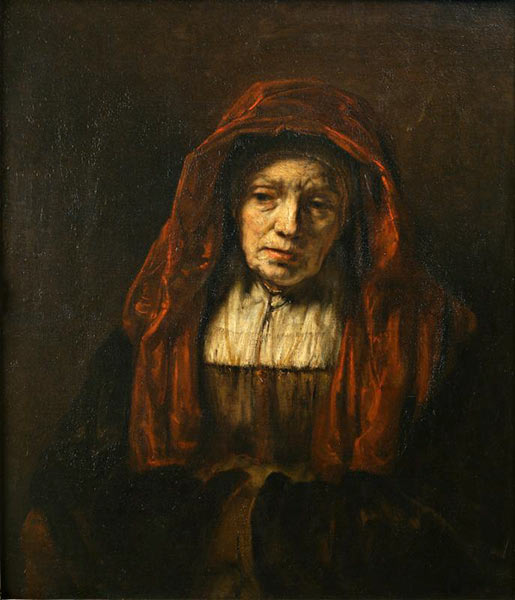 Rembrandt Harmens van Rijn. 1606–1669. Holland. Portrait of an old lady. 1654. Oil on canvas. 74×63 cm. Pushkin Museum named after. A.S. Pushkin arts-museum.ru 4/4
 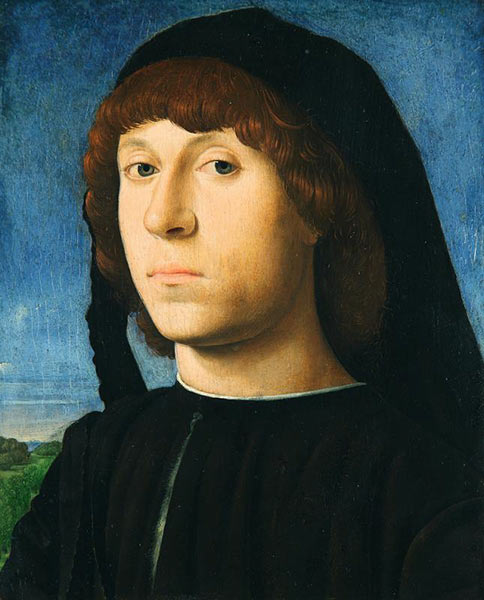 Antonello Da Messina. Around 1430 - 1479. Italy. Portrait of a young man. 1478. Wood, oil. 20.4x14.5 cm. State Museums of Berlin arts-museum.ru
 In 1959, Malraux took the position of Minister of Culture, which he held until 1969. From a left-wing writer and friend of the communists, Malraux turned into a conservative veteran, throwing his imagination into the service of the state machine. Political transformations did not affect his love for art. In the 1950s, he undertook to prepare a series of works on art - rewriting the essay "The Imaginary Museum", collecting "Voices of Silence" and bringing together "Metamorphosis of the Gods" - grandiose, grandiloquent reflections of a man selflessly in love with beauty. Then he gave his project a physical embodiment and began opening houses of culture throughout the country, which the French did not particularly like. As Velikovsky writes, “Malraux equipped them with the fervor with which cathedrals were built in the old days,” but received much more criticism than medieval architects. In 1972, exhausted by official work, bureaucratic drudgery, addiction to caffeine, strong alcohol and amphetamines, he fell into a coma several times - only to break out of it and continue endless flights, meetings, public performances in Delhi, Bangladesh, and various parts of France, which were interrupted only by death in 1976. Twenty years later, Malraux's remains were transferred to the Pantheon by order of President Chirac.
Not everything described above actually happened. Or it happened, but not to the full extent. Or it happened, but not only with Malraux. Drawing any discernible boundary between what actually happened and what Malraux invented is an extremely difficult task. Malraux erased what did not correspond to his idea of life narrative. In Anti-Memoirs, he noted that “human life in time is like historical biographies: at once unique and anonymous, the same as that of many others,” while denying himself such a fate and tirelessly rewriting his exploits. Biographers approached the hero in different ways, overcoming his secrecy. At the beginning of the 2000s, Olivier Todd, Camus’ biographer, published a book under the terse title “Malraux: A Life.” Growing up on “The Human Lot,” he noted: “Malraux mixed the realities of his life and his imagination. The biographer is obliged to separate pigments and glues.” In an interview with The New York Times, the writer emphasized: “I accuse him of making up stories. I don't blame him for wanting to be hurt; I blame him for saying he was injured.” Malraux invented one of his injuries during a flight as part of the squadron; it was not possible to hide this from Todd.
Samarius Velikovsky, in his work “In Search of the Lost Meaning,” refused to condemn and ranked the young Malraux among the “tragic humanists.” Examining his conservative turn, he wrote: “The former defender of the burning Republican Madrid, brave to the point of recklessness, thirty years later, during the Red May of 1968 in Paris, marches in the forefront of the loyal demonstration on the Champs Elysees. <...> With a quick acquaintance with the “Malraux case” it is impossible to get rid of the impression that you are dealing with at least two completely different hypostases. The first of them is most conveniently designated by a word that has now almost fallen out of use, but forty years ago was in wide use - “fellow traveler.” Abroad, this was the name then given to cultural masters who were prompted by the immediate threat of fascism to join the camp of struggling democracy. <...> Malraux was known as one of the most passionate “fellow travelers”, was proud of his involvement in them, and justified this honor both with his deeds and his writings. And then he pulled away and left their circle. A little later, in the eyes of those with whom he had recently been so close, he appeared as a “defector” and in the end turned to them as a zealous guardian of that very “firmly established disorder” against which he had once fiercely rebelled.” According to Velikovsky, Malraux’s main mystery was not the desire to invent his own life, but a deep dissatisfaction with the goals of humanity and the search for courage to live in a world in which there is no longer God, but there are concentration camps, torture and boundless disunity. He puts Malraux on a par with Sartre, Camus and Pascal, portraying him as a preacher of life desperate in his courage.
Lyotard took a different path. Refusing denunciation and humanization, he accepted the rules of the game of Malraux himself, formulated in “Antimemoirs”: “In the face of the unknown, some of our dreams have the same meaning as memories.” Lyotard seeks out significant images in Malraux's textual universe, abandoning biographical presentation and forbidding himself from catching the hero in a lie. Lyotard turned Malraux's life into his signature, legitimizing reality. Therefore, “Signed by Malraux” is a hypobiography, a subbiography, both false and real, executed outside of tradition and method, like Malraux’s works on art.
The philosopher who documented the postmodern condition undertook to study the great modernist scoundrel and carried out, in the words of one reviewer, “an unexpected biopsy […] of a man who thought he could sign his own life.” Lyotard knows that Malraux "escaped with the help of a pen." He sifts through events, looking for those in which Malraux failed to sew reality with letter stitches. Working with texts that were not intended for the general public, Lyotard muted his praise (the youngest laureate of the Prix Goncourt! Squadron commander! First Minister of Culture of France!) and listened to the hero himself: “Malraux’s life is nothing more than a pulsating current of views, driven by sudden puncta of original dissimilarity <...>; за всем этим нетрудно угадать иной мотив, подспудное и властное, почти постыдное, как детская придурь, влечение: жажду услышать нарастающий в горле голос немых творений».
Голосам этим не дает слова разум — но последнему веры нет. Мальро вслед за любимыми Джозефом Конрадом и Лоуренсом Аравийским отказывает разуму в способности схватывать истинное — ему доступно лишь упорядочивать пережитого. Истина же идет горлом: «Люди всегда слышат свой голос горлом, и только голоса других — ушами. <…> Услышав горлом чужой голос, мы бы обмерли от ужаса». Эти еле слышные голоса обращаются к человеку из-за грани, шепчут о конечности человеческой жизни, невозможности ухватить все переживания, связанности проявлений истины: «Искусству в такую пору остается дать слово нечеловеческому, способному выступить хляби наперекор».
Лиотар низводит себя до положения комментатора, отдавая право первенства объекту исследования: «его письмо вверяется ночи, где коренится зримое, берется изречь в видимом явление — берется за сценопойесис, которому подобает имя творчества». Текст Лиотара становится палимпсестом. Биограф пишет не о Мальро, а поверх него и с особым тщанием следит, как тот пишет поверх других: перед первой встречей с коллегами по Сопротивлению Андре готовит речь, переписывая выступление Лоуренса Аравийского, готовившегося к броску через пустыню и желавшего приободрить своих солдат.
Сверхзадача Мальро — вписать себя в жизнь, уравнять в правах свершившееся и написанное. Лишь так он может оказаться среди живых и обрести равновесие: «Если его дом существовал, то это был сборный дом из букв, разбиравшихся по окончании абзаца». Как пишет сам Мальро, «альтернатива проста: либо приводимые факты легендарны сами по себе, либо легенду творит сила стиля». Лиотар вторит ему: «дело сводится к тому, чтобы предписать реальности аскезу возможности, которую она делает невозможной». Если же для этого предписания не достанет слов, право указывать останется за искусством, которое тоже свидетельствует о том, что непознаваемо: «все формы связаны узами родства, и родства не сюжетного, ибо они доказывают присутствие иного мира. Не обязательно мира ада или рая, не только мира загробного, но — запредельного перед нами». Если текст пытается подчинить себе происходящее, то искусство говорит о том, что тексту подлежит, — эту речь Мальро слышит чужим голосом в горле и не может обратить в письмо. Но ему под силу ее разместить — именно для этого и возводится Воображаемый музей, противоречащий собственному названию.
В нем нет хранилищ, нет залов с развеской, шедевры не обезвреживают каталогизацией — они движутся свободно, подобно реке, полноводность которой зависит лишь от широты кругозора. Мальро носит свой музей в голове, создавая «из всех произведений на свете монтаж, способный дать нынешней цивилизации единственное произведение, соответствующее ее бездеятельности». Проект романтичный, абсурдный и бесконечный, как и сам модерн. Мир вокруг может быть разрушен дотла: на пасторальных лугах разобьют концентрационный лагерь, друзей обратят в мертвецов, а цель жизни испарится прежде, чем силы оставят тело. Но память о мире ином будет жить, пока его можно вспоминать, сравнивать и оценивать, по скаутской привычке представляя перед мысленным взором все, когда-либо увиденное.
Лиотар удерживается от того, чтобы говорить с Мальро в унисон, но говоря о музее, он позволяет чужому голосу рождаться в своем горле: «Единственная онтология, позволенная нашей сомневающейся мысли, это Воображаемый музей, ведь в него входит только то, что вопрошает». Если Мальро и удалось обрести пристанище за пределами слова, то лишь в музее: «Он строил единственный подходящий для себя дом, в котором нет „внутри”, ни „снаружи”, древний и всегда новый — грандиозный музей, названный Воображаемым потому, что сила творческой фантазии, внося в этот музей невиданные чудеса, меняет иерархию признанных шедевров, и те приходится без конца передвигать с место на место». Личная история, стреноженная письмом, обращается в вымысел, оживающий в каждом следующем прочтении.