
Translated material
Completely green
Who in the Old World hates Israel most?

Protesters demand the cancellation of Ireland's League of Nations matches against Israel, September 5, 2026. Photo: Sipa USA / TASS
18+. THIS MATERIAL (INFORMATION) IS PRODUCED, DISTRIBUTED AND (OR) SENT BY A FOREIGN AGENT OF THE INTERNET PUBLICATION “NOVAYA GAZETA” OR CONCERNES THE ACTIVITIES OF A FOREIGN AGENT OF THE ONLINE PUBLICATION “NOVAYA GAZETA”
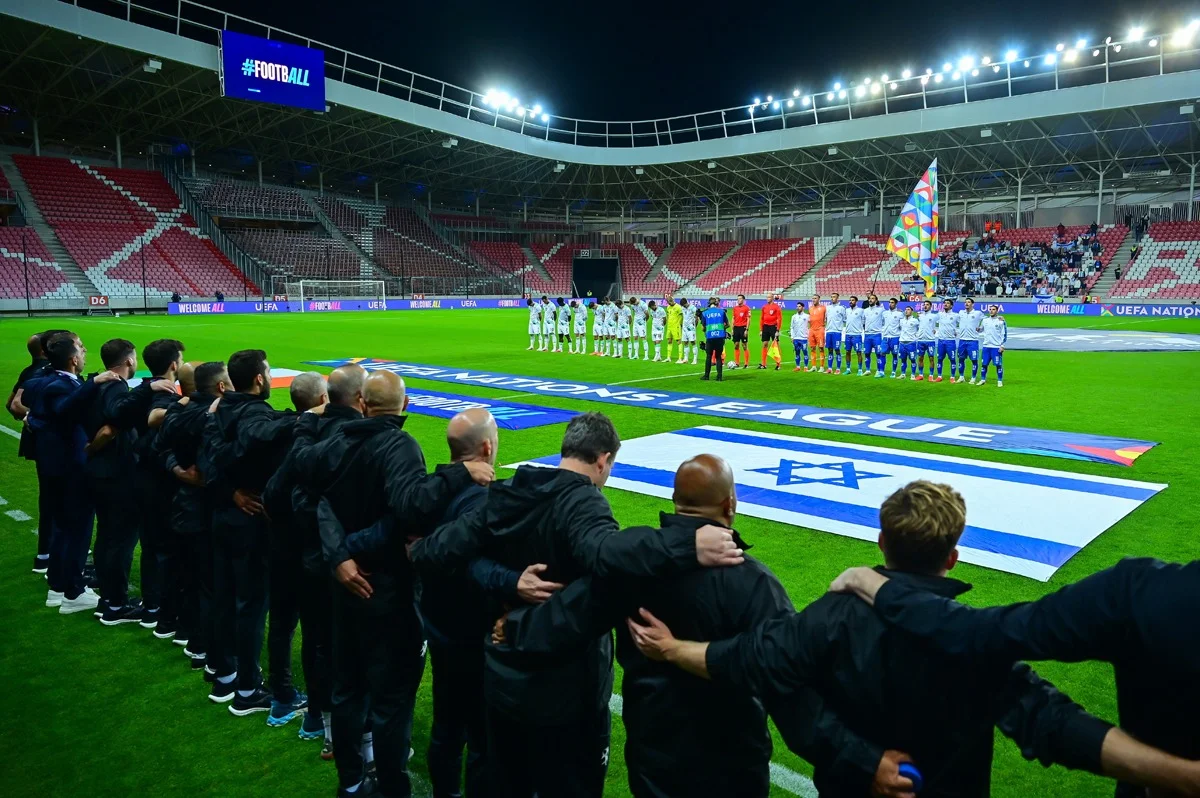
On Sunday, the men's national football teams of Israel and Ireland met in another match of the group stage of the League of Nations. Given that their previous meeting on September 27 ended in a 3-0 defeat for the Israelis, I expected them to be thrashed on Sunday as well. I was, as always, wrong: Sunday's duel ended in a draw with a score of 1:1.
As before, the Irish footballers showed up wearing black armbands in honor of those killed in Gaza (which included thousands of Hamas dead). The Israelis also came with black armbands in memory of those killed on October 7th.
Both meetings are significant in that the opponents did not shake hands before the start. The first was supposed to take place in Ireland, but they can’t stand Israel so much that the game had to be played on neutral territory, that is, in Hungary. The second took place in Serbia, not Israel.
Both took place without spectators.
On 26 September, the day before the match in Hungary, Ireland goalkeeper Gavin Bazunu announced that he would not participate in the match.
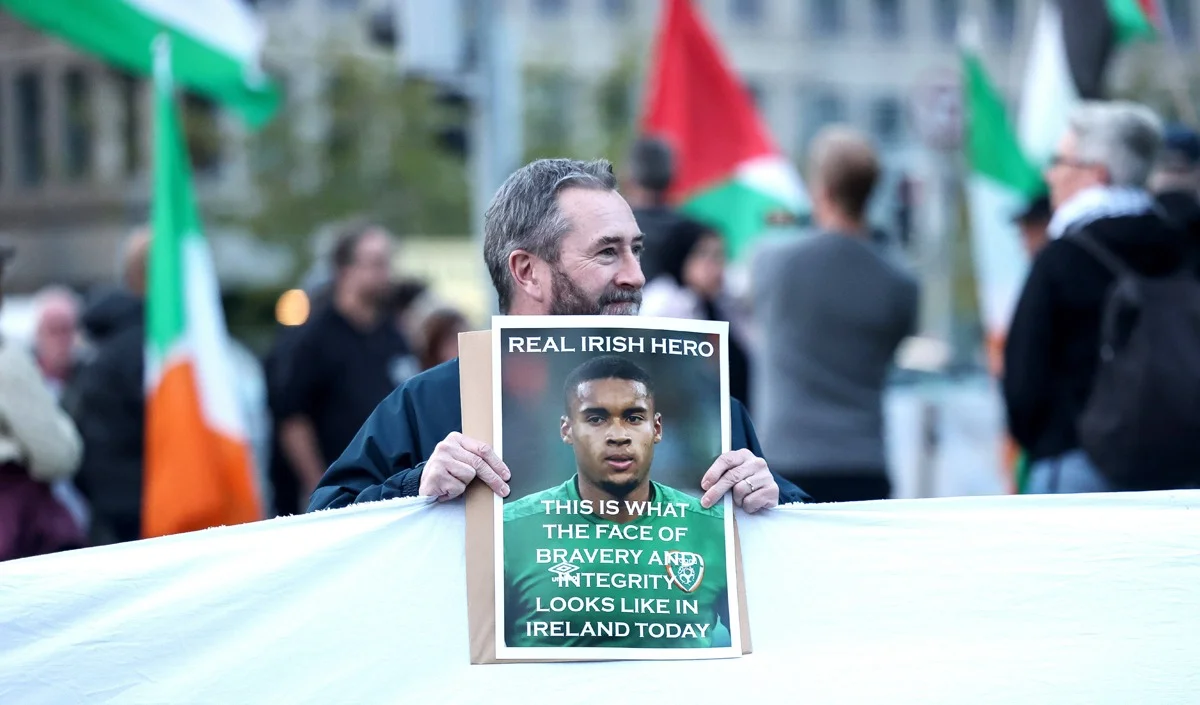
The Irish Football Association did not want to play Israel at all and called for the Union of European Football Associations (UEFA) to expel it from its ranks. The Union has 55 members. So far, only three of them have supported this demand. These were Ireland, Türkiye and Norway.
As the Wall Street Journal noted, Irish national team head coach Heimir Hallgrimsson was under incredible pressure to succumb to the anti-Israeli hysteria that had gripped Ireland. The other day he finally broke down and told reporters: “We are not playing with genocide, we are playing against genocide!”
The Israeli Football Association accused the coach of “ignorance and hypocrisy,” the Russian agency RIA wrote. Here is the full quote: IFA recalled in X how many Nobel Prizes have been won by Jews and noted: “Unfortunately, we have not yet found a cure for the stupidity, ignorance and hypocrisy exhibited by the coach of the Irish football team.”
This, notes the Wall Street Journal, is not the first clash between Ireland and Israel.
Since the Hamas attack on Israelis on October 7, 2023, not a single Irish office building has flown the Israeli flag in solidarity. Instead, many Irish figures displayed Palestinian flags.
This year, Irish public broadcaster RTE boycotted the Eurovision Song Contest because of the participation of the Jewish state. There are 57 entries in the competition, only four of whom follow Ireland's example. RTE is planning to boycott it next year as well.
Israel is disliked by most of the Irish, but the most powerful of them, that is, politicians, media workers, artists, academic staff and functionaries of sports organizations, suffer the most acute antipathy towards it.
When I moved to New York from Connecticut in 1977, the Russian catering scene had not yet emerged, and I hung out in Irish ones, mainly at the Greensleeves bar on the corner of Second Avenue and 31st Street. As befits our Irish, the crowd there consisted mainly of policemen and firefighters, and not the aforementioned influencers. I hung out at Greensleeves for several years and became friends with the bartender and the regulars, including a Jewish girl named Eileen who lived next door and was an Irish groupie. Eileen worked as a junior editor in a publishing house that produced school textbooks, in one of which, at her initiative, a boy, Vladimir Kozlovsky, soon appeared. In those early years, percentage norms for names already existed in the USA, and when the publishing house needed another non-Anglo-Saxon name, Eileen inserted mine.
In all my years of hanging out in Irish bars (Second Avenue was full of them in those days), I had never heard a single attack on the Jews or their state, and so now I was surprised to hear reports of the prevailing hostility towards Israel in Ireland. Its origins are explained in the Journal by Irish writer and essayist David Quinn, who notes that before Israel closed its embassy in Dublin last year, its diplomats said privately that they considered Ireland the worst diplomatic post in Europe. They complained, in particular, that in this country there are absolutely no politicians with whom they can deal, and they complained about this even before the start of the current war in Gaza. There is no press at all in Ireland that is sympathetic to the Israeli point of view, Quinn wrote on 23 September.
Animosity towards Israel has existed in Ireland for decades. Quinn attributes the lion's share of it to Irish history.
Ireland was occupied by Britain for centuries and many of its people liken the Palestinians, especially the Catholics of Northern Ireland. They compare Israel to Britain.
This comes as a shock to many Israelis, who think that if anyone in history has suffered oppression like the Irish, it is the Jews. During the early period of the struggle to create a Jewish state, its leading figures, such as future Israeli Prime Minister Yitzhak Shamir, drew inspiration from Ireland's successful fight for independence from Britain. Shamir went by the nickname Michael in honor of Michael Collins, one of the leaders of the old Irish Republican Army and a member of the nationalist Sinn Fein party.
Quinn sees the irony in the fact that Sinn Fein, more than anyone else, has had a hand in fueling anti-Israel sentiment in Ireland. This leftist party sees itself as part of the international struggle against imperialism. Her attacks on Israel and Zionism are “regular and vociferous,” according to the Irish writer. In this sense, nothing distinguishes her from people like Zoran Mamdani here in New York.