
Translated material
Religious scholar at a crossroads
About Pavel Nosachev’s book “Cartography of Ignorance: Mysticism, Psychiatry, Neuroscience”
The UFO publishing house has published a new book by religious scholar and cultural scientist Pavel Nosachev, in which he explains why attempts to call religious experience “mystical,” treat it with pills and study it through a tomograph are questionable from the point of view of humanities. The resulting fascinating study touches on the history of psychiatry and the objectivity of its knowledge, the creation of the image of the “mystic” in medieval and modern culture, the tense relationship between neuroscientists and humanists, and whether we live in a world controlled by pedophile Satanists from other galaxies. At Gorky’s request, Roman Korolev read the book.
All of us, since February 24, 2022, have found ourselves in the face of advancing barbarism, violence and lies. In this situation, it is extremely important to preserve at least the remnants of culture and support the values of humanism - including for the sake of the future of Russia. Therefore, the editors of Gorky will continue to talk about books, reminding our readers that there is still a place for thought and fiction in the world.
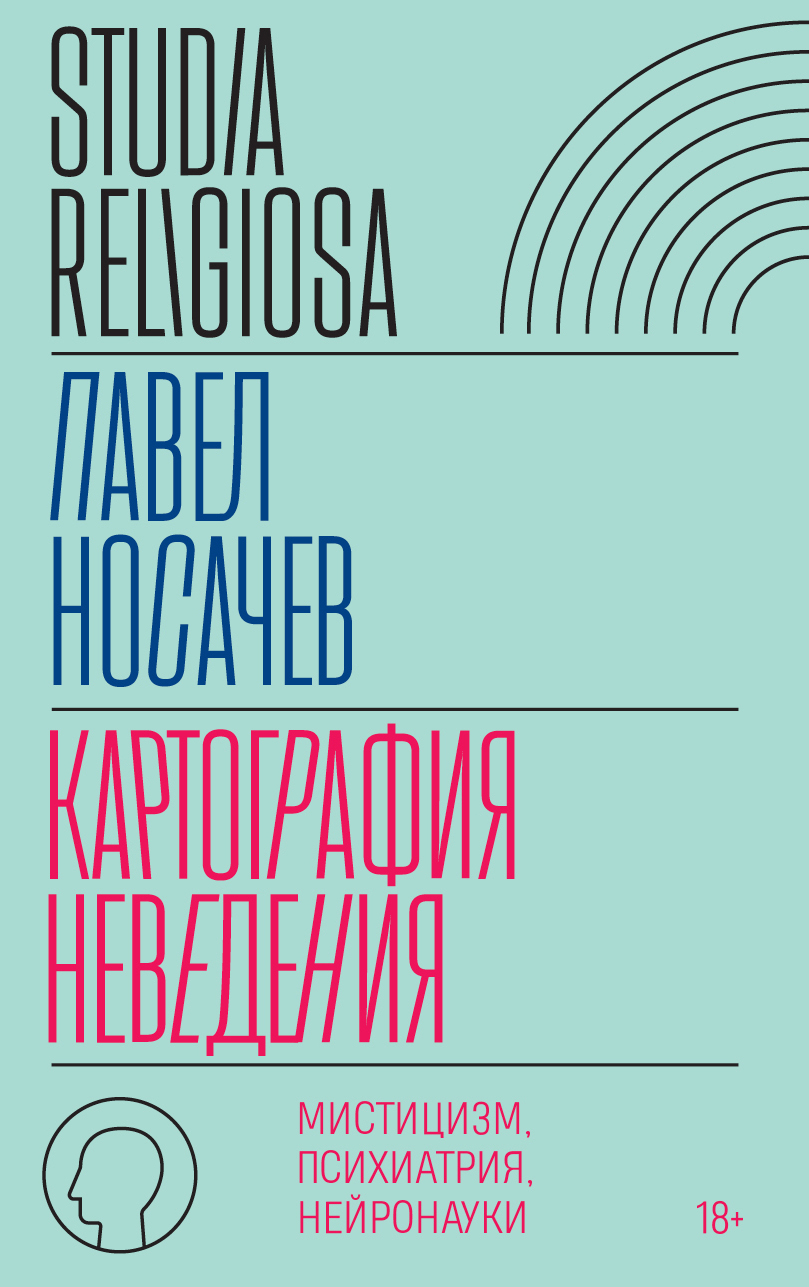
Pavel Nosachev. Cartography of ignorance: mysticism, psychiatry, neuroscience. M.: NLO, 2026. Contents
How can we, people raised in a secular culture, respond to a person who tells us about a religious experience that turned his life upside down: at the level, for example, of direct contact with higher powers? If we are tolerant enough about such things, we will probably say that this experience should not be taken literally, but it has undoubted significance for the spiritual life of our friend. We might think that such an experience is caused by the mechanisms of his consciousness, because the human brain itself sometimes makes its carriers believe in extremely strange things. In the end, we may simply decide that our friend is, in the medical sense, “out of his mind” - and he needs the help of a specialist who labels the diagnosis with the corresponding disorder.
Essentially coarsening, we can say that these three philistine interpretation strategies correspond to the three main paths along which the scientific community has moved in recent centuries, trying to comprehend for itself the phenomenon of religious experiences: through the category of “mystical experience,” by reducing them to the pathology of the psyche, and through neuroscience data that explains the structure of our brain.
HSE Professor, Doctor of Philosophy Pavel Nosachev, who gained fame as one of Russia’s leading specialists in the study of Western esotericism (Gorky previously wrote about his two books on this area, “Renunciation of Knowledge” and “The Charm of Mystery” ), in his new work, “Cartography of Ignorance,” undertook to prove that all these paths lead to nowhere.
In the first part of the book, Nosachev examines in detail how in the Middle Ages, as a counterweight to scholastic rationalism, the discourse of “mystical theology” was formed, which focused on the direct experience of communication with God and described it in a deliberately gibberish language, replete with erotic imagery. In turn, the American transcendentalism of the 19th century - a movement whose ranks usually include Ralph Emerson, Walt Whitman and Henry David Thoreau - culture owes the emergence of the category of “mysticism” to describe a specific type of religiosity. Here, as in the case of medieval mystics, direct experience is declared to be the most important thing in religion - however, this experience is finally separated from Christian theology, and the place of following tradition and confining oneself within the walls of a monastery is taken by unity with Nature as the temple of God revealed to us.
The idea of mystical experience, enshrined in the public consciousness through modernist literature, is beginning to be perceived as the highest form of religious experience, not limited by the narrow boundaries of specific faiths. Mystics are supposed to develop through regular exercise an extraordinary ability to comprehend higher realities and use it for the benefit of all living beings, opposing tyranny and fanaticism. Unlike the ascetic, the mystic does not withdraw from the world, but remains in it, often taking on a political role: thus, Simone Weil appears as an archetypal example of a mystic in the twentieth century.
However, a modern mystic can easily afford to be an atheist: in this case, the place of communication with higher powers for him will be taken by the oceanic feeling that covers a person at the moment of realizing unity with the Universe. Thus, one of the four horsemen of the “new atheism,” philosopher Sam Harris shares an absolutely mystical in spirit and letter description of how, at the site of the Sermon on the Mount in Galilee, he experienced the feeling of the disappearance of the boundary between himself and the world. Thanks to this, he realized how beautiful the world is in its integrity - and absolutely does not need him, the atheist Sam Harris, as an observer in order to remain so beautiful.
So, the category of “mysticism,” the scientific usefulness of which Nosachev is inclined to consider to be near zero, acts, in his opinion, as a collective image of all the good that non-confessional spirituality can offer to an enlightened inhabitant of the modern world.
Readers of Gorky may recall that a year earlier we discussed on its pages the essay “Mystical Anarchism” by the British philosopher Simon Critchley. It’s quite funny to watch how Nosachev reconstructs in detail the creation in modern culture of exactly the image of the mystic that Simon Critchley loved so much that he decided to invite his readers to become like him.
At the same time, Nosachev, in our opinion, somewhat exaggerates the thickness of the line separating in the public consciousness the socially approved “mystic” from the socially condemned “esotericist” and “occultist”. One need only recall historian Anne Eppblaum’s acclaimed article on the fashion for political obscurantism to understand that “falling into mysticism” still seems to the public to be a relevant explanation for someone’s dangerous insanity that threatens public peace.
Speaking of insanity: the second part of Nosachev’s book is dedicated to it, or rather to various attempts to medicalize religious experiences by integrating them into the nosology of mental illnesses. Since it is difficult to find specialized works on this topic not only in Russia, but also in English, the author here undertakes nothing less than “to write a brief history of psychiatry with an emphasis on its relationship with religion.”
A school of thought that purports to explain unique cultural phenomena of the past through the lens of medical diagnosis has been called “retrospective medicine.” The key problem with it is that already representatives of ancient cultures could well understand that there are spirit seers in the world and there are mentally ill people - and distinguish the latter from the former. This, however, does not prevent many to this day from defending maxims such as “modern mentally ill people in ancient times were considered shamans” or “visions of Catholic nuns were caused by epilepsy.”
One of the waves of popularity of retrospective medicine was associated with the name of Jean Martin Charcot and the habit of diagnosing “hysteria” to absolutely anyone obsessed and frantic. We owe another to the ideas of Sigmund Freud and the belief in the possibility of explaining through the category of “neurosis” any mental trauma in a person.
The legendary backward arching fits, however, for some reason stopped bothering women in the first half of the twentieth century and now retain only cultural value as a model for scenes of possession in horror films. In turn, the dominance of psychoanalysis (which many humanitarian intellectuals still seem unchallenged to this day), according to Nosachev, was seriously undermined by the fashion for the restoration of repressed memories, which “unblocked” in the minds of thousands of people scenes of being raped by cultists or aliens.
“If psychoanalysts have really shed light on the hidden secrets of society, then we live surrounded by pedophiles, Satanists and aliens from distant galaxies invading our lives for non-peaceful purposes,” writes Nosachev. And although, unlike the author, we are inclined to believe that we live in exactly such a world, for the mass consciousness such a view will probably seem too radical.
Be that as it may, in parallel with the crisis of psychoanalysis, the formation of what we perceive as modern psychiatry is taking place: with the widespread use of pharmacology and a clear classification of diseases, approved by the latest version of the Diagnostic and Statistical Manual of Mental Disorders (DSM) or the International Classification of Diseases (ICD).
Nosachev emphasizes here in every possible way that he personally is on the side of precisely this type of evidence-based psychiatry (especially with romantically minded anti-psychiatrists in mind, the book contains two detailed descriptions of what exactly a person is capable of in a state of acute psychosis). At the same time, it would be difficult to ignore the depth of the crisis that this discipline is currently experiencing: from accusations of working for the “pharmaceutical mafia” and the widespread hooking of people on antidepressants to the enormous problems in the field of diagnosis and search for the biological basis of mental illness.
Modern psychiatry is too preoccupied with the problems of its own foundations to solve for us the riddle of religious experience - and, by and large, it no longer strives to satisfy such ambitions, since the revelatory approach of Charcot and Freud has been replaced by the idea of the peaceful coexistence of mental health and spirituality. Belief in witchcraft and hallucinatory experiences with God are no longer interpreted as pathological in the DSM-V if they are culturally appropriate. There are numerous attempts to develop criteria that make it possible to distinguish “healthy” religious experience from “unhealthy” ones, with the methodology of which, as Nosachev shows, huge problems again arise.
But the main thing that he seeks to convey to the reader here is that both the modern “tolerant” state of psychiatry towards religion, and previous attempts to attack it under the banner of “hysteria” or “neurosis” were not a consequence of the accumulation of objective scientific knowledge, but of changing cultural fashions. “Eastern religious practices are becoming fashionable - and psychiatry borrows them, declaring them therapeutically effective; the attitude towards religion (as well as towards persons with non-traditional orientation, racial minorities, etc.) in society is changing - and psychiatry is introducing provisions on the positive role of religion in mental life; Scandalous cases of mass suicides appear in the NRM - and psychiatric criteria for unhealthy spirituality arise. It is obvious that none of these actions rests on the basis of biology, and research confirming the effectiveness arises after the fact, to consolidate the new fashion.”
Perhaps, at least neurobiology, as a science with direct knowledge of the brain, will be able to tell us something objective about religious experience? In the third part of his book, co-authored with religious scholar and neurotheology specialist Tatyana Samarina, Nosachev reconstructs the history of two large research projects based on this belief.
The first of them, neurophenomenology, inherits the ideas of the Chilean biologist Francisco Varela, who insisted that the difficult problem of consciousness cannot be solved by neurobiological methods alone without data from introspective observation of mental processes collected by the researcher “from the inside.” Alas, collecting this data is not so easy, because people’s minds are usually undisciplined and lazy: this is where the need for meditative practices arises and space for dialogue arises between Eastern religions and science. The Mind and Life Institute, founded by Varela, continues to work after his death, bringing together neuroscientists with Tibetan monks and meditation teachers on one site. Nosachev notes that this activity is extremely similar to religious activity - and that it is to “Mind and Life” that we owe that cult of awareness, from which in modern society it is not so easy to hide.
The other, neurotheology, which developed almost in parallel, is associated with the names of the American neuroscientist Andrew Newberg and his colleague, Patrick McNamara. Neurotheologists talk about evolutionary mechanisms to which we owe the emergence of a ritual designed to synchronize a group of believers with each other and establish a stable “connection” between them and the center of their religious life: the Universe, the Absolute, God. An explanatory myth is built around the ritual, which is difficult for the natural scientist to work with. But the ritual itself causes measurable changes in brain activity - and lends itself well to studying with neurophysiological tools. So, it was Newberg, along with his followers, who became the pioneer of research into prayer and meditation using tomography and modern methods of imaging brain activity.
The pages of the book will not avoid the project of cognitive religious studies, which has become a sensation in recent years, but it will be touched upon only tangentially, since, according to Nosachev, he is interested not so much in the moments of peak religious experience, but in the mechanisms that make people believe.
It is easy to notice that neurophenomenology and neurotheology are quite far from ideological neutrality and are loaded with the personal beliefs of the founders of these projects, who, contrary to the popular belief about neuroscientists, did not at all stand on the position of unshakable materialism. Thus, the goal of neurotheologists is to remove fanaticism and inertia from religion, preserving what even the most inveterate atheist would most likely recognize as good - the bright experiences that arise in a person as a result of prayer and meditation. Such experiences are proposed to be correlated with specific forms of brain activity and made reproducible through a series of understandable practices.
There are known problems with reproducibility in practice. Relevant studies show that if you, as a secular person, want to master psychotechniques designed for a Buddhist monk, then instead of an increased level of awareness that will allow you to do your job more effectively in IT, you may get effects that can unpleasantly surprise you. For example, you will come to the understanding that the world is an illusion and life is suffering, and then you can reach complete dissociation with the body and the disappearance of the feeling of love for your own children. The businessmen from Victor Pelevin’s novel “Secret Views of Mount Fuji,” which Nosachev quotes with apparent pleasure, fell into a similar trap when they decided to buy enlightenment for themselves.
In addition, there are a number of methodological issues with any neurobiological project. It's not just that instead of studying authentic religious experience, neuroscientists are simulating it in the laboratory, but also the fundamental philosophical issues that their experiments raise. If you truly believe that "studying the movement of ions across neuronal membranes can explain the complexities of human behavior" and there are no qualia in religious experience that cannot be captured by visualizing the data collected by a CT scanner, then what is the point of talking about religion at all?
In principle, all three large research traditions that Nosachev talks about - “mystical”, psychiatric and neurobiological - suffer, in his opinion, from one problem: they are built on the basis of secular humanism of the Modern era and the psychologization of religion. And they are engaged not so much in comprehending religion as such, but in creating a convenient image for it, a frame in which it can be conveniently placed within a secular society. Here, of course, I would like to ask the author, how is it possible - and is it possible at all - such a research trajectory that would talk about religious experience without trying to integrate it into a secularized context, but at the same time not relating to the confessional study of religion?
Nosachev has no answer to this question, but there is also no unequivocal statement that the methods of natural sciences are completely useless in the study of religion. Everything is mediated by culture, but not everything is determined by it. So, it makes sense to combine natural scientific approaches with cultural ideas and concepts - for example, as the clearly sympathetic American anthropologist Tanya Luhrmann, famous for her study of modern witches, does - and then such mixing, if it does not reveal to us the whole truth about religion, will at least allow us to come to interesting conclusions.
The situation is similar with Nosachev’s own book. Even if it does not contain the answer to religious experience, it at least makes it possible to set off on the waves of culture on a fascinating journey along with Joyce’s epiphanies, werewolves in the retinue of the Merovingian in the second “Matrix” and the spiritualistic project of reforming psychiatry with the replacement of treating doctors with mediums. Even the most demanding reader will be able to take away something fascinating from this journey.