
Translated material
Ghosts of communitas
- 0. Idea
- 1. Properties of liminality
- 2. Communitas
- 3. Spatial practice
- 4. Prefiguration
- 5. Artistic residencies
- Sources
0. Idea
This text was born after I visited artistic residences in 2025–2026 and thought about the need to analyze them as Temporary Autonomous Zones - temporary autonomous zones.
A temporary autonomous zone is a conceptual and practical model of a liberated space (a piece of terrain, a period of time, or an area of the imagination) in which true autonomy and freedom are realized directly in the present time. The main source of strength of the temporary autonomous zone is its invisibility for the state. As soon as she is “assigned a name,” she disappears, only to reappear in another place. 1
The very concept of TAZ eludes a clear and specific definition. Hakim Bey, the author of the concept, argued that its meaning is revealed through direct practice. 2 But what it defines has a number of specific properties, so it seemed logical to me to search for these properties and measure the level of their manifestation in my personal experience of participating in artist residencies. Moreover, among other things, Bey argues that TAZ represents that exclusive time and space in which art can be performed for the sheer pleasure of creative play; within it, art loses the characteristics of a commodity and becomes a condition of life. 3
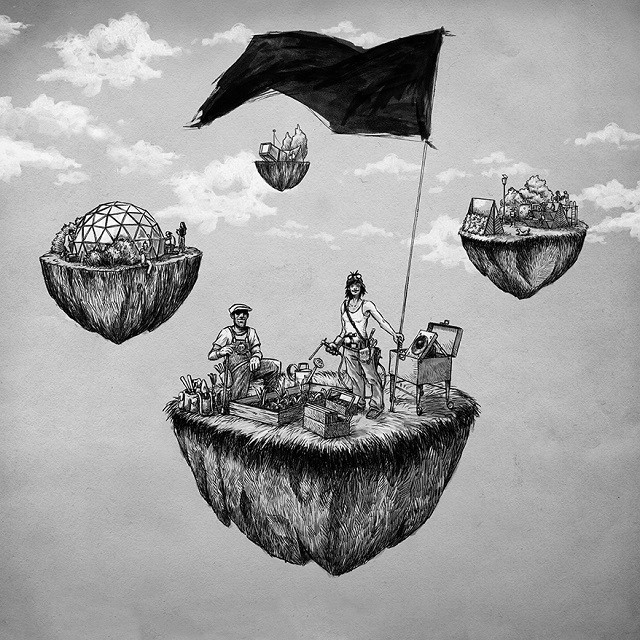
A little later, I realized that the temporary nature of these zones inevitably and necessarily follows not only from the desire to escape from external supervision, but also from the desire to escape from institutionalization as a possible result of the social form's desire for self-reproduction. Bey himself talks about this by highlighting the difference between permanent Revolution and temporary Uprising, giving preference to the second. A permanent revolution as an attempt to fix a state of freedom always ends in failure and a repetition of the cycle returning to dictatorship and unfreedom. 4 At the same time, the author of the TAZ concept also developed the concept of Permanent Autonomous Zones - permanent autonomous zones. There is a great temptation to roughly understand by this the same thing as TAZ, only with greater stability, but in this case we are talking about communities and communes that act as network nodes from other temporary autonomous zones and support their functioning, while acting rather as their consequence. 5 The question of the possibility of the existence of one or the other remains debatable, but in any case it is worth clarifying that it is the constant and stable state of something, in particular the autonomous zone in the understanding of H. Bey, that does not seem to be quite realistic, and the parameter of temporality plays one of the key roles. Therefore, the disappearance of any autonomy, structure and community should not be perceived in an entirely negative way. This can be shown through the concepts of liminality//liminoidity, communitas, the production of space and prefiguration.
1. Properties of liminality
or liminal personae (“threshold people”) are necessarily ambiguous, since both liminality itself and its bearers evade or slip out of the network of classifications that usually locate “states” and positions in cultural space. 6
The latest explosion of liminal popularity in popular internet culture (at least in the observable Western part of it) seems to me to have begun around the same time as the web series Backrooms in 2022. 7 Using the example of this series, albeit crudely, it is possible to determine the boundaries of liminality—that is, where it begins and where it ends, while partially circumventing its elusiveness.
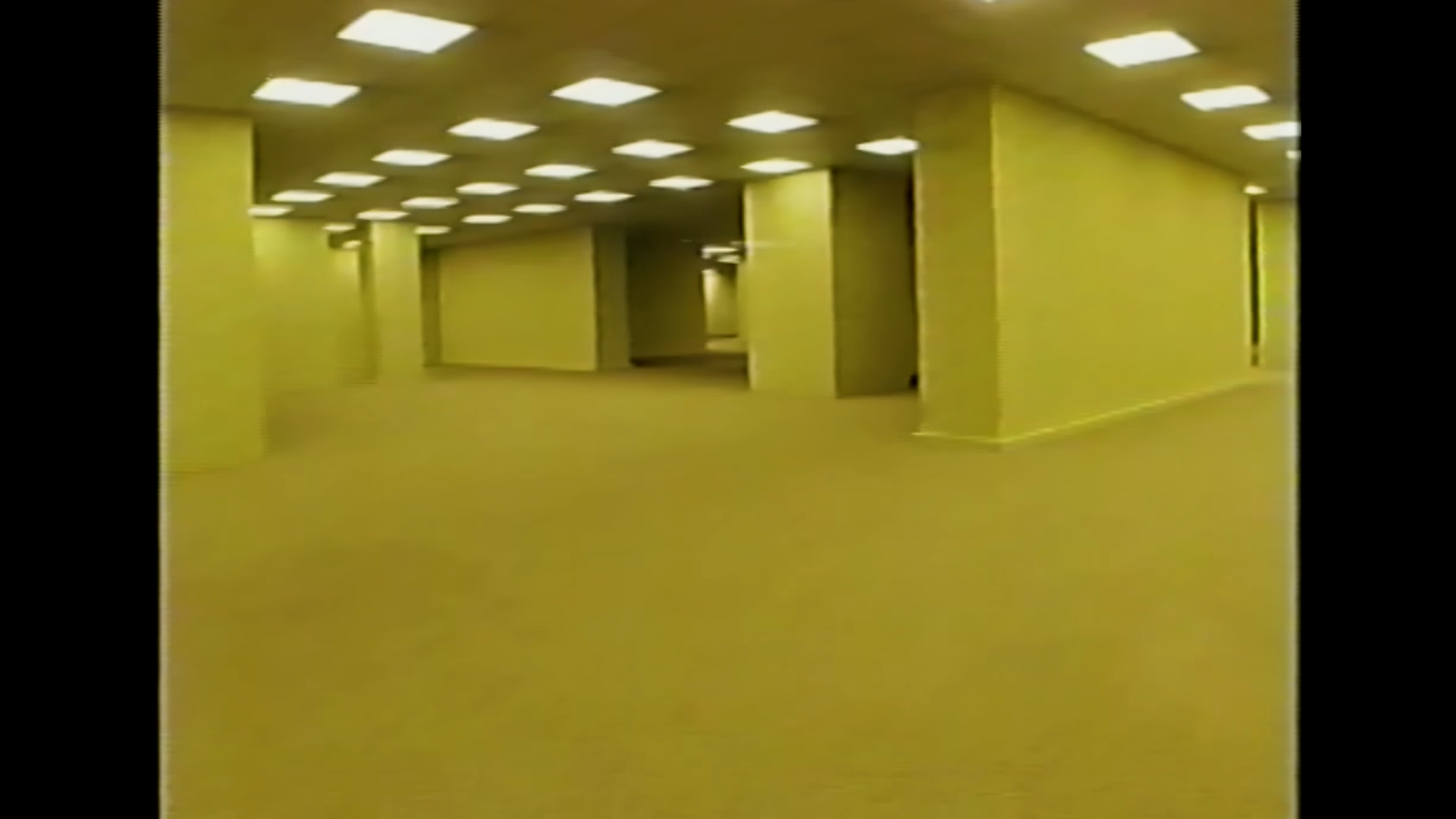
The narrative of these relatively short videos is built around the opening of a portal to another dimension by a research institute and the simultaneous - increasing - cases of people disappearing without a trace. Both these random people and scientists find themselves in the Backstage, a space that disorients them with its implausible properties and laws of functioning. But if the missing people who “failed” there are haphazardly and chaotically looking for a way to get back into the real world, then scientists act differently - they are trying to master the place that has opened up to them, which is remarkably shown throughout almost two dozen episodes of Backrooms . So, the liminality of this space ends when teams of researchers with cables, tapes and cables, like Theseus with Ariadne’s thread, go on expeditions through the labyrinths of yellow rooms, mapping them, building bridges over dangerous gaps and blocking passages, behind which they met Entities , Lifeforms and simply Entities inhabiting this place. The dangerous, the threshold (either a ghost, or living carrion, or simply mold) is literally cut off from the space, captured by understandable wooden boxes, equipment and practically cars for faster movement of personnel through this warehouse, incredible due to its infinite size.
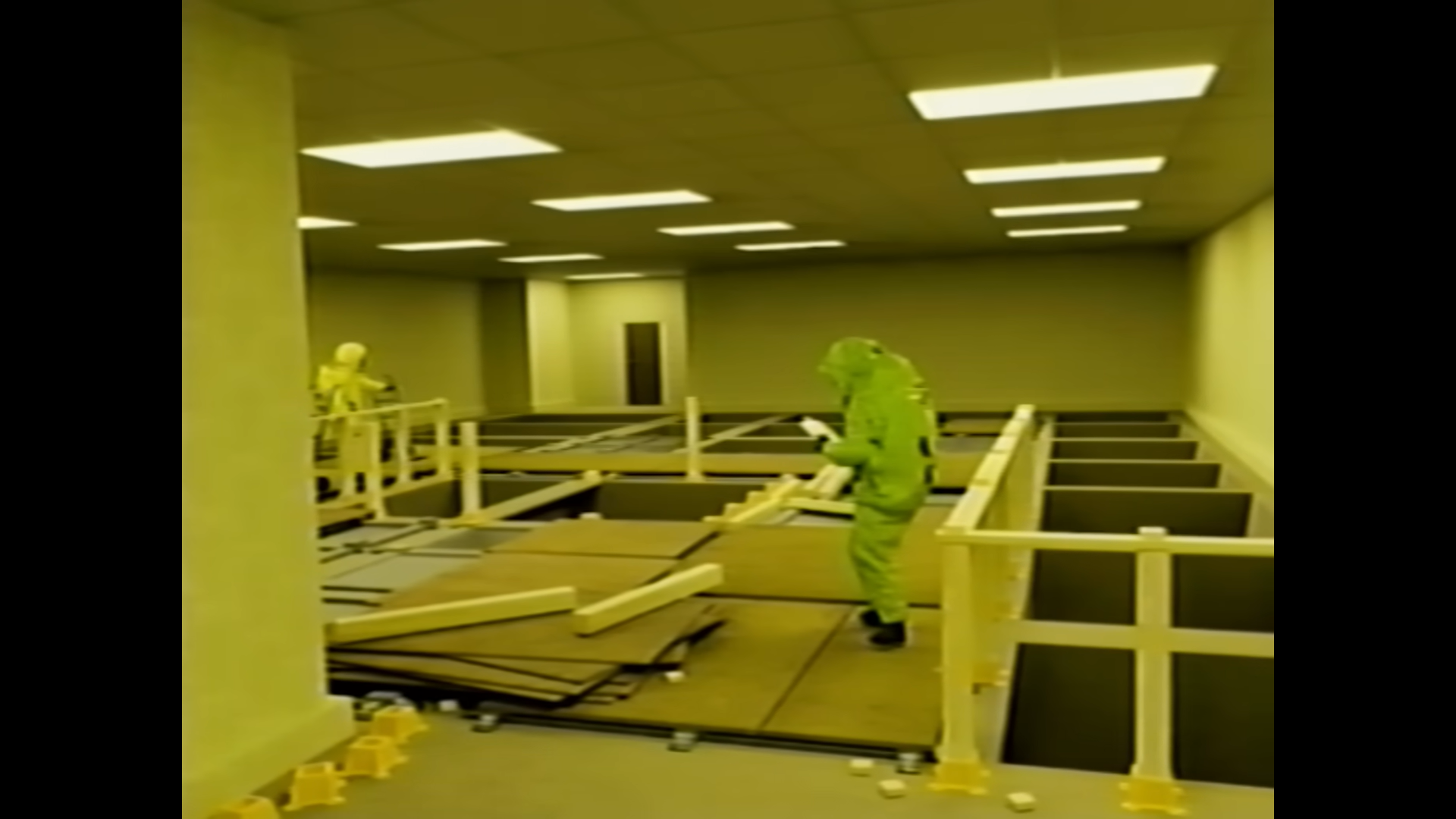
The liminal space in this case is filled not only with horrors, but also with opportunities and resources that can be mastered very effectively and centrally. It thus becomes vulnerable to expansion and colonization. But in fact, in the case of TAZ, I am less interested in the liminality of the white noise of a television turning on by itself in a shopping mall at night, but rather in liminality as a state that a person undergoes in rites of passage, as Victor Turner wrote about in 1969. The time a person spends in such liminality is always limited, because the transition must somehow occur in order to be recognized as such.
Turner also writes that two models of human interconnectedness can be distinguished: firstly, society as a structural, differentiated and hierarchical system, and secondly, a non-structural or rudimentary-structural society, rather a community of different individuals “subject to the supreme authority of ritual elders”, while being distinguishable precisely in the liminal period. 8
An artist's residency, at least of the type I have been in, has the potential to exhibit the qualities of Turner's second model. This is a specific place, remote from the city, in which artists structure their everyday life in such a way as to maximize the share of time allocated to commercial production. At the same time, their life and immediate social environment are changing through the contrast between the usual urban and conventionally “village” life, as well as through changes in the methods of social interaction. Everyday life, communication and creativity within the residence are as close as possible to each other, that is, they are the least differentiated. Along with this, the subjective perception of time also changes: for example, if city life and being busy at work are perceived by me as something monotonous and extended, and some significant events are unevenly and randomly distributed over this extent, then the situation of residences, on the contrary, is something event-concentrated, compressed and almost does not contain any neutrally colored gaps between events, about which one could say “at that moment nothing happened.”
But for the analysis of residences in this case, the concept of liminoidity is better used than liminality. In From Ritual to Theater, Turner clearly distinguishes between these concepts: liminoid phenomena are similar to liminal ones, but not identical to them. 9 Both describe borderliness and potentiality, 10 the freedom to emerge from the normative structure into the play and reconfiguration of cultural elements , 11 and are important conditions for the birth of communitas, 12 a concept which I will turn to later.
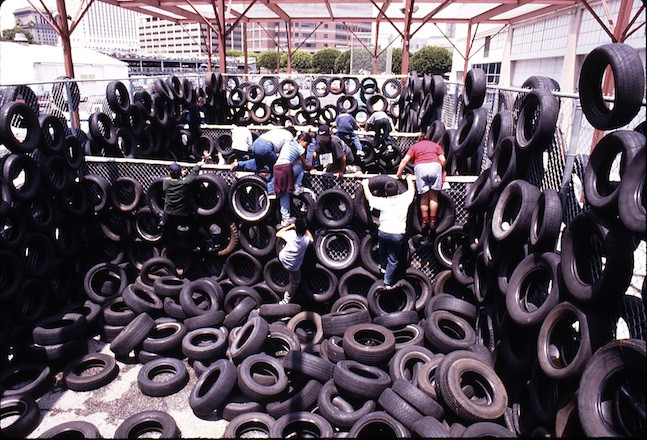
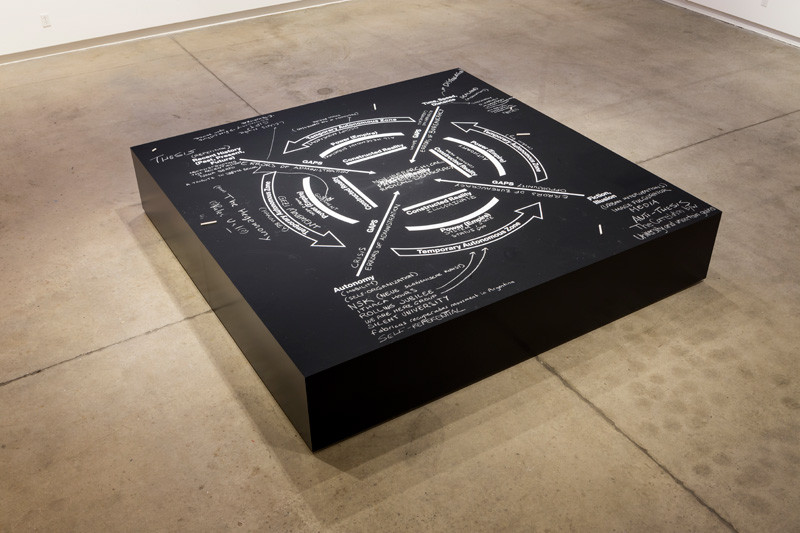
Geffen Contemporary at the Museum of Contemporary Art, Los Angeles, California
Photo: Alex Slade
Liminal phenomena dominate in traditional, tribal and early agrarian societies, while liminoid ones dominate in industrial and post-acceleration ones; 13 in the first case, participation in ritual activities leading to liminality is obligatory, but liminoid activity is voluntary. 14 Finally, the liminoid is separated from work activity: it exists in a separate sphere of leisure and can be individual rather than collective; be openly critical of the accepted social structure and undermine its values and can be generated at any time, rather than being built into natural cycles (seasons, etc.) 15
Based on these properties, to analyze the artistic residence as an autonomous zone, I highlight the following characteristics. Firstly, this is horizontality as a principle of internal social structure: the curator can either be completely absent from the territory of the residence, or perform a coordinating rather than a “managerial” function. That is, in this case, the principle of voluntariness is preserved, starting from the very decision to take part in the residence and ending with any activities from within it. Secondly, this is autonomy - the residence can be independent both from large artistic institutions and structures, and from the social structure as a whole. Here I mean maximum freedom from surveillance and censorship from, for example, the museum hosting the artists, as well as the absence of unambiguous attachment to the ideological or political narratives accepted in society (or dominant) at the moment. And thirdly, the existence of freedom to choose the method of action, the style of living of this residence by each of the participants. In other words, artistic production in this case is not only deprived of the above-mentioned control, but also not governed by any set of rules: for example, the preference for individual or collective artistic practices should not be articulated by the curators of the residence as desirable or the only possible; in general, the artistic process should not fall into the field of any regulation, but, on the contrary, rather be in the area of chaos or self-organization in a natural way. In cases where “negative” signs appear in the residence - i.e. control, censorship, regulations - it is much more difficult for any autonomy, self-organization and, finally, liminoidity to manifest itself.
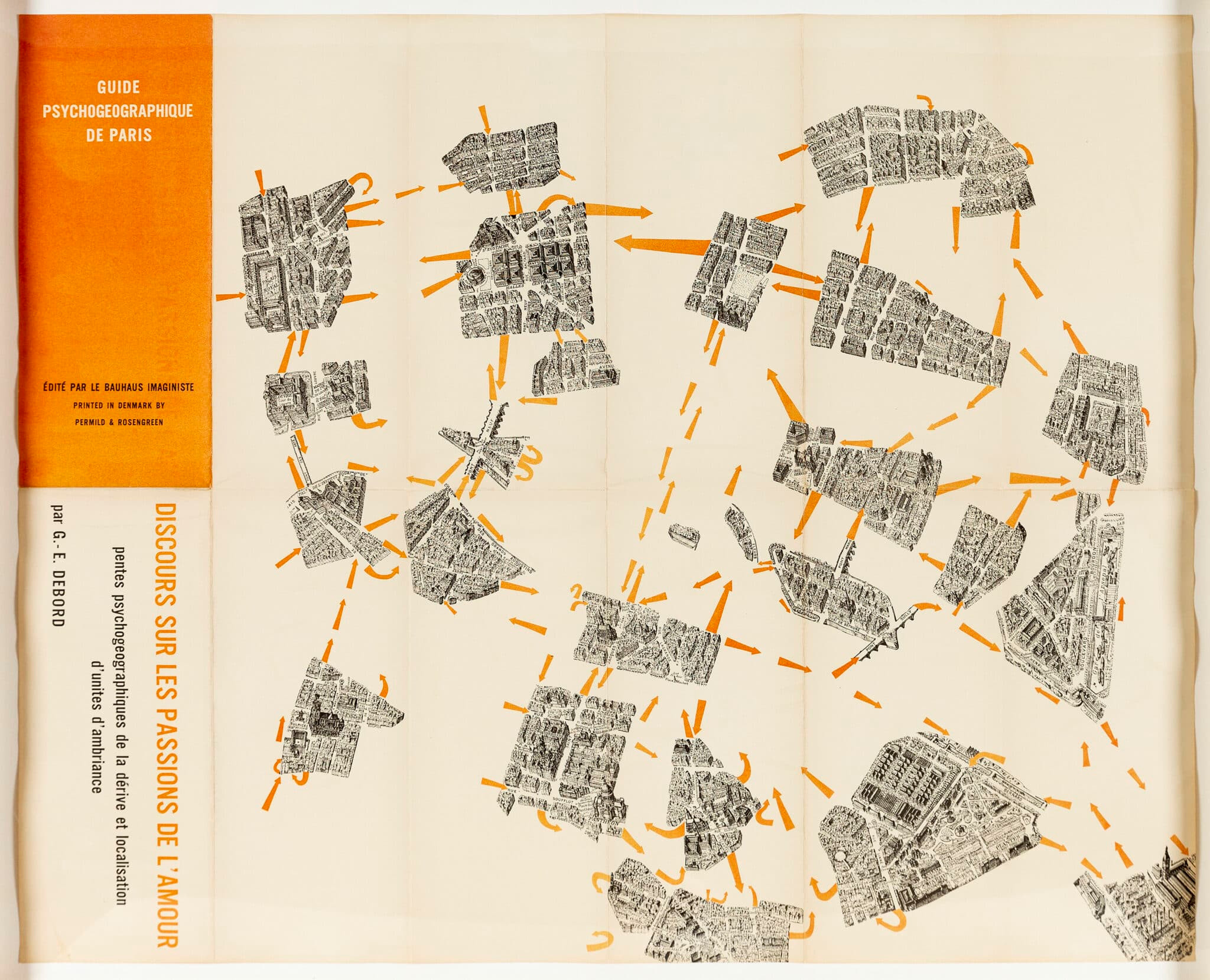
Turner writes that a ritual is a stereotyped sequence of actions that involve gestures, words and objects, performed in a specially prepared place and intended to influence supernatural forces or beings for the interests and purposes of the performers. 16 As I showed earlier, the artistic residency has a structure similar to the liminal transition in such rituals, and its individual practices can take on a ritualized character, with the caveat that participation in them is voluntary. Being in a certain place, it functions and develops precisely through gestures, words and objects created by performers and is aimed at changing or supplementing the artistic or symbolic field - around a given place, around a given community of people, or simply around each individual participant, considered individually.
In the processes of ritual, a person emerges from the indicative or indicative, i.e., indicating/binding social structure into the conditional, i.e., subjunctive anti-structure of the liminal process, in which he is transformed and changed by liminal experiences. 17 The significance and intensity of what is experienced in this liminoid process in the case of residences directly affects the desired result; Moreover, we can say that the success of an artist’s work here can be subjectively determined not so much by a specific result, but by the intensity of living this period of time.
At the same time, the structure of the artistic residence does not contain any strictly binding factors, nor anything that could be empty symbolization. Those residences in which I visited were characterized by autonomy not only from the established properties of social structure and everyday life, but also from any large institutions through which ceremoniality and hierarchy could seep in. This helped to erase or recreate as much as possible one’s presence in the “old”, familiar order.
The end of the liminal state in ritual or the liminoid state in residence is inevitable. However, there is something that remains after, and in this case we are talking more about the experience of social relations, the memory of them and the possibility of repeating them, than about specific objects, for example, produced in the residence. Finally, what exactly can arise when a liminoid space is actually created in an artist’s residence?
2. Communitas
- this is a special modality of relationships within a community, which is characterized by spontaneity, unstructuredness, integrity and equality of communication. It is most fully revealed as the opposite of the differentiated and structured model described above. 18 In this modality, there are a minimum of social barriers between people. The main place of its manifestation is liminality or liminoidity; strictly speaking, communitas must periodically change its structural state, protecting it from cementing and solidifying, which does not always happen and depends, in my opinion, among other things on the degrees of openness and freedom in a particular society/community. Communitas cannot exist indefinitely: just like ritual, it is subject to phases of beginning and end, through which, in the process of long-term existence, a new structure and a new law are generated, and the original conscious or unconscious intentions towards equality and spontaneity are lost. 19
Communitas manifests itself most fully in liminal or liminoid spaces; accordingly, the characteristics necessary for an artistic residence to become such a space are also valid as the conditions for the emergence of this phenomenon.
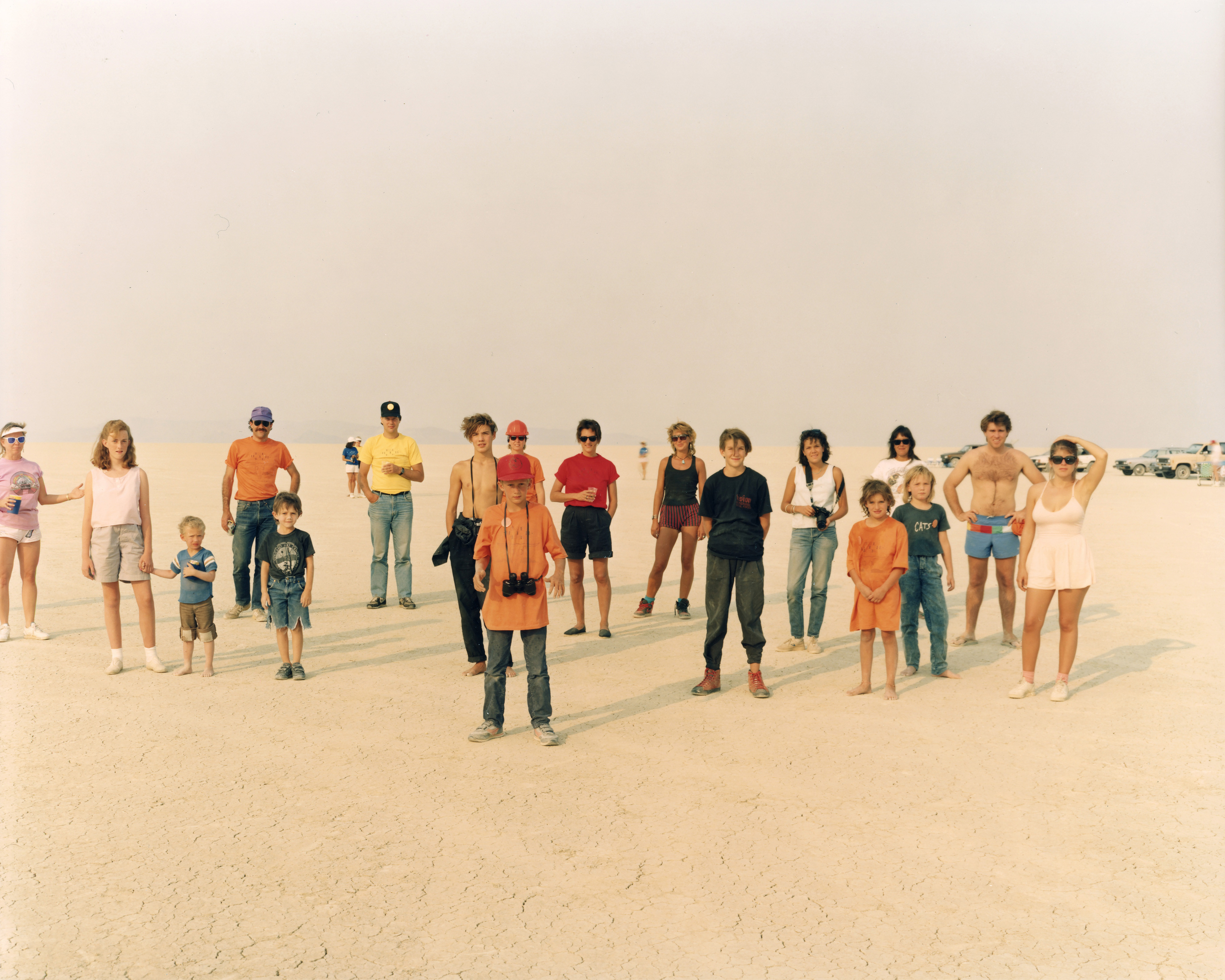
In my opinion, the full experience of this liminoidity and these communitas, albeit in a limited time period that may not be repeated in the future, leaves a certain trace on the subject, which, together with the will of the subject, can “reassemble” the structure surrounding it in other times and places. Communitas is a non-empirical thing, it is more ghostly than material, and here I draw on the concept of ghostliness in the same way as in the essay on “phantom anarchism.” 20 In the case of residences, I am interested in the illusory quality not so much of the individual, but rather in the illusiveness of the lived community with all the characteristics of its relationships, i.e. openness, equality and minimal differentiation.
“To people engaged in maintaining the “structure”, all incessant manifestations of communitas must appear in perspective as dangerous and anarchic and protected by various prohibitions, regulations and conditions.” 21 There is nothing to add to this, so is Libertaria, about which David Graeber wrote, 22 or the Republic of Sale from the book of H. Bey possible in our present ? 23 The most optimistic answer for me is “I don’t know.” Something else is possible: not utopian pirate island kingdoms, but rather flying Dutch without home ports, filled with hosts of ghostly communitas and materializing here and there; “dodge and slip” from the network of classifications and from the field of view of the surveillance camera. But there is something more.
3. Spatial practice
any society generates its own space; there are representations of space - special knowledge, signs and codes accepted in a particular society; and finally - spaces of representation, which include the symbolism of hidden social life, art, philosophy, but also what is directly lived. 24 This is Henri Lefebvre's famous triad, which he uses to explore social space.
This triad can be applied to an artist residency as follows. The spatial practice of a residence is how different places are used by artists: a place to have lunch or dinner together, a place to work, sleep and socialize, etc. Representations of space are those descriptions of places that are provided, for example, by curators, that is, the original designation of places for living, working and relaxing, a general characteristic of the residence. The space of representation or lived space is how the residence is perceived, thought by residents already after being in it: camp, shelter, commune, creative or research laboratory, etc.
In this case, it is interesting to compare the institutional representation of space (on the part of curators or institutions) and the space lived by residents. Если они практически полностью тождественны, разумно предположить наличие именно контролирующего и надзорного компонента в структуре резиденции (и готовности ему подчиниться). Лефевр писал о пространствах досуга, что они только иллюзорно уходят от контроля — «Контролируемое, управляемое пространство навязывает особые правила, ритуалы и жесты (например, загар), дискурсивные формы (что следует и чего не следует говорить) и даже модели и вариации пространства (отель, бунгало, причем предпочтение отдается частной жизни и семейной генитальности).» 25 Если же изначального контроля не было, или же он был достаточно слаб, то через ту или иную пространственную практику резиденты выстраивают своё собственное проживаемое пространство. То же самое может получиться, если взаимодействия «куратор — резиденты» выстраиваются как горизонтальные.
То есть, социальное пространство одновременно выступает и как инструмент контроля власти, и как продукт социальных отношений. В различных комбинациях вышеперечисленных условий может возникать или не возникать та самая временная автономная зона.
Возникновение и исчезновение отдельных точек и очагов лиминальности, автономности и свободы не является с точки зрения производства пространства уникальным событием; это следствие действия конкретного механизма. Для его запуска, как я полагаю, достаточно воли — индивидуальной и коллективной. Why is this necessary?
4. Префигурация
— это стратегическая установка, согласно которой революционные движения и организации должны уже в настоящем времени воплощать в своей внутренней структуре те формы принятия решений, управления и социальных отношений, которые они желают установить в будущем, посткапиталистическом обществе. Она обладает экспериментальным и практическим характером, внутри её процесса происходит проверка гипотез о будущих состояниях тех или иных частей социальной структуры. При этом префигуративная политика отдаёт предпочтение горизонтальным связям, а не иерархическим вертикалям власти, но может использовать временные союзы с существующими институтами или совершать попытки их перестройки и требовать создания новых, низовых институтов. Во многом она направлена на практическое воплощение автономности через прямое повседневное участие в горизонтальных структурах принятия решений. 26
Мне в данном случае особенно интересен момент, связанный с реализацией префигурации «здесь и сейчас». Главным образом это необходимо потому, что базовые институты существующего сейчас общества по своей природе иерархичны, далеки от равенства и свободы. Для того, чтобы заменить их иными институтами, более отвечающими идеалам будущего общественного устройства, людям нужно обладать соответствующими способностями, потребностями и соответствующим сознанием. Но существующие «здесь и сейчас» институты прямо препятствуют выработке подобных качеств, а большинство людей, которые не обладают опытом взаимодействия в горизонтальных сообществах, попросту не знают, как это делать. Каким образом люди могут освободить себя, если существующие институты не позволяют им развить соотвествующие этому освобождению качества и характеристики? Выходом из этого тупика является «практика будущих отношений в настоящем», то есть префигуративная политика. 27
Автономные и самоорганизованные места, точки на карте, такие как художественные резиденции, независимые галереи или концертные площадки могут являться своего рода участками префигурации, то есть «предвосхищения, прообраза и прототипа» 28 потенциального, желаемого и идеального социального устройства, пусть даже они и работают чаще всего на межличностном, а не меж-общностном уровне.
Те системы отношений, которые складываются в резиденциях, не являются префигурацией «по умолчанию», в данном случае следует вновь обратиться к некоторым критериям. Люди должны осознавать потребность в иных типах отношений и рассматривать их как желаемую альтернативу существующим или привычным. По крайней мере в тех местах, где бывал я, зачастую прямо проговаривалось желание большей распространённости того типа функционирования и взаимодействия, который коллективно конструировался в течение художественной резиденции. Я полагаю, здесь также должно иметь место понимание резиденции как автономного пространства, а не придатка какой-либо культурной институции, который нацелен на банальное производство искусства как объекта на продажу.

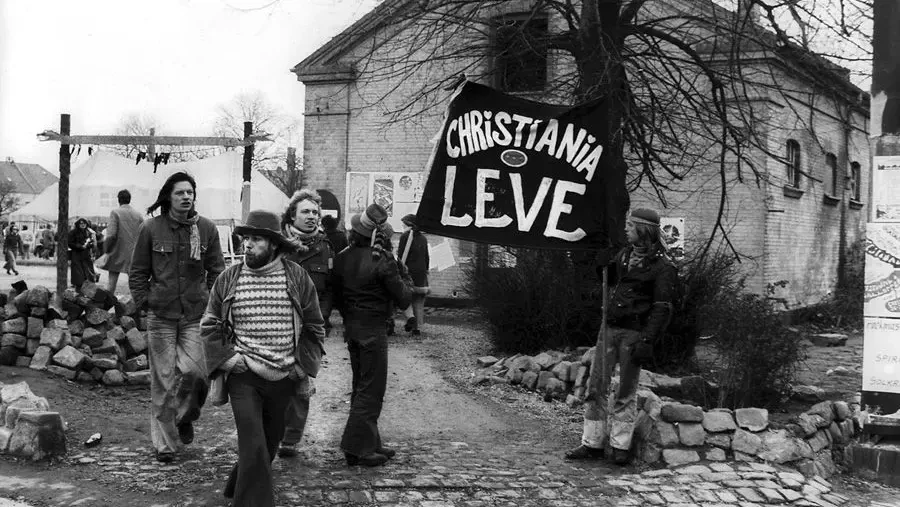
В статье Jilly Traganou The Paradox of the Commons: The Spatial Politics of Prefiguration in the Case of Christiania Freetown Свободный город Христиания (существующий доныне) рассматривается в качестве префигуративного пространства и социальной автономии в процессе её длительной эволюции. Она начала складываться в 1971 году вокруг жилищной проблемы и коллективных практик создания и управления общими ресурсами в противовес капиталистическим методам регулирования. Это началось как самоуправляемый район с отказом от частной собственности, прямой демократией и самостоятельным строительством необходимой инфраструктуры (жилые дома, системы переработки отходов и системы отопления.) Эта автономия имела «повстанческий дух» до начала 2010-х годов, когда под угрозой выселения землю выкупил и арендовал у государства специально созданный фонд. С этого момента, как отмечается в статье, Христиания стала скорее «регулируемой» автономией, входящей в договорные отношения с властью. За этим последовал государственный мораторий на новое строительство и обязательный порядок получения муниципальных разрешений, а также найм внешних по отношению к общине архитекторов и администраторов, что явилось нормализацией и отчуждением от жителей непосредственной работы с пространством. Появление централизованных коммунальных удобств снизило потребность в коллективном труде, таком, как готовка еды или прокладка труб. 29
В то же время существовало жёсткое разделение коммуны и внешнего мира, граница между внутренним и внешним пространством. Христиания в процессах борьбы за существование постепенно сфокусировалась на внутренних, локальных потребностях и проблемах, начав терять связи с внешними социальными движениями (которые, например, борются с жилищным кризисом или с проблемами в области прав мигрантов и молодёжи). В результате, начавшись как «префигуративная лаборатория», Христиания рискует превратиться в замкнутое на себе, самореференциальное пространство. 30
Выше я уже писал о понятии постоянных автономных зон, которые могут быть «узлами» сети из TAZ. В случае Христиании можно увидеть реальный пример проблемы постоянства на достаточно длинной временной шкале.
Ничто не мешает продолжать воссоздавать эти призрачные прообразы в иных местах; скорее, их призрачность по сравнению с жестоким реализмом настоящего играет в этом случае на руку. Конец одного ритуала не ставит крест на том, что происходило внутри его лиминальности; конец одной художественной резиденции или вовсе её фактическое исчезновение, прекращение деятельности не есть показатель упадка этого метода, так как вездесущая смерть не мешает продолжаться жизни, и разве временность — не одно из главнейших слов, вплетённых в саму плоть человеческого существования?
Недолговечное существование автономных зон не следует рассматривать исключительно как вынужденную тактику уклонения от внешнего контроля или же как неудачу. Это может быть внутренним условием сохранения самой автономии: длительное воспроизводство автономной общности требует закрепления её практик, норм и механизмов управления, вследствие чего возникающая изначально как антиструктурная communitas постепенно превращается в новую структуру. Исчезновение может представлять собой условие сохранения тех форм отношений, которые сделали эту зону автономной.
Художественная резиденция в этом смысле интересна как институционально организованное, но временное лиминоидное пространство. Институция или конкретный владелец резиденции создают условия для выхода из повседневной структуры, одновременно задавая пределы этого выхода. Вопрос заключается не только в том, насколько резиденция автономна, но и в том, какие формы автономной социальности она способна произвести до того, как её собственная временность завершит своё действие.
5. Художественные резиденции
, к исследованию опыта пребывания в которых я непосредственно могу применить выделенные выше характеристики — это лесное 11 (2025 г.) и TwinПлёс (2026 г.) В первом случае резиденция располагалась на даче в пределах работающего садового товарищества, во втором — в доме в полузаброшенной деревне. И то, и другое пространство было личным пространством кураторов резиденций, которое они предоставляли во временное пользование художникам, отбирающимся через open-коллы.
Итак, в широком смысле меня интересуют лиминоидность, communitas, репрезентации пространства и префигурация.
О нас — Подмосковная резиденция для художественных исследованийЛесное 11 - пространство для художественного исследования и интердисциплинарного обмена. Дача предоставляется для разработки и воплощения художественных проектов. В распоряжении художников - сад (поляна), жилой летний дом с кухней-террасой и жилой летний дом без кухни, хозблок(библиотека) и необходимые для проживания удобства. Прием заявок от художников и художественных коллективов или инициатив, которые хотят опробовать и/или реализовать…thedacha.wordpress.com
В лесном 11 куратор резиденции взаимодействовал с участниками исключительно дистанционно. В самой резиденции социальное взаимодействие довольно быстро пришло к горизонтальному типу с гармоничным распределением бытовых обязанностей и определением времени совместных активностей. Способы и методы художественной работы выстраивались участниками самостоятельно вокруг тематической рамки, установленной куратором. Куратор регулировал скорее хозяйственно-бытовые вопросы, чем художественный труд. В то же время удалённость от городской среды создавала автономию от привычных способов распределения времени работы, отдыха и творческой деятельности. Социальное пространство резиденции имело черты лиминоидности, в особенности для меня как человека, непривычного к дачному формату отдыха. В то же время, автономия этого пространства, как мне показалось, заключалась ещё и в его камерности, на которую намекало наличие вокруг территории, используемой под сугубо хозяйственные цели (садовое некоммерческое товарищества), то есть для меня собственно резиденция происходила почти исключительно в пределах одного дачного участка.
Непосредственность, целостность и равенство общения, которые являются одними из основных условий возникновения communitas также присутствовали, более того, самими участниками резиденциями проговоривалась желательность большей представленности подобного типа отношений. Таким образом, в каком-то смысле наша деятельность в лесном 11 имела некоторые черты префигуративной.
Что касается репрезентаций пространства со стороны кураторов и проживаемого резидентами пространства — по большей части два этих компонента были практически тождественны, но на мой взгляд, это произошло скорее автоматически, нежели под руководством куратора. В каких-то частных моментах участниками изобретались и другие репрезентации, отличные от описания резиденции куратором. В то же время участники активно вовлекались в практики производства пространства — через собственную инициативу к уборке, обустройству и украшению территории.
Copy of Арт-резиденция ТвинПлёсtwinples.art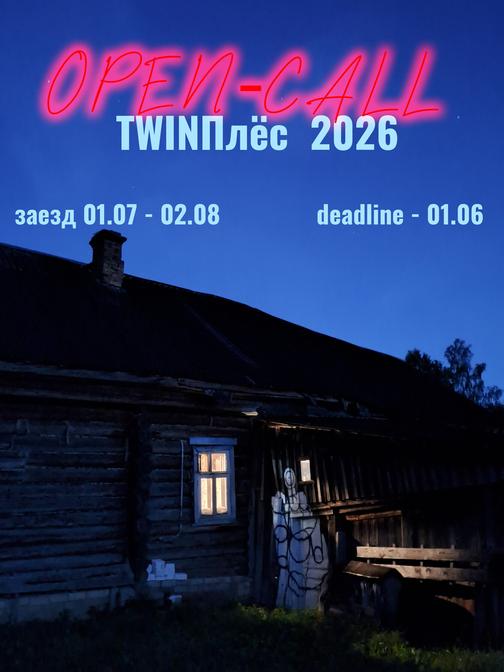
В резиденции TwinПлёс куратор проживал совместно с участниками на протяжении всей резиденции, при этом изначально проговорив, что его взаимодействие с резидентами должно приближаться к горизонтальному формату. На мой взгляд, эта интенция имела успех: резиденция воспринималась как дом с гостеприимным хозяином, а не как сколько-то институциализированная структура с жёсткими правилами. Тематическая рамка для художественного производства устанавливалась более мягко, чем в предыдущем кейсе; какие-либо контролирующие или регулирующие функции практически не имели своих проявлений. Касаемо автономности с моей точки зрения TwinПлёс можно назвать практически идеальным случаем: с одной стороны, обособленность деревни как полузаброшенного места и отсутствие привычных средств связи (мобильный интернет) позволяли не просто временно изменить образ повседневной жизни, но и ощутимо «отпасть» от цивилизации. С другой стороны, куратором резиденции проговаривалась и реализовывалась практика взаимодействия художников с непосредственно окружающим социальным пространством, такая как походы в музеи и общение с местными жителями. Таким образом, опыт резидентов захватывал не только проживание в конкретном ограниченном месте, но и расширял их проживаемое пространство на близлежащую территорию. Методы и способы при художественной деятельности, её индивидуальность или коллективность выбирались участниками и не имели строгой регламентации. В конечном итоге, на мой взгляд, пространство TwinПлёс можно назвать лиминоидным.
Способ социального взаимодействия, выбранный куратором как целевой, способствовал появлению черт модальности communitas, которые складывались не только между художниками, но и в более сложных взаимодействиях «куратор-художник-гость».
Репрезентация пространства со стороны куратора изначально включала в себя горизонтальность, экспериментальность и междисциплинарность. Деятельность в рамках этой резиденции, таким образом, во многом задумывалась близкой к префигуративной политике, реализующей снижение дифференциации, иерархии и утверждающей равенство и свободу выбора.
В итоге можно заключить, что оба указанных мной случая так или иначе приближаются к реализации характеристик лиминоидности, communitas и префигурации. В первом случае направленность на это исходила скорее от самоорганизовавшейся общности участников, во втором случае в этом процессе принимал непосредственное участие куратор. Так или иначе, сам феномен художественной резиденции в полу- или полностью сельской местности имеет в себе потенциал для изучения в разрезе концепций о TAZ, лиминоидности, communitas и префигурации.
Sources
1 . Backrooms (web series), Kane Parsons, January 7, 2022 — present. — https://youtube.com/playlist?list=PLVAh-MgDVqvDUEq6qDXqORBioE4Yhol_z&si=FFfdU3L-xodi3Ncc
2 . Donald 'ābhāsa' Cooper. Ghost-anarchism //ГАЗИН #2, ВРД , Самара, 2025
3 . Raekstad P. Prefiguration: Between Anarchism and Marxism // The Future Is Now: An Introduction to Prefigurative Politics / ed. L. Monticelli. — Bristol: Bristol University Press, 2022. — P. 30-46.
4 . Raekstad P. Revolutionary practice and prefigurative politics: A clarification and defense // Constellations: An International Journal of Critical and Democratic Theory. — 2018. — Vol. 25, No. 3. — P. 359–372.
5 . Traganou J. The Paradox of the Commons: The Spatial Politics of Prefiguration in the Case of Christiania Freetown // The Future Is Now: An Introduction to Prefigurative Politics / ed. L. Monticelli. — Bristol: Bristol University Press, 2022. — P. 144–160
6 . Turner, V. From Ritual to Theatre: The Human Seriousness of Play. — PAJ Publications. — 1982. — 127 p.
7 . Лефевр Α. Производство пространства / Пер. from fr. — М.: Strelka Press, 2015. — 432 с. - With. 51-53
8 . Поляков Д. Обратное присвоение. Постанархизм как антиполитическая политика // AKRATEIA, 17.08.2021. — https://akrateia.info/obratnoe-prisvoenie-postanarkhizm-kak-antipoliticheskaia-politika/
9 . Тэрнер В. Символ и ритуал. Comp. В. А. Бейлис и автор предисл. — М.: Главная редакция восточной литературы издательства «Наука», 1983. — 277 с.
10 . Хаким Бей (Уилсон П. Л.). Автономные зоны: временные и постоянные. — СПб.: CHAOSSS/PRESS, 2020. — 347 с.
временные автономные зоны резиденция искусство