
Translated material
Venice 2026. Results
The Golden Lion was given to a film about the persecution of Danish women who slept with the Germans during the occupation. Prize for directing - "Dau". Acting Award - John Malkovich (for the best role in his career)
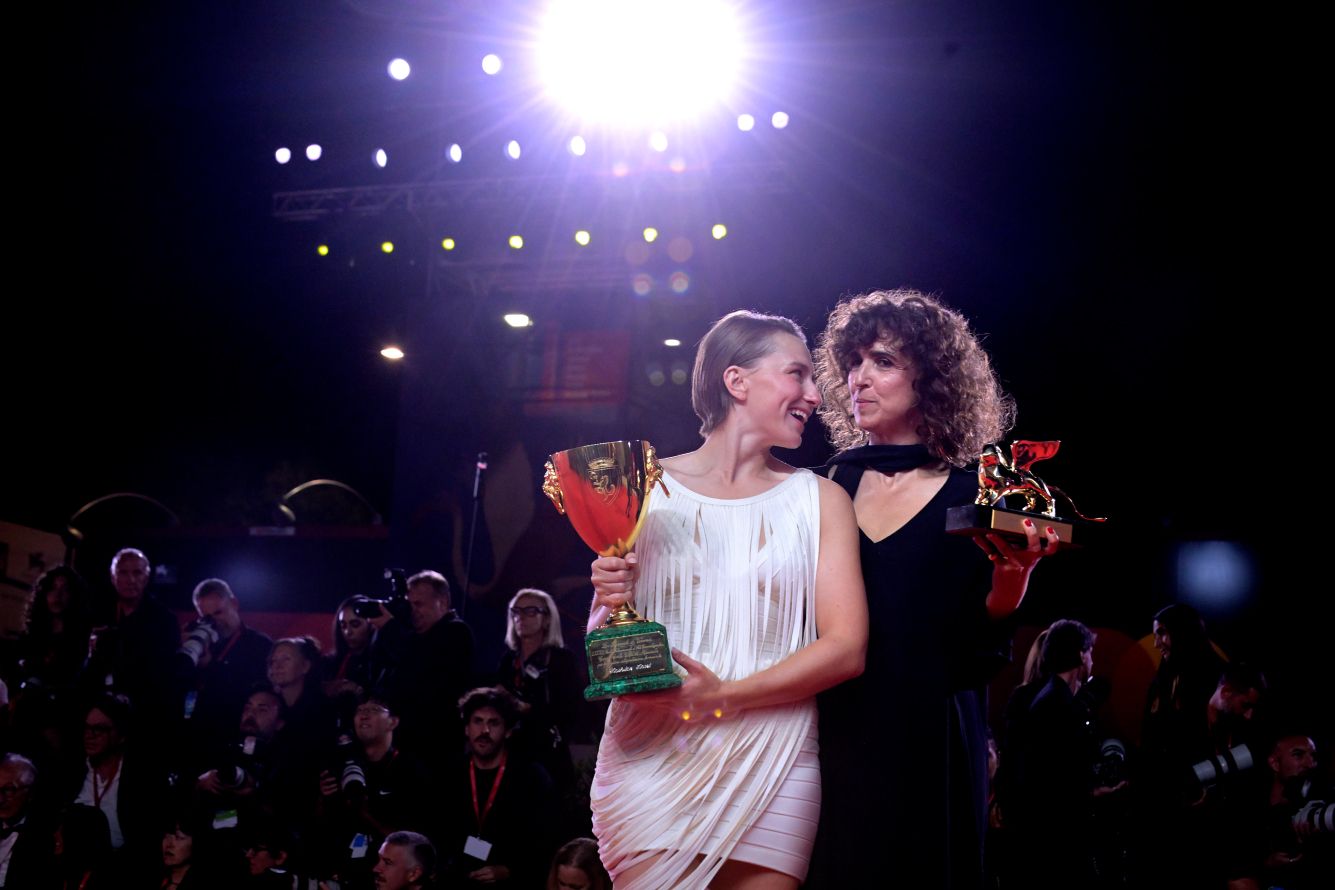
The 83rd Venice Film Festival has ended. The top prize, the Golden Lion, went to The Woman Unknown, set in post-World War II Denmark. The second most important award, the Grand Prix, went to the film “Possible Love” by Korean director Lee Chang-dong. The award for best director was awarded to Ilya Khrzhanovsky for the film “Dau”. The special jury prize went to the documentary film “NAZA” about the war in Gaza by Israeli directors Yuval Avraham and Rachel Shor. John Malkovich, who starred in Martin McDonagh's Wild Horse Number Nine, won the best actor award. Best actress went to Mathilde Arcel (“The Unknown Woman”). Film critic Anton Dolin talks more about the results of the festival.
When the director of the Venice Festival, Alberto Barbera, was asked why only one film in the competition was directed by a woman, he answered dryly: the rest did not reach our standard. However, later the documentary “NAZA” was added to the competition program, where Rachel Shor was a co-author. The "rest" apparently includes other contestants including Werner Herzog, Danny Boyle and Nanni Moretti.
All of them were left without prizes, and 49-year-old Mai el-Touki became the first Danish woman in the 21st century (and only the second in the history of Venice after the great Carl Theodor Dreyer) to be awarded the Golden Lion. Her Unknown Woman combined timely subject matter, modern film language and still painful historical material - the persecution of women who slept with the Germans during the occupation - into a tense thriller, flawlessly acted by an ensemble cast. The leading actress, Mathilde Arcel, received the well-deserved Volpi Cup for her outstanding work.
There will certainly be people who want to criticize the jury and the festival. Surely they will say that "Female Unknown" was not good enough for such a prestigious award, but received it due to an imaginary "gender quota" (in fact, Barbera stubbornly resists any such practices). But it’s enough to remember the films of Maggie Gyllenhaal herself, the actress and director who headed the jury, to be sure: “The Unknown Woman” is a picture that probably touched her to the quick and seemed close to her. She and el-Tuki are also the same age, both were born in 1977.
Gyllenhaal's choice for the honorary role of chairwoman was also criticized. Her acting career includes obvious successes (the most famous are “Secretary”, “The Dark Knight” and “Crazy Heart”), her directorial debut “The Lost Daughter” brought the creator a Venice prize for the screenplay and an Oscar nomination. However, Gyllenhaal cannot be called legendary, cult, or even very popular, and her recent “Bride” is considered a failure. Nevertheless, it happens: not the most outstanding filmmakers sometimes turn out to be subtle and thoughtful judges of other people's work.
"Unknown Woman" is a sniper's choice: the picture walks the line between smart mainstream and provocative drama of ideas, exploring feminism and patriarchy in an era when these terms were not so widely known. But other decisions of Gyllenhaal’s jury are distinguished by their balance, if not the wisdom of choice.
The most authoritative of the contestants, the rarely filmed Korean Lee Chang-dong, received the second most important “Silver Lion” - the Grand Prix - for the solid drama “Possible Love”. On the contrary, the most shocking and radical of the program participants, Ilya Khrzhanovsky, was awarded for best director in “Dau” (this is the most significant prize in his entire career): his acceptance speech included a wish for perseverance and victory for Ukraine in the fight against Russian aggression. Lee Chang-dong and Khrzhanovsky represent two extremes of the director's profession. One gravitates towards careful psychological realism, the second towards experimental methods and innovative film language, which is often mistaken for a lack of professionalism (and which irritates many). In awarding both, the jury showed true open-mindedness.
It seemed impossible that the documentary “NAZA” by Israelis Yuval Avraham and Rachel Shor, which was received with delight by the public, would go without prizes. Award or ignore such a movie, in any case it will be regarded as a political gesture. Gyllenhaal showed remarkable intelligence here too: this very special, out-of-the-ordinary film was awarded a special prize. It was presented by Tunisian Kaouther Ben Hania, the creator of The Voice of Hind Rajab, which thundered a year ago (the film received the Grand Prix in Venice).
We wrote about all the films mentioned, without having time to touch on only one picture: “The Good Soldier” by the Frenchman Stéphane Brize, awarded together with co-authors Olivier Gorce and Coralie Amedeo for the screenplay. Brise's favorite actor Vincent Lindon plays the cynical director of an insurance company, Italian Alba Rohrwacher is the HR specialist he has just hired, without much success instilling progressive values and humanism in her colleagues. This tragicomedy at certain moments turns into caustic satire, the dialogues in it are really quite good.
The acting trophies are distributed impeccably. Young Malu Hebizi in Cedric Kahn's French drama about adolescent psychiatry "15/18" deservedly won the Mastroianni Prize (given to the best young actor or actress), her work in this ensemble film stands out from the first scene. Mathilde Arcel accomplished a real acting feat in “The Unknown Woman.” John Malkovich in Martin McDonagh's Wild Horse Number Nine simply gave the best performance of his extensive career.
Please note: although Gyllenhaal is American, this award is the only one awarded to someone from Hollywood (and even then Malkovich is more often associated with independent cinema). The remaining laureates are Koreans, Danes, Israelis, Russians, and French. This is what the outcome of an international film festival should ideally be.
Contract killings committed by the CIA in “Wild Horse Number Nine” and torture in the dungeons of the KGB, unjust trials and executions in “Dau”. The lasting trace of a war that caused people to lose their humanity in NAZA and The Woman Unknown. Soulless capitalism and insurmountable class barriers in “Possible Love” and “The Good Soldier”... Neither the Venice Festival selectors nor Maggie Gyllenhaal’s jury are to blame for the fact that the picture of the world looks like this today.
Today only one idealist believes in eternal love: 84-year-old Werner Herzog, whose “Bucking Fastard” flashed in the program like a meteorite from some parallel space. Perhaps that is why he was not included in the number of those awarded.
Anton Dolin