
Translated material
Return of Saturn. Fragment
Arina B.
I didn’t know if I had a plane ticket, but I stood in line to check in for the New York-Belgrade flight. I pushed the suitcase in front of me: I knew for sure that it weighed exactly 23 kilograms - the maximum allowed for transportation.
At the previous airport I had to bring its weight to the ideal level. The suitcase needed to get rid of seven extra pounds. There was no extra money to pay for excess weight, nor were there any scales to weigh the suitcase in advance. Therefore, I prepared for the worst, which came: I mentally made a list of things that I could part with without critical consequences for my life and budget.
I found the airport trash can - it was sterile steel and divided into sections for sorting recyclables. All that remains is to figure out which sections to throw a linoleum cutting knife, an orthopedic pillow and a dildo into in order to minimize harm to the planet.
Someone told me that 23 kilograms is not a random weight, it is this figure that is spelled out in the contract of airport workers as the maximum: so that those involved in transporting luggage do not strain their backs too quickly. As I stuffed a rectangular pillow into the round neck of a bin labeled Other , I thought that even if this wasn’t my most environmentally friendly action in life, at least I was caring about the health of the movers. The linoleum cutting knife flew in the same direction. The dildo was placed in a Glass container : a new life awaited it there.
In the check-in line for the New York-Belgrade flight, I had less than $20 left on my card. I spent half the night on the plane and the remaining half in the international terminal at New York's John F. Kennedy Airport. Brianna bought the tickets for me, and I didn’t know the reservation number.
Brianna is an exchange program employee. Over the course of 2 exchange years, I never saw her: about Brianna, I only knew that she lives in New York and loves extreme sports, her profile reported this on the program website. Brianna wrote me letters, in which she always addressed me in the same impersonal manner. The last letter from Brianna fell into my inbox with heavy tears:
Dear Fulbrighter ,
I hope you are doing well and that you are excited to return home at the end of next month! You are receiving this message because your Fulbright Program end date is approaching, and you have not yet reported your departure details.
I didn't understand what home Brianna was sending me to if my home was here in Arizona. I was torn between two desires: 1) explain to her that I couldn’t leave, that in two years I could not only spend a hundred thousand government dollars, but also get two dogs and get married; 2) answer her something like:
It should have been instead called Foolbright!
But instead, I texted Brianna that I was ready to fly to Serbia in a month. In Belgrade, Masha was waiting for me, a friend with whom we already had a history of living together: even before the formation of our frontal lobes, she and I rented a two-room apartment as a couple in Moscow’s Maryino.
My original flight from Arizona, for which Brianna sent me a ticket, was rescheduled, and I no longer had time to catch the international flight. On weekends, the New York-Belgrade flight did not fly, and this gave me two more days at home, with the dogs and S.: as if a coin once thrown into the sea had finally worked. As if this was a sign: you can still replay everything and stay.
As a child, on trips, the day before leaving, my mother and I would throw coins into the sea; if the vacation was not on the beach, we would throw coins into a city fountain or pond. Only now I was in Arizona, and water resources were tight here. And it’s better to save money, especially not to waste it. The latter was especially difficult for me: I felt that I had thrown a hundred thousand into the sea with one dollar, but it was of little use.
Instead of the airport, S. and I went to a bar with pinball machines, I took the cheapest alcoholic cocktail - something between an Aperol and a Margarita, we exchanged cash for game tokens, squeezing them in our palms, and went to the gaming area.
The essence of pinball is the speed of reaction: you need to press the buttons on the sides of the machine in time to stop the ball from falling down. S. was a pro in this matter, but her ball would fall sooner or later, and if the game still lasted (one token gave several attempts), then it would immediately return to its original position.
I imagined that this was not just one ball coming back again and again, I got carried away by the game and began to believe that the previous ball fell into the abyss, into oblivion, fell somewhere behind the machine, from where we could not get it. But we still had a few new, not tired balls in stock, and it was a fresh start. Each escaped ball was like a coin, and each coin was like a sign, and each sign told me bye-bye .

*
Dear Brianna ,
Are you interested in skiing? I read that you love extreme sports. If skiing is your cup of tea, then I recommend visiting Flagstaff, in northern Arizona.
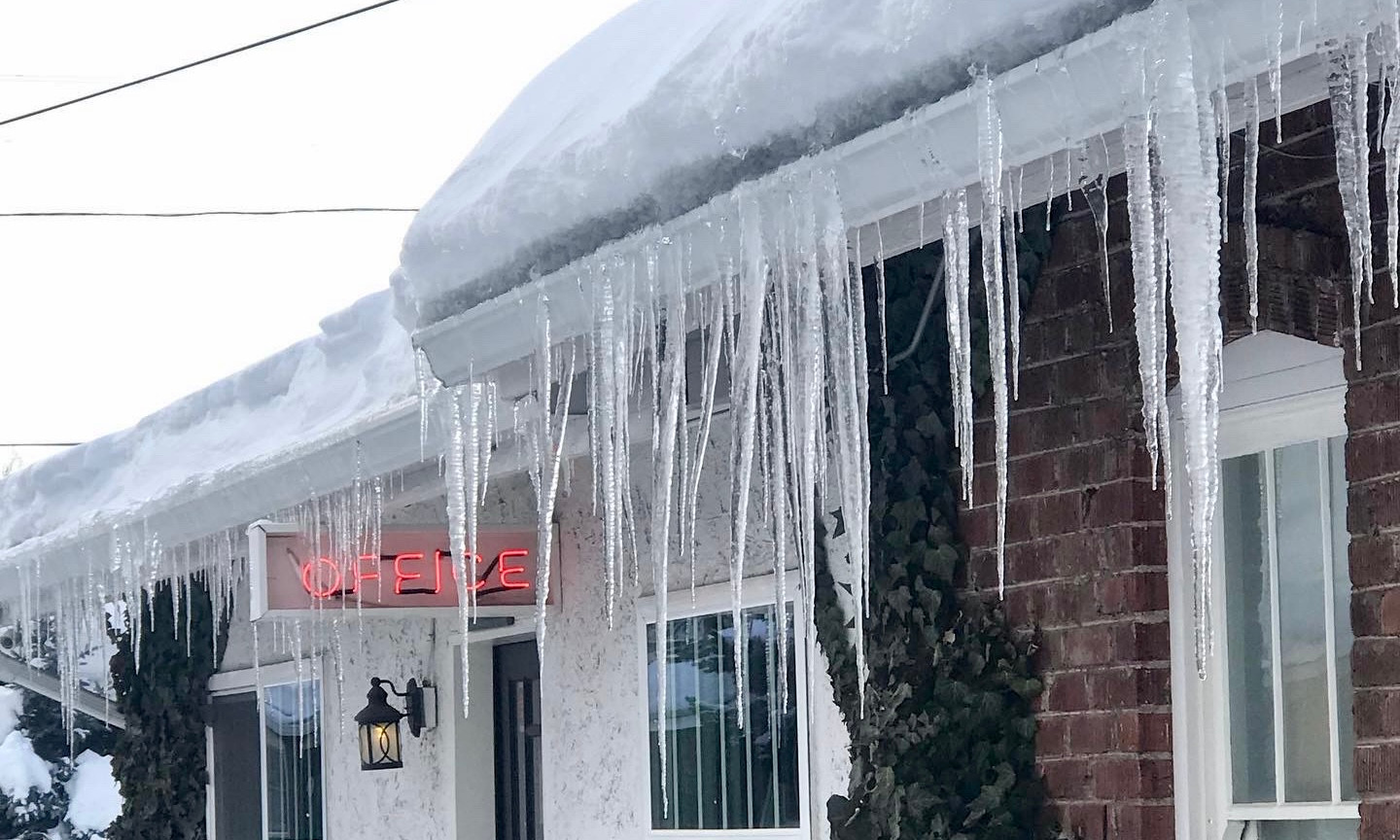
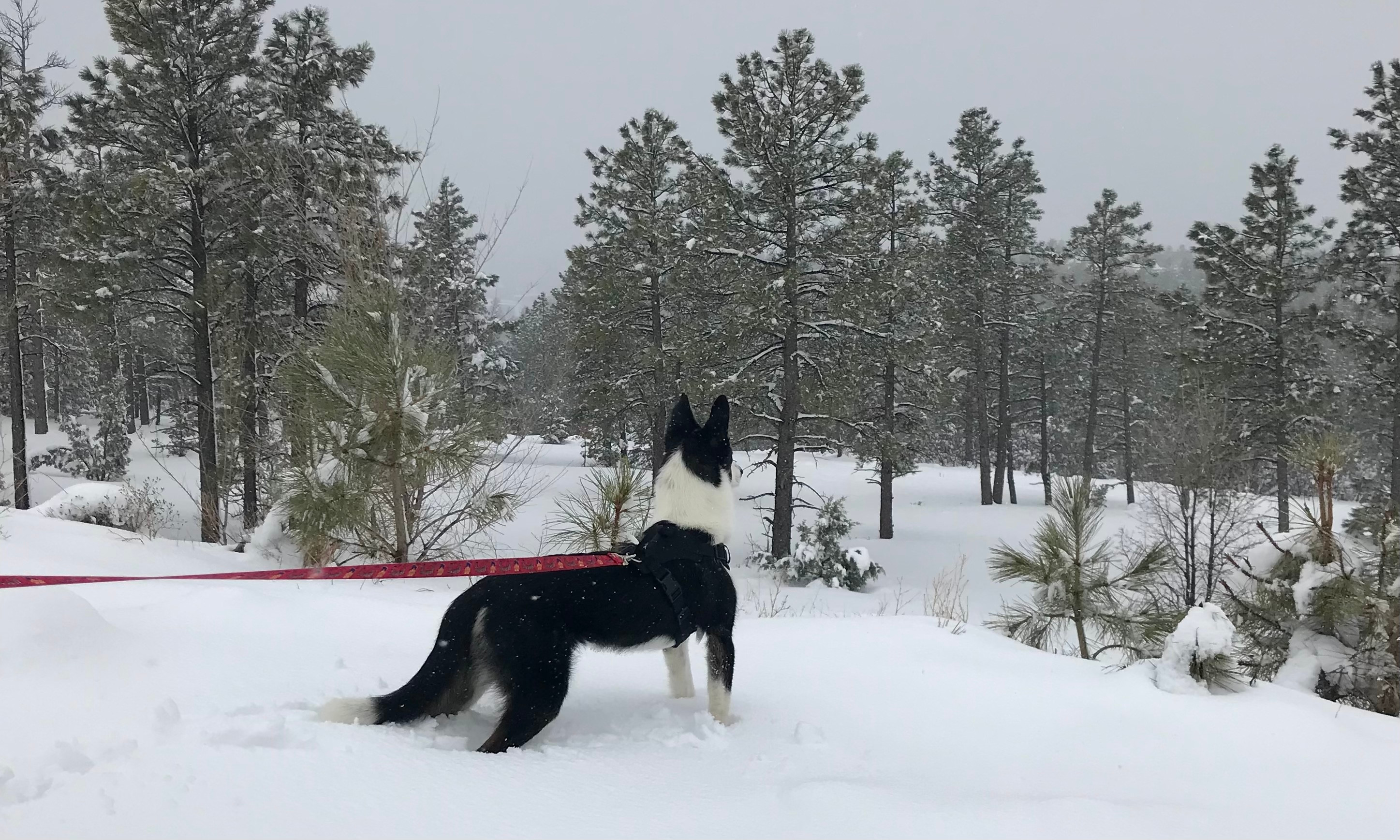
During my first winter in Flagstaff, the region experienced an abnormal amount of snow: it fell for days and nights and seemed to have no intention of stopping until it covered everything: the cars, our two-story apartment complex, the playground, and the road signs. Classes at universities were canceled or moved online, shops and cafes were closed, postmen and couriers did not work. When I went out for a walk with Val, she jumped in the snow, as if it did not fall under her, but was elastic, like stretched fabric. We made our way along what just yesterday had been a trampled forest path, and left creaking footprints: scream-cry , scream-cry .
My driving test has been postponed by two months. The local traffic police did not ride with inexperienced drivers, even if a millimeter of snow fell. They can be understood, but then I had no time for it: I was locked in a one-room apartment by a snow storm with a person who no longer wanted to be with me. We broke up that same winter, on February 13, discussing our plans for Valentine's Day. She said: “I don’t want to celebrate, and maybe we should break up altogether.”
It sounded like a reasonable offer and I agreed. We both cried and, wiping our tears with the sleeves of our sweaters, began to discuss how it would look: we would continue to live in this apartment, but we could sleep in different rooms. The dog will stay with her. The dog will stay with her. By that time, Val had been living with us for four months. We did not take her spontaneously, but abruptly - something like a child who is taken in to save a relationship. The dog will stay, and I will leave. After all, I have neither citizenship nor a green card, I am here temporarily. I'm just a graduate student with no driver's license or savings. Is it fair to the dog to make its life so miserable?
I wasn’t going to write about this today, I wanted to write about snow, and about that special state of waiting that only happens in winter, when time becomes a snowdrift - clumsy and heavy.
Since then, every winter there comes a moment when I can't wait any longer. Wait for news from the immigration service. Wait for the fee. Waiting to swap your puffy winter jacket for a flowy coat. When it will be possible to walk along the streets, feeling the asphalt under your feet, and not a dirty mess. Waiting for my heart to melt and open to new love. It’s good that at least I don’t have to wait for a response from you, Brianna, because my letters are not reaching you: my student email was deleted, and while I’m waiting for all this, you could have already quit.
I passed my license only at the end of March. When the examiner said that I had scored enough points, I screamed in the traffic police parking lot - from joy and from the realization that now I was not tied to other people. I can drive alone in the car, I don't have to ask my ex or anyone else for a ride. It was a very American cry (as a migrant, I shouldn’t express my emotions too much, be obedient and polite) and very American freedom: after all, I didn’t have my own car, and who did I take it from? That's right, with an ex.
The first thing I did was go to my favorite coffee shop in the city center and order their special - coffee in a wide cup, mixed with a shot of cocoa and topped with whipped cream. I parked my car on a parallel street, proudly paying $1 at the parking machine. The sun was shining at 30 in my SPF. It was the end of that northern Arizona winter, the snowiest in my memory.
Sincerely,
Your Fool
*
January 2026
1/30: About the frontal lobes
It had been a year and a half since Brianna last emailed me, I was already living in my third country, and I was turning 30 in three months.
The period between twenty-eight and thirty years is the era of Saturn's return. The planet of maturity and responsibility is slowly circling the sun to return to where it was at the moment of your birth. “Saturn is a strict teacher, he teaches life lessons. One of my Saturn clients went to jail,” says YouTube astrologer Angela Pearl, looking straight at me in a warning tone. I haven’t fully decided whether I believe in astrology, but when I was interrogated at the Kazan airport at five in the morning, I imagined Saturn flying around the Sun: I convinced myself that I, like him, had a place to return to.
Maturity is nothing more than a myth, a social construct around which there is so much talk that you begin to think that you will not achieve it. Or that you are growing up “wrong.” The return of Saturn is a testing period that supposedly makes you wiser and calmer. There is no turning back: you go through this period, simply because time passes, planets move, and you are still alive.
Another transition marker: the formation of the frontal lobes, the part of the brain responsible for planning, decision-making and emotions. Previously, it was believed that it occurs at 25 years, but today scientists agree that the formation process continues longer - up to 30, or even 30+ years. There are many memes about what happens when the frontal lobes have matured: you start buying plants, get a full-time job, realize that you are suffering in vain for your ex.
I'm trying to figure out when my frontal lobe moment happened : when I got a dog, and then another, when S. and I got married, or when I wrote to Brianna that I was flying from the USA to Serbia? Or maybe even earlier - in the summer of 2022, when I had all my wisdom teeth removed?
If trauma is something that breaks you forever, or at least for a long time, then, according to these memes, developing the frontal lobes is like wiping off your glasses and seeing things clearly: your relationships, your career, or your environment. But why then did I become even more confused by the age of 28? I believe Angela Pearl and her strict Saturn theory: the decisions I've had to make over the past two years feel like being on a quiz where the correct answer options weren't included as a joke.
2/30 : About loneliness
Masha left a week ago, leaving me with two cats - her cat Praxis and the cat Theory, which we picked up from a supermarket on our street in early January, and have been adopting since then. Living with Masha means sharing the kitchen space, where we both eat and work, and the cats eat and sleep right there—each has its own sofa.
Living alone means reinventing my days, cooking only for myself and only what I like. Throwing my things around and leaving them there until I'm in the mood to clean. An empty apartment has its own rules.
At first, I felt uneasy about how many hours in a row I listened to the radio so as not to sit in silence; how much I am silent because there is no one to talk to. Like when you check into a hotel and are left alone in a room where the traces of other people have been deliberately covered up. Then a new routine for my lonely days is established.
I work for hours and only remember about a break when my legs go numb. I talk to a JBL speaker , sing songs I heard on the radio to the cats, move the clothes dryer into Car’s bedroom and her humidifier into ours with the cats.
Today I woke up to Praxis the cat gnawing on the charging cord above my head, telling me in Praxis language that it was time for his breakfast. Once a week there is a day when I get up at 9 am, like today. I usually sleep until 11 - I used to be ashamed to admit it, but now I look at it as an achievement: I manage to win nine, or even ten hours from capitalism, enjoy a free schedule, the absence of children, office work and sleep problems.
While I was grinding coffee, I read that yesterday Venus entered Aries, my sun sign. The horoscope newsletter I subscribed to said this was a time of “adventurous passion.” Maybe that’s why lately I’ve been wanting to install dating apps and try my luck again. These apps put a spell on me, promising that one more swipe, one more like, and I'll definitely find what I'm looking for, I just need to try a little more. But this never happens, and I spend hours scrolling through profiles, chatting about nothing with people who disappoint me either at the first meeting or even before it.
While the coffee was dripping from the filter into the mug, I went to Instagram and saw a friend’s story - she posted a collage in honor of her three-year anniversary with her boyfriend. She and I studied together, and when everything started with them, I saw him at social events of our faculty. The concept of “performative man” was not yet used, so I defined it as the “man in too well-groomed shoes” type. In this collage, photographs of them together flash and are layered on top of each other: here they are in California, here they are driving somewhere in a car, here they are walking with a dog.
When I see posts like this, I tell myself it’s just Instagram, something they experienced is much more complex and not as hysterically rosy as the posts and stories about it. Perhaps the most truthful thing about this friend’s collage is how moments from joint trips, dates and everyday life are superimposed on each other at such speed that it is impossible to distinguish one from the other, to consider and be touched by each. I want to believe that all this is true love, and that they are together forever, and stop cutting myself about such collages, like an unsuccessfully opened tin can, remembering that the format of my relationship has been dictated by the US immigration system for more than a year.
Arina B. is a writer, researcher, and writing teacher. Works in Russian and English. Lives between Yerevan and Tbilisi.