
Translated material
Internet by passport
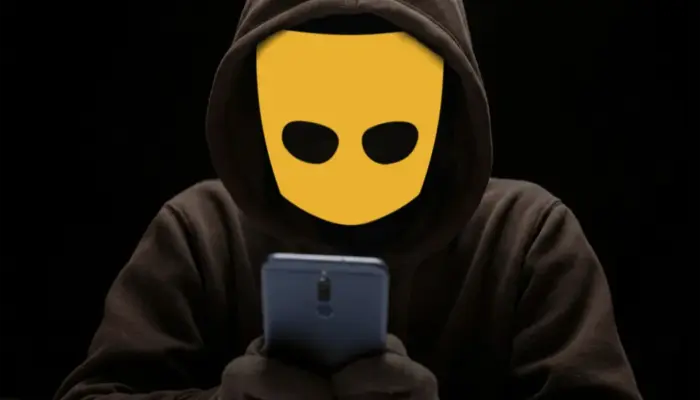
To access a website, an adult is increasingly being asked to prove that he is an adult. It sounds reasonable and almost innocent. But for a queer user whose security rests on the gap between her passport name and her digital life, the question “how old are you?” very quickly turns into another: “who are you really?”
A barrier that looks reasonable
I'm not going to argue that children should be protected from content they are not ready for. This is a real challenge, not an excuse that should automatically be ridiculed. Another thing is alarming: in modern society, a clear goal is too easily attached to a technical solution, the consequences of which no one explains to the person on the shore.
In the UK, “high-impact age verification” obligations for a number of services began to apply in the summer of 2025 . In the first major report on the practice of applying these standards, the regulator Ofcom examines not only porn sites, but also social networks, dating services and other platforms - and at the same time admits that no method of verification completely eliminates circumvention. The European Commission, meanwhile, is promoting its own model , which should make it possible to confirm the achievement of the age threshold without revealing the exact date of birth or identity to the platform.
This is where an important boundary lies. Checking one property - for example, that a user is over eighteen - is not at all the same as establishing his identity. A good system only answers “yes” or “no” to the service. The bad one gets a person, a document, date of birth, address, request history and technical metadata at its disposal, and then swears to dispose of all this carefully.
We are asked to evaluate the promise and take it at its word. I propose to evaluate the architecture of such solutions.
For whom a pseudonym is not a masquerade
A queer person might live under one name at work, another on a dating app, and another in a mutual aid community. This is not playing spy or a sign of dishonesty. This is normal boundary hygiene: parents should not see their son’s profile, an employer should not see his correspondence, and a casual acquaintance should not collect a map of your entire life from several accounts.
Digital rights are not an abstraction here. The Electronic Frontier Foundation reminds that for LGBTQ+ people, control over digital identity is directly linked to the risk of outing, harassment and discrimination, which means that a pseudonym can be an important condition for participation in public life. Especially in those regions where the very appearance of queerness is dangerous.
A regular account already leaves a trace: IP address, device, login time, payments, contacts. Age verification adds an “anchor”—a photograph of a person or document that links scattered traces to a person on a government registry. Even if the site vows to immediately delete the source, questions remain: who exactly processed it, what signs were extracted, what ended up in the logs and logs, how the transfer to the contractor was arranged, whether the error can be disputed - and what will happen in the event of a leak.
For most users, this is an unpleasant risk. For a person who separates his queer life from his passport life for the sake of security, the risk is structural: the system destroys the very gap that protected him.
Selfie is also a document
When talking about age verification, people like to contrast the “hard” loading of a passport with the “easy” assessment of age by face. At first glance, the word “evaluation” is reassuring: as if the neural network just looked and forgot. But a photograph of a face is a biometric material, and the result is still not guaranteed and is probabilistic in nature. An adult can be mistaken for a minor, a minor for an adult. And such error will be unevenly distributed if data and testing do not reflect well the diversity of individuals, ages, and gender expressions.
The European Data Protection Board has formulated ten principles for such systems: legality, necessity, proportionality, data minimization, transparency, protection against decisions that go beyond the original purpose. The main practical meaning of the statement is simple: the method should be the least intrusive of the ones that are truly effective.
This turns the question around. It is not the user who must prove that he is worthy of privacy; on the contrary, it is the service that must explain why anonymous confirmation of the age threshold is not enough for him. It is not the person who is required to trust the company that the selfie will not become part of an advertising profile or a product when trading a database of users with business partners. It is the company's responsibility to technically exclude such use as much as possible and describe the residual risk in plain, understandable language, rather than hiding it in the fine print of an unreadable sheet of a license agreement.
Consent is not a magic button here either. If, without showing your face, you cannot enter the space on which you depend on dating, health information, or contact with the community, the choice to “agree or leave” can hardly be called free.
One lock on very different doors
Platforms love a single solution: one verification provider, one script, one tick for the regulator. People are still more complex.
Someone does not have a valid document. Someone's name and gender marker do not match how the person looks and presents themselves. Someone uses an old phone with a bad camera. Someone lives in a country whose documents the service does not support. Some people can’t calmly take a selfie at home. And some are simply not ready to give their biometrics to a commercial company for the opportunity to read posts in their feed.

When the only available path is tailored to the holder of the “correct” passport, camera, address and appearance, technical verification turns into sorting citizens into categories and varieties. Of course, this in itself does not mean that any age barrier is discriminatory. This means that the system must have alternative verification methods, accessible appeals, and the ability to pass verification without revealing unnecessary information.
In a joint statement, British regulators Ofcom and the ICO emphasize that online security and data protection must work together, and services are required to build data protection into the very design of systems. This logic is close to me. Privacy is not a barrier to children's safety. On the contrary, this is a form of security, including for children: teenagers are also queer and also need protection from unwanted disclosure.
Why does a ban often simply change the route?
If the official entrance closes, the need does not disappear. A person looks for a mirror, downloads a VPN, moves to a less regulated site, or trusts the first intermediary he comes across. Ofcom is separately looking into VPN use following the introduction of age barriers - and the fact that it's doing so is important because user behavior is part of the effectiveness of the system.
This is not a “every rule is meaningless because it can be circumvented” argument. This is a requirement to count spillovers. If a well-known service introduces a check, after which vulnerable adult users go to opaque sites - where moderation is worse and there are more attackers - a report on the number of blocked logins through the platforms' allowed channels does not say anything about security, even if it creates the temptation to provide a beautiful report to voters that does not carry any practical value other than easy earning of political points. Politicians and organizations promoting this line often only sell people the fear of a threat, and then kindly offer a simple (albeit ineffective) solution and bask in the rays of gratitude.
The same problem arises when an age filter blocks not only sexual content, but also information about HIV, consent, sexual health or support. The categorization algorithm may not distinguish between exploitation of a topic and necessary education. And then the protective measure cuts off the teenager from knowledge that would help him recognize violence or seek help.
Therefore, what needs to be measured is not the severity of the barrier, but the result: whether there is less harm, whether leaks and errors have increased, whether access to socially significant information has been maintained for those who need it.
Seven questions for the “verify your age” screen
A user rarely has time to read dozens of pages of privacy policies. But even a short test helps us understand what exactly they want from us. I suggest you ask the following questions:
- Is the age limit confirmed - or is the identity established?
- Who receives the source data: the site itself or a separate provider?
- Are the person and document preserved, and if so, for how long and where?
- Is it possible to choose a method without biometrics and a passport?
- How can I fix the error without sending even more data?
- Is the result associated with an account, your advertising profile or browsing history?
- What happens if I refuse?
The absence of clear answers is already an answer. It means that the risks were transferred to the user, and somewhere in official offices they reported on an “effective security system.”
However, not every system is equally bad. The European prototype is based on the idea of separate knowledge: the document is verified by a trusted party, and the service receives only cryptographically verified fact of reaching the age. Such architecture does not guarantee perfection, but it proves the main thing: choice exists. Between “let everyone in without restrictions” and “show your passport to a porn site” lies a huge space of engineering and political solutions.
The right to be an adult without identifying yourself
In the age verification debate, it is easy to designate one side as the defenders of children and the other as the defenders of access to pornography. This black and white frame is convenient precisely because it hides the structure of power, which, in turn, is extremely beneficial for the latter and those who possess it.
The real question is: how much information about oneself must a person provide in order to consume legitimate content, and who will be able to link that information together? For queer people, the price of the answer is higher : the passport name, face, sexuality and social circle add up to a ready-made dossier. Who will use it and for what purposes is a question that now, it seems to me, we do not ask ourselves often enough.
Of course, I'm not talking about the Internet, where age cannot be verified at all. But I need an Internet where checking one sign does not automatically give you the right to identify someone. Where minimizing the data we give to third parties is not a beautiful slogan, but a technical limitation. Where there are alternatives, appeal and independent audit. Where effectiveness is measured by harm reduction, and not by the number of collected selfies or photographs of documents that are stored unknown where and viewed by whom.
The mere fact of adulthood does not negate a person’s right to a pseudonym and anonymity. And if a new digital door opens only with a passport, it’s worth asking not only who it doesn’t let in. It is worth asking for whom it forever connects two lives that a person has the right to keep separate.
Sasha Tumanov