
Translated material
Moscow Air
I feel how the city is flowing out, how the content, the soul disappears, how it turns into dust. And it's not about new buildings

Festival "Theater Boulevard" in Moscow. Photo: Alexander Kazakov / TASS
Here recently, at an exhibition, the following incident occurred: a woman and I were standing next to each other, studying the exhibition, and suddenly she said: “No, I can’t look at these photographs! I can't see this Moscow! My heart just breaks!”
“What is it?” I ask, trying to understand and empathize.
“How can I tell you... For me, this time - the end of the 80s and the beginning of the 90s - was just such a difficult time, such horror, I still can’t come to my senses, it all ran over me like a wheel... I wanted to re-shoot it and send it to a friend, she’s been living in Boston for forty years, but I can’t. This is not the Moscow she knew. This is a completely different Moscow.”
She hesitated, wanted to add - “heavy, bad, joyless.” Ugly. But even so everything was clear.
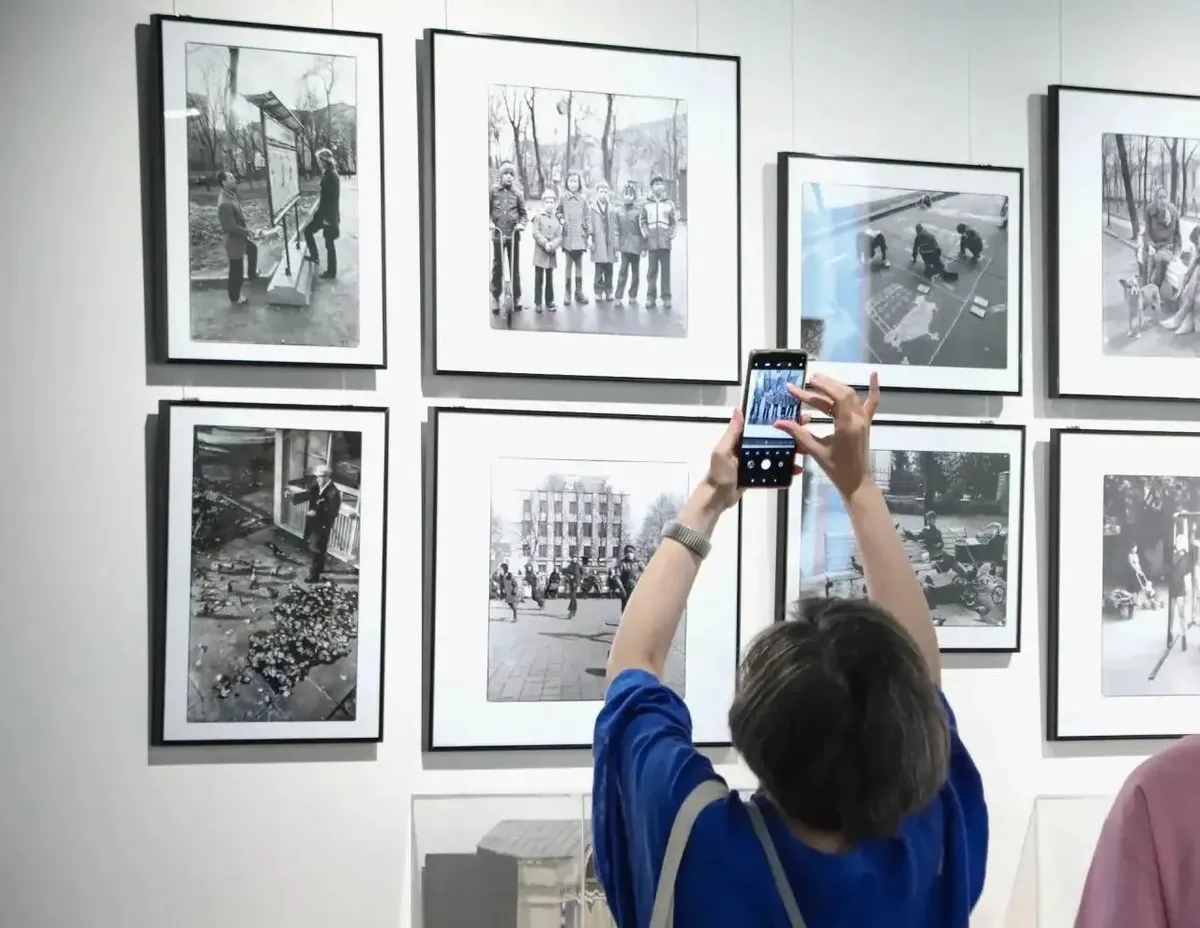
...The exhibition at the Moscow Time Foundation of black and white photographs by Igor Stomakhin and multi-colored “plasticine architecture” by artist Alexei Mikulin evoked completely different feelings in me.
Of course, that city cannot be called shining, glossy or cheerful. People on the street do not at all resemble cheerful builders of communism. They are different, indeed. But... these photographs show real Moscow air.
It seems to be such an ethereal, ephemeral substance, but so intelligible and tangible.
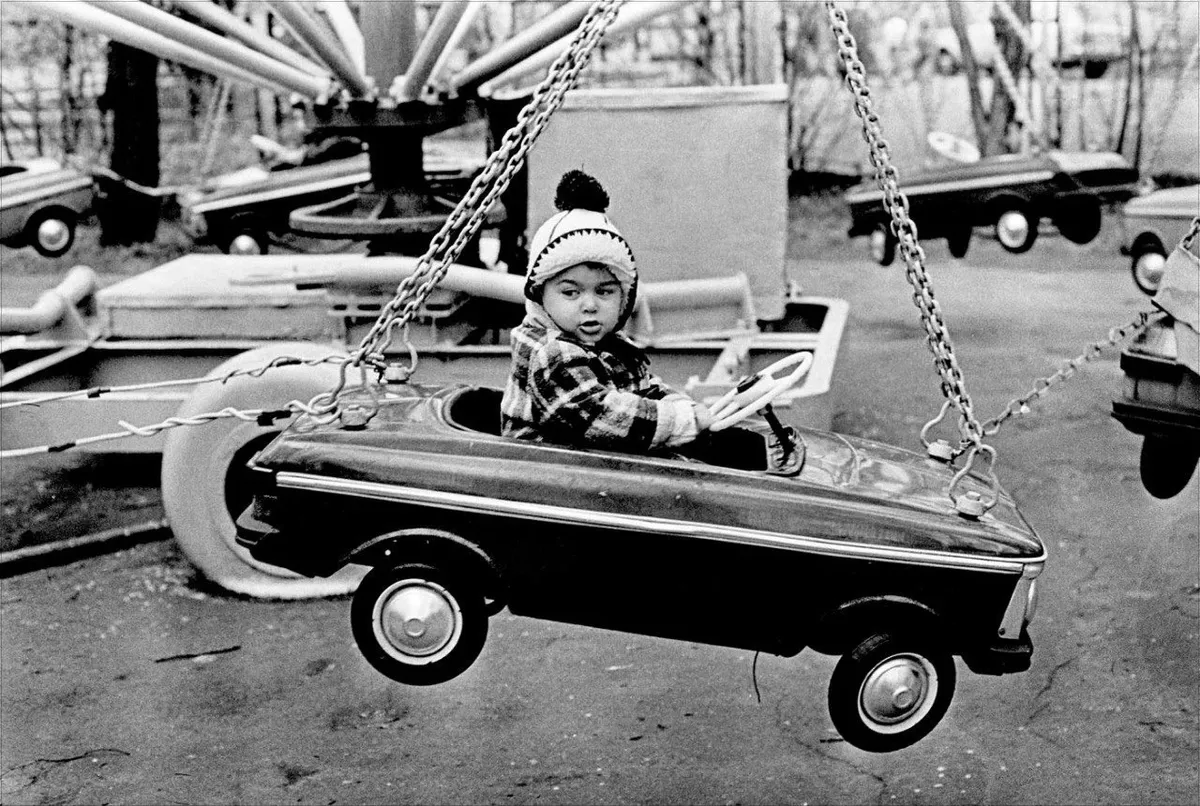
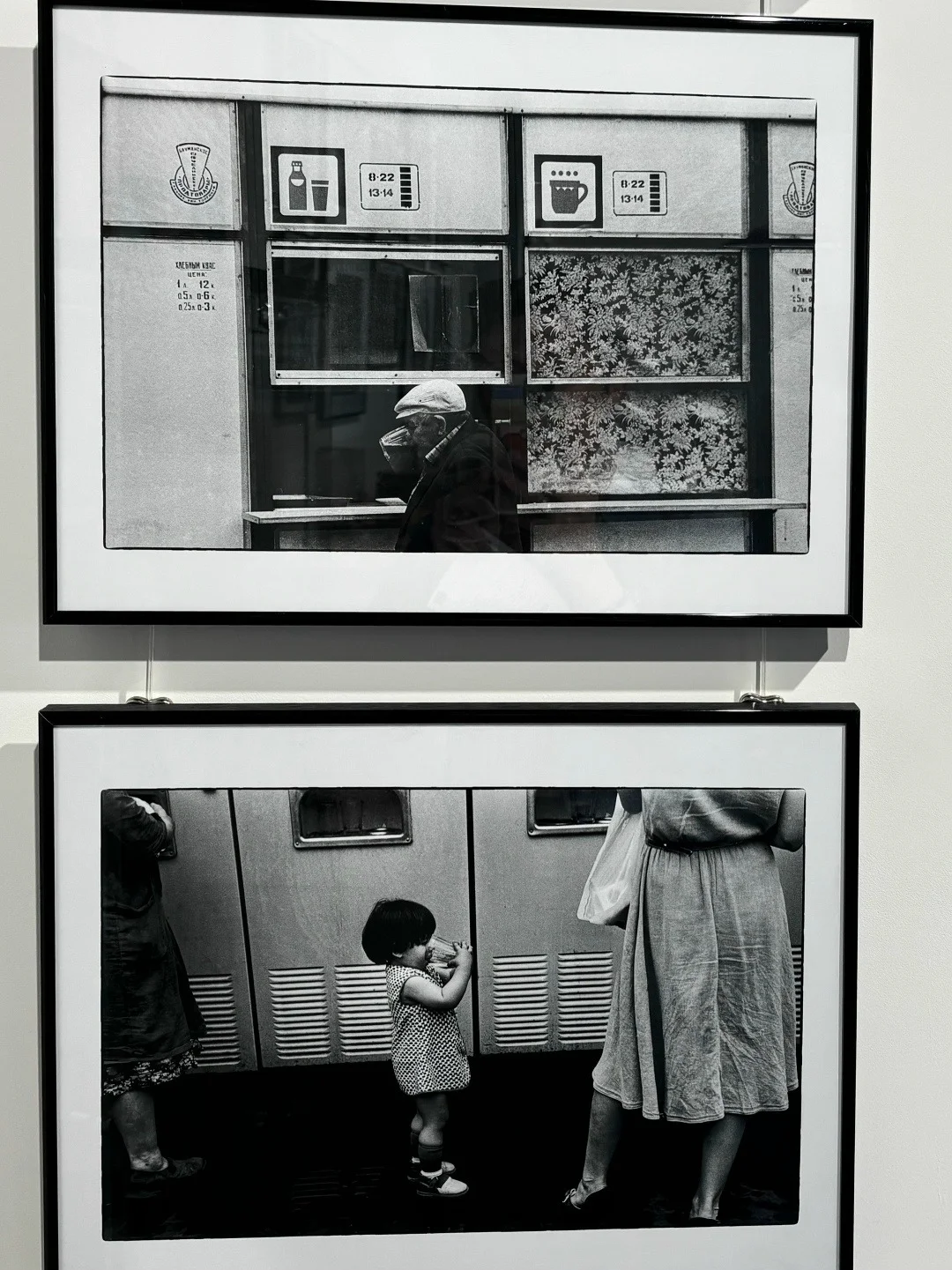
Here, for example, are children, in these terrible dresses and coats from “Children’s World”, in rubber boots. Here is the lock on the Yauza with river boats, not tourist boats, but workers cleaning the riverbeds and carrying cargo. Here are people in a long line right in the courtyard of a vegetable store near wooden boxes - probably standing for bananas. Here is a girl accepting glass containers. Here are Moscow hippies near the cafe near the Tourist store on Kirova Street. Here are the bathroom scales in Gorky Park. Pay ten kopecks, weigh yourself. Here is a woman selling, or rather renting, empty glasses from soda machines near the Ploshchad Revolyutsii metro station. Communal kitchen. Rows of saucepans on nails, an old gas stove. And again the air - Moscow spring and autumn, boulevards and gateways, ponds and parks.
The time of the 80s, which may seem torn, unkind, unsightly - but it is real, it envelops the city like a suspension of emotions - raw, anxious and desperately believing in the future.
Air. This Moscow air.
What's wrong with him now?
“I don’t know...” I said timidly. “But I kind of like it.”
“Well, you’re probably much younger than me,” my interlocutor finally answered (I was not younger than her at all). “So you have a different feeling.”
Coming out of the exhibition halls of the Moscow Time Foundation on Mayakovskaya, where all this was happening, I thought about this.
For some, this Moscow of the late 80s and early 90s has forever remained new . That is, a stranger. Unnatural, wrong. But for another viewer, this is exactly old Moscow. Amazing, poignant, almost forgotten.
What does it mean? New and old in this city sometimes imperceptibly change places, like racers on a bicycle track. And it is not always possible to follow this process.
We live on the second floor. It’s a bit low, of course, but what can you do? I love this Cheryomushki district, my home. Previously, on clear nights one could see the moon, sunsets, low five-story buildings surrounded by tall poplars. Now there is no more sky - here they are building one residential complex, here another, tall towers literally blocked out the sky for us. Well, maybe something is visible a little bit - just a tiny piece.
I understand that people will have good, comfortable apartments. This is the main thing. But living with air in the window and living without air in the window are completely different things.
The air was taken away - and somehow without asking.
Moscow (greater Moscow) is slowly turning into Beijing, as I saw it in 2013 or 2014 - and it feels like its entire landscape will consist of huge high-rise buildings. Moscow will rise into the sky, but from below this sky will be almost invisible.
However, we have good news in Cheryomushki.
It seemed to me that after the last hurricane there was only one duck left on the pond; she looked like a widow; she sat sadly on the parapet of the floating house and suffered. Suddenly - lo and behold! - there are two of them again, and they again hatched nine chicks! As in all previous years.
Everyone is happy - alcoholics hanging out on our pond in the morning, couples coming here around midnight, pensioners proudly marching in their victorious squad, fishermen with fishing rods, and dog walkers like me - ducks, we love you!
The tram is ringing, the already dry leaves of August are rustling, stinking markings are being applied to the asphalt, green apples and wild pears are falling from the trees into the grass in the courtyards, construction and repairs are all around, workers are covered in lime, but girls are walking around in light dresses - what can you do with it, with this Moscow!
...But there was somehow less air.
Where did he go?
I remember arguing with my friends - why are you so obsessed with these decorations, these “green sculptures”, these flower beds and fairs, these exhibition flowers?
Well, yes, I said, you remember those, our boulevards, empty, with autumn leaves, or March snow, on which, of all the entertainments, there were only newspaper stands (Pravda, Trud, Soviet Russia) and public toilets. There was an existential emptiness in them: frozen couples on benches, lonely passers-by, sadness, so what?
Should boulevards always be like this? Once, in order to understand the reason for the righteous anger of the “former Muscovites,” I walked specifically through Tverskoy, at the very beginning of this era of decoration. Gazebos, flower beds, ping-pong tables, pavilions selling either honey or souvenirs, an area for playing bowls (a French game that never took root in Moscow), endless children's attractions - indeed, in my Soviet times there was no such abundance of entertainment on the boulevards...
But is this the new Moscow? In the 40-60s, on the boulevards they sold ice cream and soda in glass cones, offered to measure the “strength of impact,” weigh on scales, and play chess and dominoes. There were also summer stages. Orchestras played. I saw these photographs myself.
The “old” in Moscow has become new again.
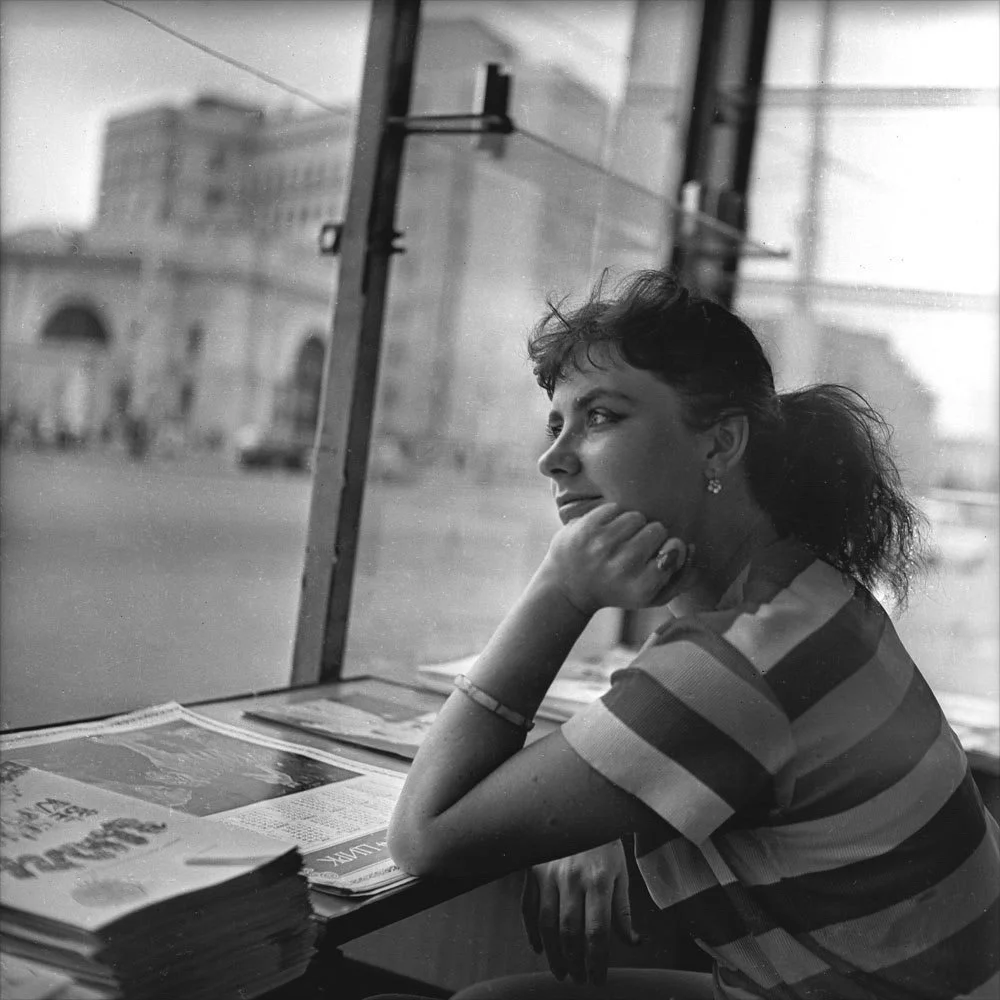
…Reflecting on that conversation at Stomakhin’s exhibition, I suddenly realized what kind of exhibition that woman would definitely like. A few years ago at the Museum of Moscow there was a retrospective of photographs by Nikolai Rakhmanov: the Brezhnev era in all its splendor - wide streets, beautiful new avenues, a neatly dressed crowd, bright colors, familiar Soviet slogans, very complex technical panoramic views of the city, monuments of “Soviet modernism”, as they now say: Luzhniki, TASS, the Rossiya Hotel, a monument to Gagarin, in general - the capital of our homeland, hero city Moscow.
And even “street scenes” took place. Well, there are two girls in short skirts, laughing. Here is a girl pushing her little brother in a stroller. Well, I don’t remember anything else. Such “beauty,” as they say, is in the endless proud architecture of socialism, in the endless glass buildings and straight lines.
Those photographs could easily have been sent to a classmate in Boston, where she has lived for forty years. Moscow before perestroika. Until the moment when this air of change began to be felt in her. Which still makes many physically nauseous.
Sometimes it seems to me that this Brezhnev-Andropov Moscow, a Moscow without rallies and hippies, heavily combed and even slightly retouched, as in Rakhmanov’s photographs, is the ideal of the current architects of the “Moscow miracle”. That we are being led there - “back to the future.”
But isn't this a fallacy? Sometimes it seems that the true matrix of today's Moscow is not there at all. Not in that era.
Here I am reading...
“Not the entire life of a Soviet person in those years passed between the entrance of a factory and a column of marching demonstrators, as Soviet propaganda depicted it and as anti-Soviet propaganda still depicts,” writes Sergei Belyakov in the book “Parisian Boys in Stalinist Moscow,” dedicated to the fate of Marina Tsvetaeva’s son Georgy Efron (Moore). Let’s leave the expression “anti-Soviet propaganda” on the author’s conscience and move on: “Even in the pre-war years, life went on as usual. Women tried to dress beautifully and please men. Men wanted to please women. Balls were held every Tuesday in the dance hall at the luxurious Moscow Hotel. Announcements about balls were invitingly decorated with the words: “Competitions. Shows... Flowers. Confetti. Serpentine." They opened a dance school there and recruited new groups for classes on Sundays - from seven to ten in the evening. The hotel's restaurants and cafes invited “a good rest, a fun time and a delicious meal.” The central restaurant was open until four in the morning. Jazz orchestras played in many restaurants. Jazz reigned then on the Moscow stage.
At the Bolshoi Theater they performed “The Queen of Spades”, at the Operetta Theater - “Sylva”, at the Moscow Art Theater - “Tartuffe”, at the Moscow State Theater named after Nemirovich-Danchenko - “Pericola”... At the House of Unions there was an evening of Jewish humor with the participation of Solomon Mikhoels and Mikhail Romm. On Mondays the theaters were closed, but if not the nightlife, then the evening life continued. In the premises of the Variety and Miniature Theater (on Gorky Street, building 5), the most popular jazz of Tsfatsman played, and verse singer Ilya Nabatov performed. If you had no money or no one to go to the theater or concert with, you could simply wander along Tverskoy, as Moore did on April 20, 1940, and April 30, and May 1: “Moscow has become prettier in the spring. Women have become more beautiful, more interesting.”
Let me clarify once again what year Georgy Efron’s diary is about – 1940.
In a year, Marina Tsvetaeva will die of her own free will, and four years later Moore will die at the front.
“Stalin's houses drive me crazy. Stalin’s houses are driving me crazy,” as the Central Russian Upland group sang in the 80s. A brilliant line, albeit as simple as a moo.
“For Tsvetaeva, this new Moscow - without bushes, without trees, but with numerous cars - was simply frightening. According to her biographer Maria Belkina, Marina Ivanovna could not stand the “gray asphalt wasteland” of Vosstaniya (Kudrinskaya) Square: “When she had to come to us alone, without Moore, we usually met her on the corner of Povarskaya or Herzen. <…>. And when we took her across the square, she convulsively clung to her hand, then almost starting to run, then suddenly stopping dead in her tracks in the most inappropriate place. It seemed to her that all the cars were rushing towards her. But Tsvetaeva came to Moscow not from a remote village, but from Paris, one of the largest metropolises in the world.”
I would like to continue quoting Sergei Belyakov, his “documentary novel” about Moore’s life in that pre-war Moscow - about the brilliant concerts at the Philharmonic, which he adored, about cafes and restaurants that were quite accessible even to a schoolchild, about a hundred varieties of ice cream, of course, how could he live without him, about parks and used bookstores - about that carefree, sincerely joyful, cheerfully noisy Moscow that opened up to him then and which he loved it very much.
All this is written so vividly and vividly that I want to understand the nature of this sensation.
And nature is twofold. On the one hand, speaking objectively, today’s Moscow, in its layout, mentality and even everyday habits, was born in many ways precisely in those years. On the other hand, when reading these pages, the following feeling arises: Moscow of that time literally traded in carelessness, “lightness of being,” as a commodity. Piece by piece and by weight, in slices and “pieces”. For what?
Well, ask her... She won’t answer.
For the third year in a row, the Theater Boulevard festival is being held in Moscow. I have a priori good attitude towards him, I love street theater, I especially remember last year’s performances at Chistye Prudy by a group with the strange name “Pukh i Prah”. It was a real mystery, something very similar to magic - the performance was called “Prickly Fluff”. By the way, my friend, the poet German Lukomnikov, took part in it.
“The crowd gradually accumulated, tension grew, trying to squeeze into the front rows, I saw strangely dressed people playing strange music, I remember the words of the chorus: “Pray and repent, pray and repent, pray and repent, Baby and Carlson.”
Following the prologue, a little witchy and frightening, there was a procession of “angels” with large downy wings, “almost like Polunin’s,” and musicians of a huge brass band,” I wrote then, a year ago.
But when I came to the festival this year, I didn’t find anything similar. There was almost no street theater as such. The only exception was a group called “Rap Theater”; in a week they taught plastic arts, singing and collective movement to everyone, right from the boulevard, and staged a wonderful thing - a rap opera based on the lyrics of “The Tale of Igor’s Campaign”.
...But mostly the speakers were professionals. I walked past the site near the Chistye Prudy metro station, where arias from operettas were performed almost every evening.
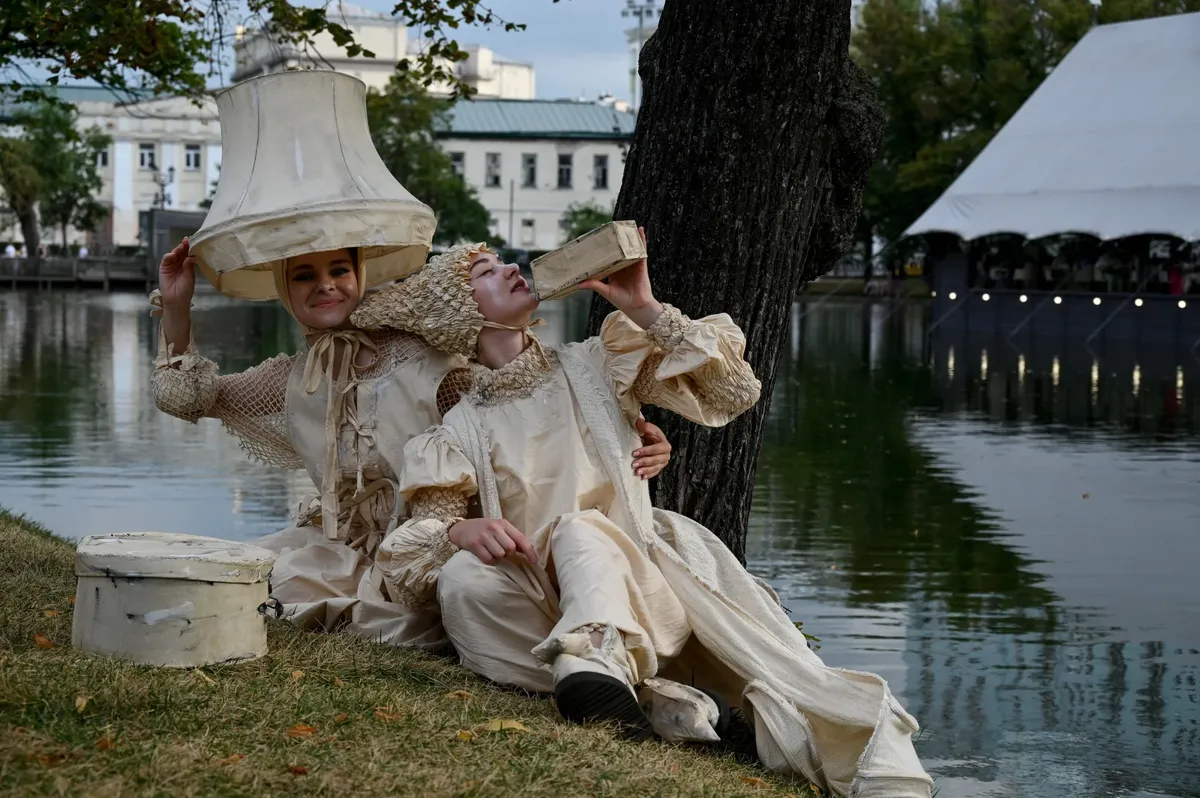
People gather at Teatralny Boulevard willingly, they come very early to take comfortable seats, they wait a long time for the performance, and they react well. And I understand them - I want to become a participant in the event, to feel involved in the action, in improvisation, in what happens only here and now - be it Chinese acrobatics, a performance of a live orchestra with music from Charlie Chaplin’s films, operetta...
"Good evening!" - the presenter said joyfully.
Adult men and women in pioneer ties came marching onto the stage and sang in chorus: “The cheerful song makes your heart feel lighter! She never lets you get bored...” The people listened attentively. Many smiled. “And the villages love the song... And the big cities love the song.”
Alas, there is less air on Teatralny Boulevard, in my opinion.
Well, because... it’s not easy on the heart. In fact. Whichever way you look at it.
If you get involved in a dispute about old and new Moscow, you will not emerge from there, from this viscous fog of arguments and arguments. How many passions were in full swing, for example, about the new marking system for the metro map - are these numbers, these floor signs, this emphasis on the color of a particular line needed? And now everyone has gotten used to it, not even a year has passed. And it seems so simple and natural - when the transition sign is right under your feet and the two “Oktyabrskaya” signs are marked in different colors.
It is foolish to argue with the fact that Moscow, under Mayor Sobyanin, has experienced an entire transport revolution (hundreds of new arteries, stations, gigantic, newly created infrastructure, very important for residents), a revolution of digital services, a revolution of housing construction, healthcare, and this, of course, will forever remain in history.
City residents always strongly dislike something in the actions of city authorities - and here, too, you don’t have to look far for examples: the notorious “Sobyanin tiles”, dangerous for pedestrians in the cold months, a new drainage system that has more than once led to natural disasters and transport collapses, months-long queues for specialists and medical services in the same healthcare, but the main thing is the attack of builders on the usual recreation areas: a favorite ravine, a forest, a public garden, a park - and if earlier residents still resisted, went on pickets, demolished fences, wrote collective letters, now everyone understood - it was useless. Everything is resolved without them.
In Moscow, many beautiful old mansions, estates, architectural monuments are being restored and updated, which you can read about right in the metro on special monitors in the cars - but... But more than one and a half thousand monuments were deprived of their protective status a year ago, and now their demolition does not require special approval - and this is also a reality.
Old Moscow (and a very old one at that) again risks turning into a new one - in the literal sense, when “false teeth” of new architecture appear inside the old buildings, in the very center. Yes, here is my house in Cheryomushki - it seems to be still completely new, it suddenly became old and underwent major renovations, they decided to renovate the facade, the house was covered with scaffolding. As I say, here the old and the new change places all the time.
However, let professional analysts discuss the era of Mayor Sobyanin with facts and figures. I’m talking about something else - about the air of this time, the air of Moscow, an ethereal and almost, I repeat, imperceptible concept.
...I walk around Moscow, to be honest, as if I had been undermined.
I come up with routes, study the alleys I’ve studied for a long time, peer into the houses. Almost every day.
For some reason, the feeling that I could lose Moscow forever appeared in me. Maybe this is the reason. Or maybe in something else.
I feel how Moscow flows out , how content and soul disappear inside its usual form, how it turns into dust. Not completely, of course. But still I feel it somehow very acutely.
Of course, I wouldn’t want it to disappear completely, and the feeling itself is completely subjective. But it is there. For me, “Moscow within itself” is a city that is always alive, independent, and free. And eternal. Such a subtle, elusive feeling. And now it gradually disappears...
I remember how it turned out to be such a day in Moscow - the sun through continuous and thin clouds, and this weather phenomenon: as if everything around was drenched in silver. Прошел дождь, я вышел на Профсоюзную улицу и обалдел, настолько ясным было оно, это сияние, исходящее от города, от асфальта, от домов, от неба, и оно было слитным, как будто кто-то включил излучатель.
Выдохнул, оглянулся.
Многие останавливались и, прищурясь, как и я, тоже смотрели в перспективу — туда, где чуть поднимается наша улица на Беляевский холм, к небу.
Какой-то фотограф, любитель прекрасного, подсуетился, поставил штатив, камеру и пытался поймать самый лучший кадр.
Какая-то вновь «украденная» радость и в то же время некий знак, данный нам в утешение и в назидание — живите как люди!
Недавно обнаружил храм, в котором еще не был, — всех святых на Кулишках в Малом Трехсвятительском переулке. Это совсем рядом с Хитровской площадью. Храм очень интересный, древний, да и всё вокруг — летним вечером — показалось поразительным каким-то: тихим, ласковым, уютным, в проулке между домами, в старом проходном дворе сидит молодежь на ступеньках, шум голосов, звон бокалов. Beauty.
Вот он, московский воздух!
Воздух новой Москвы….
Конечно, я бы и сам не прочь купить кусочек этой беззаботности, хоть самый маленький. Но, наверное, в моем возрасте и в моей ситуации мне это просто «не по карману» (тут не про деньги).
Но мой вопрос к этой новой московской беззаботности — он, собственно, в чем? В том, что всю ее как бы окружает такой невесомый стеклянный шар, зеркальная сфера. И что есть ощущение, что она вот-вот разобьется.
Лев Каневский
This material was published in the sixth issue of the magazine "NO". You can buy it in the online store of our partners.