
Translated material
Right to click "no"
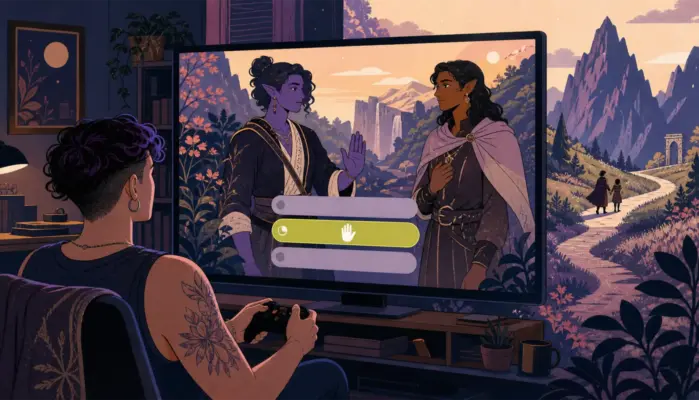
A queer character can be drawn, voiced, put on the cover - and at the same time not allow the player to experience an ounce of freedom. The game reveals its values not when a rainbow flag appears on the wall, but when the system asks: what do you want, who can you refuse, and whether the world accepts the consequences of your choice.
A representation that stands still
Every August, the gaming industry shows us the future again. At the presentations, new worlds, heroes, appearance editors and promises are flashed that now the player will be able to become anyone. In 2026, gamescom takes place again at the end of August in Cologne , and my question for the next showcase of promises is still the same: which of what is shown will turn out to be the rules of the game, and which will be decoration?
I've been working with narrative and stories most of my life, so I think of story as a choice machine. In a movie, a character can say “no,” but the viewer can only watch. In a game, refusal should exist as an action: understandable, accessible, not hidden behind a humiliating remark and not punished by the loss of half the content.
This is where queer representation becomes lived experience. Not in the companion’s biography, which can be read optionally, but in what kind of relationship the system generally considers possible. Can the hero flirt without commitment? Stop the scene? Maintain friendship after rejection? Name yourself? Change your mind? To be desired without becoming a reward?
The very appearance of a queer character in the game answers the question “who is visible here.” The mechanics are much more difficult: “who has subjectivity here.”
A choice is not equal to a list of options
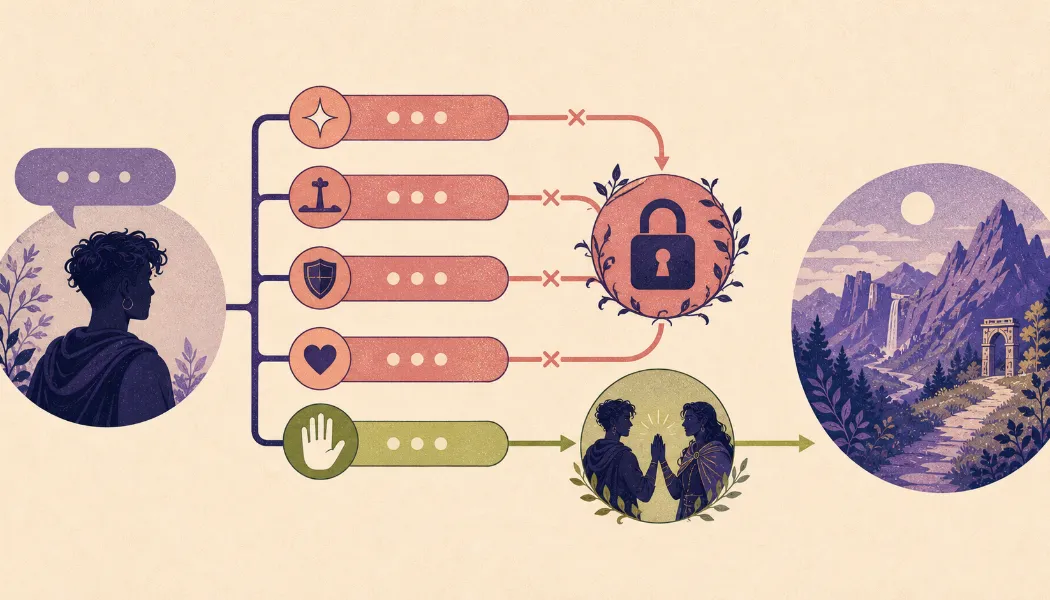
Games love to boast about the number of solutions: five lines of dialogue, eight novels, dozens of endings. But buttons by themselves do not guarantee anything. If four answers lead to the same reaction, and the fifth exists only as rudeness, freedom remains only in words.
Researchers of game mechanics of consent suggest looking not only at the content of scenes, but also at how the game distributes power between participants: whether consent can be requested, given, withdrawn, discussed boundaries - and see that the other character is also able to choose. Work on the design of consent in games views mechanics as a way to model negotiation rather than as a one-time checkbox.
And this works far beyond sex scenes. There is agreement in accepting a companion into the team, in reading someone else's memory, in changing appearance, in touch, in public disclosure of a secret. When a game automatically treats the player's curiosity as the hero's permission, it teaches one model of power. When he allows you to stop and recognizes stopping as a meaningful decision, it’s completely different.
Queer experiences are particularly sensitive to this difference. Too many real-life social scenarios are built on the assumption that once you have entered a space, revealed your sexuality, started flirting, or agreed to one form of intimacy, further consent is often, unfortunately, implied. The game can reproduce this scenario. Or it can give you a rare feeling: the border does not require justification.
Romantic slot machine
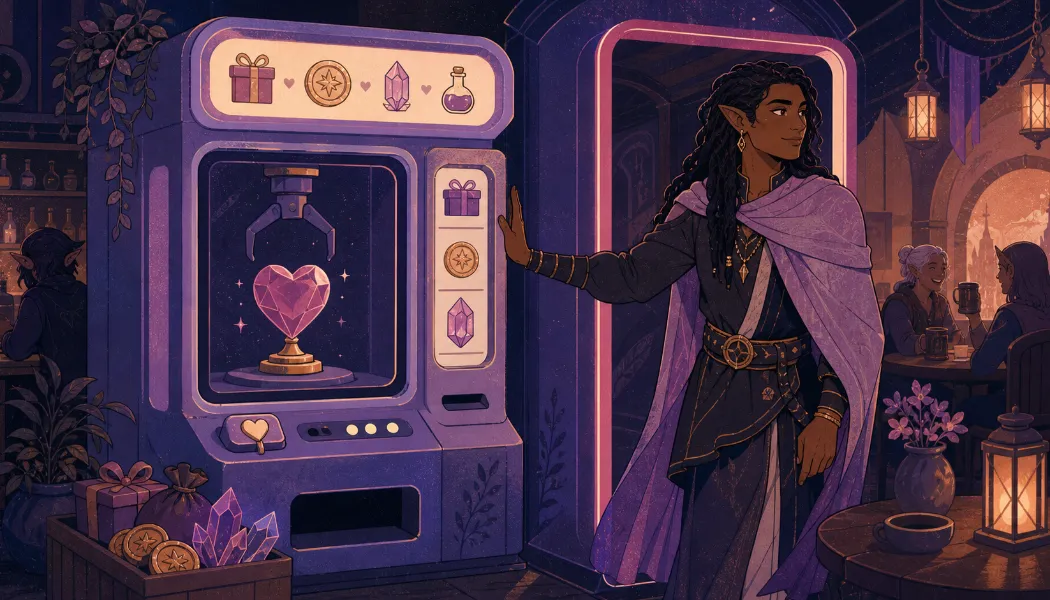
Classic gaming romance is designed like a loyalty machine: choose the right lines, give the right gifts, complete personal quests - and the character will give out a scene of intimacy. The player understands that this is a system, but an unsuccessful design turns the other character literally into a vending machine: accumulate points - get love.
Modern RPGs have complicated this scheme, but its traces have not gone away. The Official Romance Guide to Dragon Age: The Veilguard explains: Companions are canonically pansexual and can form relationships with Rook regardless of his gender, race, class, or faction; Until the moment of commitment, the player is free to explore several connections, and then the choice secures one of them. It even got its own term: "playersexual" - that is, the NPC's identity is such that the available companions want the player character.
This is both an expansion of freedom and a reason to take a closer look at architecture. On the one hand, the availability of all romances eliminates the situation when a gay player from the entire team was left with one NPC for a romantic line “on a residual basis.” But the final “lock” still communicates: the real romantic ending is the couple, other possibilities are closed. This is not an accusation that a particular game is wrong. This is an example of how even an inclusive cast of characters can end up in the familiar monogamous "default" form.
However, polyamorous mechanics would not be automatically progressive. If it turns companions into a collection and does not leave them their own boundaries, it is simply an expanded inventory or a trophy panel. What is important is not the maximum availability of bodies, but the reciprocity and meaningfulness of choice.
Refusal, after which the world remains
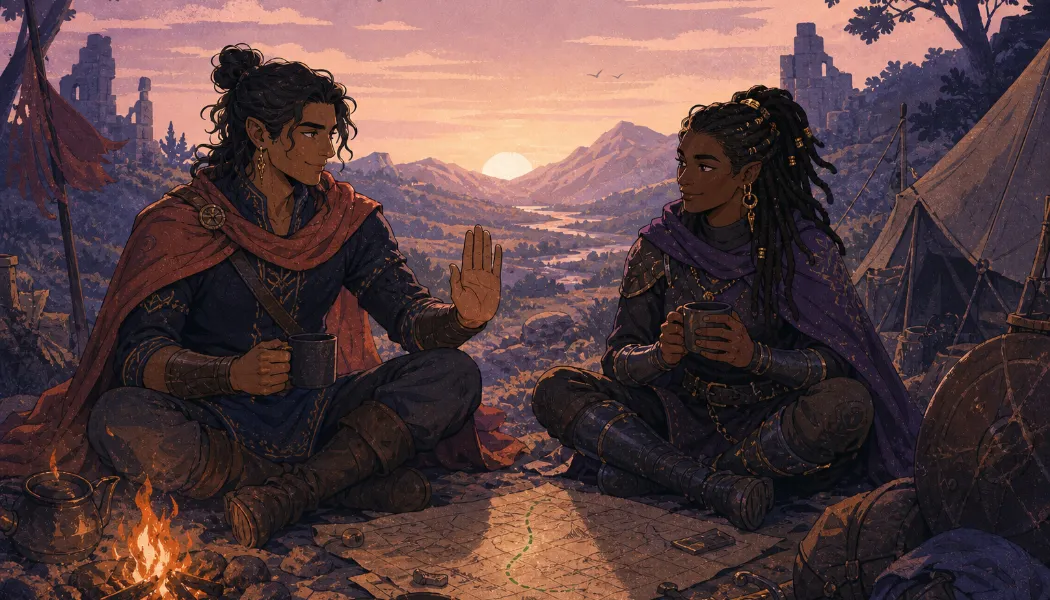
The most definitive test of a video game's romance system starts not with a confession, but with a "no."
What happens after a refusal? Does a character disappear from the story? Is friendship going to zero? A player loses an important quest? Do you have to choose between unwanted intimacy and a full-fledged passage? Is it possible to say “I care about you, but I don’t want romance” - and get a special friendly line, and not a cut-down version of the content?
In reality, queer people often learn to recognize friendliness, flirtation, and safety in the face of uncertainty. The game does not have to be a textbook of correct behavior, but it always acts as a kind of rehearsal for a real model of relationships. If any warm response quietly includes an affair, and the only way out of it is through cruelty, the system states: emotional intimacy between the characters must either necessarily become sex or break off.
I'm much more interested in games where friendship is not a consolation prize. Where a platonic connection has its own scenes, risks, rituals and ending. Where after refusal the character does not become empty. This is especially important for asexual and aromantic players - but it frees everyone: relationships are no longer built on a ladder, at the top of which there is always sex.

When another character is also a subject
The game often gives freedom only to the main character. Companions wait until they are chosen and freeze their personal lives after refusal. The official description of romances in The Veilguard is notable in that some companions can form relationships with each other if Rook did not choose them. A small but important shift: the world does not stop wanting and living its life when the camera following the player is turned away and not facing the NPC.
NPC subjectivity is the ability to have tastes, doubt, set boundaries, and get on with life. But here design comes into conflict with the fantasy of control. The player is used to it: all the content is created for him and must open if he completes it correctly. Someone else's “no” is perceived as a locked door, and not as a feature of the living world.
Queer representation doesn't have to satisfy every player. A gay character may not be interested in the hero. A trans character shouldn't have to have their gender explained to them by default. A bisexual companion is not required to confirm his orientation with a list of former partners - but also should not become “anyone under the player” without his own history. Accessibility and autonomy exist in tension, and that's what makes them interesting.
Good game design doesn't relieve this tension. It makes the rules clear and doesn't turn minorities into exotic attractions.
The character on the screen and the person at the screen
GLAAD's first report on the games industry documented the gap between the visible presence of LGBTQ+ gamers and the tiny share of games with visible queer content on major digital stores. The authors emphasize that games are important not only as entertainment, but also as a space of self-discovery and connection. However, the quantitative deficit is only the first half of the task.
You could add ten queer characters and leave the player with only two roles: approve of them or be the villain. This design turns the person at the screen into an ally being examined. It does not allow you to experience your own ambiguity, fear, mistake, change of language, different forms of desire.
The opposite extreme is to believe that any traumatic option is useful because it is “realistic.” Facing homophobia can be part of a strong story, but the player must understand the genre and control at least the entry into a heavy scene. A sudden outing for the sake of a dramatic turn is not made deeper by the fact that the authors call it “bold.”
It should also be noted that choice only works in conjunction with awareness. It is not necessary to spoil the plot - it is enough to indicate the tone, give content settings, allow you to skip an intimate scene without losing relationships or content. In this case, it would be an honest dialogue between history and man.
Queerness as a verb
The tabletop role-playing game Thirsty Sword Lesbians explicitly calls itself a game for creating queer stories with friends. For me, what is important here is not so much a specific set of identities as the verb “to create.” Queerness arises in the very way we negotiate together—about peace, desires, conflicts.
It’s more difficult with video games: most of the possibilities are fixed by the developers in advance. But even there you can design not only the presentation, but also the action. Body editor, not tied to voice and pronouns. A novel that doesn't check the hero's gender against an acceptance chart. Dialogue where you can ask not to reveal the past. Mechanics of the selected family. The ability to change your name and not be punished by the plot for “inconsistency.”
This doesn't mean that every game has to include all the options at once. Limitation is also an artistic tool. It is important that the authors understand: they are not limiting the list of available cosmetics, but the space of possible gaming experience.
Queerness in a game is not just what a character is presented as. This is what he can do with his identity and relationships.
Four questions about queerness for the game
When I look at a new game, I have four questions to ask.
- First: what can I choose? Not how many buttons, but what forms of life the system is generally capable of offering.
- Second: what can I refuse - without humiliation, fines and without losing the full gaming experience?
- Third: Do the other characters have a will of their own, or do they only exist to validate mine?
- Fourth: does the world remember the decision and change after it?
If there is a queer character on screen, but not a single question has a good answer, we have a set piece. It can be pleasant and even important, but do not confuse appearances with freedom.
I need queer characters. I'm glad to see them in big games - for decades the industry pretended that its audience was different. But what I need even more are the queer mechanics: the right to name yourself, the right to change your mind, the right to be chosen without being available, the right to click “no” and discover that the story doesn’t end there.
Sasha Tumanov.