
Translated material
Mikhail Fichtengolts. Criminal opera
Even in the lazy August season, when the intelligentsia is in the last days on his favorite dachas, the Russian premiere of Salieri’s opera was appreciated: in the Ostankino Theater, there was nowhere to fall on the apple on both Danaid's performances. The audience clearly intrigued the opus of the great poisoner, with a little delay, who had ripened to his anniversary - 250 years since his birth. They decided to celebrate the anniversary one of the most gloomy operator operator operator, the main theme of which (a coincidence is or an accident?) Is murder.
 The plot of the opera, as you can guess from its name, not from funny. Fifty daughters of Danae and fifty sons of his sworn enemy Egypt should be combined in order to put an end to many years of enmity. But Danai pushes his many daughters on a terrible thing - each of them pierces the heart of the wife with a dagger on the first wedding night. Only the eldest of Danaid, Hypermneter, saves his narrowed Lensei and thereby incorporates the wrath of his father and sisters. Of course, in the opera of the gallant century there were murders, but in order to kill like that and wholesale - this is too much even for the views of the opera scene. The epic ends with the not at all a love duet of the saved newlyweds; The curtain falls under the groans of the criminal daughters of Danae, tormented by the furies in the underworld ... For some reason unknown to us, the operating opera of classicism at the end of the century gave the roll towards romantic hopelessness: six years after Danaid, Joseph Izeph, the Hands of the Hands of his last opera Orpheus, and will finally destroy himself and finally destroy himself Vacchanes.
At one time, the opera was a noisy success, in our century she earned a modest but bright stage fate. For the first time, the Danaids recalled, as they say, thanks to the Montserrat Kabalier , who was looking for a virtuoso, not yet a hasty role. (By the way, it is the great primadonns that we owe the resurrection of many masterpieces: Joan Saserland opened the Gendelev’s “Alchina” to the world, and the great Maria Kallas - the aforementioned opera Haydna Orpheus and Eurydice .) In the late 80s, Danaid was recorded by the English company Emi Classics with the participation of a brilliant English woman Margaret Marshall . Now the turn of Russian musicians has come.
In relation to the current performers, for some reason, I also want to apply the word "crime", probably because they reacted to the opera in the most unrequited way. To begin with, the audience was inflated: it was not a stage production, as promised, but a trivial concert performance. The director and choreographer of the production of Natalya Kaydanovskaya, planting singers on stools, limited herself to miserable ballet diverse diversification performed by meekly dressed young men and girls, who from time to time appeared in front of the public in short fur coats and jackets (it was cold in the Ostankino Theater). The impromptu orchestra, composed of half of conservative students, was desperately hacking, regularly "traveling" with the singers. However, there are no bad orchestras, there are bad conductors. This time, Alexei Semenov, known for the venerable public as an organist, and as a conductor, which was like skiing as a conductor, stood behind the remote control. More than a modest choir (where are you, numerous brides and grooms?) Figus at Semenov and, judging by the singing, clearly did not understand his desires and movements. The most adequate musical text turned out to be soloists: the cold Svetlana Sumacheva (Hypermnestra) and Alexei Kosarev (Linsey). They more or less successfully overcome all vocal difficulties and complex relationships with relatives - and remained alive. This sad picture, where there is almost no place for professionalism, once again leads to thought that we can’t play old music and sing yet. Nevertheless, there was one person who saved this helpless performance from complete failure.
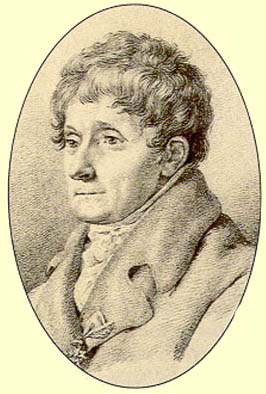
This man is Antonio Salieri , who composed wonderful inspired music. The lyrical monologues of heroes, framed by dynamic and solemn choirs, are captured two hundred years later by their noble pathos and purity of feeling. Salieri’s music will remind professionals Gluck , an opera reformer, and ordinary people ... - Mozart , with his sincerity and a cult of beauty. The fifth French opera made according to the style of the Danaids are theatrical in the best sense of the word and require a greater scene and a large audience. But most of all, Danaya does not get good musicians, without whom the pompous definition of the Russian premiere Antonio Salieri is an empty phrase.