
Translated material
Ilya Lepikhov. Difficult for young people in the village
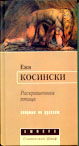 Where
Where
In Poland.
When
Between 1939 and 1945.
About whom
The boy, who, by the beginning of the Nazi occupation, is barely nine years old, is separated from his family and wandering around the Western lands of the former Polish state. He is a dark -skinned brunette, so he is in danger of being given to the Germans as a Jew or gypsies.
Why, or name
“Once they caught a large raven, whose wings were painted red, the chest was green, and the tail in blue. When a flock of ravens appeared above the hut, we released ... a bird to the will. As soon as the raven flew up to the pack, as a mortal battle began ... The painted raven fell with a stone on the freshly spanned earth ... His eyes were blurred, blood flowed along the painted feathers .
Unlike a thief about n, they do not fly in flocks .
This is such an unobtrusive allegory-in modern Russian, the “painted bird” should sound like a “white raven” or “Narcissus-Kamikadze”.
About what
Firstly, about the person, what is he really. According to the author of the "painted bird", his characteristic features are cruelty, anger, lust and mental limitation.
Secondly, about humanism. So live, how evil and disgusting Ukrainians live (Belarusians? - The book is not said about this for sure), it is impossible and pointless. It’s the other way to the contrary: in cleanliness, warmth and electricity. So, beloved brethren, we will rejoice at packs and packs ...
Thirdly, about ideas. The boy consistently experiences the temptation of paganism, Nazism, Catholicism, demon, socialism, banditry, and not much clinging to anything.
Artistic tasks
The objective narrative, which aims to reconstruct elementary - it would be more accurate to say the "preliter" in the classical sense of this term - psychology.
The quality of the translation
A hard four with a minus. Another “painted bird” hangs on the network - no better.
Genre
Pseudobiographic novel, a kind of village fantasy.
The closest predecessors
Gorky, Kuprin, Platonov, interwar Polish novelism. The epigraph to the novel is a quote from Mayakovsky: "And only / God was gray -bearded, / that it is / animals / different breeds."
The main advantage
Pure movie generation. "Colored Bird" is a finished script.
The main drawback
Compositional imperfection. The plot is built according to a simple scheme: escape - acquaintance - humiliation - atrocities - revenge - escape. And so twenty times.
The brightest scene
Copying of a fourteen -year -old girl with a goat. In this case, "goats" is not a curse, but the most goat.
The best scene
The peasants make raids to the railway, where trains with prisoners pass, and collect photographs thrown out of the windows, trinkets, notes and other trifles from the railway embankment. In the village, they serve as an object of exchange.
Only shoes are removed from the corpses.
For whom
For those who have never seen a living Ukrainian (Belarusian) and does not at all clearly imagine what war, village and partisans are.
For Polish intellectuals who need to feel their superiority over neighbors from the east.
For you and me, so that we snort, spit, clapped their hands and denounced the gentry unbridledness.
Bottom line (ratings on a ten -point scale)
Inner drama 6.5
Composition 5.5
Household plausibility 7.0
Fiction 7.0
Ideology 7.5
Humor 2.0
Violence 8.5
Sex 7.5
Romance 6.5
Fig in pocket 9.0
Cultural background 8.0
Average rating 6.82
The age category is after 21 years.
Uf ...
And Kosinsky was connected with me with two memories. For the first time I heard him in the early nineties from the resident of the North American states, an artist and Sibarita, who left Moscow in the early eighties. The pantry of the art market remained, alas, impregnable strongholds, but is not lucky in business - he was lucky ... He got down with a girl from a family of Iranian emigrants, a family, we have a wealthy even by American standards.
The problems of the materiality for him since then not that they ceased to exist, but, let's say, have faded into the background. From now on, he did not work for sale, but exclusively for the soul. In order not to depend on his deobi, he was addicted to agriculture: he looked after hemp bushes, carefully planted in the front garden in front of the house, and for a small fee supplemented with an ecologically clean foolish of the faculty of Colombian University. Exceptional principles were a man, God forbid him health!
About Kosinsky, who by that time had already managed to put his hands on himself, the artist spoke enthusiastically. His works were recognized as a truly worthwhile product, and his death was completely and completely withdrawn from, using the official language of Soviet propaganda, suffocating the conditions of the bourgeois society.
I was intrigued.
The second memory is much shorter and, as it is called, converter, I watched Hal Eshby’s film “being there” (“gardener”), a film adaptation of Kosinsky’s book about a mentally ill person who, again we will use the Soviet cliches - large representatives of American financial and industrial capital are made by the president of the United States. It was made smart, evil and great.
I was humble.
And today, when some kind of very good graceful picture of overseas political battles begins to flicker on TV, the same quote from Kosinsky revolves in my head: the words that the outgoing president, who was already harnessed into the strap of the successor, the eccentric Shanxi, capable of talking only about the bushes and seedlings: "This wise man told me that Krona is free. Society blooms only on condition that it is fed by the roots of a healthy economy. ”
After the film of Kosinsky -Eshby, I seemed to be a good job to determine whose candidate - republican or democratic - will prevail in the next election: the one who looks more like Shanxi Sadovnik in the brilliant performance of Peter Sellers will win. In this sense, the chances of the mountain to win from the very beginning seemed very doubtful to me.
In a word, after "being there" as a reader, I was ready to forgive Kosinsky any extremes.
That's just a cattle - an obvious overkill. Well, God be with him.
According to one book, it is impossible to judge the features of the author’s manner of Kosinsky, but the installation of a “painted bird” is extremely close to the domestic tradition. It is difficult to say what is more here: games in “Russianness” in order to angry the faithful compatriots (which is still more likely), or gratitude to the great literature of the neighbors (which, alas, probably less), and yet. On the Gorky "childhood" in the text of the novel there is a direct reference; Write Kuprin your “oles” in thirty years - who knows if something similar would have come out from under his pen. But they are not, but, perhaps, Chekhov is the main character of Kosinsky. Direct correlation between the "painted bird" and, suppose, "men" or "bishop" no, yes, probably, it cannot be, but indirect - as many as you like.
There was no writer in Russian literature, who knew so brilliantly the true Russian life and at the same time as if this was forever ashamed of this knowledge as Chekhov was. The truth of the characters and the household credibility, for which Turgenev and Bunin, Goncharov and Aldans would give half of their skill, Chekhov seemed to disdain. Either they reminded him of an insignificant origin, or he knew better than ours, what was strong and disdained his abilities, but only occupied him (which, in particular, follows from the diaries of A. Suvorin close to him), mostly core-literary issues: ideology, philosophy, ethics.
The same is Kosinsky. In places, the “painted bird” is stingy and plausible to dizziness: “We found countless paper shreds, notebooks, calendars, family photos at the embankment and between the rails ... On the back of the photographs there were words of farewell, oaths and quotes from prayer prayer books, scratched by hands, clearly trembling from fear or movement of the train.” But the Kosin-Belletist seems to not trust his skill. He is not either the same as a freedom that suddenly erupted over his head, or he will produces himself harshly - but the narrative, which, in all, can become dense and rounded, like a frozen waxy bastard, crumbles and brushes.
From agricultural we will transfer to the field of industrial metaphor. That there is wax - a hive, a swarm, a construction site! By reading, the novel leaves the feeling of some strange engineering structure, which is entirely held on the complex system of the barely noticeable levers and counterweights. One has only to sway one of them, like the whole building collapses. So, do not touch, but it is better to move away and try to understand the principles of organizing the material, find out where this bird has the wings, so to speak.
By consideration, it turns out that, firstly, the wings grow from the back, and, secondly, the total wings are the total number of two pieces. Kosinsky writes two novels at once: household and psychological, for you and me and for the American reader, the one who is about the partisans, and about the war, and about Ukrainians with Belarusians - very approximately. In one of them, the villagers are jammed with vodka, waves with stakes, go behind the cattle, pierce the eyes of each other with tin spons and copulate to the blue of the loins.
Here, in all likelihood, it is necessary to look for the solving of the compositional imperfection of the “painted bird”, when a scene of violence is given in a couple of every everyday episode, and a little, and sometimes a lot of sex. In terms of the latter, Kosinsky is inventive and resourceful so that at some point it even begins to seem that for the sake of all this squash, groaning, dull blows and riverbed gaps in the plank ceilings, the novel was written. The way, according to Kosinsky, Belarusian (Ukrainian?) Peasants - animals, animals! - With their households, worthy of a separate xxx-site, and for fidelity and without any fear of mistake, one can attribute another X.
But in fact, sex is not sex at all, but, so to speak, in its purest form, a revealed psyche of local graceful places, the spirit of the time, minus; It is no coincidence that at some point in his wandering the main character is speechless - well, the pure "mirror" (Tarkovsky put Lema - and, who knows: read or at least he heard about Kosinsky?) - the implementation of a dopsychological, subsidiary, and the sublitative installation.
Is this not the secret of the Chekhov word, all these lengthy monologues, thoughts about Africa and clouds - written tables. Maybe this is not the words at all, but something that we are not yet able to give the name - gestures, touch, kissing a kiss, to bleeding lips? Naive, sweet time ...
However, for 1964, when a novel was written, a distrust of domesticism, especially in Poland, Lee, North America, is natural. There were so many previous thirty years that at some point nothing became of him except everyday life: neither a person, nor truth, nor the future. With sex in this sense is simpler.
The movement from reality, the common to the Atlantic literature of the middle of the century, at that time was slowed down on the sexual problem, taking a short respite on the way to secrets, as it, literature, thought, subconscious. Visions, hallucinations, going beyond consciousness - all this burst out later, after, when the flattened bodies with the dissected sternum, in which the word once beat, the back was already wrapped in the back and the last flabby heaviness was poured.
But all this will be a little later, but for now ... while the heroes of advanced writers went out of only the outskirts. They went out - and a step to the edge of the forest, burning his hands with a "comet", a hole in a can -can with a coal smoldering in moss, - an indispensable thing in those parts.