
Translated material
Andrey Kovalev. Swedish exhibition # 5
N.V. Danilievich. Baron Falz-Fein: the life of the Russian aristocrat. -M.: Fine Arts ", 2000.-232 p.; Circulation 5000 copies; ISBN 5-85200-381-6.
In essence, nothing bad can be said about the baron, except that he once traveled to the Berlin Olympics as a correspondent of the French newspaper. He really liked Hitler's show. For these innocent inclinations, the evil human rights activist Savik Schuster has already trampled in plenty of a poor aristocrat.
But in fact, there is also a pure fault of the baron before Russian culture. Of course, there is nothing pathological in the fact that the naive merchant of souvenirs from Liechtenstein gathered souvenirs from his historical homeland, where his ancestors-German ancestors once settled. It’s not even terrible that the Falz-Fayne spent the labor centimas earned on the Americans and the Japanese, and the fact that the interior of the second half of the 19th century turned out to be those treasures that should be returned to his homeland at any cost. And here, it would seem, there is nothing terrible - their Aivazovsky and in our museums there are enough. (Who did not have enough - let's draw more.) The worst thing is that the Falz -Fayne inspired his tastes with gullible ladies from the Gorbachevsky cultural Fund. And the delightfully bad taste of the baron as a result of a massive attack on the poor "new Russians" was implemented in the form of a modern Russian antique market, where soapy aivazes go for some fabulous money.
But the one who reads the composition of Natalia Danilievich, the personal spokesman of the baron, will not lose. The arrangement of historical jokes compiled with the proper fraction of love and delight, told by a rather boring old man who survived the entire twentieth century, will amuse not only professional posters in Russia, which we lost. The adventures of the European adventurer, dandy, Zhuira and the athlete are read much easier than it can be expected from the old emigrant loosened on the fate of Russia.
Quote: Yes, in his homeland he is unpretentious, never “snorts” unlike Russian emigrants who are always dissatisfied with something: bath towels are too small, toilet water is too hard, the air conditioning is noisy. This is true, but listening is unpleasant.
- Review in "NG"
- “Radio Liberty” ): “ Savik Schuster. You covered the“ black ”Olympics of this century, the Berlin Olympics. Eduard Falz- Fayne. I did not understand what you said?" Black "Olympics? .. Savik Shuster. " Black "because she was in the" black "Berlin, fascist Berlin. They were “black” in Italy, and there were “ brown ” Savik "Black-brown", or it, as it were ... Eduard Falz-Fayne.
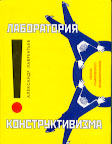
Alexander Lavrentiev. Laboratory of constructivism. - M.: Grant, 2000. - 256 p., Il.; The circulation is not indicated; ISBN 5-89135-150-1.
Alexander Lavrentiev is a grandson, or rather, the grandchildren of Alexander Rodchenko and Varvara Stepanova, the keeper of their extensive archive. In addition, he is a professional art critic, publisher and propagandist of the creative heritage of his famous ancestors. As a person is highly informed in purely esoteric objects, Lavrentiev was among those who created and elevated a special kind of epic text to the rank of standard, through which only one can narrate the mysterious and unknowable Russian avant -garde.
But now this epic can only satisfy the children of small ones. So there is nothing surprising in the fact that the reviewed book is not at all a treatise that needs to somehow prove his scientificity and sanity - this is the course read by the honored author in the polygraph (today - Moscow State University of Press).
The book has many very interesting, often rare pictures, but there is no systematic picture at all. And why is it to people who will mines their hard bread with one mouse movement? They already understand everything, it is enough for them to tell them that everything that is needed has already been invented. There is nothing surprising in the absence of a table of contents in the book. The table of contents, as is known to any minor layout, has no applied value. Therefore, it will remain forever unknown to whom the text of the book actually belongs to - Lavrentiev himself or Nikolai Besvonov, Dmitry Mordvintsev and Kirill Paramon, who expressed gratitude "for the texts of articles." Quite in the style of constructivists. Even a very low seal of the reviewed publication looks stylish. To make a good book is very difficult, everyone knows.
Quote: Likely, today the designer-artist uses fonts, ruler and vignettes from the computer’s memory, the artists of the 20s used finished elements of a typographic set of cash desk.
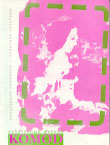
Loskod: cultural policy, cultural policy. # 9, August -October 2000. - Yekaterinburg, Ural Association of Young Arts. - 90 s.; circulation 500 copies.; ISBN 5-900474-21-6.
At first it seemed to me that in this issue there are no drawbacks of a rather periodic magazine. But with a more attentive examination, it turned out that the sweetest Yekaterinburg art historians Arseniy Sergeyev, Nail Alahverdieva and Elena Krikivitskaya nevertheless made one mistake (typos do not count, there are srylchens near Words and ordinary skirts, in skirts). The circulation has been declared only 500 copies. - This is a completely catastrophic and irreparable mistake that you can not cut down with an ax. There are actually a lot of us, and we all read the cultural magazine "Komod".
Moreover, it is remarkable that the "chest of drawers" finally got into people, received some money from the HCCI, and everyone was fine. It is remarkable that people from the outside decided to study the Moscow hunger. Not quite, of course, strangers, but little involved in the burdock internal showdowns of the Moscow art community. In Moscow, it is simply not customary to ask such trivial questions that the Yekaterinburgers posed. But since the question was posed, the Moscow ones answered the bazaars - both Viktor Misiano, Andrei Erofeev, and Marat Gelman, and Georgy Nikich, and Vladimir Ovcharenko, and Marina Perechikhina.
Naive questions received worthy answers. It turned out that Viktor Misiano, for example, was very poleved and now clearly opens against liberalism and demodernization of the post -Gorbachev type . (Vitya has always said something similar, but not so brightly expressed.) "Cultural processes are in the department of the expert community, and its function is to critically distance himself from globalized market and medial flows" ("reflecting object and art").
Ekaterina Dgo (“how we are with cultural policy”) also arrived a lot in terms of radicalism. She scolds “new passive” (especially newspaper critics), and “new active” in the person of Helman and Sviblova, and “new technologists” , that is, Nikich and Sergei Zuev. "All of them are" driven out by ", but they do not know, do not develop an attitude. And politics is in this, otherwise it is just an unconscious reflex." I really love Katya. She is pretty and funny, she so wants to reach everything in everything. More pretty - the fact that she gets this business !!!
Indeed, Georgy Nikich ("Forum of Public Initiatives: New Technology") says something very sophisticated, but vague, which is why it becomes a little terribly. Zuev also speaks terrible things that are impossible to quote.
Marat Gelman ("Cultural Machine") traditionally grumbles on the Moscow mayor, uses words "creative" that are not understandable to my meager mind and hopes that his GIF.ru project will make it possible to "describe the subject of cultural policy, discuss its strategy and identify the main participants in the process outside the state machine." The business is good, but, as always, it is expressed in the language of this very shaving machine.
But the most important thing is that the right people were still found - they remembered the Bogoblars Avdey Ter -Oganyan and Oleg Mavromati, who suffered from the clericals and subjected to persecution "for inciting national growth." Katya and Vitya are right: the times have come such that the discussion aloud - that is, with a circulation of more than 500 copies. - Such questions are not subject to. In fact, the times have come dreary, Komodov (not to be confused with the reign of the emperor from the Hollywood film "Gladiator", whom high -butary translators call "comet").
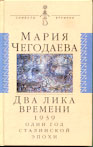
Maria Certaeva. Two faces of time. 1939: One year of the Stalin era.- M.: Agraf, 2000 (series "Symbols of Time"). - 336 s.; circulation of 2000 copies; ISBN 5-7784-0140s.
About the "worker and the collective farm": something real, genuine, some historical truth shot up by a torch in this work. Thanks to the Stalin era? Contrary to the Stalin era?
Recently, under the heading of the Institute, art history has published quite a few books that cause me allergies. For example, a completely innocent book of a very respected Gleb Gennadievich Pospelov. It smelled of her, to put it mildly, with a strange ideology. But the composition of Maria Crasdadaeva, also an employee of the God's institute, struck my body with characteristic decompression. Very characteristic nausea and dizziness occurred - as after lifting from depth.
So, Certaeva tells about the difficult fate of the intelligentsia in these terrible times . The reader already in the first pages learns that Stalin himself was Satan himself and the art was performed by the Satan ritual invented by him. The creative intelligentsia was mutated when it was forced to fulfill this demonic ritual; Everyone only dreamed of simply and artlessly draw a portrait of a friend or bouquet with flowers. However, in the workshops of the Moscow Region, Maskh on Maslovka, it turns out, was very fun and pretty.
However, everything starts very scientifically - a treatise such as "Art of Ensk in the Ensk year": a fashionable and promising approach in academic circles, especially in Germany. But M.A. Ochdaeva is not at all distinguished by such a boring. Co -rewriting whole pages of the article of the Stalinist critics, she with genuine pathos and enthusiasm begins to expose the deceitfulness of socialist realism and the search for true realism, carried out by the most risky artists. The diving decompression that struck me is generated by this incomparable mighty research pathetics, when the historian scientist begins to replace the criticism of 1939 and give assessments in his style: “In a rather weak, poor, variegated and sluggish creation of the crew of the Efanov brigade, the colorful head of the old Kazakh, his costume and are indeed the most professional strong strong piece " . In what year is it said-1939 or 2000? Nausea comes from this effect of presence, and the head begins to spin.
There are very amazing things; For example, about one of A. Omberkin’s performances is an amazing note to the text enclosed in square brackets: “crossed out by the editors” . M. Odaadaeva was present at the speech or itself (!?) edited the records? Interestingly, the phrase of the kindest Osmerkin is crossed out "I categorically object to this." And in a state of decompression, the idea flows into the head: in the sublime pathetics of M. Dachdaeva, the most strange way in common with the passionate prudence of Ekaterina Gaur's beloved. Of course, there is a certain difference in aesthetic and civil positions, but what is the enthusiasm, what is the intensity of civil pathos !!!
So the secret charm of the composition of Certaeva is that instead of the declared academic work, it turned out just a document of the era. From this point of view, the essay is incomparable, and researchers who produce their studies at a distance from the primary sources (see, for example, “socialist canon” ) are simply not allowed to understand the greatness of the Stalinist liberal intelligentsia, which has opened a special ethics of existence in an aggressive environment. Also, the genealogies of "true realism" and "good art" do not understand, which for outsiders look just strange mutations of socialist realism. But it was precisely the same “forces of good” that arranged in Brezhnev times the only and inimitable dictatorship of good art.
Maybe it is not bad that the Soviet government was the villain's liberal intelligentsia to speak an ezopian language? And it’s better to chew than to say?
Quote: And yet, the forces of reason overcontrolled madness; The talent, instinct, the artist’s eye got out of control, overcoming both the errors and the fear of repression. The talented enduring art of the Stalin era appeals to us; Our duty is to save every lively smear, every living word, free sincere movement of the soul. In 1939, there were much more such living strokes, words, and movements of the soul than could be expected.
- Unsiscent thoughts on the topic "Art and God." "At first, the God -assassination seemed to be heroism, evidence of human power and freedom, his triumph of nature. But very soon the bestial principle, devoid of" divine soul ", gained terrible power over a person - and everything in the world lost the price and meaning, turned out to be crowded midges, the adhesion of empty, mostly ugly accidents. denials and mockery; the statement of chaos, cruelty and ugliness as the only "laws" of the universe ... where God is expelled, someone else inevitably settles.
- Flights in a dream and in reality: again about the art of the twentieth century in the Tretyakov Gallery . “I, as an art critic, is resigned. It turns out that the art that I knew, in which I lived, was not. There was no main thing that was anxious, like an alarm, it sounded 50 years in our art - attempts to comprehend and show the tragic reality of our being ... The principle of the new exposition is precisely the political confrontation, but not the other. It is no coincidence that is not accidentally “soothed” and “sixties” and “seventies” are so well -thought -out and a very thoughtful concept, however, is not devoid of, however. Cultures), do not argue - and I am leaving to inspect my old dreams.
- Temple of repentance and gratitude