
Translated material
Oleg Dark. Ellin among barbarians
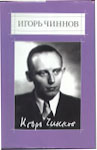 Igor Chinnov (1909-1996) already published three books in Moscow: “Empires. The Ninth Collection of Poems” (1994), Alchemy and Akhiney: Grotret. The Tenth Collection of Poems ”(1996), as well as the chosen ridges of Genesis (1998), in the preparation of which the poet took part, but the books did not wait. His new Russian edition is the first complete collection of poems, or rather, books (in the second volume, fragments of Chinnov’s memoirs are promised). It remains to regret that comments that were not mentioned in the “content” of volume, as if they did not matter, are limited by the instructions of the first publications and discrepancies. The Russian emigration of the 20-30s did not give us many poets whose significance would surpass the local: Russian-Berlin, Russian-Parizh ...
The composition of the books and the order of poems in them "Collection" does not quite repeat the former copyright publications. If this expression of the new (last) will of the author, then it should be stipulated. Chinnov repeatedly redistributed his collections: he confused poems from the first book “Monologue” (1950) with new ones in the book “Composition” (1972) - but with the teasing letter “M” in brackets, and completed the book “Pastorali” (1976) by the collection “Lines” (1960). Either the poet proposed comparing poems, noticing the development and movement of his poetry, or its immutability and almost immobility. An irritating uncertainty constantly arises with Finovov.
He loved three things in poetry: the words that George Adamovich calls in the 1952 article “incomplete” about Fininov, and we, according to the mathematical association, are irrational: “Nevertheless”, “However”, “nevertheless”, “sometimes”, “in general” ...; Dactilic composite rhyme with “serious” poetry (another matter is comic or puncture) by the accession of the Union ”and“: “Dust and“ / “Castile” , “So forth” / “Harding ... and ...” , “clearer” / “in a dream” , “disgrace” / “Almaza and” ... such a rhyme, as you know, creates a strange feeling of simultaneously smoothness, infinite, infinite Easy, overflow of the verse and its difficulty, almost impossible when pronouncing.
It is impossible, for example, to recognize in speech a meaningful word and the subsequent union as separate, while "and" at the end it turns out not two, but three or more, as if the throat can no longer stop in endless effort, frantically producing all the new "and". This type of rhyme creates phonetic (or rhythmic, as you like) the embodiment of the ellipsis - a sign that Chinnov preferred. And the “irrational” words, parasites in everyday speech, is the illusion of an endless definition and clarification of the subject (its location, sign or its circumstances), as if approaches to it, but in fact they take it away from it, are lost in reservations.
G. Adamovich explained the addiction to the "half -uniforms" by the fact that "the words were completely lost ... trust." In fact, both Adamovich and Chinnov, his student in poetry, distrust to the word - a derivative of distrust to the world. How can you determine what the reality of which is not entirely established? The world does not quite exist, including the speaker himself. He is also not entirely "eat", in any case, he doubts this. Around it is not Nabokov’s scattering scenery, but mirages in the desert (magnificent landscapes and buildings in different parts of the world and at different times of the year), not that ready to climb into the air, but already flying. Together with them, the observing them also ascends.
The third that the Chinnov loved was ancient meters that were strangely modified with him, almost up to unnecessary. He seemed to hide them all the time, masked them in a Russian verse: the three -ends and two -part of the archilo or Alkeev Stanfu ... (we are talking, of course, about ancient forms, as they are traditionally, from the 18th century, Russian Sillabotonic poetry represents.) It will break the stable line of Kallimakhov’s “Chromy Yamba” (with the transition of Yamba to Khorey or vice The broke in the second half of the line) will add syllables, suddenly turning the chorea into a dactil, or dilute the “sapphic stanza” with verlibr and, as if liquefying (or loosening) it, will increase two syllables in the line, and the quatrain will unexpectedly turn into the six -elast rhythmic repetition of codes.
Of course, this was not the concealment of roots and origins, but an intimate feeling of the ancient Greek world, with which the poet could do what he wanted. It seems like that completely homemade, a summer cottage took a landscape with a white goat grazing at the amphitheater. His “diminutive ... its own invention” (A. Bahrah) often related to ancient realities: “sticks” , “karonushka” ... It was special, its own appeal also with mythology. Chinnov has a lot of names or landscapes not Greek in origin, but they seemed to be seen (or heard) with an ancient Greek, as if he had fallen into the Muslim, Chinese or Christian world.
Although he uses classical rhythms, this ancient Greek is late, the “period of decline” and the destruction of the Greek world, he is haunted by the idea of dying, which is naturally accompanied by general ill health. It is not manifested in insufficiency, inferiority, but in the excessiveness of natural luxury or human structures; Both always take the form of swollen and ready to burst tumors, material for decay. The world causes a mixture of disgust and pleasure, not opposite, but mutual feelings. Literally it looks like this: the paintings of decomposition and decay cause almost delight and admiring, and luxury and beauty scare and repel.
The corpse of the nightingale, which the Chinnov admires, is a parallel to the dead chick of Catullus, this time the Roman poet. But the Chinnov bird not just died, it becomes a little more alive from the movement of worms in it. A kind of resurrection occurs, the galvanization of the corpse; As a dead body moving from extraneous influences is perceived by the rest of the environment.
This Greek is in the Roman world (and therefore wars, violence and gross entertainment), which he cannot but feel as barbaric. It seems that he also perceived his exile of the Chinnov according to the Greco-Roman model. This is the expulsion of an individual (and not a representative of the class, for example) and for personal differences from neighbors. And it doomes to constant movement, wandering. The ancient idea of the uniqueness of his policy in G. Adamovich is expressed aphoristically: "There was one capital on Earth,/ All the other are just cities."
The Roman historian Tacitus described such an almost Hellenistic character, a military leader, in which the "aversion to life" and its coverage complemented each other. Often he threw all the necessary things and duties, indulging in a circle of friends to discuss "the separate existence of spiritual and bodily principles." Why he was accused of "isoating himself and dangerous independence." The relationship of the soul and body is an obsessive theme of Chinnov. Natural scheme: the body envies the immortality of the soul and asks for pity.
Chinnov’s relationship with Rome, that is, with readers and critics of emigration, were dramatic. His almost enthusiastic admirer of I.Doevtsev in the 1971 article about the verses "I live in the world of ciliates ..." said: "Really disgusting," probably because emigration did not without reason accepted these verses on her own expense. The Russian Thought newspaper a year before, has already announced Chinnov’s poem “Horses fall into the Black Sea ...” “Classics on the contrary,” with which poetry “began ... to decompose” . The inclusion of some verses in Chinnov’s book “The Guineack” (1970) Odoevtsev called “Heroic” and “Donky -Versye” . And no less sympathetic to Chinnov A. Bahrah, judging by the article 1978, was never able to accept his poems with the "extracts" .
In addition to Don Quixote, in connection with Dinnov naturally, another traditionally common name - Hamlet. Of course, his mention came to G. Adamovich, albeit in a negative sense: Chinnov as Boratynsky, "not yet fell into his harsh Hamletism ..." But there is no Boratynsky and Chinnov without "Hamletism".
I don’t know how conscious the Shakhovskaya Shakespearean reminiscence (1985) is “praise to the poet, the reader of his surprising” . Remember: "O amazing son, so surprising his mother!" ("Hamlet", d. 3, d. 2)? If you imagine emigration as a mother (having a child in abroad, Chinnov was formed by him), then the metaphor is almost realized. For a long time in the past, the contrast of Hamlet and Don Quixote. It became clear that Hamlet's paradoxes themselves were no less action than the paradoxical actions of Don Quixote.
Without Hamlet-Donkihotsky "extract" there are no poems by Chinnov. Especially if you return the word "initial", almost not a metaphorical meaning: from "spin", "twist". (Kierkegaard in this case said: Kehre - turn, kehren - turn.) This is a turn into the thought that the reader is worried about the Chinno poetic plots. Often there are many such turns; Sometimes each line is a turn; The poem revolves with it - literally the image of the reader (who needs to repeat all of them, which not everyone will withstand).
The term "speed of poetry", as well as the acceleration with which the poem (and in the reader), the thought in all new subjects runs in the poem runs here. Not only do you not steal her, you still need a special volume (here is the term: a poetic volume) in order to continue to keep objects in memory.
There was a cheerful living nightingaleAnd now - a clumsy dead.
However, no, a little more alive: from worms ...
One fun, other cares. Then oblivion.
Yes, the living woman, yes, a bonfire.
Yes, cold-head. Do not joy old age. (And night and autumn.) ...
Here, in each line, three turns, marked with the cesers and sound coincidences (this is no longer twisted, but weaving, pigtails). If the truth is that there are nine turns in a good thriller (they are also called thresholds of expectation; they say that the great master of Hitchcock had 13 thresholds), then we have such a thriller with the number of thresholds ... we will count: two stanzas of three verses plus more, in each verse-three turns-driving ...
Such a “turn” (in the singular) can complete the poem, or canceling it, or returning it to the beginning. It turns out that everything is not the same as thought during the reading, when, after a long -colored humor of crimes and response, painted with a black humor ( “all died” there) appears a “dumb” angel of reckoning, “tired of all crimes/ and all the punishments of the earth” . Or a poem with the rhythm of the Pushkin’s “drowned” (“The children came running into the hut ...”) ends with another Pushkin association, almost shocking transformed: “We’ll drink a darling -girlfriend” - almost the only case when the Pushkin nanny opens as a metaphor: soul, psyche, “Psyche” - from another poem of Chinnov.
There is justice in the fact that he seemed to have no place in the literature of the Russian abroad of the 30s. (And the younger poets then came out in two or three collections.) But it was printed before that in the journal "Numbers", the organ of "Young" (closed in 1934). Everything seemed to deliberately developed in such a way as to “transfer” Chinnov’s recognition to the later time. His poetry is the natural expression of the consciousness of Fin de Siecle.
Note that the "end of the century" almost half a century earlier than for the rest of humanity began for Russian emigration of the first wave. Poets stood out in it, whose flourishing falls on the "second" - on Dante - half of his life (as it was with Yu. Ivasky). As if the poets somehow survived all the 30s and 40s in order to “save” themselves for the “new” context: “O as on the slope of our years ...” and so on. As if it was necessary to first "get lost in the gloomy forest" in order to reach the heights of poetry. The anachronous world of abroad canned not only the Russian language, but also the poetic ability.