
Translated material
Anna Old. Two -headed orchestra
The Russian National Orchestra , founded in 1990 by Mikhail Pletnev, gave a solemn anniversary concert in the Great Hall of the Moscow Conservatory. The first Russian orchestra, created regardless of state structures and budget financing, managed not only to survive in his homeland, but also to gain a solid reputation abroad. On his account there are a lot of touring tour recorded by CD (for example, on Deutsche Grammophon ), programs with the participation of world stars - conductors of Kent Nagano , Peter Maxwell Davis and Michael Tilson Thomas , Dave Brubek and Winthon Marsalis.
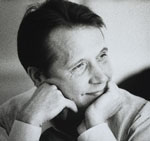 In addition to festive truisms, the anniversary of the RNO became the reason for the exit to the surface of rumors about the difficulties in the current leadership of the orchestra. It is primarily about the distribution of roles in his leadership. One and a half seasons ago, the brothers of the reign of the RNO, at the suggestion of Mikhail Pletnev, took Vladimir Spivakov into his own hands. Maestro Pletnev was then elevated to the rank of honorary conductor and intended only occasionally to appear behind the remote control, in order to focus on the solo career of the pianist and sometimes compose music. In fact, it turned out that he almost more often Spivakov conducted the RNO, in any case - in Russia. Here is a jubilee concert, both in the creative and in his official units, he went completely under the sign of Pletnev: he conducted Beethoven's ninth symphony, and he received congratulations. Nobody came from the top - neither Putin nor Luzhkov. The Ministry of Culture, represented by Mikhail Shvydky, promised to provide the orchestra with state support: with all its visible well -being, he did not refuse it.
The current artistic director and chief conductor spent the whole action in the sixth row of the stalls. Vladimir Spivakov explained this fact by the fact that too late received information about the anniversary evening from the orchestra's office and the proposal to take part in it. He could not change his schedule in a short time (and the Maestro concert schedule is filled until 2004) and therefore, instead of the acting person, he played the role of the viewer. However, as it turned out at a press conference, Spivakov’s power in the RNO begins with the preparation of his own programs and ends with the same. Neither in the planning of the tour, nor in the development of a general repertoire strategy, nor in the discussion of "Star Names" (whether it is conductors or soloists) invited to work with the orchestra, Spivakov does not take part. These facts speak of a somewhat incorrect attitude of the orchestra directorate to his chapter, and even that Spivakov’s position in the RNO is more adequate to the post of the main invited conductor than the artistic orchestra. It can be seen that this state of affairs of Vladimir Theodorovich is not satisfied, but he is not yet able to win the prevailing party with the director of the orchestra, Sergey Markov. Or is it not at all? Yes, and is it necessary to especially fight Spivakov for priorities in the RNO, having chamber "virtuosos" in its power? As for the experience of working with large symphs, then he gets such offers in the West. Of course, there is a contract, according to which Spivakov should work out. He practices - how he can and how much they give him to do this.
All it would be nothing, but in recent years, the best Russian orchestra has been losing its professional positions. So far, this does not affect the name (in other words, the surroundings with a mass of sponsors, honorary members and connoisseurs investing certain amounts in the prosperity of the Pletnevsky brainchild remains the same). But the contradictions that arise on the top of the orchestra also affect the quality of its sound. And the last confirmation was just an anniversary concert. Even at hand, the testing conductor, whom the orchestrandants love more than all other conductors, they played medium, which did not happen before. Pletnev motivated this with excessive excitement (too responsible event), which, as usual, is far from always good, and torn rehearsal schedule (they began to teach the symphony two months ago). However, Pletnev noted his satisfaction with the performance. With the opinion of the maestro, one can agree if you limit your attention to the first part of the Beethoven score: in the beginning, of course, the fuse and the quality developed at rehearsals were noticeable. But the second part is already - Skherezo's inconceivable fast in the Pletnev interpretation, where the stringed were almost frankly unexploded, sounded crumpled. The slow third turned out to be a frozen and lifeless, devoid of internal movement.
The finale created by the composer for the famous text of Schiller’s Oda “To Joy” is not God the news as he was voiced by the chamber choir of Vladimir Minin. The soloists participating in it - Galina Gorchakova (Soprano), Marianna Tarasova (Mezzo -Soprano), Alexander Efanov (Tenor) and Sergey Leifokus (Bariton), who, incidentally, joined the orchestra and each other, only on the eve of the concert at the General Reutation. World celebrities imagined, it is likely that they habitually solo in the opera: everyone personally urged millions to hug. But so far, even the two main conductors of the orchestra has not been able to.