
Translated material
Georgy Dalidovich. Notes on artificial intelligence: Turing apple
The cars have no problem. I would like to be a car
And you don't?
(Andy Warhol - Andrey Warhol)
Preface to the final part
I have planned to write q icl articles about Alan Turing for a long time. This looked like a natural continuation of the work dedicated to Norbert Wineera . But starting it, I regretted it. At first it was difficult for me to understand Turing, and I made my way among the texts of his articles, formulas and extensive biographical data. Then, as it seemed to me, I understood it. A portrait began to loosen from a pile of information. Portrait in a frame with broken glass. And I regretted once again that I took up this topic. But work requires its logical conclusion.
 The conflicting feelings that arise when reading the work of Turing reflect the intractable internal conflict. On the one hand, a detailed understanding of the picture of the world - from quantum theory and the principle of relativity to psychology and neurology, united by the apparatus of mathematics and logic - it would seem that it can give an answer to any question posed, but it was Turing that there is no universal method or algorithm that can solve any problem. The philosophical idea of the world is devoid of some unifying center. The truth seems to be very close, but it is unattainable. Despite the breadth of coverage and encyclopedic knowledge in all areas of science, gaps remain - “unsuccessful functions”, insoluble tasks, requiring the attraction of mysterious black boxes, “turing oracles”. The main task - modeling consciousness - is fundamentally feasible, but this consciousness is not a person, which recognizes Turing itself. How to fill these "black boxes"? Turing could not understand this. His world and individual characteristics of thinking did not allow this. He himself was like a "worldwide" with a disabled "oracle". Warhola was mistaken. Cars have problems. Can this feature be called "unproductive" and connect it with the homosexuality of Turing? This could be a catchy heading, but that would not be true. There is no doubt that it was the multifaceted and non-standard thinking thinking that was productive, but there was not enough something elusive. He advanced in understanding the world much further than many. Maybe too far so that it remains safe for himself.
That's how it was.
The message of the invisible world
This is unfair. The athlete, and then - three attempts. But life even in prosperous and conservative England is more likely not to run obstacles, but to the royal Croquet with Flamingo, so well described by another English mathematician.
A person wants to live according to clear and understandable principles. Perhaps that is why the game on the cognized field with regulated laws, despite the tension of intelligence, is for many a vacation. For some - chess, for someone - a formal science or other abstract classes. Even applied programming or HTML-coding positively affect the psyche because it is a game according to clearly defined rules. If everything is done as it should, then the planned result is inevitable. If something did not work, it means that an error is made, but it can be corrected. There are no secrets. Everything is stated in the specification. However, life - by and large, is not arranged.
But it is life, in all its manifestations, and was not perceived by Turing. He was outside her conventions, which he simply ignored, due to their illogicality. Thuring did not avoid society, he was along with everyone, but not one of all. He could put a drink for his sports club comrades, in which he even was a member of the organizing committee, but his interests were outside. His friends knew nothing about his work, and about himself. Often his scientific interests turned out to be not understood even colleagues, which, however, did not prevent him from continuing what he had begun. So, at the end of the war, Turing was invited to the National Physical Laboratory in London to participate in the creation of the first English computing machine. However, his project of "automatic computing" (Automatic Computing Engine - ACE), completed in 1946, was recognized as unnecessarily arrogant and did not receive approval. In fact, this development contained the first detailed description of the computer in the modern sense of the word.
Turing returns to Cambridge in 1947 and continues independent research, which affect not only computational mathematics, but also psychology and neurology. The work written during this period, not understood and not published during the life of Turing, contains the main provisions of the theory of what is now called "neuristor networks." For the first time, it was assumed that complex artificial systems can be self -organized to study the environment.
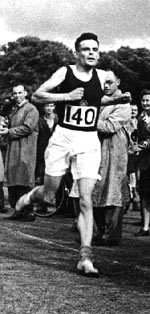 Without meeting support from the leadership of the National Physical Laboratory, annoyed by delays and wires, Turing quits from there. He fills out his free time with training in Valton (Walton) Club, wins the races of 3 and 10 miles, and in the popular all -English marathon in 1947 he occupies a prestigious fifth place. He explained his tense training with the need to relieve stress caused by work. In 1948, his result in Creek turned out to be better than that of an athlete, who soon became a silver medalist at the Olympic Games.
But the break in work does not last long. Already in 1948, Turing, at the invitation of his former teacher, professor Newman (Newman), begins work at the University of Manchester as a lecturer and director of the Madam (Manchester Automatic Digital Machine) project. He is engaged in the development of software and architecture of the new machine. This project turned out to be fruitful and led to the creation of one of the first efficient computers. As specific programming tasks are solved, he returns to more general issues of mathematics - in particular, to a long -standing issue of calculated functions and numbers.
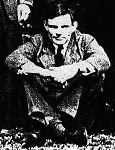 It seems that now life comes in a certain direction. It enjoys significant independence at work, has time for independent research, its projects are implemented. Turing buys a house ten miles from Manchester, in the small town of Wilmslow in Cheshira. This distance, he usually ran along the way to the university.
In the Mind philosophical magazine, published in 1950 , “ Computing Machinery and Intelligence ), he first proposes a description of the“ Turing test ”, which was mentioned in more detail in previous articles of the cycle . Then he predicted that by 2000 the development of technology will allow us to "fool" the average operator for about 5 minutes. It was already a realistic look: "We can only see a small segment of the upcoming path, but we see how much remains to do." And, judging by the awards issued for passing the test for various programs and developers, this forecast was justified.
It is interesting to note that the topics for "interrogations" during the test are often as specific as "romantic conversation" or - even more frankly - "sex". Which, however, continues the tradition, begun by the Turing himself, describing the test in which the woman and the man are trying to prove to the operator that it is he (she) is a woman. Although at this stage there is no computer among the participants in the test, Turing shows that thinking is not the only characteristic of a person, and imitating thinking means to be a thinking creature. At the same time, it becomes obvious that there are other characteristic features of a person’s personality, in the definition of which it does not mean to be. But the main statement is not included in the short popular article that all operations in the process of mental activity should be represented by "calculated functions." Obviously, there are “unsuitable” ones, but they are not directly related to the “mental process” in the understanding of Turing.
 In 1951, he was recognized by scientific merits - the election of the London Royal Scientific Society, mainly for the work on the Turing machine, written back in 1936. But the present reason for this is precisely the practical implementation of the theoretical principles laid down previously. In Manchester, in 1951, as a result of the development of the Madam project, one of the first fully operational computers Ferranti Mark 1 was put into effect, and Turing begins the first computational experiments on nonlinear modeling of form formation in plants and shells. He again returns to his Margaritas and observations of nature. Turing writes work on morphogenesis issues - a scientific direction that determines mathematical patterns in the development of forms of living beings.
Of course, the calculation of the configuration of the flower was not the only and not the main task performed on the "brand 1". A few years later, it was used to create an English atomic bomb. The evidence was preserved that Turing conducted “unauthorized” calculations on it. What else was believed by Mark is known only to him and Turing. Perhaps these were work for the Governmental Codes of the Code Unit codes - an organization that continued to decrypt work, which had begun during the war in Blechli, with which Tahring did not stop cooperation about which no one was suspected at the University of Manchester. This time, Gchq was in the focus of the Soviet residency in England. But it is possible that computational experiments concerned the early “children's” hobbies of Turing: during this period, he develops a quantum theory of spinors - components of elementary particles - and is working on some issues of the theory of relativity. Then he shows a serious interest in the methodology of the psychoanalysis of Jung and writes down all his dreams. These records have not been preserved.
Since 1952, Turing has a new passion - Scandinavia: countries, cities and a wide range of dating. In the names of many of his programs, Scandinavian names begin to sound: starting with ibsen to his new friend from Norway - Kjell. The hobby of the Scandinavian nature, Scandinavian art and Scandinavian friends speaks a lot about the spiritual state and moods of Turing during this period. He always carefully and subtly felt nature. Norwegian landscapes, like numerous, but fleeting acquaintances, are an ideal world for tired consciousness.
Despite the visible well -being, Turing all this time balances on the verge of permissible. It should be recalled that the mid -50s is the heyday of McCartism in the United States and the midst of the Cold War, and a wave of hunting for "unreliable" has reached the British islands. Turing could afford to ignore public opinion and mood in society, although he never behaved defiantly. Perhaps he even tried to find a compromise with a heterosexual environment. Even during the war, Turing made an official proposal to one of his fellow mathematicians, but subsequently abandoned him, admitting his addictions. But society did not want to ignore the too independent mathematics, which did not hide its homosexuality. Therefore, it happened that, in general, could not fail.
The criminal plot of this story looks ordinary and corny. Probably, such situations have repeatedly happened before him and repeatedly, with some variations they repeated after. The fact that this happened to him was natural. In 1952, the Turing house was hacked and robbed by one of his sexual partner's friends. Without succumbing to blackmail, Turing announced a robbery to the police. In the process of investigation, the features of his relationship with a young "friend" surfaced. As a result, he was charged with “extremely obscene” behavior on the basis of British law on homosexuality. Thuring did not experience irritation or anger towards the police. The evidence was preserved that he called them "cute poor fellow ". The court took place on March 31, 1953. The only thing that Town declared in his defense was that "he does not see anything illegal in his actions." However, this was not worried about the court. The verdict was a choice: either imprisonment, or the injection of estrogen - female hormone "to reduce libido" - during the year, which was a way of chemical castration. Turing chose the latter.
After the details of the case became the property of a public scandal, he was deprived of the "tolerance" (Security Clerance) and fired from the codes department. Thus ended his service of the British Empire. Moreover, the wide range of international ties created serious problems for Intelligence Service , which began a total test of all his friends and acquaintances. And the Turing trip to Corfu, to Athens and Paris in 1953, accompanied by numerous new acquaintances, caused panic in the British security service: Turing was recognized as "unreliable", but he knew too much. European friends of Turing had no idea about his work and did not suspect that he was a carrier of the most important state secrets. The arrival of the Norwegian friend of Keel in Newkasle alarmed the entire police of North England, which organized surveillance of him.
Formally, his work at the University of Manchester continued, and, moreover, as it would be called from us, "the labor collective took it on bail." Turing, remaining a researcher, shared his observations with his observations over the consequences of estrogen exposure on his body. However, scandalous articles in local newspapers and an hostile atmosphere led to the fact that he began to appear less often at the university.
This is not to say that all the misadventures of these years have caused Turing depression in Turing. He studies Scandinavian languages and tries to find work in France, but to no avail. However, humiliation from regular "procedures" and isolation among colleagues undoubtedly led to stress. The dying British empire completely paid him for his service with its conservative laws and fidelity to traditions. All the experiences remained inside, and even among his closest friends, who were younger than him by age, no one could say what he understands or at least knows Turing for real. In March 1954, he sent them several postcards entitled "Epistles of the Invisible World." On one of them, addressed to Robin Gandy, who was his graduate student and for a long time an intimate friend, it was written:
Hyperboloids of Wondrous Light
Rolling for Aye Through Space and Time
Harbour Those Waves Which Somehow Might
Play Out God's Holy Pantomime.Amazing light does not stop centuries -old wandering,
Piercing the space of the curtain.
Accept him, and he may open the script
Divine play.Or:
Sparkling light stream
Will not stop space and time.
God will be revealed
To those who accept knowledge of the burden (or this stream in a crown).
Let me forgive me Turing for these variations.
That, in fact, is all.
On June 8, 1954, Alan Matison Turing, the holder of the Order of the British Empire, a member of the Royal Scientific Society, a mathematician, whose many works were understood only in the 70s, and the scandalously known homosexual was found dead in bed at his home in Vilmlow. According to the police report, allegedly the day before, he accepted potassium cyanide. Turing was 41 years old. A biting apple was found nearby, on which cyanide was applied. He used this reagent in experiments on electrolytic coating on spoons. Chemical experiments were his favorite hobby since the age of ten.
His mother refused to believe in the official version of suicide, she considered what happened to an accident. However, she knew him little and was never particularly close. In addition to the hypothesis about the accident that, it seems, only the mother of Turing, could also have the assumption that the British Intelligence Service was tired of developing the contacts of an “unreliable”, sociable, often being abroad and too much knowledgeable former colleague. But for those who tried to understand the "world of Turing", I think, doubts about the voluntariness and awareness of his departure.
Here I hear a reader's replica: "Mine, is that all? And what is the conclusion?"
But there will be no conclusions today. This is life, and not an invented story with compulsory morality at the end.
 The emblem of the Apple-Mac and the apple of knowledge from the biblical myth. He always chose his path, and even he decided to accept potassium cyanide in such an unusual way. Or did he want to say something and leave his last message?
The bibliography of works on turing is very extensive, therefore, links are given only to the most comprehensive studies used in the preparation of the material: