
Translated material
Vadim Zhuravlev. The bald singer
There is a place in the world where the Operaman still feels not the last person. The Austrian capital is perhaps the only city on earth where every self -respecting person is interested in a musical theater. Even taxi drivers are aware of the problems of the main theater of Vienna - StaatSoper , and the repertoire for a week - and bounces from their teeth. And if you came to practice German, then ask the crown the question: "How do you feel about the tent on the roof of the opera building?" Despite the fact that this structure is built for the most good goals (special shows of children's operas), you are destined to hear in response many local idiomatic expressions.
The memories of seven years ago will help to fully tell about the love of crowns for their theater. In October 1993, the famous film director Istvan Sabo put Verdi’s opera Trubadur, whose action was transferred to the Vienna Opera building, destroyed in 1945 by American bombers. When the curtain opened and the audience saw a scenography that reproduced historical ruins in detail, a real scandal erupted in the theater. The audience screamed "BU" (local cry of disapproval) and whistled so that the performance had to be stopped for a long time.
 Each crown considers himself the failed director of the opera. Therefore, every premiere of five to six premieres of the season is visited by the president and chancellor, and with them the whole Vienna elite. And in the back of the stalls there are standing places where the overturned opeorians go to work, looking down at rich Japanese tourists. On the gallery, you can still meet people with scores; For them there are places equipped with miniature lamps. Many singers still have fear of this savvy public, never goodbye vocal and acting misses. Luciano Pavarotti, for example, was a “bukan” five years ago, and since then he has not been invited to Vienna.
The Vienna Opera is a repertoire theater: the performances are on stage until the audience visits them. The main criterion introduced by the current director of the theater, Jon Holander, is 90% of the room. All productions that collect fewer spectators disappear forever. Therefore, 40 opera names, which are from September to June, almost always with Angels. For more than a hundred years, the opera has been led by the most famous conductors - from Gustav Mahler to Herbert von Karayan . But none of them was delayed for a long time. The current director sets a record: a contract with it was concluded from 1990 to 2005. The former Viennese impresario Placido Domingo came to the theater in the wave of xenophobia, when the efforts of local cultural officials from the theater survived the Italian Claudio Abbado. After the abbdo departure, the post of "GeneralmusicDirecter" was completely eliminated. True, now the crowns were caught and invited since 2002 to the role of the chief conductor of the famous Japanese Seiji Ozava.
The director of Holander made a bet on the singers of the young generation, devoid of stellar manners, but gradually gaining momentum of world promotion. In recent years, the Vienna opera has become a springboard for many opera stars (including from Russia). The Austria government likes this, since the theater budget does not go beyond the established one. Although Domingo and Carreras in the theater appear regularly. The theatrical aesthetics of the Holander era are a modern directorial theater, but without avant -garde excesses that always irritate Shirnarmasy.
Holander offers crowns a diverse repertoire. For example, a month later, the Austrian premiere of one of the gloomy operas of Benjamen Britten Billy Bad (two dozen men's characters and not a single soprano) will take place here. And now the crowns went crazy about the premiere of the forgotten opera of Donitnitti "Roberto Devro".
"Roberto Devro" is a charming opera vapouka based on English history. The story of how Elizabeth English sent to the block of her favorite Count Essex, who loved the wife of the Duke of Nottingham, it was packed in a classic underwear set of virtuoso arias with cabbelts, passionate duets and choral finals. Donitnitti generally had a passion for the Tudor dynasty, writing three more operas in addition to the “girl”: “Elizabeth in the Cenilvort Castle”, “Anna Boleyn” and “Maria Stuart”. The first remains still forgotten, the last two have been revived in the last 30 years. But "Roberto Devro" requires such vocal technology that now only one singer - the Slovak Edita Gluberov sings the main part of Elizabeth.
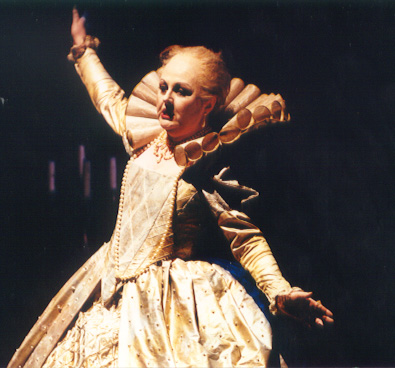 Grubyova - the phenomenon in the world opera is simply unique. Having once appeared in the Vienna opera to replace the sick singer, she became an indispensable performer of high coloral parties, but only in German operas. The very ugly, emasculated, melancholic timbre of her voice put a cross on her attempts to perform in Italy in a Belcanth repertoire. Therefore, she left attempts to charm the Belcanto’s homeland and focused entirely in German -speaking countries, where her ability to make her vote and phenomenal acting were appreciated from the shortcomings of her vote. In Switzerland, a special recording company Nightingale was even created, which produces only its records. In Vienna, Grubyova, once every two years, sings a new performance, staged specifically for her.
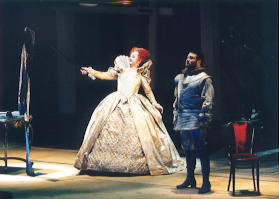
The new production of Roberto Devere is entirely on the Great Primadonna. Although there are many high -class singers around her: many consider the tenor of Ramon Vargas to the new domino (not only because he also grew up in Mexico City), and the Spanish baritone Carlos Alvarez is already a real star. The production of the Romanian director Silviu Purkaret is reduced not to interfere with the singers to sing: the only find is a museum of life -based wax figures. The scenography of Helmut Shturmer is a cultural mixture of modern English gentlemen with umbrellas (choir), historical costumes of the Elizabethan era (soloists) and the species of the Neapolitan San Carlo Theater, where the world premiere of the opera of the Donitsetti was held.
But everything that happens on the stage is forgotten at the moment when the Primadonna begins to withdraw coloring passages. Perhaps, not a single singer in the twentieth century could boast of such a breathtaking technique, including superstars like Maria Callas or Joan Sasraland . A dozen shades of singing Piano, the lightness of high notes completely replace the absence of a juicy timbre: Italians simply cannot forgive Grubyrova of its non -dedicated origin. But the main thing is complete acting: the old woman -Korolev, tired of life and power, trying in vain to straighten the acute shoulders and overcome the lower back pain. In a classic fiery red wig and chic theater outfits, Gro rest is not afraid to look old, sick and ugly. And when in the final stage she spills out onto the hall with roulads all female suffering, and then pulls off the wig from her head and exposes the bald crown, the hall is fascinated. And then the thirty -minute fury begins. Already now, tickets for the entire second series of premiere performances - in May - sold out.