
Translated material
Inna Bulkina. Review after review
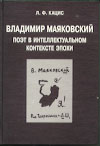 I renew, I was very late with this review. What I repent. But there is no thin one without good. As a result, a rare thing happened, and in my memory - almost one of a kind. The unhurried, academic (in the bibliographic department, at least), once every two months the output “UFO” overtook the operational, daily updated RSA. Although in the case of Katsis’s books, this is for the UFO precedent: “Today is in the newspaper, but tomorrow in the bathing” is not his credo; There are 45 numbers in the same bibliographic department, where V.V. Nicolaenko reviews the summer books of Catsis 1 , - half, as usual, last year's publications and before. But all the more unique the situation, and it develops in favor of Leonid Friedrichovich Katsis. He wrote very necessary and timely books.
Nevertheless, in this whole story (i.e., the fact that the first word was beyond "UFO") has its own logic and, if not a pattern, then legitimacy in any case.
There is such a completely obvious thing as the pragmatist of the text. It occurs where the relationship "Author - Book" ends and the relationship "Book - reader" begins. In the case of Catsis, a well -known duality was always present here. His audience is quite wide (almost like M. Zolotonosov, and he often writes approximately about the same thing), but is divided into two unequal and, let's say, unequal parts. For the so -called “The wide range of readers” Catsis is the author of the elite, high -lobed, a big scientist, perhaps even “too scientist”: rarely one of the “wide circle” seriously climbed after this author into his intertextual wilds, but precisely due to all these dizzying rapprochement, the fireworks and quotes, random, and therefore even more mysterious terminology, in short, - in short, - in short, - in short, - in short, - in short, - in short. Due to all these intellectual excesses - a well -known conspication arose, unconditional reverence: I do not understand, but I respect.
As for the narrow circle, not by the night, there were mentioned specialists, here Catsis never celebrated and considered the rhyme to Etkind (that about Eros and Tanatos). True, the scandalous bewilderment of the first conferences was replaced by a calm habit, and the habit - humility and partly recognition. The author became familiar, years later, after anfanterry, he turned into a person with his merits, the academy does not shine for him (although everything can be again), however, articles in system magazines and grant monographs - as much as you like. And in this sense, the reviews of V.V. Nicolaenko are very indicative. They have their own evolution: "Catsis’s article should be commented on, - I wrote not without malice in one of my first reviews." Now, the same author, without any malice, recognizes the comprehensive completeness of context as a monograph on Mayakovsky, and the context, in turn, is relevant and convincing, after which traditional reproaches of slurred and methodological idiocy ( “Catsis too often loses power over the intertextual method, the danger of which is just about the hazard of which I have already simply been indiscriminately” ) look like a mandatory tribute Or the room on duty, as it may, but, becoming a tradition, they were legalized in a certain sense.
In general, the short meaning of a long speech is that the verdict of the “UFO” reviewer should have been preceded by this article of mine, and not vice versa. The right to judge the scientific merits of the book of L.F. Catsis should be given first of all to a specialist - precisely because of the peculiar reputation of the author and the unequal of his reader resonances.
The hero of this fundamental - cumbersome, but certainly thorough in the best sense of the word - the monograph in some ways is similar to the author: he is also anfanterry, and not only in life, but also had serious problems with reputation and resonance. As for the school Mayakovsky, until a certain moment he was a Soviet monument, and when finally at this very famous moment he was dropped from the pedestal, it seemed that justice triumphed. No one except and no one needed this procedure anymore, except that instead of the “textbook gloss” and the monumental “founder” of the same unprepared, to put it mildly, the audience was revealed by Frankenstein, a moral horror and household masochist.
The fate of Mayakovsky is not school, but academic, it seemed more adequately: the tone was set by Jacobson and Khardzhiev, the “Soviet Mayakovs” can be taken out of the brackets, however, if you look at the scientific apparatus of the same pathos - the monograph of Catsis, it suddenly turns out that all or almost all of its discoveries, unexpected allusions and “distant ranges” and far away ”and distant similarities” are so or otherwise or otherwise They were spoke - sometimes between the matter, sometimes in other contexts, but in each individual case of the discovery of America literally ... does not happen. Another thing happened: for the first time, all these “intellectual contexts” were collected together, and the exotic figure of the “rude Huns”, which is still “breaking” from all conceivable ideological systems and intellectual hierarchies (all about the same “broad circle of readers” Mayakovsky, moreover, was never and sought to be an elitist poet), and these contexts were inscribed. And it’s good that Catsis did it. Do this, for example, Omri Ronen, a book would have turned out excellent, it would have released it some American university, and it would become the property of the same narrow circle not by the night be mentioned ... etc. The book of Catsis, precisely because of the methodological controversy, will make some rustle, and the final result will be different: the “intellectual context” will now become the property of newspaper art critics, those who bring culture to the masses. And this is not bad at all, but, on the contrary, good.
As for the notorious "Catsis method", then, like that, Chokh, to declare it incorrect - it is also not quite decent. Catching fleas for more than 700 pages is a lesson, frankly, ungrateful. The same reviewer of the "UFO", having run into a lie in the quotes in "Russian eschatology ...", was belatedly regretted that he had read the monograph about Mayakovsky without "biased alertness."
We will do differently.
One day we will almost at random this volume and try to follow the dizzying pirouettes of the Katsisov intertext: "Chapter 1.1.2. Heine. Annensky. Mayakovsky." The essence of the chapter is to describe the “The role of the work of the German poet for Mayakovsky repeatedly described and before us” , but not in a direct, but occasional way: “Often the motives of the work of a poet arise in Mayakovsky thanks to someone else” . Here, according to Catsis, Annensky became such an intermediary, or rather, his article "Henry Heine and We." That's it would seem. The direct path is the best of all possible. But Catsis never searched for direct ways. Initially, a prone passage about Mayakovsky and Severyanin follows, because the indicated article by Annensky "became one of the subtexts of poems by Igor Seversin." Poems are:
The ashes of Mirra Lokhvitskaya is defiled,
The cross is changed to the mausoleum, -
But still magnificent
Her ecstasic stanza alley.
The Annensky article about Heine also has the word "mausoleum" (but not for rhyme and in the context of a slightly different, in order not to say the opposite). The cycle of northerner poems is called "Prologue". And Heine has a cycle in the "Book of Songs" under the same name. And "the fact that this (the Annene-Geezes subtexts of the northerner? -I.B. ) confirms the most important image of the northerner’s poem, where the hero kisses the" cold marble "of the sphynx. After all, in the poem" Flute-Brush "the hero will kiss the beloved, comparing them with the cold in the rocks of the monastery." I still follow the text of Catsis and have not missed a single logical ligament, so all questions are not for me. The “flute bonker” is mentioned here then that it will continue to be about the “national question”, which “starting with the“ flutture flute ”will accompany the life and work of Mayakovsky.” This question "occupied both Dostoevsky and Rozanov, and, it seems, Annensky, not to mention Heine."
Such an intricate figure is made by the thought of Catsis through only a few paragraphs (p. 34-35). Despite the fact that the contexts of Heine, Annensky and Rozanov in this chapter actually create the effect of stereoscopy, all this is cast in such an incredible way that there is no longer any strength to thank the author.
In the end, I would like to give another wonderful example of the intertext, but this time not from Catsis, but from Ronen Omri. Catsis quote about the textbook "Poems about the Soviet passport" without a specific reference to the Ronen article. So: “Mayakovsky’s free joke dates back to the letter of I.S. Turgenev, which the poet could read in the very # 5“ New World ”in 1926, where his“ Poems by Sergey Yesenin ”were printed:“ Damn it - it seemed to be in Luzhela, in the Basel, in Keel, in Mannheme, in Mainz, - gradually lost an umbrella, overwhelming, overwhelming, overwhelming up, overwhelming, overwhelming up. A stick, a lornet woman, a hat, a pillow, a knife, wallet, three towels, two cases (Fulyar? - I.B. ) and two shirts and now I’ll jump to Leipzig, with a suitcase, a patchort in his pocket and x ... m in his pants, and only! And laughter and grief! " Actually, here is the joke, it is also an exemplary intertext - indicating a specific source of a particular text, more than likely circumstances of acquaintance with it; finally, he explains the well -known ambiguity of political poems. I can’t know anything more about the analysis of Ronen: Catsis here for some incomprehensible reason conceals his source. Nevertheless, Turgenevsky context allows one or another to connect" poems about "poems" The Soviet passport "with the Parisian love cycle (Turgenev’s figure itself becomes a sign here); moreover, as Catsis himself rightly notes at some point, " the Mayakovsky International Passport has no attitude to the Soviet passport system. However, for the first time, the Soviet man got the opportunity to marry this document abroad. " It would seem, the whole plot (except that another" intertext "is asking here: " ... I will not come running to the Pashport for the right to love you ... " ), but this slender picture is the fruit of my reconstruction. Because Catsis here recalls Marina Tsvetaeva:
Give me! (In the dioxide language:
On! - dioecious snake!) (?),-
Averchenko and Pushtorg Selvinsky, and all this is mixed with Bruno Yassensky and Ehrenburg. I can’t describe the sequence, everything is one way or another to Mayakovsky, but only to unravel this incredible ball - in fact, a separate work for the following commentators.
 1 Almost simultaneously with the monograph on Mayakovsky, Russian eschatology and Russian literature entered Katsisova .