
Translated material
Evgeny Reutov. From the Annals of 2001 AD
... I turned and, until the two double hours of the morning did not pass, the beating did not stop them ... They left their tents and, in order to save their lives, trampled the corpses of their warriors. Like the caught a dove caught, their hearts trembled. They let out hot urine, left their feces in their chariots ...
From the Annals of Sinamherib (Mesopotamia, 691 BC)
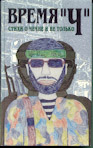 T , from the fact that in the book that contained poems and poems of more than a hundred modern authors, there are also modified quotes, and - in many - epigraphs, and even poetry poems, you can’t replace the compiler of the collection in any way. This is natural for the anthology, published during the Second Caucasian Campaign, during (anyway) a rare war, war-Remeika. There and the shadows of the classics flash on the pages, but especially often (which is quite natural) you come across the phantoms of the authors of "sleep" and "poems about the 1980 winter campaign." It is these two poems, in my opinion, that are a kind of tuning for the “Time” h. And, perhaps, the lines of the block “let the groom rides - does not give. The Chechen bullet is true. "It is incomprehensible why not a single participant in the book put them with an epigraph to his own text, although another two -to -end Alexander Alexandrovich - about spring endlessly and without a edge - found a shelter on three hundred first page.
It would be unfair, and it is unworthy to reproach the authors and the compiler in the secondary. Recall the Borkhesov assumption: all writers are one writing. And recall Ecclesiasta: there is nothing new under the sun, just turn on the "box". "In the television bowl / about the victims of the Chechen war / personnel in the hospital / boy of about thirteen / torn off his legs above the knees / seda, a spatristed mother / throwing a blanket / in front of the cameras." This is a fragment of the poem by Dmitry Kuzmin. But Philip Minlos peers into the same TV adit: “Suppose his name is nine gives her nine large roses / she lives on Spartakovskaya / everything and always reads lying / watching the series Antonella / says not to give so many flowers / or I will not allow you to escape / Jewish, he cooks well / I am not clapping the second floor / I do not clap the door / with the kitchen. Gudermes / In the next series they / will not appear on the screen. "
But the thing is that only the "statists" disappear from the screen. “Heroes” and “characteristic” presenters, if they do not wander from series to series, will certainly appear a dozen shortages later. In another suit. Against the background of a different decoration. Moreover, I noticed that in the first Chechen among the "statists" there were acquaintances of acquaintances , and in the second - just familiar , although not close ... This is the approximation of your individual tragedy or, better to say, the eve of the collection that has expired. "In the white sky in blue transparent windows / handfuls, it is as if a child throws sand / bird flocks / Mom calls far. The voice is lost stalling / Boy collects empty sleeves in the woods // Open the hunting season shoots in the summer on the fly and the leaves and color feathers / friends give / and red spiders all wait for the guided wind / and the cartridges stand at the table smell of burning " (Dmitry Grigoryev). You must admit that these lines from the book about the war in the Caucasus will come to the place and in the book, for example, about the "third Udmurt" or "fifth Nanai". As, however, the verses of the oldest of the authors of “Time“ h ”is the seeds of Lipkina (who knows what“ Time “h” is, not only from the media or from acquaintances of acquaintances): “An unnatural rumble of guns. / Enravous smoke rises. / Wasmous people have decided, / that it is easy to die young. // Pouns a rock of loud tears, / with an angry noise. The goat is scattered.
These eight lines resurrect in my memory the Moscow winter of 1994-95. In the janitism and boiler rooms, in offices and offices, and especially in the editorial offices - disputes with foam at the mouth, with grabbing for lapel (there will be a storm? Who? Who? You? Me? Yes, I myself ...). You work as a fashion-fashion, go on challenges-almost everywhere a TV is turned on, in which the blue-black, trace, purple. In the center on each corner - verification of documents. He ran out to Tverskaya for cigarettes - they took hands under Bely. And the sunset over the Belarusian station is a crimson, with the prooferens, and in a dream, flying fish, then a childhood friend in beret a paratrooper, then in the winter sea of the barge, on board loaded with boxes in brown boots ... and - at least once - well, I will not say that the feeling of Deja Wu, but the feeling that there will be deja vu, not through a moment ...
But back to the book. Its appearance in our progressive -aggressive society is an undoubted event, after which the war will undoubtedly continue. The heartbreaking Lermontov’s “dream” did not stop the Caucasian war in the nineteenth century, and Brodsky’s gallstone -and -for -persons about the “1980 winter campaign” - Afghan bloodshed in the late twentieth. At least the attempts of literature were still in vain to contrast the war, they are in vain now. “We and they breathe the same air / One oxygen burning in our cells / We write and write and write and write / they kill and die / We write / write, we let the bowl in a circle / They break the skulls // We pretend to be a person to a person hunting / who are our lines and these are also / probably those who are with attacks on the skin” (Raphael Levchin).
Having retreated two spaces from the quote, I will try to formulate a hard -to -verbal thesis. Yes. Not again - in our memory and in the foreseeable history - poems and poems stopped either bombing, landing, nor "laid out" (so often appearing in the collection). But "never again" - does not mean "never in the future." “Farewell, princess, I’m going far, / to where no one has been to us yet. / From restrained waves and pearls of the East / I will be taken to fight in the Caucasus. // ... Farewell, Princess, don’t think badly. / I don’t cry either. The Caucasus is so the Caucasus. / And if I’m a perish, without a lot of use” (Dmitry ”(Dmitry” (Dmitry River). Although in these lines, it is quite “traditional” for domestic literature, one cannot but notice the shade of posterity, they also hear the nostalgia, addressed to the future - nostalgia. In her presence, the author’s “pose” is more than excusable. Those who are the current homebody who, from a dozen or two years ago, went to fulfill a “sacred duty”, who parted with friends on the platform or from the military registration and enlistment office and who did not deign to come to a girlfriend, this doomed bravado is close and understandable. Admit the favorable writing readers that in each of us, faith is glowing in contrary to everything: someday, in some wonderful way, the process of folding letters will melt the icy stone on the heart of a non-repubilities of the reader and not even the reader at all. As if I want to sit the pants at the computer or vigilant over a sheet of notebook paper leads to an effect like what, say, Raggi’s stadium concert was nearing during the Civil War on Jamaica ... Probably, while we are in the Third Roman Empire, where, according to the observation of Viktor Krivulin ( the earth he is fluff ), the smoked March dryers have contours Private Ivanov or Kazbek Atatuev - still it is necessary to open a notebook, repair a pencil, turn on a used computer, go along the path from the beer to the book. For if this is not done, then the literature of the beginning of the third millennium of our era will be like two drops of water similar to the ancient Veselonian cuneiform writing - or to the Mesopotamian letters that I made in the epigraph.