
Translated material
Anton Dolin. Cinema-30: Bodan Taurus with the Emperor
"Romanovs. Venzenos family" Gleb Panfilov and "Taurus" Alexander Sokurov
The films of Sokurov and Panfilov became noticeable events in cultural life simply because they could not not become them. Classics are classics, and the topic obliges in both cases. Each director put a double burden on his shoulders - the responsibility for the historical and artistic resume. There is no need to talk about one of the percent success in any of the two cases, and this is not surprising - too capital questions are posed on the agenda. Nevertheless, in both cases, a statement has been made - quite conceptual, conscious and weighty; It is difficult not to reckon with him.
We will immediately reject the criticism of all those who said and wrote about the mismatch of both films of historical truth - about the last months of the royal family and about the last years of Lenin's life. Firstly, in each gaming historical film you can find hundreds of inconsistencies of reality - all the more so since for complete adequacy a giant staff of consultants and a huge budget is needed, which sometimes cannot afford not only Russian, but also American paintings. Secondly, both the Romanovs and Taurus are not historical films, but mythological films. No one tried to check the reliability of the events of the "Molokh" - probably because our public is known about the Fuhrer’s everyday life, and in Europe they reacted to the picture as it should - as a fiction. By the way, Sokurov himself persistently repeats in every interview about the "Taurus" that there is simply no ideological or historical component there. Panfilov’s previous experience from the same time - his adaptation of the Gorky “mother” - was an attempt to overcome ideology and plunge into the deliberately inaccurate element of the myth. In addition, over the past eighty years - and especially over the past decade - the images of the last emperor and the first leader have been rethought so many times that the original appearance (and as extremely vague as the historical period itself) was completely lost and - most importantly - lost significance. Finally, the task itself is to summarize the intermediate result at the junction of the millennia, to show the quintessence, the pain point of the era in two conditional hours of screen time; At the same time, the remarks that "the shooting of the Romanovs were not an imitation of family photography," but "Lenin did not ask the party to poison". Of course, the fact that one famous director of Soviet cinema chose the heroes of the Martyr Tsar, and the other leader of the Communist Party, indicates not the difference in positions, but about the chosen angle of view. In the focus, there is a myth. It is curious to try to determine what is its specifics.
The Romanovs. Wencenoal Family is a thorough and detailed following the director and viewer for the central character, Nikolai Second, as well as his family throughout the “last path”: from a fatal trip to Mogilev to the execution of Ipatiev’s house. "Taurus" is a concentration in one day, invented by Yuri Arabov and Alexander Sokurov , all recent years spent by the patients dying of Lenin in the hills. So, in the center is the process of dying, lasting in time and space of death. The macabaric nature of the Russian cinematic myth is not news, its roots are still in the "Bestensis" Potemkin ", and recently it has become a rule (maybe everything has begun with Elma Klimov’s film about the collapse of the former world with the speaking name" Agony "). The lifelessness of the Sokurovsky Hitler, his impotence spoke for themselves, in the" Khrustalev " of Herman's key scene became a key scene The episode with a dying fate into a pile of meat suffering from pain, and these are the best domestic films for near -historical plots in recent years;
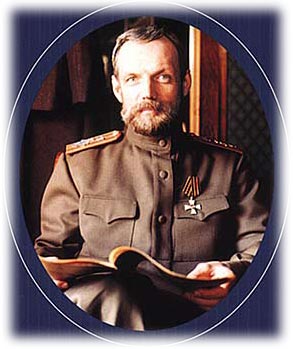 In the film, Panfilov, Nikolai Second - the dead. In the best sense of the word. It is no coincidence that in the original version of the "Romanovs" the scene of the execution , the episode with the recent repose of the royal bones in the Peter and Paul Fortress crowned. The director’s goal came down to the task of a trivial exorcist from horror films: to find where the bones of the dead man who are not able to find a repose are hidden, and to bury in the sanctified land. And Panfilov coped with this task. Nicholas in his film is the same dead, which is either good or nothing. And since Panfilov wants to be objective, observe the likeness of a historical sequence, reconstruct events, he prefers to speak not “good”, but “no”. The author’s position is neutral. This is a conscious and consistent position: we meet Nicholas for the first time at the moment when his reign is coming to an end, and it is already impossible to say whether he really committed the atrocities for which the Bolsheviks hate him, or, on the contrary, ruled rightly and wisely, until the horde of non -humans sentenced an unsubstracted autocrat to death. Panfilov shows events one after another, accompanying them with the titles with explanations - what's what, when and where, but does not give an assessment. Even to the question of a retired king, the only son - "Tell me, I was a good king?" - There is no direct answer - it would seem that the character can be afforded that the author does not allow himself ... but no.
It is curious that neutrality in the assessment is expressed quite vividly at the level of acting. In the "Romanov" many famous, outstanding artists, and all of them are busy in episodes. Each character: Oleg Basilashvili is a humane, but honest physician who cannot be silent and announces the emperor about his son’s serious illness (the whole role is for three minutes), Alexander Filippenko is a cynical infernal Lenin, who decides the fate of the royal family behind the scenes of the pen (one episode), Cyril Kozakov is a cowardly sustainer (two and a half and a half. Episode), Mikhail Efremov is a variable, but not without nobility, the eternal boy Kerensky, Igor Sklyar is a harsh, although not alien to humanity commissar from Moscow ... At the same time, it seems that the playing Nikolai Alexander Galibin , on whose face the camera is concentrated over 90% of the screen time, is an ideal person without properties. A person as such, who has only an external appearance and a number of common character traits - love for the family, good manners, indifference to drink, cowardice in difficult moments, the ability to gather with the forces at the moments of truly heavy ... Nikolai Galibin - absolutely no, just like his family - quite faceless (distinguishing four Grand Duchesses from each other, although everyone seems to play gifted young people Actresses), and the environment: explanations and credits - who is who is some of the generals - is doubly absurd, since the names of historical characters do not say almost nothing to the general public, and the screen portrait of each of them is completely devoid of qualities.
Probably, Panfilov’s idea was relatively simple: to show that Nikolai was also a man and did not deserve such a terrible death. However, as a result, something opposite turned out - almost everyone looks in the film, with the exception of the crowned family itself. The final is known in advance to the audience and the authors of the film, and the strongest scene of the picture - a cruel and colorful execution - only agrees that it is read in the subtext from the first frame. Nikolai, the martyr in advance, the hostage of the inevitable death, behaves accordingly - intelligently, gently, doomed. In short, this is not a full -fledged portrait, but a schematic image of a chapter from the icon, into which the emperor and his family are embodied in the last (added at the final author's installation) scene of the film - canonization in the Cathedral of Christ the Savior in August 2000. This is a logical ending, and Panfilov perfectly demonstrates the process of mythologization in Russian: the one who during the painting "was no" "suddenly" becomes everything. " Alas, the film loses its main plus - neutral intonation, instantly becoming a clumsy apocryphus, in which the vengeful viewer wants to seek out historical inaccuracies. Fortunately, there are enough of them ...
"Taurus" is a work much more strange and original than the "Romanovs". However, the main installation is made here on the same neutral intonation - the film causes a negative assessment of both the extreme left and extreme right -wing politicians; Sokurov did not score a nail into the coffin of Lenin, but the apologetic mausoleum dismantled the brick, pulling out the mummy tired of decades to nature, in the city - in the hills . If Panfilov shows the process of forming a myth, then Sokurov seeks to create his myth instead of the usual one. And here is another point of contact: the visible attitude towards the creation of the image of Lenin outside the authorities, a sick, tired, and therefore the image of Lenin-Human, instead of a leader, in reality turns into the disappearance of anything habitual-human from the characters of the story told. If the heroes of Panfilov exist on the eve of the paradise of the gate, then the action of the "Taurus" takes place already in the afterlife.
This is not Christian and not danta hell - it is not hell at all, but the world of life after death, pagan (pre -Christian connotations of quite religious Sokurov in the last two films are clearly expressed even in names), uniting the souls of villains and righteous - as already mentioned, there is no similar division in the "body" at all. Muted pastel colors (mainly green) and sounds, the complete merger of the organic world with the human world; Apparently, in order to avoid the repetition of the sharp contrasts of Molokh, here Sokurov himself took up the camera. As in the "Romanovs", the construction of the art world is concentric, around one character. The rest here are statists. People in caps and servants are either small assistants to the orders of the underworld (apparently, the director himself), or the servants on the funeral service, or the jailers. Two women, sister Masha and wife Nadia, are like two gospel Marias - a woman as a family and a woman as a companion. And in the middle he himself is Lenin, simply Volodya.
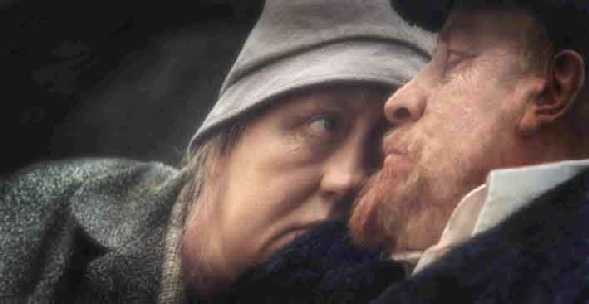
If Nikolai Panfilova and Galibin is a walking icon, who is aware of this and therefore behaving like an icon, then Lenin Sokurov and Arabov is a lot of and varying. Nikolai is a man without properties, Lenin is a person with properties, but without a face. Leonid Mozgova, who played Hitler in Moloch and Lenin in Taurus, is a truly ingenious actor, Proteus, whose skill is not able to duplicate any dressers and no computers. He is strikingly similar to his face to Lenin, but the character absorbed so many images and myths that he ceased to be specific. He begins to forget the names of the satellites of life and associates in the party (“Who is he?” He asks about Stalin. “Georgian? Jew?”), He is afraid that he will forget his own. The main and insoluble task set by the attending physician for Lenin is the multiplication of 17 to 22. 17 - the designation of the year when Lenin was a person with a capital letter, a real historical person - the most influential in the world. 22 - designation of the year of action of the film, or eternity, in which every day looks like the previous one, and time loses its meaning. Therefore, the physiological similarity of the actor, playing the role of Stalin, who comes to visit the patient, is not so important with the historical prototype - in the world of shadows living people themselves become shadows, in contrast, and are in a hurry to return to their, real world, to regain flesh there. Here, in the hills, political intrigues have much less meaning than the mystical result of multiplication 17 by 22.
Lenin performed by the brain - a character that contains a whole galaxy of images from the cultural heritage of mankind. He is Taurus - a living man, a prisoner of his own body, refusing to obey. He is a golden cart, a subject of worship that does not have the right to his own opinion and, moreover, to freedom; The subject is too expensive to stay unattended. He and the sacrificial Taurus, brought for the sake of eternity, so that she would allow stories to go on his turn, already without his participation. He is a braid symbol of suffering, trying in vain to escape with the help of his only cane - a Lynchevsky man who has returned to the screen.
If the “Romanovs” are a hymn of memory, suggestion “to remember”, then the “Taurus” is an apotheosis of oblivion, the action beyond the boundaries of the flat (therefore, the timeless effect is more summer, and the dim greens - summer), where even the multiplication table loses its former meaning. The approaches are different, there is only one conclusion: the story as such, consisting of facts and evidence, died and gave way to myth, in any case, in art. Before the viewer - two recipes for reincarnating history into mythology: since the last cunning will not allow you to look at it objectively, you will have to prefer something ... The choice is the viewer, who, perhaps, is much nicer than Mikhalkov or Radzinsky. Today, history suffers a subjunctive mood.