
Translated material
The most comfortable of the status of the letter "
In her translations , the name of the rose , the Pendulum Foucault , the island on the eve of Umberto Eco were published.
Laureate of the Il Prize "For the best translation of the novel" The name of the Rose ", (1988), the" Zoil "awards for the translation of the novel" Island on the eve "(2000)
RG: How did you come to the translation?
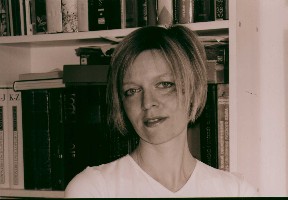
Elena Kostyukovich: I always wanted to edit, make words in illusory "good" ranks. If you write your own works, you will also build such "good" ranks, but with a certain psychological device you are shy. Probably, some non-standard conditions are needed: for example, alcohol euphoria plus no more than an hour at the disposal. Or work under a stranger. Or a genre of a friendly joke.
Translations are born calmer. The translation can generally start doing, finish and will be satisfied. Translation is the most comfortable from the status of the letter.
You also proceed from the amount of the rules, select words on the basis of chess combinations, cultural precedents, always given the prosodia. However, the position of the translator attracts what it is clear from what rules to proceed. Of course, no one frees you from big questions anyway, but at least you are not responsible for the main thing whether it will be a detective or pastoral, a boy or a girl. The functions of the demiurge took on the original. The translator is responsible for the less universal aspects, although also responsible: for name, for example, for choosing a language. The name affects both the social future of the child and its character. Similarly, the speech that you put in the child’s mouth and hearing (if the choice of language is ambiguous, as it was with my children in real life) - this speech will become the guiding of his fate. But still, to determine such aspects is not as nightmare as solving the issue, to be or not to be.
RG: Who do you consider your teacher in the field of translation?
E.K: I was not taught the translation, that is, I did not pass on the translation of exams and did not go to seminars. Moreover, there was no student student (in the student’s cloak). I think that the translation is not preserved. But we teach the syllable. First of all, abbreviations. Of course, grammar. With regard to technology ... Well, someone should notify a person in the first years of work that repetitions, anachronisms, and unintentional assonations should be avoided. What else can you teach? Who can read the due number of texts for another and who can know what rhythms wander in the other in the head?
A teacher of editing techniques for me was Vladimir Muravyov . I learned with grief about his death from the publication in your selection. Immediately after the end of Moscow State University in 1980, he took me to work in his magazine "Modern fiction abroad", published at the library of foreign literature, during the reign of Gvishian-Kosygina. He who remembers this ballot, he knows that information about the current Western, including the Svic culture: about prose, poetry, literary criticism, as well as festivals, theater and cinema (special nomer) came through it. Muravyov came up with the formula for this reconstruction of forbidden reality in analytical retelling. He demanded that retelling be made correctly. The authors did not always bring competent texts. The texts of such a touching curvature entered the processing that certain parts of them stuck in their memory for life, like "cut, brothers, cut." “He lives a male Vikuny ... One friend Ricardo gives him an idea where to find a female ... The hero goes across the border to Brazil, where the female Vicuni are noticed. He does not think about the extermination of animals, he is dear to the idea of increasing their livestock. He thinks about life ...” (I do not remember either a reviewer, nor even a country of publication).
Muravyov demanded from us, editors by regions (mine were Italy, Portugal and Latin America) of the radical processing of these semi -finished products that came into the journal. In particular, we were obliged to read the reviewed book and polish all the moments of retelling, optimizing the translation of the name and quotes given. We also had the obligation to bring a social note into the analysis, for which the ants himself later mocked us. Following our editing, he took on each article himself, stylistically processed it, cut, entered new pieces.
Working under his control, I got used to being afraid of a mocking parsing, applying the principle of "If You Doubt, Throw it out" and not apply the word "start". ("Do not write: he began to scream. Write: he screamed." - Muravyov).
Muravyov and I did not talk about translations. In those days, he was engaged in Tolkien , I - "the name of the rose" and the treatises of Italian Baroque (Thezauro). We are always conducted in the most general plan about these non -resident, real classes ("His/it will not be in the service today: he/she sits works, do not twitch, do not call").
Translating, that is, expressing “not from myself,” I, in particular, saw cases when it was appropriate “he began to scream”. This confirms that you can teach a good syllable, but translation cannot be: in translation there is a place and a bad syllable.
I will add that during the first works I had an attentive and competent critical reader - Sergey Leonidovich Kozlov, from 1979 to 1989, his hints influenced many of my decisions, which later seemed successful to someone.
Reading other people's translations, which is stimulating for me, is a reading of the translations of M.L. Gasparov (before - Vagantov, now - Vagantov and Ariosto) and M.A. Salier ("thousand and one night").
ML Gasparov once performed at our philological faculty when I was in my fourth year. His lecture was rich in technical instructions: the language of ancient Rome can be translated into Russian Russian, but the European seventeenth century requires an appeal to the Russian eighteenth ... since this coincided with my intuitive impulses, so I do it all my life, already without Hamletty indecision. Then I asked a question from the place, whether the translator should correct the author’s obvious mistakes. Mikhail Leonovich replied - let him correct, since he plants his new ones, the proportion will be observed.
That's all the students.
RG: Do you translate several works at once, if so, can it be things of different authors and genres?
E.K: If you have to break away from one and urgently sit down for another, let the other be as far as possible along the genre, so that the rules, prerequisites do not get confused. I also make technical translations. What is there to talk about authors and genres.
It all depends on practical necessity. Returning to the recently left work is quite easy. After the set of characteristics of the text has been developed in memory, it will not go anywhere from it. Unless if it was a break about fifteen years, as it turned out with my translation of the "telescope of Aristotle" Emanuel Thezauro, which I am finalizing for printing (for the Petersburg "Aleeta") now, and the text of the science was handed over in 1985. It is possible to deal with two or three translations at the same time. I translate in parallel from Russian to Italian (since I live in Italy and live publishing labor) and from Italian to Russian. But, of course, when you sit for a computer, in this piece of time (an hour, two, in a happy version - ten), the translation should be one. The larger the translation and the larger a lump -sum portion of work, the faster it moves.
RG: What are your own translations most?
E.K: Chapters 107 and 108 from the "Pendulum Foucault" Umberto Eco .
RG: What work was the most difficult for you and why?
E.K: All texts where the modern realities of the West are involved and where a neutral modern language. Wanting to try extreme difficulty, I undertook to translate a small book of Moravia “this is the most” for the Petersburg Limbus. Now it’s very difficult for me. In particular, because you have to invent Russian techniques for an uninitated description of Eros. I am very far from the original. Otherwise, disgusting. Only think, even the first pages of the new novel by IVF Baudolino (they are written in an imaginary protoromanian language) did not cause me such difficulties as the prose of Moravia, and did not require such removal from the original text. But I want to do something unusual, I undertook to oversee the entire series of Moravia’s books in Limbus . This is the stylistic layer to which ninety percent of modern Western literature owns - and two percent of the Russian.
RZh: Was it so that you started the translation and then threw it for some reason?
E.K: It was a hundred times and will be a hundred times, fucking. These are mainly poetry - translations from Italian, English, French, Spanish. No one is stopping someday to return. There are finished unpublished translations. They were made, not endowed, and then the time was gone, timidity was overcome or interest was lost. If there is a desire, someday I will be back, fuck.
RG: Does the atmosphere of the translated work affect you?
E.K: In practical life, the atmosphere of what is written or translated in this period does not affect. Rather, on the contrary, it is like an artist that a desire to go into the high -part of the stage role is goliardically. A translator who would never allow himself in his own text to scandalous praise, or sentimentality, or tearfulness, this translator is the happiest of mortals when he manages to pat the face on literary stage, knowing that the responsibility is not his. In the eighties, I translated the social verses of modern Italian poets. It was charming. It was possible to turn to the rhythmic memory of the "installations" of pioneer childhood. Now I am translating erotic stories of Moravia. But life has not yet been filled with a frantic rampant.
So the style of the translated does not apply to life. Another thing is that life itself goes against the background of constantly present verbal tasks. In moments of monotony, sagging, when part of the energy is absorbed in something, and other areas of attention are not busy: say, when you steer a high -speed highway by car for a long time or sit at a meeting, the tasks come out onto the active plan of logic and begin to solve and, characteristic, are well solved. Everything needs time, but there is never enough time.
RG: Having finished the transfer, do you take it right after another or give yourself a vacation?
E.K: I belong to the category of such psychos who are most afraid to be left without classes (being loaded forward for fifteen years), so I begin another job on the same day.
RG: Do you agree that the first page of the transfer is weaker than the rest of the work, because the translator is only getting used to the translated work?
E.K: The first is weaker than the second, the second one weaker than the third, there are rules that are crystallized to the hundredth, but since everything corresponds a hundred times, no first exists. In general, I always translate the first piece of text last. The “Foucault Pendulum” was translated from the thirteenth chapter, the “Island on the eve of” from the fourth, “Aristotle's tender pipe” starting from the second book, “how to write a thesis” Umberto Eco (in the near future is published in Moscow “Book House University”) - from a subgal for 3.4. I began to translate the name of the rose from the first service of the first day, but the novel begins with three introductions that I made under the curtain.
RG: Do you make a "fish" or the final text?
E.K: I immediately make the final option, which I then remake endlessly. When there were no computers, the texts were reprinted at least five times. "The name of the rose" (800 pp.) And the "telescope of Aristotle" thesauro (1000 pp.) I reprinted six times on the typewriter. In general, everything was much easier with the typewriter: when the sheet was so packed that it became completely unreadable, it was reprinted, and for its inertia and the next few, and at the same time eliminated blunders. Since 1988, I have been working on a computer. When you are dealing with a computer, your gaze falls somewhere, you begin to correct, word for word, and everything is twisted, and the return is unrealistic. Another lovely plot - confrontation of files and work not on the last (right) - but on the penultimate file. In general, thanks to them, computers, of course, especially because such an impact force is not needed as the keywords of a printing machine, so you are less whining ... You can still make automatic searches and automatic replacements, after which a feeling of uncertainty is formed that you rush to read and rule the whole work from the beginning to the end. Thanks to computers, of course, work was dialing, so our work has become even more tiring.
RG: Does your attitude to the text often change, for example, disappointment, etc. From the first reading to the subsequent work with him?
E.K: No. I mostly like it stronger as my acquaintance deepens. For me, the goal is not to recreate masterpieces, but to recreate stylistic ligaments. If you study the subject for a long time, as you know, you will also be interested in improving the incubation regime of musk duck eggs.
Since I am not interested in many, but I am translated by Umerto IVF, here is a piece from an interview that I took from him in 1998, preparing his trip to Russia. The interview is large, it has never been printed.
- I worked for about forty years in the publishing house, edited other people's translations, from where I had a great distrust of translation as an idea, as well as great respect for him, and I sparkled that I would never translate anything in my life, since this is too difficult. Indeed, in good two decades I translated, by practical need, only one article on the philosophy for my magazine Versus. But nothing else.
I had to jump into the water and swim when Kalvino persuaded me to translate the "stylistic exercises" of Remon Keno. I must say that this is a thing that I already wanted to translate long before that. I made a certain imitation of sounds, forms of words, the anagrams of the original, realizing that I am engaged not so much of translation as retelling and implementation. As I said in the preface, it was about understanding how Keno plays with his tongue and play an equivalent game with my language. It was an honest operation, since the translation was published with a parallel original text, and therefore it was quite clear to the reader where I gave a real translation, and where the retelling was. The text included poetic parodies that Keno composed on the basis of formal rules of the French verse, and I remade in accordance with the poetic tradition of Italy. In any case, it was an amazing exercise.
The second important translation in my life, completed a few months ago, is Zilvi Gerara de Nerval. And I have to say that I somehow worked out on this translation imperceptibly for myself, wait, the sixties, seventies, eighties, nineties, I worked forty-six years. I read this book at twenty, fell in love with it instantly, I studied it a lot, read the courses in Bologna, in Paris, in the USA, wrote articles on it, led diplomas from it, and there was a feeling that this text, the more I analyzed it, the more deeply penetrated into the smallest details, stylistic and narrative, the more fresh and new it seemed to me. Every time I read it as if for the first time. And then I told myself that if every time I open it, I open it again, the only way to understand it is good and deep - to translate, based on the proud premise that if there is a person who has devoted more than forty years to ponder this essay, then this is precisely me.
This enterprise was extremely difficult. I studied ten Italian translations, three English translations; I needed English because the imperfect is very important for Silvi, there is no imperfect in English, which is why I was occupied, as translators were twisted into a language in which there was no imperfect.
I was occupied by the problem, common for all translators: is it necessary to orient your text on the study of the original world or bring the text of the original to the picture of your world? ..
Further, I told his private difficulties and options for their decisions for quite some time. I admit that I personally are unusual for me to discuss point decisions. It seems to me to boast of my own puns in the same way (this is not an eco case, but this is your favorite occupation of colleagues in congresses and conferences on the problems of translation), finds or its amazing accuracy in some place.
By the way about finds. I remember a very long -standing dialogue with an adviser colleague:
- Maybe you will come to mind, you need a closet, but not a closet, and in a male gender.
- Schiffonier.
- No, you need l'Mme debout, a standing man ... I know the navigation "Monashka". But the "nun" woman.
- Well, make a "monk" ... from yourself ... invent then ...
- No. So I think, if you already invent, to convey Debout, let there be a "Stoic". A? Then the translation will turn out "In the corner of the room was Stoik ..."
- See for yourself ...
(The editor without asking for corrected, it turned out in the press: "There was a table in the corner of the room ...")
It seems to me that in a conversation about the profession the presumption should be this: everything you have done have an explanation. In some place, it is important for you to move away from the original - leave, and be brilliant. In another place, be literally accurate. In the third, be the accurate phonetically. I translated hymns from Latin, monitoring compliance with the supporting vowels. In Lozinsky, at the beginning of the "Divine Comedy", supporting vowels of the original are observed ...
It seems to me that in prose it is advisable to reproduce not as grammatical as the accent aspect of the original - Sillabik of prose. This is personally my principle. I think it’s crazy enough. But he helps me.
Желательно понимать, чего ты добиваешься, в любых местах текста - в том числе в неэффектных (профессионалы знают, что неэффектное труднее всего). Желательно улавливать скрытые цитаты и воспроизводить их, но не комментируя и не кичась невидимыми миру находками. Think! Вот в барочных часах гравировался узор на механизме, на шестеренках, чтоб им мог восхититься в лучшем случае один человек - коллега, другой часовщик, да и то вряд ли, ибо по идее часы делались настолько прочно, чтобы не ломаться и к другому часовщику не попадать в руки...
Беседу провела Елена Калашникова