
Translated material
Swedish shop # 50
The release was prepared by Roman Ganja

Sergey Nosov . Give me a monkey: novel, stories, plays. - M.: Olma -Press, 2001. - 320 p. - (original). Circulation 5000 copies. ISBN 5-224-03174-5
The Olma publishing house launched a new series of Russian non -jeanne prose. The project is called "original". The author of the project is Boris Kuzminsky . The idea of the project, the ratio of the genre and the mainstream in the book market, the principles of selection of works, author's fees - about this and much more Boris talks here and here .
Sergey Nosov is a famous Petersburg prose writer, author of the novels " Mistress of History " (1999) and " Member of society, or hungry time " (2000). The "original" collection includes a new, newly finished novel "Give me a monkey", plays for reading "John Lennon, Father" and "Berendey", three novels.
"Give me a monkey" - a chronicle of a provincial election campaign. The central character, the writer Tetyurin, works as a textual at the headquarters of one of the election blocks, then he is beaten, and in the end they are imposed on the role of the bridegroom of the candidate Nonovoi. In the final, we find the hero in an extremely unpleasant position. Here, in short, and the whole plot.
But that's not all. Against the backdrop of grotesque election decorations, a real drama is played, the heroes of which are not so much people as the methods of worldview, the technique of thinking. There are two such methods in the novel. The first is "literature", or "metaphor"; The second is "life", or "metonymy." To think literary, or metaphorically is to think paradigms, binary oppositions and hierarchies. Any thing, including the most thinking person, occupies a clear place in the system of similarities and differences, it is always necessary to itself and is comprehended in the categories of foundation, essence, truth, integrity, subject, creation. To think metonymically means to think with random associations and aleator sequences. With this approach, a thing is determined not by a unique configuration of qualities, but primarily with its combinatorial capabilities, functionality, versatility. “Literature” in the novel is represented by Tetyurin, and “Life” is a fashionable political technologist of Kosolapov. The action of the novel moves in the direction from the "metaphor" to "metonymy" (as in the Zyuskinsk " perfumer ") and ends with the apotheosis of the latter.
Tetyurin does not think of himself outside of his place in the generic hierarchy of entities. He is an "writer", "creator". Tetyurin draws models for his work (and to comprehend the events of his own life) from two sources. This is a treasury of world literature and memory stores . A new role - the production of gross metaphors - is given to the aunt easily. For the time being, until he is instructed to compose a love story for one of the candidates. Tetyurin sortices possible options, but they all suffer in inaccuracy , there is no authenticity, the truth of life in them. The rhetoric of common places stumbles, and then the aunt adapts his own love story - that is, it takes something inviolable , a particle of himself, and makes a substitution into someone else's history.
And here we are moving to the territory of Kosolapov. Truth and in general any correspondence does not bother him. In the developed scenarios, Kosolapes achieves, first of all, the maximum effect . The value for him is not the image itself, but the energy that is produced as a result of the perception of this image (for example, at the exhibition of contemporary art, not objects themselves are important, but a degree of attention of the public and critics, and this degree can be regulated). Anagrams, puns, random associations - these are the instrumentation of Kosolapov.
Tetyurin also complies with his "fall" in the images of a verbal game. " Tetyurin thought about interchangeability. Book" Bogatyrev "to change the aunt to Bukovka - will it be worse? " This is "dirty" technologies. After all, what is "purity"? This is the demarcation, distance, strict order of entities. "Cleanliness" is Modus Essendi "Literature". On the contrary, “dirt” means merging, mixing, direct contact, metonymic substitution, random connection, substitution, that is, “life”. Us. 273 Tetyurin will be raped, on p. 274 - beaten, and just at that moment, Kosolapov decides to marry the aunt and Nonova (p. 278). " Tetyurin did not know whether to cry or laugh. <...> Nobody even consulted with him, he was not asked for permission, he was vocrated by the Banbratian, in his own way. And, the worst thing, the aunt likes. Like someone else's middle name, as it gives an amazing anagram (p. 315), I like to be a "groom", I like the gypsy light in the eyes of a non -verification ... Final: in the midst of a wedding in the aunt, they launched shit. The fact that the writer Tetyurin seems to be the end, in fact, is the apotheosis of "life", dirty, nasty, disgusting, criminal. Cold Anflerazh in Russian.
Quote: Only what is not smells of. Even what is not, it is able to smell if it is desirable, like a piece of raw -capacious sausage, always absent, but always chased, but the sensible must smell, since it smells, how can you feel unnecessary and silent? One visibility. The visibility of the non -existent. The visibility of what should not be - not the property smell. Inexplicable. Brains is slanted. The dog’s hind legs tremble when she dreams of the moon.
The moon is a big nothing. The image of non -being, the image of the sensitive death. I want to howl.

Natalia Smirnova. Factory: Roman, stories. - M.: Olma -Press, 2001. - 318 p. - (original). Circulation 5000 copies. ISBN 5-224-03173-7
Natalia Smirnova lives in Yekaterinburg. Published in the magazine " Ural ". The first author's collection, " Love Stories of Flowers and Vegetables ", was published in 1999 at the Ural University Publishing House. The story " Women and Shooters " was awarded the Fellowsip Hawthornden International Writers Retreat, Scotland, 2001. "Factory" - Writers in the Central Publishing House.
Smirnova’s prose is very complex, saturated, voluminous. It exists, as it were, in two dimensions at once. On the one hand - a dense, thick style, living, tangible metaphors; On the other hand, the multi -layer system of leitmotifs, which are repeated from the story to the story, are pumped out, brought to the boiling point, fall, implicitly snake and break through, germinate in the former tearful tonality. It was this serpentine, stuffy, foggy and vast atmosphere that has become for me the main difficulty in reading the book.
There is so much metaphor that you can make thematic catalogs. For example, images of nature, thunderstorm: the sky was stitched by lightning needles; Do not sew the torn edges of heaven; earned with elbow elbows, waved with robbery knives; The billiard balls rolled over their heads (but also: a fucked girl with breasts, round, like billiard balls ; and in the same section: girls, tight as a bowstring ). And, most importantly, any comparison is appropriate, does not look vulgar, even without it I bent like aspen in the wind . Or: a simple life of the species, grossly, like a droppings, heavy, like iron money.
The main theme of Natalia Smirnova is "Woman". “ This is not flesh, this is another. Views, words, jokes, turns, bends of the body. At that time, the whole world will politely step aside, stop being. Only a woman in the house and nothing more. You have to get to the bottom, squeeze everything out and her ,” the declared topic is overgrown with important details. Firstly, flesh and soul . “ Voice, gait, laughter are not quite physical nature. The soul is manifested in them ” - a purely female substance, is not a logos of which men consist, but something much more ancient, unimaginable, irrational. That is why any woman is a woman in general , a woman’s metaphor. The man does not know this, he thinks that women " can be changed like cars ." A man is a syntactic creature, the order of words, dramaturgy, intrigue, action are important to him; He is afraid to think about essence, is afraid of purity and transparency; And at the same time - stretches to them.
This is expressed in ambivalent images of water . " What can a woman give a man <...>? The opportunity to get to the bottom. That is, drown ." And, on the contrary, " to part with her is to drown, to die ." Archetype: a bear entering the lake. The uterine growl of the sea. " A tide, women go to the water, it becomes bright and frantic ." " You drink the sea abyss, drunk with fear ." A well, bottom, a woman with a fish face. Sleep: " The line is barely noticeable, a careless step - you are in the water, it is the water that is afraid of death. In the water he can’t fight off the monsters, it is deep, dark and teems with creatures ." The key scene of the novel "Factory" occurs by the lake (p. 77 - 79). A woman, water element, whole, simple, meaningless, erupting the embryos of time, criticism, reflection and absorbing again. The ancient ocean, the bosom of being, the womb of all things. Metaphor of life.
Quote: Well, the moon, the queen of reflections, in your face everyone sees what he wants, you won. I myself came here under wet snow, but I might not come, but the Narcissus is only yours, my girl, for it is vicious, any passion is vicious in this world, but she is beautiful, only she is the seventh ray piercing the sun!
<...> Well, finally we met, the moon, the queen of reflections ... glasses, telescopes, lenses, magnifying glass now my brothers. How glad I am to see you how beautiful you are, you became even better than it was, if possible. When I return, we will talk on equal terms as a reflection with reflection. In the meantime, can I? I can thank this and the last time! That's all, the crowd climbed onto the scene, see you, my girl, a vicious Narcissus only yours.
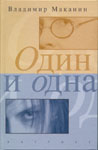
Vladimir Makanin . One and one. Baptist: Romanes. - M.: Vagrius, 2001. - 430 p. Circulation 3000 copies. ISBN 5-264-00514-1
Vladimir Makanin (b. 1937) - Moscow prose writer with almost forty years of experience. Last year, the Vagrius publishing house published a collection “ A successful love story ”, which included not only two new novels - the same name and “ letter“ A ” , but also several old things. This year, Vagrius continues the retrospective:“ One and one ”and“ Baptist ”were first published ten and twenty years ago.
The heroes of the novel "One and one" - Gennady Pavlovich and Ninel Nikolaevna - representatives of the generation of the sixties. Maybe today it makes sense to read this novel not as a “attempt” on “ one of the main intellectual myths - the myth of sixties ” (I quote publishing annotation), but as a study of a special form of life, a specific life attitude. The least I would like to qualify the Modus Vivendi heroes of the novel as successful or unsuccessful (regardless of the position of the author himself). It is much more interesting to understand how internally this method of existence is internally stable, whether it reveals a tendency to development, and what is its strength and weakness. (Then the proximity with the novel of the “Baptist” will be quite justified - after all, this is also a story about a special person, healer Yakushkin, who loses his gift.)
We can say that the “one” and “one” in everything are opposite to the so -called “ordinary person”. This person is captured by a life stream, leads a horizontal existence, but at the same time dreams of something tall, bright and pure. He lives among people, adapts, pushes his elbows, grinds, smells, crowns and displaces. The heroes of the novel live among the images, positive and negative. They make judgments , busy with rhetoric . At first glance, in their Inventio, they really appeal to the common places of the sixties. In fact, they simply reproduce the ancient idea of two existence registers. Dox and epistemic, profane and sacred, poet and crowd, art and craft, natural and phenomenological installation, intellectual and tradesman, “we” and “you” ... So all the characteristic features of the heroes of the novel - loneliness, misunderstanding of others, idealism, learning tone, directness, uncompromising - go back to the sixties, but to the era of the birth of class relationships. Brahmin, philosopher, sacred madman, ascetic, Vestalka - these are the closest relatives of the heroes. Intravision, purity, the demarcation of entities, order, hierarchy - this is the meaning of their existence. And therefore, any contact ends for them tragically: he is trying to establish normal human relations with a "ordinary woman", as a result, he is thrown out of the train; She humiliates to telephone complaints to the wives of her bosses - and as a result, she almost ends with suicide. The bloody sacrifice was brought, the choir offers praise to the gods ...
Quote: And, as always, further the words "love" did not listen: well, he fell into a dumb and saw dog dreams. When he woke up, the old man was cold. He died sitting, as he sat: bowing his head.
<...> by night he dismantled him, and he howled.
The complete works of the American writer Nathanael West (Nathanael West, the real name of Nathan Weinstein, 1903 - 1940): "Visions of Balso Snell" (The Dream Life of Balso Snell, 1931), "Friend of the Sorrowing" (Miss Lonely Hearts, 1933), "The whole Million, or the dismemberment of Lemuel Pitkin "(A Cool Million, 1934) and" The Day of the Locust, 1939).
West's main theme is violence . Violence is not as a rude fact of everyday life, but as a material from which the imagination of a modern person is woven, the environment in which the view is placed and the view is functioning. Literature and cinema do not just portray violence, they are a mental apparatus woven from violence, which is taken out and replacing people with “natural” emotions and experiences. "Visions ..." - a kind of cartography of violence, a catalog of various "perversions" of human nature embodied in various literary forms. So, on p. 29 - 31 "oligaturation" of banal beating occurs, turning it into a unique "experience": " She transferred the second beating with a meek, a soft smile ." "Friend ..." is the story of a journalist leading the section "Consolations". Constantly encountering the images of suffering and cruelty in the letters of readers, the hero loses sensitivity: " He, as a dead man, could heat only friction, and only violence could withdraw him out of immobility ."
In the "Day of the locust", a specific and terrible image of violence is drawn - Hollywood. An imaginary life, sweet dreams, coveted images are produced here. At a distance, from the screen, they excite a moderate and civilized emotion in the viewer. However, the immediate proximity to the beautiful bodies of the movie stars creates a destructive effect: lust (" rape - you can’t do less here "), shame, guilt, humiliation, and, as a result, an explosion of inhuman cruelty. The hero of the novel, the artist Tod Heket, is covered by an apocalyptic mood, he considers himself a new Jeremiah, a forerunner of death and extermination. "Cream of the madmen of America", "The burning of Los Angeles," - the names of the paintings that he writes. But the apocalypse is the usual phenomenon for Hollywood: in the final of the novel p. 330 - 334 describes a scene of a mass crush at the entrance of some social event with the participation of movie stars. Thus, the plot (as in the “ perfumer ”, as in the novel of Sergei Nosov ) moves from the “image” to “reality”, and ends with an episode of destructive bodily contact, somewhere beyond the human line.
Quote: Perkins was deaf and almost completely blind <...> but the nose! His nose was an instrument of amazingly sensitive and noble. In his sense of smell, nature seemed to combine all five feelings. She strengthened this body beyond measure, making it so sensitive that it could replace all the tactile organs combined. Perkins did not cost anything to smell all other perceptions: sound, vision, taste, touch. He could recognize the D-Minor chord by the smell, to distinguish by smell a violin from Alta. He smelled the tenderness of velvet and iron rigidity. They said about him that he could, by smell, distinguish an isosceles triangle from an unequal.
<...> In the aromas of the female body, Perkins discovered endless, unpredictable changes and metamorphoses - the world of dreams, seas, roads, forests, outlines, colors, aromas, forms. <...> From the aromas of his wife’s body, he created architecture and aesthetics, music and mathematics. There was everything - counterpoint, multiplication, square sensation, cubic root of experience. According to him, he even discovered the political hierarchy of fragrance: self -government, management ...
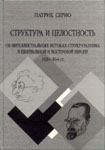
Patrick Serio. Structure and integrity: on the intellectual sources of structuralism in Central and Eastern Europe. 1920 - 30s. / Authoriz. per. with fr. N. Autonomova . - M.: Languages of Slavic culture, 2001. - 360 p. - (language. Semiotics. Culture). The circulation is not the Criminal Code. ISBN 5-94457-014-8
Patrick Serio is a professor of Slavicism from Lausanne University (Switzerland). Among his works is the monograph "Analysis of Soviet political discourse" (1985); a number of articles on the history and epistemology of science, including the history of Russian and Soviet linguistics; translation and publication in French cultural works of N.S. Trubetskiy (1996); The publication of a number of thematic collections (as special numbers of linguistic magazines), such as " Jacobson between East and West, 1915 - 1939" (1997), " Prague School : Epistemological contribution" (1994), "Language and a nation in Central and Eastern Europe from the 18th century to the present day" (1996); The publication in the Russian language of the collection of works of French linguists 1960 - 1970. (" Square of meaning: the French school of analysis of discourse ", M.: Progress, 1999). The book "Structure and integrity" was published in Paris in 1999.
The subject of the study is the "Eurasian linguistics" of the Russian Prague. Eurasian ideology is seen as an “epistemological obstacle” and at the same time as a birth environment of structuralist ideas, and this duality is expressed in contrast to the structure and integrity - two sides of the subject of “new science” described by the Prague Linguists. Установка на целостность - это установка на единство и синтез, на единую идеологию, это вера в реальность, данность, натуральность изучаемого объекта, отказ от понимания его построенности и измышленности, наделение его идеальными чертами (таким объектом для русских пражан выступала "Евразия", или "евразийский языковой союз"). Это также тенденция к усложнению предмета, когда он начинает обрастать многочисленными параллелями и соответствиями. В фундамент этой метафизики целостности заложена идея сродства как сходства и как притяжения . Эта алхимическая идея, подхваченная романтиками и преформистами, определила общую направленность евразийцев на поиск симметрий, совпадений, изолиний и увязок, а также активное использование органической метафоры (Евразия как единый организм).
С другой стороны - идея структуры как набора вариаций, установка на различие , а не на сходство, конструктивный подход к объекту науки, номинализм. Серио пишет, что путь от целостности к структуре не был пройден пражскими лингвистами до конца, однако в дальнейшем (имеется в виду послевоенный французский структурализм) " структура победила целостность "... В каком-то смысле это уже известный нам путь от "метафоры" к "метонимии" (см. выше ), победа плоской реальности над "возвышающим обманом", триумф технологии, гибель поэзии.
Цитата: В итоге современный французский язык позволяет вычленить три основоположных и взаимопроникающих смысла: от родства через союз и от простого сходства через подобие или аналогию мы переходим, минуя мир химических взаимодействий, к романтической эпохе, к идее предрасположенности, склонности к соединению, взаимному влечению, спонтанному тяготению между различными, генетически не родственными вещами и существами.
Тем самым в эволюции термина родство выявляются две линии: они кажутся дивергентными, но на деле причудливо извиваются, сближаются и иногда пересекаются. Одна линия идет из юриспруденции, где сродство есть союз в силу договора, другая - из алхимии (а затем - химии), где сродство есть сила притяжения или же влечения тел, предрасположенных к этому.
 |
 |
Интеллектуальный Форум: Международный журнал. # 6. - М., 2001. - 220 с. The circulation is 1000 copies. ISSN 1606-9552
Цитата: Для людей моего поколения они стали паролем детства. Есть счастливцы, которые умеют сохранять в памяти цвета, запахи, жесты, звуки прошлого; им не нужно придумывать детство заново, каждый раз другое; но большинству из нас необходим толчок извне, рычаг, чтобы приподнять чугунную плиту прожитых лет, и замки - один из лучших подсобных инструментов в этом непонятно кому и зачем нужном деле. Так, неожиданно понимаешь, что Айвенго и Роб Рой пережили в тебе Андрея Болконского и Ганса Касторпа; что память мгновенно выдает имена Готфрида Булонского и Салах аль-Дина, но запинается на полководцах Курской дуги, хотя их имена заучивались в школе наизусть, а о Раймонде, графе Тулузском, в суете влюбленностей, экзаменов, житейских перипетий, поисков себя вспоминать было недосуг. Но оказывается, они терпеливо ждали и при виде замков, будто окропленные живой водой, воскресли, рассыпая передо мной мешки сокровищ: забытый рисунок маминого выходного платья, запах увядающего дикого винограда в палисаднике, слова древнего, пропавшего, как Атлантида, языка - "крепдешин", "керогаз", "газированная вода с сиропом"...
Интеллектуальный Форум # 5
Интеллектуальный Форум # 6
In previous issues