
Translated material
Swedish shop # 51
The release was prepared by Roman Ganja
This is what the way you need to go in love - yourself
or under someone else's leadership: starting with individual
manifestations of the beautiful, it is necessary all the time, as if
on the steps, climb the samog about the beautiful
up - from one beautiful body to two, from two -
to everyone, and then from beautiful bodies to beautiful
morals, and from beautiful customs to beautiful teachings,
Until you rise from these teachings to the one that and
There is a doctrine of the most beautiful, and you will not finally know,
What is it - beautiful. And in the contemplation of the beautiful
<...> Only a person who has seen him can live.
Plato. "Feast"
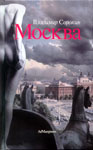
Vladimir Sorokin . Moscow : Roman, essay, script. - M.: Ad Marginem, 2001. - 432 p. The circulation is not the Criminal Code. ISBN 5-93321-029-3
Ad Marginem continues to publish Sorokina . The first was a two -volume , which has long become a bibliographic rarity. Then - “ Blue Barrow ”, “ Feast ”, “ First Subbotnik ”, “ Hearts of four ”, and now - “Moscow”. The collection includes: Eros Moscow Essay (published in 2000 in the magazine " Poster "), the novel " The Thirty Love of Marina " (1982 - 1984), the film scene " Moscow " (the first option was written in 1995).
Three texts are connected not only (and not so much) in the word “Moscow” as a kind of geographical occasion, but as a common topic, declared in the epigraph to “Marina”: “ ... for love, my friend, like the Holy Spirit, lives and breathes where he wants .” This means that there are places that contribute to the transition to the highest register of existence, no matter how we understand it: “love”, “contemplation of eternal ideas”, “truth”, “knowledge” ... places, falling into which, a person experiences trance, ecstasy, second birth, comprehends the secrets of the universe, feels the presence of higher forces. It can be both places on the map of the city , as well as the general places of rhetoric, special language constructs, mantras, spells, "large narratives". Each person has their own places, and each place has its own sensitivity.
The essay "Eros of Moscow" is dedicated to the secret and delicate places of the city, which is associated with the ascent from " banalism " to the " secret ". Not everyone lets everyone in: it, " like any woman, needs sincere tenderness coming from the heart ." Moscow should be comprehended directly : the list of "places" with a brief description of everyone may seem witty, nothing more. No grain cannot be extracted from it, and this impossibility is intentionally emphasized by Sorokin. The fact is that reading is essentially a collective practice, and the meaning of any collective, ritual actions is the preservation of the existing symbolic system, in all its triviality and vulgarity. Real, genuine, real, opens up to a person in moments of metaphysical loneliness.
Climbing the Platonic Love ladder is depicted in the novel "The Thirty Love of Marina." From one beautiful body - to two, from two - to all ... From the lead and debauchery of the Moscow bohemia - to the beautiful customs of the mechanical workshop of ZMK ... from private dissident illusions - to the excellent teachings, proclaimed from the rostrum of the XXVI Congress of the CPSU ... And what, if you think about it, the party teaches us, as not the beautiful on its own! And in the contemplation of the beautiful itself, only a person who once saw him can live. Orgasm on p. 235, “Little Death”, a birth in truth, a wonderful transformation - all this happens at a minute of the absolute loneliness of Marina, after she decided to break with the usual environment, change the “natural” order of life, get off the trodden path. And the fact that in the magical moment she “ merged with everyone ” means only one thing: the former person, limited, final, erasing the animal, herd existence, died; A new person, free, beautiful, unlimited, like an ocean, was born.
Quote: Orgasm, and even what, is unprecedented by strength and duration. Having flashed in the clitoris with a painful coal, it flares up, ignites the body burned with a surf, when suddenly - a clear tonic exhalation of a powerful orchestra and right behind the back of his head - a choir. Majestic, huge, crystal -clear in his overtone spectrum - he is right behind Marina - there are millions of enlightened people there, they sing, sing, sing, breathing together in her head, they know and feel how good she is, they are happy, they sing for her:
Union of indestructible republics of free
Great Rus' rallied forever!
Long live created by the will of the peoples
One powerful Soviet Union!
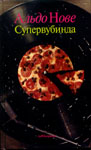
Aldo Nov. Super Wybinda / Per. With Ital. Gennady Kiselev. - M.: Ad Marginem, 2001. - 240 p. The circulation is not the Criminal Code. ISBN 5-93321-030-7
ALDO NOVE (ALDO NOVE, 1967), Italian, writes for young people and youth. "Superwood" (Superwoobinda, 1998) - the second, expanded edition of the collection of miniatures "Wubinda" (Woobinda, 1996). Gennady Kiselev is an excellent translator from Italian. Among his works are the novels of Alessandro Barikko " Sea -Ocean " and " Silk ", Roman Italo Calvino " If a traveler is one winter night ."
"Super -Wybinda" is a collection of deeply reactionary anti -Platonist feuilletons. A person is depicted by a disgusting, dirty animal. Rough instincts and elementary mimetic reactions are all that remains of the "soul" sung by the great poets of the past. (We live without thoughts, without passions ...) A world without love, a world in which a person cannot be alone with himself, because he is busy with an eternal search for porn on TV. The terrifying image of total communication, when two people have nothing to say to each other, because for complete understanding it is enough to report your zodiac sign and the name of your favorite group. A world shalled in a giant mixer to a state of absolute entropy. But what do the words "reactionary" and "anti-Platonic" mean? The reactionary means that it is a person who denies the possibility of a person to perform any meaningful action in order to change his fate and achieve happiness. Anti -Platonist - it means that it rejects the idea of the dual human nature, lowering it to the level of a meaningless, stupid piece of organic matter. The combination is an ancient, but not having lost its frog charm, repeatedly reinforced by the brilliant work of the translator.
Quote: The husband left the room and called from his Ericsson EH-237 to my Sharp TQ-G400.
The vibral immediately trembled. It was a call signal. I was so protruding from him, such a buzz was caught that I had no time. I just lost my head. It suddenly dawned on me that in our glorious times, thanks to the technique with cute, you can shut up. I only mumbled frantically. And the device is all Zzhzhzhzhzhzhzhzhzh in my pop. I could not stand it, got out of bed and took my cell phone from the chest of drawers. I was already before the lantern. I started up like a plowed whore.
I was in full swing of my crack: up and down, up and down. A small elastic antenna fiddled with the clitoris as only Sharp antennas can be fiddled. And so the broken orgasm rolled up. A husband entered the room. He was the Saint : Scorpio under the sign of Leo. With his right hand, he pressed to the purple member flashing Ericsson EH-237.
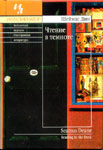
Shemas Dean . Reading in the dark: Roman / Per. from English. Elena Suritz. - M.: Foreigner; B.S.G. -Press, 2001. - 235 p. - (Illuminator). Circulation 5000 copies. ISBN 5-94145-025-7 ("Foreigner"), ISBN 5-93381-066-5 (B.S.G.-Press)
Shaimas Dean (Seamus Deane, 1940), Irish poet, author of four poetic collections, critic, literary critic, essayist. The novel "Reading in the Dark) is the first novel of the writer, the finalist of the 1996 Buker Prize. Elena Suritz is a translator from English, French, German, Scandinavian languages. The novels were translated by Jane Austin , William Golding , Virginia Wolf , John Steinbeck , Knut Gamsun , the plays of August Strindberg , Eugene Ionesko , Samuel Becket , script for Ingmar Bergman . Among the latest works are the stories of Dylan Thomas , the “ risk seekers ” O'Genry , “ Master of George ” Beryri Bainbridge , “ Emperor's Sufferberry ” John Dixon Carra . Sheimas Dina’s novel in the translation of the Suritz was first published in the August issue of Il for 1998.
Northern Ireland. The post -war years. Childhood. Central emotion is a sense of border . The boundaries pass everywhere. Behind the neighboring field is the border of a free state. People are divided into "their" and "strangers", but you never know exactly who is who. The difference is very thin, almost elusive. " Outside there was bad weather; in the house - a fire that hid in danger, love. This subtle mixture was enchanted ." Glorious past, indefinite present. The outside world, transient, unsteady, and internal world, " which will not confuse nothing, will not grow, will not touch offense ." Each moment is permeated with a sense of mystery (" life is a secret "), the boundaries between the famous and unknown, hidden from the eyes. " Keep your secrets with you, I silently asked, keep them with you, I don’t want to. But I wanted to know everything ." A terrible family secret, as if a precious family relic in the ground, brings trouble. The acute desire to take possession of it, but also fear, doubt, is a thin line that makes up the backbone of the hero’s inner life. The plot: slow, many years of climb to the origins of family tragedy, gradual understanding , penetration into forbidden depths. The secret should remain a mystery - this is the result of a long search for the hero. Heavenly love cannot be measured by the standards of earthly, human love. General love, like memory, is indestructible, because it is perfect. In the end, it is the memory that remains the last refuge of the spirit, the place where the truth is accomplished, where a person is the image and likeness of God.
Quote: Thank you, holy father. So, he throws it like a spear. And the seed is from the Latin Semen. Is it not for that we teach Latin and Greek? He says to her: "Well, the organ is the Greek word. The seed is Latin." Without Latin, one sin. Love requires Latin, fornication - does not require. I went through all the words - not Latin - which I heard on the street. They sounded much stronger.
- Now you understand? - He looked so affectionately that I did not have the spirit of saying “no”, I was confused, not understanding what the essence of the famous act was and how my parents did without the knowledge of the Latin roots. Probably, the sacrament of marriage immediately overshadows you, and you act as the church requires. I shone from this thought, and he accepted my mine for the sign of consent.
Josep Coetze, Coetze citizen, writer, critic, linguist, the only person in the world who received the Buker prize twice: in 1983 - for the novel "Life and Time of Michael K.", in 1999 - for the novel " Calnication " (Disgrace). The track record of the translator Sergei Ilyin is posted here . In the January issue of Il , in 1999, Roman Kutzeee " Autumn in St. Petersburg " was printed in Ilyin , later published by a separate book in the Illuminator series. The translation of "dishonor" was published in the January "Foreigner" for this year.
Plot: The White Professor loses his job due to a scandalous connection with the student, leaves for his daughter in the village, works as a burner of corpses in a dog sump. The logic of the development of the plot: crime and retribution . The hero’s crime is not even that he violated the natural order of things, sowed the old seed - rather that he did it without love . Love is when two become the flesh of the One , identity, purity, innocence. Without love - the violent mixture of the heterogeneous , dirt, chaos, evil, dishonor . The retribution is commensurate with the crime: 1) the university authorities, contrary to the idea of law , attempting to the inner world of the hero, and not so much punishes the act as trying to heal the soul; 2) rural hooligans, Africans, rape the daughter of the hero; She gets pregnant, but decides to leave the child. " Rape, the god of chaos and confusion, the defilest of solitude ." The daughter looks at this differently: " What, if the price that needs to be paid to stay here? Perhaps they look at this; perhaps I should look at it like that. They see in me the owner of a certain property. And in themselves - tax collectors or debts ." The fact that for the hero is an absolute evil, danger, disorder, his daughter considers as a kind of system , archaic, inextricably linked with the habitat. Within the framework of this system, the very presence of a white man on African land is a mess that needs to be eliminated by comparing a symbolic loss by a kind of ritual effect. The hero does not see a place in this system. Instead, he creates a chamber opera dedicated to Byron's mistress, Teresa. Byron has long died, but Teresa keeps the memory of him. The memory, the twilight place between life and death, in which love can only exist - this is the last refuge of the hero, the former scientist -humanitarium, and now the dog Haron.
Quote: The marriage of chronos and harmony: the act is unnatural. In order to punish him, and it was - if you discard the beautiful words - the trial is started. Returned for court for lifestyle. For unnatural acts: for the spread of old seed, tired seed, seed, unable, Contra Naturam, for fertilization. If the old people slam young women, what future is shining with the human race? This is the basis of its essence of the accusation. Half of all literature is also devoted to young women who are struggling to get out of the oppressive severity of the elderly - for the good of the human race.
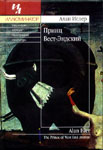
Alan Isler. Prince West-end: Roman / Per. from English. Victor Golyshev . - M.: Foreigner; B.S.G. -Press, 2001. - 296 p. - (Illuminator). Circulation 5000 copies. ISBN 5-94145-029 ("Foreigner"), ISBN 5-93381-067-3 (B.S.G.-Press)
"Prince of West End Avenue, 1994) - literary debut of American Alan Isler (Alan Isler, 1934); The translation of Viktor Golyshev was first published in the November issue of " Foreign Literature " for 1997.
New York, the House of Narbage. The protagonist, Berlin Jew, who lost his family and miraculously survived in a concentration camp during the war. The daily exercise of memory helped him to be saved: " It is clear that today you are there ... where you are today. This is normal. For me, yesterday and today have changed places. I was in the past; that I seemed to" recall "was the present. It was a conscious effort of will, and it saved my life ." After liberation, the hero erases everything that happened to him from his memory. Years pass. And then a beautiful young woman appears in the elderly house, a physiotherapist, like two drops of water similar to the first love of a hero of sixty years ago. The memory returns, but the memories are not traumatic: the hero, as it were, re -plays out his life, reflecting in detail on the meaning of certain scenes and episodes. This is facilitated by his participation in the amateur production of Hamlet - first in the role of a secondary character, and then as a director and, in fact, Prince of Danish. Life appears in the light of a grandiose directorial plan, all its disparate parts are gradually lining up in a single ordered picture. And, most importantly, the hero feels that the last act has not yet been played - he composes for himself a final, decisive, triumphant output with a brilliant decision of the director, marked by the final reconciliation with the past. " I am confident in today's triumph. The dizziness has passed completely. The flying mouse finally sees a way out of the cave and is going to forces. The trout randomly pulls its tail. After a minute I will put this manuscript in a shirt box in the closet. <...> Readiness is all ."
Quote: Oh, the oddities of love! I leaf through my manuscript that has grown to an amazing thickness - my modest attempts De La Recherche du Temps Perdu - and I myself am amazed at the number of pages that I dedicated to this inexhaustible topic. "Voi Che Sapete Che Cosa E Amor" - sings Karubino on the other side of the corridor. Yes, the oddities of love are really matter for a comic opera. Only a few have been given - in art or in life - to give their love majesty. We, the rest, must rely on these few to put on at least borrowed dignity our insignificant novels.
Philip Roth (Philip Roth, 1933), American writer, laureate of numerous awards. The “Case of the Portnoy's Complaint, 1969) is known for the fact that he once squeezed the Nabokov“ hell ”(1969) from the first place in the list of American bestsellers. Roman has existed in Russian since 1994. The new translation of Sergei Korovin is named in the publishing annotation "Brilliant." If this is the opinion of Viktor Toporov , then it deserves trust.
Cabinet Psychoanalyst. Patient Alexander Portnoy, 33 years old, born in 1933, tells his history attentive to the doctor. The past is seen by a series of tireless attempts to break out of his provincial Jewish environment, to lose the burden of family norms and prohibitions, to get rid of the obsessive image of the mother and finally break into real life, to the uninhabited conventions of love, to the open pleasure of the female body. However, it holds the past, does not let go: everything that makes a tailor is one way or another is another argument in a dispute with parents, a more or less successful “course”, another little victory in the war for independence. And after each such victory, the hero invariably feels guilty, painfully suffers, ashamed of his desires. The ironic, parody and very competent encroachment on the Freudian truth: the fact that psychoanalysts of all countries understand figuratively - all these Edipu complexes, the fear of custody, here finds its literal meaning. This is not treated.
Quote: I almost go up with emotion, or maybe from something else, for example, from how the stockings of my mother’s thighs change, rising higher? I move closely, I pretend that I look at the clasps on the belt to which stockings are fastened, I hear the smell of fragrant talc and soap. And the smell of some infection, polish, from the back of the bed - mom sleeps on her at night with a man, they say about him that he is my dad. For what? Как много разных запахов в маминой спальне, откуда-то запах рыбного салата, хотя мама тщательно вымыла мне пальчики после завтрака. А, так пахнет у нее между ног! Оттуда! Ух, я просто рычу - представляете, в четыре года! - я чувствую кровью какую-то неизъяснимую сладость. We are alone. Толстое длинноволосое существо, которое называют моей сестрой, отправилось в школу, тот, который папа, тоже куда-то ушел зарабатывать деньги. Я бы хотел, чтобы они никогда не вернулись. Пусть только мне эта женщина показывает, как она надевает чулки, пусть только для меня поет свои птичьи песенки и лопочет...
In previous issues