
Translated material
Putin prepares entrepreneurs for capital amnesty
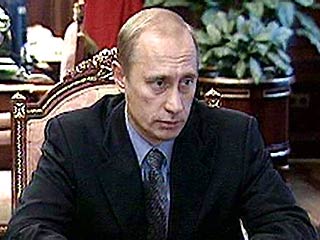
Russian President Vladimir Putin called on Russian entrepreneurs who keep resources in foreign banks, think about their return. Speaking on Wednesday at the congress of the Chamber of Commerce and Industry in Moscow, he warned that Western communities "would tighten the use of funds in offshore zones in connection with" toughening the struggle against terrorism.
“You are tormented by the dust to swallow, running around the courts and defrosting your funds,” the president quotes the interfax's businessmen quoting. As an alternative option, he suggested "together with the government to think about how to return these funds to his homeland. In other words, to think about creating good conditions for investment.
According to the president, "the state should not have enough everyone for the sleeve, asking where these funds came from, if at one time it could not create normal conditions for investing."
On Tuesday, the need for the amnesty of capital was discussed by the deputy head of the government apparatus, Alexei Volin, who informed reporters that "the Russian government carefully examines and analyze proposals to legalize the incomes of Russians," posted on accounts in foreign banks. In his opinion, this option is most likely: the deposit owner who wishes to legalize it pays a 13 percent income tax from the entire amount and at the same time receives the right to continue to store 75% of the taxes that remained after paying taxes. However, such a process is not entirely true, since the amnesty provides for the presence of the fault of citizens who at one time exporting money abroad. And the government will not blame such individuals.
Abroad, the reaction to the new initiative of the president and the government is positive. So, experts in the City London believe that foreign investors would only welcome the “amnesty” to Russian capital brought into offshore.
According to analysts, the opinion of which RIA Novosti cites, this would increase the interest in Russia of foreign investors, who, in connection with the return of Russian capital to their homeland, would have more confidence in the reliability of the Russian market.
According to experts, the announcement of the "amnesty" in the context of the growth of the Russian economy from the political and economic point of view would be justified, since it is under such conditions that Russian capital will be willing to go back to Russia.
The history of the issue
The idea to conduct an amnesty of capital has long been in the minds of politicians, officials, bankers and entrepreneurs. Back in the fall of 1997, at a meeting of the Federation Council with a proposal to hold in Russia an amnesty of runaway capital "for 10-15%" was the President of the Russian Federation Boris Yeltsin. Later, the former heads of the tax service Alexander Pochinok and Boris Fedorov, Prime Minister Evgeny Primakov, and the director of the Federal Tax Police Service Vyacheslav Soltaganov picked up this idea.
In Russia, the last time the question of holding the amnesty of capital in the summer of 2001 was raised by the chairman of the budget committee of the State Duma, Alexander Zhukov. “Today, all the prerequisites have been created for this. It is necessary to give citizens the opportunity to return money to Russia previously exported in violation of tax or currency legislation, pay a 13 percent income tax and legalize their income. I think this will benefit the budget and will make it possible to significantly increase the influx of investments in the Russian economy,” the deputy said then. However, the case has not yet reached the introduction of specific bills.
On the sidelines of the State Duma, as well as in the White House, they say that “a political decision is needed” - and, apparently, it was made.
In this regard, Kazakhstan favorably differs from Russia, where the amnesty has already taken place, Kommersant points out.
In April 2001, Kazakh President Nursultan Nazarbayev signed a decree by which Kazakh citizens could legalize their capital, transferring them to the special account of Kazakh banks, with the exception of serious crimes received as a result of serious crimes. In this case, it was not necessary to pay any taxes at all. Legalization lasted only 20 days. The settlements of the authorities for the legalization of $ 500 million were almost justified: Kazakh officials and businessmen surrendered more than $ 480 million, of which more than 80% of the US dollars. The minimum legalized amount amounted to about 2 thousand, the maximum - about 800 thousand dollars.