
Translated material
The government summed up the results of the half -year
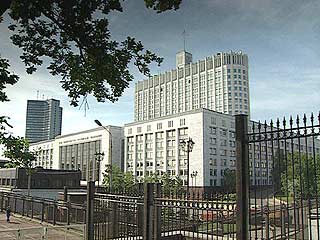
At a meeting on Thursday, the government summed up the results of the country's socio-economic development for the first half of the year.
Opening the meeting, the head of the Cabinet of Ministers Mikhail Kasyanov complained that not all indicators of the development of the Russian economy are characterized by positive trends (namely, for obvious reasons, reports of ministers will be concentrated).
For example, "inflationary processes are not yet fully controlled by the Central Bank and the Ministry of Finance." Nevertheless, in the first half of the year it was possible to withhold inflation at the level of up to 9 percent, and at the end of the year it will not exceed 14%, as was promised at the beginning of the year.
In addition, Kasyanov considers insufficient growth in investment in the domestic economy, ITAR-TASS reports. This indicator in the first half of the year did not reach the predicted level and amounted to only 1.8%. "This is a very low pace, insufficient for economic growth," the prime minister said.
The prime minister is also the fact that in the first half of the year the export of Russian products decreased by 7%, while imports increased. This means that he remarked that "consumer demand is satisfied largely due to imported goods."
However, in general, the situation in the economy is good. According to the prime minister, GDP growth in the first half of the year turned out to be a little more predicted - 3.8%, industrial production increased by 3.2%. Real incomes of the population grew at a long pace than in previous periods and increased by almost 8%. The federal budget was executed stably with a total surplus of 73 billion rubles.
The prime minister said that the Russian government should analyze the situation in the country's economy in the first half of the year and work out measures that will allow to consolidate positive trends in the second half of the year and mitigate the negative ones.
In addition, the government recognized the results of the legislative activity of the State Duma into the spring session. This was at the end of the meeting of the Cabinet of Ministers by the plenipotentiary representative of the Russian government in the State Duma Andrei Loginov.
According to Loginov, the Duma approved all nine priority government bills.
The head of the Ministry of Economic Development, German Gref at a briefing after the meeting, said that the execution of the 2003 budget would be a “rather complicated” process.
For example, financing of federal target programs in 2003 will be reduced by 8 billion rubles compared to 2002. "We decided not to fully close the financing of such programs, but to select only the necessary measures that will be funded to a minimum," the minister said.
As for inflation, then, according to Gref, much will depend on the summer months, primarily on prices for the food group of goods. Only after the inflation rate for July, August, September will be calculated, it will be possible to draw conclusions about the final annual inflation, Gref said. However, he expressed confidence that inflation would not be released for the government planned by the government.
True, according to the Department of Government Information, the inflation may be needed to contain special measures that the Ministry of Finance, the Ministry of Economic Development and the Central Bank should develop.
Gref, who read out a report drawn up in his department on the socio-economic development of the country, advised special attention to pay special attention to the growth rate of the production of the main industries, compliance with the predicted level of consumer prices, ensuring the growth of investment and conducting an effective price policy (tariffs) for the services of natural monopolies.