
Translated material
Iraq confirms that he handed over to the UN inspectors 24 documents on his military program
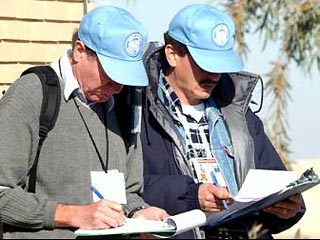
Responsible for coordination of Iraq interaction with UN inspectors, General Ammer Saad, expressed the hope that the report of international experts on February 14 at the UN Security Council "will be fair and reflecting reality."
At a press conference in Baghdad, an Iraqi military leader noted that his country "has already presented many documents explaining our activities in the past."
“We discussed even some issues with inspectors that are not mentioned by the resolution of 1441 SB UN. We did everything we had to do,” Saad emphasized.
He added that the Iraqi side introduced 24 documents to the head of the UN inspectors to Hans Sliksu 24 with technical details related to activities in the field of weapons since 1998.
The general noted that the transmitted documents contain information about the chemical, bacteriological and nuclear arsenals of Iraq, starting in December 1998, when the work of previous UN inspectors was interrupted.
Regarding Washington’s requirements to resolve the intelligence flights of American U-2 aircraft over Iraqi territory, the general said that "there is significant advance in this matter," and that, "perhaps the problem will be solved until February 14th."
Recall that on Sunday, negotiations between the head of the UN Commission on Observations, Control and Inspectorate, Hans Blix, the head of the International Atomic Energy Agency (Magate) Muhammad al-Baradei and Iraqi officials, ended.
Later it became known that the Iraqi authorities transferred additional documents to international inspectors about their nuclear and biological weapons. It is reported that new information will help to shed light on questions related to the past weapons of Iraq, which still remain unclear.
In the 1990s, Iraq admitted that he produces chemical and biological weapons, including the pathogen of anthrax, the neuro-paralytic gases of VX and Zarin. However, UN inspectors do not have documentary evidence that they were destroyed.