
Translated material
Die Welt: Even the transfer of a referendum in Chechnya contradicts international law
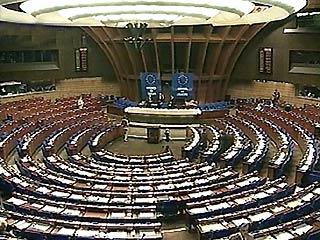
The Parliamentary Assembly of the Council of Europe accepts joint liability for Russian crimes in Chechnya against human rights, which are now committed under the guise of a "constitutional approach", Die Welt (translation on the website inopressa.ru ) writes. The author of this publication Said-Hasan Abumuslimov.
Said-Hasan Abumuslavimov is a co-founder of the Democratic Vainakh party of Chechnya and one of the authors of the Chechen constitution. From 1996 to 1997, he was a vice president of Chechnya. Since the beginning of the Second Chechen War, Abumuslimov has been living outside the limits of Chechnya.
He notes that PACE supports the decision of the Russian government to hold a referendum in occupied Chechnya. Recall that the proposal of the chairman of the commission for the decision of the Russian-Chechen conflict of Lord Jadd on the transfer of a referendum was rejected. Lord Jadd said that he would resign if the referendum is still held on March 23 of this year. However, even the transfer of a referendum does not change anything, the newspaper writes. The referendum, in principle, contradicts international law. "The referendum, the conduct of which is dictated by the occupation authority and is carried out on a compulsory manner, does not have legal force. It cannot contribute to the establishment of peace. The referendum, if necessary, should not be carried out by the Russian colonial power, but the legal power of Chechnya with a guarantee of the free and independent will of the people," the newspaper writes.
The result of the referendum should be the adoption of the Chechen "Constitution". But the Chechen constitution already exists. This is ignored by both the Council of Europe and the draft resolution of Lord Jadd, the German edition notes. During the wars of 1994 - 1996 and since 1999, 160,000 Chechens were killed, among them thousands of children. Thousands of civilians disappeared in filtration camps and Russian prisons. The entire population inside and outside the country was turned into refugees, 80 percent of all cities and villages were destroyed.
According to Die Welt, Chechnya is a large concentration camp, guarded by countless blocks and competing command headquarters with each other, which hold the population in fear with their cleansing.
Currently, less than 600,000 people live in Chechnya, who are opposed by the 150 thousand-thousand-lived occupation army, which will also take part in the referendum. It turns out that those who torment and kill the Chechens will determine the fate of the Chechen people. Russia's attempts to hide criminal violations of human rights in relation to its neighbor are not new. The invasions of Hungary, Czechoslovakia and Afghanistan were called "international help", the first Chechen war was submitted as the restoration of the constitutional system, the second - as "the struggle against international terrorism." The Russian leadership, faithful to this tradition, plays a new political farce entitled "referendum on the Constitution of the Chechen Republic," the newspaper writes. The newspaper recalls that the existing constitution was developed with the assistance of experts from the Baltic states and on March 12, 1992 was approved by the Chechen parliament. In it, Chechnya was proclaimed an independent democratic state. On the basis of this constitution on January 27, 1997, under the auspices of the Organization for Security and Cooperation in Europe (OSCE), free democratic elections of the Parliament and President of Chechnya were held. The elections were recognized by all international organizations and all governments, including Russia. This simultaneously meant the recognition of the Chechen constitution. According to international law, the lack of violence and the threat of violence is a prerequisite for free elections.
In Chechnya, the population is faced with a choice either to go to the "Electoral Points" or disappear in filtration camps, the newspaper writes. The members of the Parliamentary Assembly of the Council of Europe are probably known. And yielding to the pressure of the Russian delegation, they thereby became accomplices in crimes against human rights in Chechnya, concluded the publication.
The delegates of the Chechen National Assembly at the beginning of the war in anticipation of such a propaganda trick decided: “All Russia's attempts to appoint a puppet government in occupied Chechnya or hold decorative elections, are a violation of international law and gross interference with the right of the Chechen people to self -determination and the right to freely choose their bodies. Those that recognize the planned referendum violate the international The right, although by the family of their activities they are designed to protect him, ”the publication summarizes.