
Translated material
Housing and communal services reform in Russia will cost 300 billion rubles, Kasyanov said
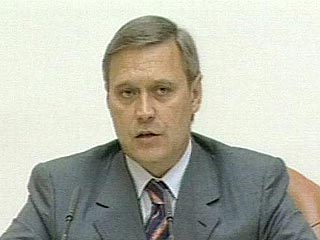
To modernize communal networks and housing and communal services infrastructure, it is necessary to spend about 300 billion rubles for five years. This was stated by the Prime Minister of the Russian Federation Mikhail Kasyanov, speaking on Wednesday in the State Duma, reports Prime-Tass.
At the same time, Kasyanov noted that without the introduction of a new economic model of the functioning of housing and communal services, it makes no sense to carry out such modernization, since the money will be wasted. When preserving the Soviet housing and communal services model, any financial injections will simply “go into the sand,” he said.
30% of the accident in the housing and communal services occurred due to the wear of the capacities
At least 30% of accidents in housing and communal services this winter occurred due to wear of the capacities and unpreparedness of enterprises to pass the autumn-winter period, said Mikhail Kasyanov.
Another third of the accidents, he said, occurred due to violations of the rules of operation of equipment and the "slaughter of personnel". The remaining accidents were a consequence of natural disasters.
The prime minister noted that today the majority of accidents that have occurred in the country are eliminated, but this does not diminish the seriousness of the problem.
Describing the situation in the housing and communal services in general, Kasyanov emphasized that the margin of safety was almost exhausted, and the system itself was not updated for years.
In 2000, according to him, 175 emergency situations occurred, in 2001 - 192, and in 2002 - 222, and since the beginning of 2003 there were 19 more such incidents. Housing and communal services reform did not give results
Kasyanov believes that today the reform of the housing and communal services has not given the results that were counted on during its development.
"In most regions, one -sidedly approached the reform, focusing on increasing the cost of payment of services for the population. It is necessary to adjust the transformation program in this area, the creation of thoughtful incentives, and not thoughtless and counterproductive benefits," the prime minister said.
First of all, you need to stop the growth of tariffs. Local monopolies in the housing and communal services should be under state control, and the federal government urgently should be given the opportunity to introduce a single method for calculating tariffs when concluding contracts for the supply of housing and communal services.
Such powers are provided for in the bill on amendments and additions to the law on the basics of housing policy, Interfax reports.
Kasyanov also considers it important to create a competitive environment in the management and maintenance of housing and communal services. "It is necessary to create a system that allows enterprises of any form of ownership to manage their property in this area," the prime minister said.
He also attributed measures to restructure the debts of enterprises to important steps, for which a clear distinction between the financial powers of all authorities is necessary.
Kasyanov states that Russia no longer has problems of external debt
According to the prime minister, Russia no longer exists problems of external debt. He noted that external debt was reduced from 100% to 40% of the country's gross domestic product. And the country's gold and foreign exchange reserves increased to $ 50 billion.
Kasyanov said that Russia could stop a policy of reducing external debt in relation to GDP.
The head of the Cabinet of Ministers explained that today Russia's external debt as a percentage of GDP is below the level that the European Union recommends, and lower than any of the European Union countries.
Answering the questions of journalists, Kasyanov said that the full liquidation of Russia's public debt is also not required.
“This is not right, this is a one -sided policy,” the prime minister said. He indicated that a balanced policy in relation to public debt involves the implementation of external borrowings in moderate size. That is why the government intends to continue to work with the public debt as an effective financial instrument.