
Translated material
Iraq opened the dam by Basra to flood the Americans
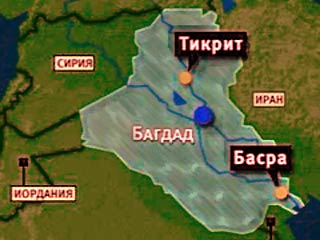
The Iraqis opened the Kuteiban dam to the north of Basra to stop the promotion of the coalition forces in the direction of the northern regions of the country.
According to the Kuwaitsky news agency Kun, the water flooded large areas near Basra. The soil, mixing with water, turned into sticky dirt, which makes it difficult to advance tanks and military vehicles, RIA Novosti reports.
Before the war, the Americans foresaw the possibility of an explosion of dams Iraqis
Saddam Hussein plans to use water in Iraq during a military operation in Iraq as a means of protecting the country - he is going to blow up the largest dams next to Baghdad so that the stream of water surpasses the south, pica in February Miami Hereld.
Lieutenant Matthew K. Massey, a military engineer of the US Marine Corps, then said in an interview with the newspaper that he was ridiculous to listen to the conversations that the war with Iraq would be a "war in the desert." “Rather, it will be a water war,” he says.
Masssi emphasizes that the American Ground Forces in order to get to Baghdad from Kuwait, will have to cross the Tiger and Euphrates River, the difficulty area of Mesopotamia, which is located between the rivers, moreover, an extensive network of irrigation channels and their irrigated agricultural fields will also be successfully flooded.
“If he gives an order to blow up the dams, he will be able to really stop our offensive and create many problems for us,” said Lieutenant Pat Garin, an officer of the 74th -moving construction battalion of the US Navy.
According to the military, the American army was preparing to overcome any water obstacles during the war with Iraq.
"The details of large bridges are delivered to the region, which can be erected in a short time (this is the Mabey & Johnson bridge with a mile long, several beam bridges of 210 feet long and several tens of 60-foot bridges based on armored vehicles), and floating pontoon bridges."
“We know that we will encounter numerous problems when crossing the rivers during movement to the north, to Baghdad,” Massey said.
The use of water resources for military purposes is not something unusual in this region. 2.5 thousand years ago, the king of Persia Cyrus changed the direction of Euphrates and sent his troops through the river of the river to conquer Babylon.
Water resources were also used actively for military purposes by the warring parties during the Iran-Iraq war in the early 1980s. One of the Western diplomats called this conflict "War of pumps."
According to the newspaper, several specialists of the engineering and construction units of the US Navy, military engineers who were consulted in Kuwait, and civilian specialists in the United States claim that water obstacles will become one of the main problems of American ground forces during the march to Baghdad-and this is about 280 miles.
Hussein can flood the southern regions of Iraq, destroying the lacquer al-Milh, which is located southwest of Baghdad, and two dams on the Tiger and Euphrates rivers, the leading expert of the Washington Center for Strategic and International Studies of Anthony Corddesman claims to command the American army.
The military engineer claims that some parts of Mesopotamia have become so or rain so or in the rain that its unit is going to change the light brown camouflage, which is used in the desert, for dark green material, which is used by military during operations in forest zones.