
Translated material
The policeman, who helped terrorists deliver explosives to Moscow, received 4 years
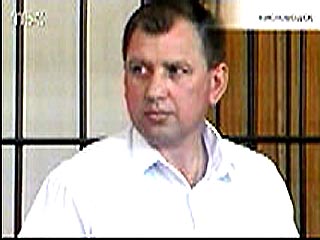
By four years in prison, a former traffic police officer Stanislav Lyubichev was sentenced to Wednesday in Kislovodsk, with the help of which terrorists in the summer of 1999 delivered 6 tons of hexogen to Moscow.
Lyubichev was found guilty under Article 290 of the Criminal Code of the Russian Federation (bribe), while the court acquitted it under Article 285 of the Criminal Code of the Russian Federation (abuse of authority).
In August 1999, the traffic police inspector ensured the KamAZ passage, loaded with explosives through a post in Kislovodsk. At the same time, the officer believed that Krymshamkhalov and Deckushev were being taken to the capital of sugar.
One of the terrorists, a resident of the village of Mirny Yusuf Krymshamkhalov, was with a policeman in friendly relations. He asked the inspector to help pass the post without inspection, explaining to him that it was lucky to be lucky for the implementation. Subsequently, for this service, the traffic police officer received a bag of sugar from terrorists.
Documents for the load were absent. Bags with a hexogen were loaded into the car, mixed with aluminum powder, ammonium nitrate and sugar.
Lyubichev, along with Krymshamkhalov and Dekushev, got into the escort car and, using their official position, helped them avoid checking the KAMAZ.
Explosions in Moscow thundered on September 8 and 13, 1999. In the Russian capital, two residential buildings were blown up - on Guryanov Street, 19 and on Kashirskoye Shosse, house 3. As a result of terrorist attacks, 228 people were killed, including 21 children.
In Volgodonsk, the explosion occurred on September 16, 1999, 19 people were killed as a result of it, including two children.