
Translated material
The Summit Russia-Es takes place in St. Petersburg
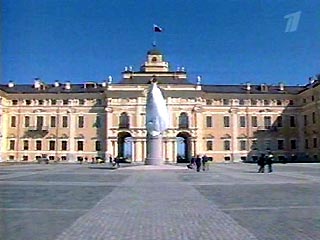
On Sunday morning, the Russia -EU summit was opened in St. Petersburg, which promises to become the most difficult for Russian President Vladimir Putin. The meeting is held in the Konstantinovsky Palace in Strelna. The meeting is attended by 15 heads of states and governments of the EU members, the chairman of the European Commission Romano Prodi, the Supreme EU representative for foreign policy and security, Javier Solan. Leaders of 10 states joining the EU are also invited to the summit.
The Russian president, opening the summit, suggested "clearing the rubble" in relations between Russia and the EU. Putin touched on the principal, according to him, the problem of freedom of movement of people. “Frankly, in the eyes of ordinary Russians, otherwise than the new Schengen wall is not perceived,” Putin said.
The Russian side, in addition to the head of state, is represented by Prime Minister Mikhail Kasyanov, Deputy Prime Minister Viktor Khristenko, Foreign Minister Igor Ivanov and deputy head of the Kremlin administration Sergei Prikhodko.
It is expected that at the end of the summit in the press center, the President of Russia, together with the chairman of the European Commission Romano Prodi and the Prime Minister of Greece Konstantinos Simitis, will answer questions from journalists. Currently, Greece presides in the European Union.
What is planned to be discussed
In relations between Russia and the European Union, many problems have recently accumulated. The Kremlin requires European interests from Europe when new members join the EU. According to ITAR-TASS Sergey Prikhodko, "it is absolutely important that the accession of new countries to the partnership of Russia and the EU will not be automatically." The accession of each country will be accompanied by a protocol requiring ratification.
In addition, Moscow insists on developing a specific plan for the transition to a visa -free travel regime with the EU, while in Brussels at best they call it a very distant perspective. The administration of the head of the Russian state understands that the transition to visa -free trips "will require significant efforts, the restructuring of many of the current mechanisms." “But you need a movement, there may be a certain stage of achieving this goal,” a source in the Kremlin said.
The representative of the presidential administration also made it clear who would have to be hard at the summit. If with most of the countries entering the EU, Russia develops "partnerships, almost trouble -free relations, then the policy of Latvia, as well as Estonia in relation to the so -called" non -military population "causes the most decisive protest," he said.
Europeans, in turn, want Russia to ratify the Kyoto protocol on the restriction of harmful emissions into the atmosphere, and President Putin nods at the State Duma, which does not want to do this. Europe is preoccupied with the situation in Chechnya, which causes irritation in the Kremlin, the Air Force notes.
Russia, in turn, accuses Europeans of blocking the country's accession to the World Trade Organization.
All these issues will be reflected in the final declaration, which should be adopted by the summit participants.